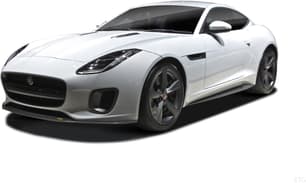
What's the difference?
After a long gestation period where a variety of Jaguar corporate overlords toyed with the idea of a successor to the all-time iconic E-Type, the F-Type finally emerged in late 2013 to a global intake of breath.
It managed to capture just the right amount of Jag heritage, folded into a high-tech package, with a simple choice of supercharged V6 and V8 engines, housed in a supremely sleek convertible body.
Over time the formula has become more complex, with the arrival of a coupe version, powerhouse R and full-fat SVR variants, special editions including the exotic Project 7, and more recently, 2.0-litre, turbo four-cylinder models to make this stunning two-seater more accessible.
A late 2019 update added some extra catnip, including a redesigned nose and this is the flagship F-Type R, complete with supercharged V8 power and performance-focused underpinnings. Time to dive into this latest chapter of the Jaguar F-Type story.
Road testing the Nissan 370Z in 2011, I noted it was getting on. Yes, the rear-wheel drive two-seater had been given a design freshen up and a bigger engine a couple of years prior, but the 350Z it was based on had hit the local market way back in 2003. And it wasn't unreasonable to expect replacement or retirement in the not-too-distant future.
Okay, so that was seven years ago, which means if you (like many) consider the 370Z to be an update of the 350Z (the transition happening in 2009), this car has been on sale for 15 years straight. Can you imagine Apple trying to sell any one product without entirely reinventing it for that long?
You might say that makes it a modern classic; so good it's only required an occasional touch up to keep it on the Sports Car Most Wanted list. And in recent years, a consistent average of 30 Aussies a month have slotted a shiny new 370Z in their driveway.
But a less-charitable type will tell you time waits for no car, and with arch rival Toyota about to lob a Supra-shaped hand grenade over the parapet, this enduring campaigner is under the pump.
So, Nissan's reached into its bag of tricks and given the 370Z yet another cosmetic tszuj-up and added a high-performance clutch to the manual version.
Is it enough to keep Nissan's eternal Z-car flame burning?
The Jaguar F-Type R is as fast and capable as it is beautiful. Although it's a little thirsty and comes up short on active safety, it's technically outstanding, delivering a stunning mix of performance, dynamics, and comfort.
It's hard not to be ageist when it comes to the current Nissan Zed, because 15 years in market (nine if we're generous) is a lengthy stretch in anyone's book. But somehow the 370Z is more than the sum of its parts. It has fantastic front-engine/rear-drive balance, an increasingly rare atmo engine, and a beautiful manual 'box. The value equation is decent, and it's nicely put together. Just don't expect to be dazzled with the latest safety, driver-assist and multimedia technology.
Although it kicked off as a roadster, a coupe version of the F-Type was always part of the plan. In fact, Jaguar's C-X16 concept, that in 2011 previewed the eventual production car, was a hardtop.
Following the Coupe's public reveal at the 2013 Los Angeles motor show, I asked Jaguar's then head of design, Ian Callum, if the bean counters had vetoed the concept's ultra-cool side-opening hatch door; one of many styling hat tips to the E-Type. His response was a wry smile and slow nod of the head.
It's a shame that door didn't make it to the showroom floor, but the E-Type is still a strong design influence on its successor.
At close to 4.5m long, around 1.9m wide, and a fraction over 1.3m tall, the F-Type R looks more compact in the metal than it does in photographs, arguably the hallmark of a successful sports car design.
A long, flowing (front-hinged) bonnet (Jaguar calls its shape 'liquid metal' sculpture) projects forward from a rear-set cabin, with broad but tightly wrapped haunches behind it. The 20-inch, 10-spoke rims (in 'Gloss Black' with diamond-turned finish) fill the wheel arches perfectly.
I'm a huge fan of the tail-light cluster design, subtly reprofiled in the late 2019 update, which echoes the shape of the Series 1 E-Type and other classic Jags, but found it harder to warm to the outgoing F-Type's squarish headlight treatment.
Always a subjective call, but to my eyes this car's slimmer, more feline (LED) eyes and ever-so-slightly larger grille deliver a better front to rear balance. And slender, flush-fitting pop-out exterior door handles remain sub-zero cool.
Our 'Santorini Black' test car had been optioned with the 'Exterior Black Design Pack' ($1820) for an extra hint of menace. It applies body-colour to the front splitter, side sills, and rear diffuser, at the same time blacking out the grille surround, side vents, side window surrounds, rear valance, Jaguar script, F-Type badge and 'Leaper' emblem.
Jaguar describes this two-seater as a '1+1', confirming the F-Type's focus on the driver, and our test car's tan leather interior emphasises the fact.
Tan dash on the passenger side, complete with flying buttress-style grab handle for extra support when g-force starts to build. Contrasted by all black and all business on the driver's side.
A broad centre stack houses the 10-inch multimedia touchscreen, with easy-to-use dials for the climate control system below. And the 12.3-inch reconfigurable hi-def instrument cluster (with graphics unique to the F-type) is a model of clarity and simplicity.
The latter offers a choice of display themes, including full nav map, but the default mode highlights a large central tachometer. Nice.
An impressive design feature carried over from the previous model is deployable front air vents. The dashtop remains flat until a given climate control temperature setting causes an upper section, housing a pair of adjustable vents, to gently rise. Very cool (no pun intended).
If you want to go all the way back, the 370Z clearly takes its design direction from Datsun's star of the '70s, the original 240Z.
Inspired by Ferrari, and (along with the Toyota 2000GT) a sports-car breakthrough for the Japanese industry, the first Zed's front-engine, long-nose proportions have remained largely intact in successive iterations over the decades.
With a broad, flat nose, distinctively jagged headlights, and steeply raked rear profile, there's no mistaking the 370's signature stance, with pumped-up guards sitting over fat, 19-inch alloy rims.
Sharp-eyed car-spotters will notice the update's new design RAYS forged wheels, smoked front and rear lights, and a similar smoked finish on the exterior door handles.
A new colour, 'Cherry Red' also replaces 'Bordeaux Black' in an eight-shade colour palette. Our test example was finished in 'Gun Metallic'.
Inside, echoes of Zeds past abound, with a trio of hooded gauges (clock, voltmeter, oil temp) sitting in the centre of the dash top, and the tachometer in the middle of a cowled, three-instrument main cluster shaded by an exaggerated tube.
And aside from consciously retro design touches, some elements have been present inside the car for so long they're just... ancient.
For example, old-school orange graphics for the odometer, gear position and trip computer are dated, and the small (7.0-inch touchscreen) multimedia display has the feel of an early noughties edition of Tekken 6.
Forget a digital speedo or head-up display. A CD slot still sits proudly in the centre stack, and matt silver highlights scattered around the cabin are as on-trend as double denim.
And the steering wheel (joined with the instrument binnacle) adjusts for height, but annoyingly, not reach.
That said, friends and family who rode in the car during the week I had the keys all commented on the swoopy exterior and cozy cockpit feel of the interior. So, what do I know?
If you're intending to daily drive your F-Type R, make sure your yoga fees are up to date, because entry and egress are for the fleet of foot and flexible of limb.
Once inside, though, within the bounds of its two-door coupe format, the F-Type offers an array of storage options, including a decent glove box, centre storage box/armrest, small door bins, a netted pocket on the top of the bulkhead between the seats, and a pair of console cupholders.
Power and connectivity runs to a 12V socket in the dash, with another in the central storage bin, alongside two USB-A ports, and a micro SIM slot.
Notwithstanding the (alloy) space saver plonked on the boot floor, the F-Type Coupe delivers worthwhile cargo space, with 310 litres on offer, rising to 408 with the load cover removed.
That's enough to swallow small (36-litre) and large (95-litre) suitcases together, and there are two (nicely chromed) tie-down anchor, as well as elasticised retaining straps at either end of a small ledge on the bulkhead.
Two seats means practicality is a relative term when applied to the 370Z. For example, getting in and out is an athletic exercise requiring gymnastic levels of flexibility and poise. As with most low-lying coupes, I found the outer hand on the A-pillar technique helps with swinging down into the car, or lurching up out of it.
Once ensconced behind the wheel, you're confronted with a relatively modest amount of storage space, running to a medium-size glove box, a lidded bin at the rear of the dividing console, a single cupholder, and door pockets incorporating recesses for small bottles only.
There are two lined recesses for soft bags or coats behind each seat, including a fold-out map pocket, but they're not exactly convenient for retrieving things when you're on the move. What's missing is a tray where you can easily stow things likes keys, coins or a phone.
There are also two 12-volt power outlets, a USB port and an aux-in audio connection.
Rear load space is limited to 195 litres, mainly due to the boot's shallow floor (an alloy space-saver spare sits underneath). It does incorporate a cargo blind and four tie-down hooks, but we only managed to squeeze in the largest (105-litre) suitcase from our three-piece hard set, or a combination of the two smaller ones (35 and 68 litres).
We also had a crack at stuffing in the CarsGuide pram (there is a top-tether hook provided for child seat fitment) and managed it with only a couple of beads of perspiration expended.
Forget the nappy-bag paraphernalia, though. The soft bags with all the baby stuff would have to go in the storage bays in the cabin behind the seats.
It's hard to pin down direct competitors for the $262,936 F-Type R, except one; Porsche's 911 Carrera S, a clear price and performance rival at $274,000.
With a 3.0-litre, twin-turbo 'flat' six producing 331kW/530Nm the 911 is capable of accelerating from 0-100km/h in just 3.7sec, which (surprise, surprise) exactly matches the Jag's claimed performance number.
Cast the net a little wider and you'll snag the likes of Nissan's GT-R Track Edition on the low side ($235,000), and the Mercedes-Benz S 560 Coupe ($326,635) for around $50K above the F-Type's asking price. So, the standard features list needs to be impressive, and long story short, it is.
Drilling down to the depths of detail on this car's equipment spec would need a review of its own, so here's the highlights package.
The 10-inch 'Touch Pro' multimedia screen manages a 380-watt Meridian audio system featuring 10 speakers (including subwoofer), digital radio, dynamic volume control and a 10-channel amp, as well as Apple CarPlay, Android Auto, and Bluetooth connectivity.
It's also the gateway to the car's configurable dynamic set-up, 'Navigation Pro', phone connection, ambient lighting, reversing camera, and a lot more.
Full-grain 'Windsor' leather is applied to the 12-way, electrically-adjustable (plus memory) performance seats. There's also a 12.3-inch customisable digital instrument cluster, cruise control (and speed limiter), keyless entry and start, auto rain-sensing wipers, auto-dimming and power folding heated door mirrors (with memory), a switchable active exhaust, LED headlights, DRLs and tail-lights, as well as an electrically adjustable steering column (with memory), climate control, powered boot lid, 20-inch alloy wheels, racy red brake calipers, and specific 'R' branding on the leather-trimmed sports steering wheel, door tread plates, and centre console.
The arrival of the tricked-up 370Z NISMO in August last year, offered Nissan Australia an opportunity to reposition the regular model, dropping the MSRP for the manual version from $56,930 to $49,990.
Aside from adjusting the car's value-for-money proposition (and pissing off those who'd bought one in July), that close to seven grand haircut delivered more pricing headroom up to the Roadster (starting at $60,990), and NISMO (from $61,490) versions.
For that money the standard equipment list includes, keyless entry and start, cruise control, climate control air, go-fast alloy finish pedals, 'HDD' (Hard Disc Drive) sat nav with 3D mapping, a 7.0-inch colour multimedia touchscreen, and Bose eight-speaker audio with 9.3GB 'Music Box' hard drive.
You'll also pick up sports seats with lots of features. First, they're 'leather accented', which is code for genuine hide in all the places you regularly contact, and a faux equivalent everywhere else. Not uncommon, and not necessarily unpleasant. Then they're heated and four-way power-adjustable, (with manual lumbar and height adjustment for the driver).
The steering wheel and gear knob also cop the 'leather accented' treatment, plus you can expect LED DRLs and tail-lights as well as auto headlights. It's worth noting that the headlights are garden-variety xenons, and things you might expect in a $50k coupe, like, rain-sensing wipers, dual zone climate, Apple CarPlay and Android Auto connectivity or tyre-pressure monitoring are 100 per cent absent.
Lining up direct competitors for the 370Z isn't easy, because there aren't any. But the closest is arguably a 2.3-litre EcoBoost version of Ford's Mustang at $45,990 for the manual. A further stretch of the imagination could haul in the Mazda MX-5 RF ($43,890) or the 86 GTS+ ($39,440) and Subaru BRZ tS ($39,894).
The F-Type R is powered by Jaguar's all-alloy (AJ133) 5.0-litre supercharged V8 engine, featuring direct-injection, variable (intake) cam timing, and an Eaton (Roots-type) blower to produce 423kW (567hp) at 6500rpm, and 700Nm from 3500-5000rpm.
Drive goes to all four wheels via an eight-speed 'Quickshift' automatic transmission and Jaguar's own adaptive AWD system with 'Intelligent Driveline Dynamics' (IDD).
The AWD system is based on an electro-hydraulic multi-plate (wet) clutch, controlled by a centrifugal electro-hydraulic actuator. Default front/rear drive balance is 10/90, although Jaguar claims even a full shift of power from 100 per cent rear to 100 per cent front takes just 165 milliseconds.
The IDD system continuously monitors each wheel's speed and traction, suspension compression, steering angle and braking force, as well as the car's rotational state.
It then uses an algorithm to determine which wheel(s) are likely to lose traction, and before grip is lost, transfer drive to the wheels that can make best use of it.
The 370Z is powered by an all-alloy, 3.7-litre (VQ37VHR), naturally aspirated, quad-cam V6, producing 245kW at 7000rpm and 363Nm at 5200rpm.
Serving in a vast array of Nissan, Infiniti, Renault and Mitsubishi models, the VQ V6 engine series has been around in various displacements for over 20 years.
It features the 'Continuously Variable Valve Timing Control System' (CVTCS) with 'Variable Valve Event and Lift' (VVEL) on the intake side. And while all that may sound new and ultra-high tech, it was actually introduced in 2007.
Transmission choice is between a seven-speed auto (with manual mode and paddles) or six-speed manual gearbox, as tested here. And this 2018 upgrade brings a high-performance clutch from Japanese specialist Exedy.
Drive goes to the rear wheels via a carbon-fibre composite drive shaft, connecting with a viscous limited slip differential (LSD).
Additional features that won't necessarily be music to purists' ears include 'Active Noise Cancellation', and 'Active Sound Enhancement'.
The former monitors and measures engine sounds, using the audio speakers to produce "acoustically opposing signals to cancel undesirable sounds". So, okay, maybe filtering out the messy noise is a good thing.
But at the same time Active Sound Enhancement employs "digital signal processing to enhance the engine note, using the vehicle's sound system to augment or modify the spectrum of select powertrain sounds in the cabin". Yuck.
I can cop a tube that channels a bit of genuine engine noise into the interior, but in this context, the phrase 'digital signal processing' is a turn-off.
Claimed fuel economy for the combined (ADR 81/02 - urban, extra-urban) cycle is 11.3L/100km, the F-Type R emitting 269g/km of CO2 in the process.
Despite the standard auto stop/start function, over close to 350km of city, suburban, and freeway running we recorded a (dash-indicated) average of 16.1L/100km.
That's a solid drinking habit, but it kind of goes with this performance territory, and we did lean into the throttle on a regular basis.
Recommended fuel is 95 RON premium unleaded, and you'll need 70 litres of it to fill the tank. That equates to a range of 619km in line with the factory claim, and 434km using our real-world number as a guide.
Claimed fuel economy for the combined (ADR 81/02 - urban, extra-urban) cycle is 10.6L/100km, the 370Z emitting 249g/km of CO2 in the process.
Over roughly 250km of city, suburban and freeway running, we averaged 15.6L/100km, at the bowser. Far from miserly.
Minimum fuel requirement is 95 RON premium unleaded, although Nissan says "for optimum performance" you should stump up for 98 RON. And just to rub it in, you'll need 72 litres of it to fill the tank.
Yep, no surprise, the 2021 Jaguar F-Type R is a proper, rip-snorting, beast of a machine. Weighing in at just over 1.7 tonnes, with 423kW/700Nm to propel it forward, in terms of straight line acceleration, it's every bit the scalded cat.
Bury the right foot and it will storm from 0-100km/h in just 3.7 seconds, with furious aural accompaniment courtesy of the 4.0-litre supercharged V8 and sports exhaust system. Electrically-actuated bypass valves in the latter's rear silencer remain closed until they automatically open under load, and boy, do they open up.
Prospective F-Type R owners wishing to remain on good terms with their neighbours will be pleased to know there's a 'Quiet Start function', but once you're a few blocks clear the engine is capable of alerting the entire suburb to you presence, complete with raucous crackles and pops on the overrun.
All 700Nm of maximum torque is available from 3500rpm through to 5000rpm, and mid-range thrust is ferocious. If you have access to a long enough private road Jaguar claims this car will storm on to a (electronically-limited!) maximum velocity of 300km/h.
The eight-speed auto transmission has picked up several tweaks courtesy of the XE-based SV Project 8, and it's brilliant. A conventional torque-converter based unit, rather than a dual-clutch, it's dubbed 'Quickshift', and that it does. Manual flicks between ratios, using the wheel-mounted paddles, are rapid and positive.
Head for your favourite B-road, and it's the F-Type R's ability to put every bit of its power down, without fuss, that impresses next. Push into a series of tight corners and the car grips, settles, and simply surges from one bend to the next, the tricky AWD system seamlessly shuffling torque between the axles and individual wheels.
The standard electronic active diff, and torque vectoring (by braking) also help keep everything under control, turning backroad tryhards into apex hunting virtuosos.
Suspension is by (aluminium) double wishbones front and rear, with revised springs and anti-roll bars added in the 2019 upgrade. Continuously-variable dampers underpin the 'Adaptive Dynamics' system, learning your style and adjusting accordingly.
The electrically-assisted power steering combines great road feel with satisfying accuracy, and the car feels balanced yet agile and responsive in enthusiastic driving.
In a more relaxed mode the adaptive set-up detects rough road conditions and adjusts the suspension settings for greater ride comfort. According to Jaguar, the damper valves and control algorithms have been recalibrated to improve low-speed comfort and high-speed control, and I can vouch for their effectiveness.
Not long after steering this F-Type R I spent some time in the supercharged V6 F-Type P380 R-Dynamic, and this R is far more compliant.
Rubber is a specially-developed Pirelli P Zero (265/35 fr - 305/30 rr), and the supremely efficient brakes are ventilated 380mm at the front, and 376mm rear.
The Nissan 370Z is actually the car many want the Toyobaru 86/BRZ to be. I can sense some of you spluttering out a sweary response to that notion. But hear me out.
If you, like many others, think the 86/BRZ would be perfect with an extra 50kW/80Nm, just bolt on a turbo or supercharger, and voila. You'll get that extra grunt, but remember, the 86/BRZ was conceived to be light, tactile, and, not least of all, affordable.
Up the outputs and you light the wick on an engineering arms race that should also lead to bigger brakes, an engine with more exotic pistons and a tougher bottom end, a stronger gearbox and clutch, a beefier diff, sturdier chassis, fatter rims and rubber... the list goes on, and on. Until you end up with something very much like the spec, weight, and price of the 370Z.
That's not to say this car isn't a fun drive. It is. Just don't expect the quick reflexes of an MX-5 or 86/BRZ.
Despite light-weighting tricks like an aluminium bonnet and all-alloy suspension, the 370Z weighs in at a not inconsiderable 1467kg. And although its 3.7-litre V6 develops a solid 245kW/363Nm, first impressions are dominated by its hollow mid-range.
Much as I love the free-revving nature of a naturally aspirated engine, there's no denying a modern turbo typically delivers lots of torque low down, with peak power also available within a useful rev range.
All the action here is at the top end, with maximum torque arriving way up at 5200rpm, and peak power taking over at a nose-bleed 7000rpm (the rev ceiling is 7500rpm). Not exactly an easily accessible sweet spot.
The gearbox is a sweet reminder of what a pleasure it is swap ratios in a top-notch close-ratio manual.
But there's still so much to like about this evergreen Zed. Its classic front engine/rear-drive layout results in a 53/47 front to rear weight distribution and the car feels balanced and beautifully predictable.
Suspension is double wishbone front, multi-link rear, and ride comfort, even over choppy bitumen surfaces is surprisingly good. On the flip-side, rumble coming up from the Bridgestone Potenza RE050A rubber (245/40 f / 275/35 r) is always noticeable, and often intrusive.
The steering is supported by old-school hydraulic power assist and while connection with the front wheels is impressive, overall feel is light. Hello 'Merica.
The gearbox is a sweet reminder of what a pleasure it is swap ratios in a top-notch close-ratio manual, and hats off to Exedy for producing a wonderfully progressive clutch. Personal preference was to turn off the standard 'SynchroRev Match' function, because I like having a go at the ol' heel 'n' toe tap dance myself.
Brakes are ventilated front and rear with almost equal size rotors (355mm f / 350mm r) clamped by four-piston calipers up front and two piston units at the rear. They are reassuringly powerful and consistent.
Age has not wearied the 370Z's ergonomics. Although the lack of a digital speedo and no reach adjustment for the steering column is annoying, the sports seats are snug and comfortable, the moderately chunky wheel feels great, and all the major controls are simple to use. Who needs slick screens and 'piano black' finishes?
The F-Type hasn't been assessed by ANCAP, but as well as the usual active safety suspects like ABS, EBD, traction and dynamic stability controls, the R features an AEB system operating at speeds above five km/h, Vehicle detection is in place at speeds of up to 80km/h, and pedestrian detection up to 60km/h.
The AWD system facilitates specific 'Rain', 'Ice', and 'Snow' modes, plus there's active high-beam, lane keep assist, a reversing camera, as well as front and rear parking sensors, and a 'Driver Condition Monitor.'
But cross-traffic alert (front or rear) is missing-in-action, blind spot assist is an option ($900), as is park assist ($700), and tyre pressure monitoring ($700). Any car that's crested the $250K barrier should have all of these as standard.
If an impact's unavoidable there are six airbags (front, side, and curtain). But remember, the front passenger seat is a no-go zone for a rear-facing child restraint. And Jaguar says, "A child should only travel in the front passenger seat if it is essential and national or state legislation permits it."
The 370Z must feel like a wall flower at the crash-test disco because it currently isn't rated for safety performance by ANCAP, its Euro NCAP affiliate, JNCAP in Japan, or the USA's NHTSA (National Highway Traffic Safety Administration) or IIHS (Insurance Institute for Highway Safety).
That said, in terms of active safety features you'll find ABS, BA, EBD, traction control, 'Vehicle Dynamic Control' (stability control), and a rear-view camera with 'Predictive Path' guidance lines.
But if you're looking for more current active tech, look elsewhere, because things like AEB, blind-spot monitoring, rear cross-traffic alert, active cruise, lane-keep assist, auto high beam or any kind of pedestrian detection are missing-in-action. They're not even available on the options list.
If all else fails and a crash is unavoidable, primary passive safety runs to active head restraints and eight airbags (driver and passenger front and side airbags, plus roof- and door-mounted curtain airbags).
Jaguar covers its Australian new car range with a three-year/100,000km warranty, which looks particularly stingy next to the mainstream market norm of five years/unlimited km, and lags other premium players like Mercedes-Benz and Genesis, both sitting at five years/unlimited km.
On the plus side, paint and corrosion (perforation) are warranted for three years, and roadside assistance is complimentary for 12 months.
And on the big plus side, scheduled servicing for the F-Type (determined by an on-board service interval indicator) is free-of-charge for five years/130,000km.
Nissan offers a three year/100,000km warranty, which isn't exactly ground-breaking in the age of Kia's seven year/unlimited km commitment.
But it does include 24-hour roadside assistance for three years, and Nissan's 'myNissan Service Certainty' capped-price servicing program applies for up to six years/120,000km.
The scheduled maintenance interval is six months/10,000km, with charges ranging from a low of $283, to a high of $831 (100,000km), averaging out to roughly $428 per service.