What's the difference?
Yet another Chinese-branded EV has arrived on our shores and if the name Jaecoo doesn’t ring a bell, that’s understandable. It’s a relatively new offshoot of Chery, making its presence felt with a growing line-up aimed squarely at everyday buyers. Think mainstream, built around accessible pricing and a decent spread of features.
Offered in a single grade, the Jaecoo J5 EV is a small SUV entering an already crowded segment. It goes up against familiar names like the BYD Atto 2, Chery E5 and MG S5 EV, all offering broadly similar promises on paper. The real question, then, is whether the J5 EV manages to carve out an identity of its own, and whether its appeal stretches beyond the price tag.
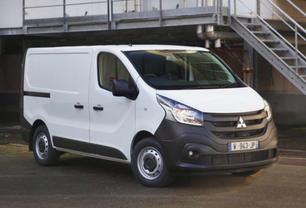
It has been a while since we’ve seen a Mitsubishi Express van on sale in Australia, and the one that has just launched here is a very different offering to its predecessor.
That’s because you could cover the tri-diamond badges on the grille or back door of the new 2020 Mitsubishi Express and be fooled into thinking that you’re looking at a Renault Trafic. Because you are.
The Express is a direct bi-product of the Alliance between Renault and Mitsubishi, and just like the Trafic, it’s made in France, at Renault’s Sandouville plant.
This isn’t a comparison - the headline isn’t Mitsubishi Express vs Renault Trafic - but the question is: why would you choose one over the other?
You’d be correct in assessing this as an exercise in badge engineering - Mitsubishi calls it “branded product” - but it could well be that you’d choose an Express because Mitsubishi has a broader network of dealers (186 at the time of writing, versus Renault’s 56), not to mention the potential for major fleet discounts and an upstream ute alternative in the Triton that helps the brand “offer the complete LCV solution”. Renault, you could counter, has a smaller and larger van for its own “LCV solution”.
There’s more to consider, including ownership, safety and value for money - read on for all the details.
The Jaecoo J5 EV makes a strong first impression and a quieter long-term one. The J5 looks the part, feels comfortable and covers all the basics well, making it an easy choice for buyers who want an affordable, practical EV without too many compromises.
It’s a solid effort overall, though even at this lower price point a few more rear-seat features would be welcome - especially given this is the only grade currently available. However, it hits the right notes when it comes to ownership and value which will be its strongest pull.
The Mitsubishi Express is an impressive return to the market for the brand, albeit one that won’t suit every buyer’s needs or wants. If you need to personalise your van, or if you value the safety technology offered by rivals like the HiAce, then you may need to shop elsewhere.
But if you do choose the Express, you will be getting a value-packed and very comfortable van that is backed by a broad dealer network and decent ownership prospects.
The Jaecoo J5 EV is a handsome-looking small SUV. Its suite of LED lighting, 18-inch alloy wheels and upright, robust silhouette give it plenty of presence, particularly for something positioned at the affordable end of the EV market. That said, originality isn’t really its strong suit. The design, especially from the rear, feels heavily inspired by a Range Rover. Imitation may be the highest form of flattery but Jaecoo could have pushed the design in a slightly more distinctive direction.
It looks good on the road, though, and inside, the J5 has a genuinely airy feel. Light-coloured synthetic upholstery and the expansive panoramic glass roof help the cabin feel open and welcoming, particularly from the front seats. The design is modern and tech-focused, with the large 13.2-inch display taking centre stage on the dashboard.
The overall layout is clean and undeniably premium in its presentation, though it doesn’t bring a great deal of personality with it. That’s becoming a familiar theme, especially in this part of the EV market, where minimalism and screens often take priority over character.
The badges are different, and so is the front bumper and bonnet. But you might otherwise struggle to tell what’s changed between a Trafic and the Express.
One thing Mitsubishi is offering, though, is a standard three-seat cabin on all models, plus dual side sliding doors and rear barn doors across every variant in the line-up. That’s a win for hard workers.
Here’s a table of dimensions to help you size up which might be best for you:
As you can see, the extra size on offer in the LWB model is strictly nose to tail, with no other compromises to consider apart from, understandably, the larger turning circle. But Mitsubishi claims even the smaller version can cope with two pallets in the back.
As for cargo zone dimensions, here’s how the two body styles compare:
It’s worth noting that there is no high-roof option available, where you can get a taller body in most competitor vans.
And while it is a bonus that there are barn doors (still not available on the HiAce), you can’t option a liftback tailgate. Plus, while the dual side sliding doors is an advantage as many OEMs charge extra for a driver’s side slider, you can’t option glazing for the rear door from Mitsubishi.
The company says that it is simply offering what it can get as part of the Alliance with Renault, but if you need to tailor a van to suit your specific needs, you might end up going with the French van (or the VW Transporter, which is the most configurable on the market).
Check the engine specs section below for more specs on weights and capacities. Next, let’s take a look at the cabin, starting with some interior images.
The Jaecoo J5 EV's cabin is spacious with both rows offering ample head- and legroom. A flat floor also helps the middle rear seat feel more usable than usual, which is always appreciated. Up front, the seats are very comfortable, with their added adjustment, heating and ventilation making a noticeable difference on longer drives. The rear seats are well padded with decent back support, so passengers in the second row shouldn’t feel short-changed.
Access to both rows is good with wide door apertures and an easy step in/step out height. My main quibble here is the keyless entry set-up. Unless you enable proximity unlocking through the multimedia system the doors aren’t truly keyless. Even then, the system can be inconsistent. That means occasionally having to reach for the key fob, which is frustrating when your hands are full.
Storage is one of the J5’s stronger suits. Up front, it’s easy to keep things neat thanks to a large glove box and a deep, if slightly narrow, middle console. There’s also a clever open shelf beneath a centre console that houses cupholders and phone storage, including a wireless charging pad. A small hidden pocket behind the media display adds to the storage count, although I’ll admit I regularly forget it exists.
Rear passengers get a couple of map pockets, drink bottle holders and cupholders. Beyond that, amenities are limited. There’s a single directional air vent and a USB-A port, but not much else to keep older kids or adults entertained.
Technology is fairly straightforward, although almost everything is accessed through the touchscreen. The multimedia system is crisp and responsive, with wireless Apple CarPlay and Android Auto working well, however it misses out on built-in satellite navigation and any meaningful apps. That said, there is a karaoke app tucked away in the system, which will undoubtedly delight someone, somewhere.
Charging options up front include a USB-A and USB-C port, along with a 12-volt socket. There’s also a USB-A port near the rear-view mirror, which is handy if you’re planning to install an aftermarket dash cam.
Jaecoo pitches the J5 as pet-friendly, with upholstery designed to be easy to clean and resistant to wear. In practice, I’d say that claim comes with caveats. Jaecoo clearly hasn’t met my son or my German Shepherd, and it took a fair bit of elbow grease to properly clean the cabin. Staying on top of messes will be key if you want the interior to keep looking fresh.
The boot offers up to 480L of capacity, which is strong for the class, and the flat load floor makes it easy to slide items in and out. There are no power ports or sockets, which feels like an odd omission for an EV. You also get a repair kit instead of a spare tyre, despite there being enough space to accommodate one. A 35L frunk adds some extra storage flexibility, and the powered tailgate is a welcome inclusion.
With a three-seater cabin as standard, the Express is already at an advantage over a HiAce. You can’t get a three-seat HiAce, and if you’ve got apprentices or workmates that always need a lift - but you don’t want the space sacrifice that comes with a crew van - it could be a crucial decision-maker for you.
And there are decent amenities for the occupants, too, with three cup holders and ample storage options across the dashboard, as well as large bottle holders in the doors. In fact, all told, Mitsubishi claims there is 43 litres of loose item storage in the cabin.
The driver’s seat gets manual height adjustment, lumbar adjustment and an armrest, as well as steering wheel rake and reach adjustment, so getting a comfortable driving position should be a cinch. Unlike the Trafic, there’s no driver’s seat heating option, but the clever “Load Through” cavity - for loading items up to 4.14m long - under the passenger seat is fitted on all models (but unlike the Trafic, which has a bulkhead, there’s no porthole, and the vehicles we tested with cargo cages didn’t have an opening to make the best use of this).
It’s set up for hard work, with rubber floor mats and a “hard wearing” poly trim on the steering wheel, though that finish is a bit coarse, and not as pleasant to hold as a leather wheel. The seat trim is fabric, and feels to be made of a durable material.
Ergonomically, it is no different to a Renault Trafic. Most important controls fall easily to hand, though people unfamiliar with Renault switchgear may need to pay attention at the dealership when the positioning of the cruise control and speed limiter buttons are explained. The buttons are between the dashboard and steering wheel.
And if you’re looking for the volume button, it’s on the weird little stalk behind the wheel itself. That has tuning and phone controls too, and it takes some getting used to. Further, if you’re used to the blinkers being on the “right” side of the steering wheel in Japanese cars, the Express is the exception.
When it comes to media and infotainment, there’s a lot left to be desired. There is no touch screen at all, and you can’t option one, either. Some drivers will appreciate that, but others will lament the lack of smartphone mirroring tech (Apple CarPlay and Android Auto), and likewise there is no sat nav available, either. There’s not even a CD player, but as standard the Express gets a smartphone holster with USB port on top of the dash, so there are two USB ports to keep things charged, plus a 12-volt below if you need it.
But the simple media system does offer a USB port to connect your phone or MP3 player, and Bluetooth phone and audio streaming, as well as DAB digital and AM/FM radio. The sound system has just two speakers, but it’s okay.
The cargo zone is, as you’d expect, a big, largely empty space. There’s no steel bulkhead option to separate the two zones, which could be frustrating for some customers - though if you can deal with the noise reverberation but just want to make sure things don’t fly from front to rear, there is a mesh cargo barrier available.
There are 14 tie-down points in the SWB (eight floor mount, six wall mount) and 16 tie eyelets in the LWB (10 floor, six wall). Plus there’s a rear-mount 12-volt outlet near the back doors to keep things charged.
We’re testing the only Jaecoo J5 EV variant available at the moment, ahead of petrol and hybrid versions due to arrive later this year. Right now, it’s being offered with a limited-time drive-away price of $36,990. Once that offer expires, it reverts to a $35,990 MSRP, which sees it tie with the BYD Atto 2 Premium as the most affordable EV in its segment.
Step up from there and you reach the J5’s sister model, the Chery E5 Ultimate, priced from $40,990 MSRP. The MG S5 EV Essence 62 sits close by, starting from $40,490 MSRP.
On paper, the J5 hits a few more notes than its key rivals and that’s worth acknowledging. There’s a solid list of premium-style features, including electrically adjustable front seats with heating and ventilation, a panoramic glass roof, powered tailgate and synthetic leather-style upholstery.
Technology is similarly generous. You get a large 13.2-inch touchscreen multimedia display paired with an 8.88-inch digital instrument cluster, along with wireless Apple CarPlay and Android Auto. A 360-degree camera system is standard, as are two USB-A ports, a single 12-volt socket up front and a wireless charging pad.
That said, there’s only one USB-C port in the entire cabin, and no charging ports or power sockets in the boot, which feels like an odd omission in an electric SUV. Accessing the vehicle-to-load function also requires an adapter via the external charging port, rather than a more user-friendly internal outlet.
Despite its sharp pricing, the J5 is offered in just one high-spec grade and that raises expectations. In that context, the rear seat feels a little underdone. It misses out on several amenities you’d reasonably expect in a flagship-style model. While that’s not unusual for an EV at this end of the market, it still feels like a missed opportunity to stand out.
Its starting price is cheaper than a VW Transporter, Hyundai iLoad, Toyota HiAce, Ford Transit Custom and Mercedes-Benz Vito. That could be all you need to know, but here’s the detailed info on the spec of the 2020 Mitsubishi Express range.
There is just one trim level - GLX - but it is available with two body lengths, short-wheelbase (SWB) and long-wheelbase (LWB), and a choice of two powertrains.
The 1.6-litre manual SWB model opens the line-up at $38,490 (RRP), while the 2.0-litre automatic SWB is a hefty $4000 more, at $42,490 (RRP). You can read more about the engines in the relevant section below, but just note those prices are before on-road costs, and therefore not driveaway deals. But keep in mind, Mitsubishi Australia promises “very competitive” fleet pricing.
Need a long-wheelbase model? You’ll have to stretch the budget by $2000. As such, the 1.6L manual LWB is $40,490 (RRP), while the 2.0L auto LWB costs $44,490 (RRP).
As mentioned, GLX is the trim level. But the 2.0-litre auto models get a bit more kit to justify their cost.
As standard on all models: 16-inch steel wheels with a full-size spare wheel, halogen headlights and daytime running lights, grained plastic bumpers, dual side sliding doors, barn doors at the rear, rear parking sensors, three-seat capacity, a stereo with Bluetooth phone and audio streaming plus two USB ports, a digital speedometer, cruise control with speed limiter, and single zone air conditioning.
The 2.0L auto models add a reversing camera which is integrated into an auto-dimming rearview mirror, plus rain-sensing wipers, dusk sensing headlights and front and rear fog lamps.
Interested in knowing what safety spec is standard, and what’s missing? Read the safety section below.
There are four colours to choose from, and they don’t have fancy names, either. You’ve got the no-cost options of White Solid and Red Solid, or the added-cost ($740) Silver Metallic or Black Metallic. If you want a bigger range of colours, be sure to have a look at the Ford Transit Custom, which has more than 100 options to choose from.
There is a range of accessories available as dealer-fit options as well, including: roof racks, roof rails, a roof platform with rear ladder, a cargo net, mesh cargo barrier, rubber floor mat for the load space, wooden panelling for the rear (floor, wall and wheel-arch), bumper protection, barn door protectors, a rear bumper step in galvanized steel, and towbar kits with or without electronic brake controllers. Ask your dealer for pricing.
The Jaecoo J5 EV is powered by a single electric motor sending 155kW/288Nm to the front wheels. That’s enough to see it sprint from 0-100km/h in a claimed 7.7 seconds. Those figures stack up well relative to the J5's positioning in the segment.
This isn’t a performance-led EV and it doesn’t pretend to be. Instead, the J5 delivers its power in a way that feels competent and predictable rather than 'exciting'.
There are a couple of options available in the Express range.
Elect for a six-speed manual transmission and you get a 1.6-litre twin-turbo four-cylinder diesel engine producing 103kW of power (at 3500rpm) and 340Nm of torque (at 1500rpm).
Choose the six-speed dual-clutch automatic transmission and the engine is a 2.0-litre four-cylinder single-turbo diesel motor, with 125kW of power (at 3500rpm) and 380Nm of torque (at 1500rpm). This engine meets a stricter emissions requirement than the other (Euro 6 vs Euro 5) because it has a 25-litre AdBlue urea treatment tank, though both have a diesel particulate filter (DPF), too. Depending on what side of the fence you sit, that’s either an advantage or an added cost and burden.
The Express is only available in front-wheel drive (FWD/2WD), so there’s no rear-wheel drive (RWD) or all-wheel drive (AWD/FWD) options available.
Of course, you’ll need to consider weight if you’re buying a van like this. And it comes down to more than just engine specs - you need to consider payload, towing specifications, gross vehicle mass (GVM) and gross combination mass (GCM).
Here’s a table with the figures you need to know:
Wanting a petrol, hybrid, electric, plug-in hybrid or gas version of the Express? No can do… well, not in Australia, and not yet.
You will have to stay tuned for our full-scale Tradie Review on the Mitsubishi Express, where we will load it up to its GVM limit. But for day-to-day driving impressions, see the driving section below.
The Jaecoo J5 EV uses a Type 2 CCS charging port and can accept up to 10.3kW on AC power via a three-phase connection, along with DC fast charging speeds of up to 130kW. On a suitable fast charger, Jaecoo claims a 30 to 80 per cent charge can be completed in as little as 28 minutes. That’s a solid result for this segment, with only the MG S5 EV offering higher DC charging capacity and quicker top-up times.
The J5 has a 58.9kWh lithium-iron phosphate battery and a 402km (WLTP) driving range. Both its sister model, the Chery E5, and the MG have slightly longer ranges. It's not surprising but it means it's an EV better suited to the city where you can keep it regularly topped up.
Official energy consumption is listed at 14.3kWh/100km. After a mix of longer drives and urban running, my average settled around 15.4kWh/100km, which is a respectable result overall and broadly in line with expectations.
Fuel consumption for the Mitsubishi Express depends on the engine/transmission combination you choose.
The 1.6-litre twin-turbo manual version is the more frugal according to official combined cycle consumption figures, at 6.2 litres per 100 kilometres. Opt for the 2.0-litre single-turbo auto and the fuel consumption is claimed at 7.3 litres per 100 kilometres.
Those figures are based on a driving loop that doesn’t incorporate loaded testing, so you can expect your real world consumption to be higher - but even so, the claims are lower than the likes of the HiAce (7.5L diesel manual, 8.2L diesel auto).
On test, for instance, I saw a return of 7.9L/100km in the SWB auto, which experienced a few traffic snarls in Sydney. The LWB auto with 200kg of ballast over the rear axle - in which I did 100km of mixed urban, interurban and freeway driving with free flowing traffic for the most part - had a displayed return of 7.8L100km.
The fuel tank capacity is large, at 80 litres. That means theoretically excellent range on a single tank - up to 1290km if you can manage the claimed consumption in the manual model.
The Jaecoo J5 EV has plenty of power on hand, with good pick-up when you need it for hills or overtaking. It feels responsive enough for everyday driving, without ever feeling aggressive or overly eager.
Steering is light, and the suspension leans towards the softer side. Around town that works well, offering a comfortable ride. On faster roads or through corners, however, it can feel a little unsettled, and the J5 isn’t particularly convincing on the open road.
Visibility out the front and sides is strong and the driving position gives you a fairly commanding view of the road, which makes day-to-day city driving straightforward.
There are three levels of regenerative braking, but even on the lowest setting it can feel abrupt. Some passengers reported feeling queasy and maintaining a smooth, consistent speed can be tricky as the car has a tendency to lurch.
Parking is generally easy thanks to the J5’s compact footprint and a clear 360-degree camera system. That said, the aggressive regen braking can make low-speed manoeuvres, particularly reversing, more challenging than necessary, as it’s hard to get the car to creep smoothly.
If you’ve never driven a modern-day mid-size (2.5-3.5 tonne) van, you will be amazed at their road manners. There’s not a bad one in the class, in round terms, and the Express builds upon the Renault Trafic’s reputation as being among the best in the class for comfort and drivability.
It really is a pretty sweet appliance, with a ride quality that is mostly excellent whether you’re in the SWB or LWB model. It offers decent comfort and control at low speeds and high speeds, and is really only upset when the potholes are deep or have sharp edges.
The SWB model has a slightly more pitchy ride when unladen, but we didn’t get a chance to put any weight in it just yet. The LWB model had 200kg of ballast over the rear axle, and that weight - combined with the extra 400mm of wheelbase - made for a very comfortable drive. Not too mushy or slushy, but actually nicely cushy.
Aside from the low-speed electric whirring sound from the power steering, the steering is terrific - it is nicely weighted and pivots well, even the LWB model. Sure, it definitely feels its size, but it’s easily manageable and surprisingly agile for such a big rig, and easy enough to park as well, thanks to the split side mirrors and reversing camera (which pops up in the rear-view mirror and is quite small, but there are rear parking sensors to help out, too).
Because I sampled both automatic models, that meant I only had the chance to sample the 2.0-litre four-cylinder single-turbo diesel engine - and it’s a very strong performer.
I never once felt like I needed any more pulling power with this - admittedly small - amount of weight on board.
And the dual-clutch transmission is decent as well. You get away from a standing start pretty well, with just a little bit of turbo and transmission lag to contend with. It’s never annoying, even in traffic jam drudgery - unless the engine start stop system activates, and then it can be a little bit sluggish to get moving again.
However, as is the case with plenty of dual-clutch transmissions in commercial vehicles, it’s not quite as measured or linear in its progress when there’s no load on-board, tending to lurch away a little more when unladen.
And while we were hardly pushing the GVM limits with only 200kg in the back, the brake pedal of the LWB did feel at times like the push was a little longer than it should have been.
It is a decently refined van, especially considering there’s no steel bulkhead to shield you from the noise intrusion at the rear. One thing, though - our test vans both had optional rubber mats fitted, and they were quite odorous.
As mentioned the visibility is pretty decent, but I couldn’t help but feel jealous of a HiAce I overtook that had its blind-spot monitoring system flicker on the mirror. It would just add a little bit of extra piece of mind, as there’s no vision over your shoulder, and if you do have a load in the back it’s hard to see in the rearview mirror. And unlike other vans in the market, you can’t option rear windows, either.
The J5 hasn’t been assessed by ANCAP yet and is unrated but it has a good suite of safety equipment included. There are seven airbags, intelligent seat belt reminders, ISOFIX anchors, three top-tether anchor points, front/rear parking sensors and a 360-degree view camera system.
There’s also blind-spot monitoring, lane departure alert, lane keeping aid, forward and rear collision warning, side exit assist, a driver monitoring system, autonomous emergency braking and adaptive cruise control. The J5 EV misses out on emergency call capability.
Most of the driver assist systems aren’t intrusive, although the driver attention monitoring can ping more than it’s needed and the adaptive cruise control is best without the assisted steering on.
At the time of writing there is no ANCAP crash test rating for the Mitsubishi Express. In fact, no safety authority on the planet has done a crash test score on the new-generation model - but the Renault Trafic on which it is based copped a nasty three-star score in Euro NCAP testing back in 2015. Ouch.
The Express doesn’t have an overly generous safety offering. No model is equipped or available with autonomous emergency braking (AEB), nor lane departure warning, lane keeping assistance, blind spot monitoring, front or rear cross traffic alert, or rear AEB. It’s sparse. There is a blind-spot mirror on the passenger side sun visor, but it’s not nearly as effective as a sensor.
You do get a reversing camera fitted as standard in the auto models, but not the manual variants (and it’s a rearview mirror for the autos) - even the extremely affordable LDV G10 has a reversing camera range-wide. Auto models also score rain sensing auto wipers, auto headlights and an auto-dimming rearview mirror, while manuals miss out on all of that good stuff.
Reversing sensors are standard range-wide, as is stability control with rollover mitigation, ABS, Electronic Brakeforce Distribution with load sensing, hill start assist and Emergency Stop Signal (flashing tail-lights under hard braking). There’s also an Extended Grip driving mode, which allows the van to better manage available traction on slippery surfaces.
The airbag count is odd, too, at five: you get dual front airbags, curtain airbags for both sides, but only a side airbag on the driver’s side.
For a brand-new van, the safety spec is frankly disappointing, and goes against Mitsubishi’s strides in its other models in its range, where it often has class-leading or equivalent safety tech.
Want a better equipped van when it comes to safety technology? Check out the Toyota HiAce, Mercedes-Benz Vito and Ford Transit Custom, all of which leave the Express (and Trafic) in the dust.
Ownership is one of the J5’s stronger points. The number eight is associated with good fortune in Chinese culture and Jaecoo has clearly leaned into it here!
It's offered with an eight-year/unlimited km warranty, eight years battery cover and roadside assistance, plus eight years of capped-price servicing where workshop visits average a low $190 per visit (which is very good).
Servicing is required every 12 months or 20,000 kilometres and for now the service network is fairly small, with around 50 centres nationwide. They’re mostly found in major cities, which is something to keep in mind depending on where you live.
Mitsubishi is constantly dabbling in the long warranty promotional deals, but the standard warranty on offer for the Express is five years/100,000km.
The brand also has a capped price servicing plan for the first three years/45,000km of ownership. With intervals set at 12 months/15,000km, the costs are low, at $250 per visit.
And if you service your van with Mitsubishi’s dealer network, you will also get roadside assistance for up to four years.
If you’re wondering how that compares with the Renault plan? It’s a three-year/unlimited km warranty (but promotional five year/200,000km warranty plans are available until 31 August 2020). The Trafic has capped price servicing every 12 months or 30,000km intervals, or as determined by the oil sensor, at $599 per visit - but as of July 1 2020, it spans five years/150,000km, and is available with up to five years’ roadside assistance when maintained in-network.
You might be curious about Mitsubishi Express problems - but it could be worth taking a look at the Renault Trafic problems page to find out if there have been issues around reliability, engine or transmission problems, recalls and common complaints.