What's the difference?
Isuzu’s 3.0-litre MU-X has attracted plenty of fans over the years – and for good reason: it’s a seven-seat 4WD wagon packed with features, driver-assist tech and it has a decent 4WD set-up including a recalibrated rough terrain mode.
But the Japanese brand's 1.9-litre experiment has now officially ended – it’s a Gary-goner. So, for this test I’m driving its replacement: the 2.2L MU-X. This 4WD wagon has a, you guessed it, 2.2-litre engine – offering better claimed fuel consumption than the 3.0L, as well as an eight-speed automatic transmission and idle stop-start technology. And this MU-X has the same 3.5 tonne towing capacity as the 3.0-litre version, that’s 500kg more than the outgoing 1.9L MU-X.
So, how does this new 2.2L MU-X perform off-road? And does it make more sense as an adventure wagon than its 3.0L stablemate?
Read on.
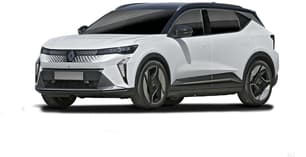
What’s 15 years between friends? Well, in this instance quite a lot because this is the all-new, pure-electric Renault Scenic E-Tech small-medium SUV.
The Renault Scenic we knew here until the late noughties was a petrol-powered, five-seat family car or an upright, seven-seat people mover.
But this is an altogether sleeker proposition, priced and specified to compete with other electric SUVs like the BYD Sealion 7, Hyundai Elexio, Kia EV5, Skoda Elroq and Zeekr 7X.
So, could this fresh Euro contender have what it takes to steer you away from such an impressive set of pure-electric competitors?
We attended its local launch to find out.
The MU-X has plenty of appeal as a daily driver – dependable and it’s a proven 4WD wagon.
Does the 2.2-litre engine add anything substantial to the mix?
Well, it's better than the 1.9-litre, that's for sure, and there's a lot to like about this MU-X in terms of its off-road capability, driver-assist tech, standard features and all-round driveability. And, while the LS-T lacks the top-shelf polish of the X-Terrain, it’s still an appealing potential purchase.
But the 3.0-litre option is better because while the 2.2L is very effective off-road and general day-to-day driving, it lacks grunt and has to work that much harder and is that much noisier under load than the 3.0-litre in most driving scenarios, including 4WDing.
The Renault Scenic E-Tech is lining up against some heavy-hitting competitors, but Renault Australia admits it has one top of mind - the Kia EV5. The Kia’s a quality package and if you’re in the market for a mid-size electric SUV, you’ll no doubt have it on your shopping list. And you should have a look at this slightly smaller car, as well. It has the refinement, practicality and safety to stand up confidently in a rapidly expanding segment.
Note: CarsGuide attended this event as a guest of the manufacturer, with travel, accommodation and meals provided.
In terms of appearance, the MU-X remains largely unchanged from the most recent iteration. And that’s a good thing. It’s blocky enough to be recognisable but sleek enough to remain inoffensive. Worth noting the door handles, window trims, front fender accents, roof rails, and side steps on the LS-T are gloss black.
Inside, nothing much has changed (other than a newly-introduced idle start/stop button) and, as such, the MU-X retains a low-key familiarity that makes it a comfortable space. Generally, design-wise, the MU-X more than holds its own against the likes of the Toyota LandCruiser Prado and Ford Everest.
There are some design tips of the hat to Scenics past in this latest electric version, including blacked-out door pillars and a recognisably angular C-pillar treatment.
But despite the fact it debuted at the Munich IAA Motor Show in late 2023, from its slimline headlights and jagged grille to its sculpted flanks and saw tooth rear end, this fifth-generation Scenic looks contemporary from every angle.
A highlight is the large Renault diamond logo sitting at the centre of a faux upper grille, surrounded by a multitude of the same elongated hexagon shape as a cool recurring graphic, the pattern merging neatly into the headlights.
Speaking of which, the LED beams can be set to produce an elaborate welcome sequence as you approach the car.
The interior feels slick and screen-rich but not at the expense of user-friendly physical controls for audio, ventilation and other commonly used functions.
Recycled fabric on the dashboard and headliner looks and feels good while doing its bit to suppress cabin noise.
Speaking of which, the Scenic is Renault’s poster child for the use of recycled materials in its construction and end of life recyclability.
Everything from ferrous components consisting of 37 per cent recycled materials to a bonnet and doors made of up to 80 per cent recycled aluminium.
The dashboard cowling is made from kenaf, a plant fibre similar to jute; the steering wheel cover is 51 per cent bio-sourced; the cockpit uses 26 per cent recycled plastic; the storage bins in the door panels are 45 per cent recycled fibre, the floor mats are 54 per cent recycled plastic bottles and the seat upholstery is 100 per cent recycled fabric. The list goes on and on, but you get the idea.
The interior has a familiar and practical feel about it and the cabin is an easy space in which to become comfortable. Controls are easy to locate and operate and charging options are numerous – a mix of USB-A, USB-C (front and second row) and 12V.
Storage places include recesses for the bits and pieces from your pockets, a deep-ish centre console, as well as dual cupholders up front, cupholders in the rear fold-down centre armrest and bottle holders in the doors. There are also cupholders either side of the third row.
The MU-X has physical-button options to activate some functions (including to switch on the audio system, to adjust volume and access sat nav).
Seats are comfortable and supportive through all three rows – yes, even the third row is roomy enough to prevent whining from whoever is back there.
My camera guru/photographer/sergeant-at-arms, Glen Sullivan, reminded me that the third-row seats don’t have ISOFIX or top-tether points for child seats. Thanks, mate.
The cargo area is 311 litres with all three rows in use, 1119L with the third row flat and 2138L with the second and third rows stowed away.
The rear cargo area has a cargo cover, tie-down points, a 12V power outlet, a storage space under the rear cargo area floor and a space for tools inside the driver’s side rear cargo wall. The MU-X’s full-size spare (bravo!) is attached to its undercarriage.
In terms of how it all works in practice, at just under 4.5m long, close to 1.9m wide and less than 1.6m tall with a 2785mm wheelbase, the Scenic is more compact than the larger BYD Sealion 7 or Zeekr 7X, for example.
But there’s plenty of breathing room up front, with the centre screen angled towards the driver enhancing the cockpit feel for the one doing the steering.
There are large carpeted bins in the doors with room for bottles and a lidded storage box between the seats doubles as a centre armrest. That lid slides forward by 70mm to cover a small storage cubby under the front of it, which is a handy trick.
Locating the gear selector on the right-hand side of the steering column liberates extra space for a centre cupholder and large console storage bin. There’s a generous glove box and a wireless smartphone charger under the centre screen includes a rubberised base and two lugs to stop devices sliding around. Power and connectivity runs to two USB-C ports and a 12-volt socket.
Moving to the second row, sitting behind my 183cm driving position, while toe room is a little tight (with the driver’s seat set low down), there’s heaps of leg and headroom as well as enough shoulder room (and foot room thanks to a flat floor) for three adults on short to mid-length trips. A pair of adjustable centre air vents is also a welcome inclusion.
Storage includes door bins (again with room for bottles), large and device-sized pockets on the front seat backs and the pièce de résistance is the evocatively named ‘Ingenious armrest’, which includes a storage area and two cupholders at the base of articulated horizontal arms that allow passengers to mount a phone or tablet at various angles in rubberised slots for joint or solo viewing.
It is, indeed, ingenious and four USB-C plugs (two in the armrest, two near the air vents) mean back-seaters won’t be short of power options.
Boot volume with the rear seats upright is useful at close to 545 litres (VDA), expanding to around 1670L with the 40/20/40 split-fold second row lowered. A power tailgate is standard across the range.
There are bag hooks, tie-down anchors, lighting and a 12-volt socket back there, although for V2L (vehicle to load) functionality you’ll need an accessory adapter to plug into the charge port.
Maximum braked trailer towing capacity is a handy 1100kg, but there’s no spare tyre, only a repair/inflator kit, which isn’t good enough.
The new MU-X with a 2.2-litre, four-cylinder, turbo-diesel engine is available with a 4×2 or 4×4 drivetrain in several variants. Don’t worry, the 3.0-litre is still in the line-up.
Our test vehicle has the 2.2L and, it is priced at $71,400 before on-road costs.
Standard features include a 9.0-inch multimedia touchscreen system with sat-nav, wireless Apple CarPlay and Android Auto, an eight-speaker sound system, eight-way power-adjustable driver’s seat (four-way power-adjustable front passenger seat), heated front seats, a 7.0-inch driver display and 20-inch alloy wheels shod won 265/60R20 Bridgestone 684II HT tyres.
It also has white ambient interior lighting, remote engine start, rear privacy glass, power-folding and heated door mirrors (with side cameras) finished in gloss black, and leather-accented upholstery with grey stitching and synthetic leather on the door trims and centre console.
Exterior paint choices on the MU-X LS-T include 'Mineral White', 'Basalt Black mica', 'Moonstone White pearl', 'Magnetic Red mica', 'Neptune Blue mica', 'Mercury Silver metallic', and 'Obsidian Grey mica'. Anything other than standard Mineral White costs an extra $695.
The Scenic E-Tech starts from $55,990, before on-road costs, for the entry-grade Techno. Then there’s the Techno Long Range for $59,990, BOC, while the flagship Esprit Alpine comes in at $65,990.
That’s sharp relative to competitors and follows the brand getting a reality check with the Megane E-Tech after it launched here in late 2024, Renault shaving $10,000 off its price only a few months later.
Equipment highlights across the line-up include a 12-inch multimedia touchscreen, a 12.3-inch driver display, sat-nav, adaptive cruise control, a 360-degree surround-camera view, all LED exterior lights, wireless Android Auto and Apple CarPlay and six-speaker Arkamys audio.
There’s also dual-zone climate control, an electric tailgate, auto-folding side mirrors, cloth upholstery, heated front seats and steering wheel, 48-colour ambient interior lighting, keyless entry and start and 19-inch alloys (on the Techno models).
Then you can fold in over-the-air updates, access to remote services via the ‘MyRenault’ app and Google In-Built that enables voice-control for up to 70 car functions.
The Esprit Alpine ups the ante with 20-inch rims, nine-speaker Harman Kardon audio, synthetic leather and cloth seat trim, six-way power adjustment (with memory settings) for driver and front passenger seats, a massaging driver’s seat, brushed metal pedal covers and facial recognition for seat and mirror settings.
In short, the Scenic is well-equipped relative to its competitive set and cost of entry, with Renault confirming there are mainly demonstrator cars in dealers at the moment, with the majority of stock landing in late May or early June this year.
There are three optional paint choices - metallic ($800), two-tone ($1000) and matt ($1200), the latter exclusive to the Esprit Alpine.
This MU-X has a 2.2-litre, four-cylinder, turbo-diesel engine, producing 120kW at 3600rpm and 400Nm between 1600-2400rpm and it’s matched to an eight-speed automatic transmission.
Worth noting the 3.0L MU-X has a six-speed auto and produces 140kW (at 3600rpm) and 450Nm (1600-2600rpm) while the outgoing 1.9L MU-X has a six-speed auto and produces 110kW (3600rpm) and 350Nm (1800-2600rpm).
While the 3.0-litre has always been unstressed in most driving scenarios – even low-range 4WDing – the 2.2-litre feels underpowered. More about that in the ‘Driving’ section below.
The MU-X has a part-time 4WD system which includes a dual-range transfer case (with high- and low-range 4WD) and a rear diff-lock. The driver is able to shift from 2H (two-wheel drive, high-range) to 4H (4WD high-range) while on the move up to speeds of 100km/h. The diff-lock may only be engaged when the vehicle is in 4L (4WD low-range).
The MU-X also has a switchable terrain mode system which tweaks the engine, transmission and traction control to suit the driving conditions. 'Rough Terrain' mode, like a steroids-enhanced off-road traction control, is king of these modes when you’re off the bitumin.
Like its Megane E-Tech sibling, the Scenic E-Tech uses an excited synchronous motor which Renault says is more efficient than the more commonly used permanent magnet type, with the bonus that it uses no rare earth materials.
The entry-level Scenic E-Tech Techno's fitted with a 60kWh NMC battery. Its electric motor transfers 125kW and 280Nm to the front wheels and Renault claims a 0-100km/h time of 8.6 seconds.
The Techno Long Range and top-spec Esprit Alpine pack an 87kWh battery and a more powerful motor, raising outputs to 160kW/300Nm and lowering the 0-100kmh sprint time to 7.9 seconds.
Official combined cycle (urban/extra-urban) fuel consumption for this MU-X is 6.7L/100km. The 1.9L MU-X offers 7.4L/100km while the 3.0L offers 7.6L/100km.
Actual fuel consumption on this test was 8.7L/100km.
The MU-X has an 80-litre fuel tank, so, going by that on-test fuel consumption figure, you should be able to get a driving range of about 920km. But remember, your fuel consumption may be completely different to mine because chances are you'll have friends, family pets, sporting equipment, camping gear, the whole kit and caboodle on board. I've only been carrying vehicle recovery gear, MaxTrax, and a first-aid kit, so I haven't had a huge amount of weight on board.
Official energy consumption numbers for the combined (urban/extra-urban) cycle are close between the two powertrains at 16.3kWh/100km for the Techno and 16.8kWh/100km for the Techno Long Range and Esprit Alpine, which are bang on average for the class.
Range for the standard Techno is 430km, which is at the lower end of expectations for a medium electric SUV but adding the bigger battery pushes that number out to 625km, which is much healthier and useful day-to-day.
On the launch drive program, which took in some urban but mostly rural B-road running, we saw an average consumption figure of 17.1kWh/100km in the Esprit Alpine, which is pretty good in those conditions.
The car’s 400V electrical architecture allows for DC charging at up to 130kW for the entry model and 150kW for the bigger-battery variants.
At that speed, claimed 15-80 per cent charge times are 32 and 37 minutes, respectively. Not the best, not the worst. AC charge capability is 11kW on all models and a Mode 3 charging cable is included.
Before we launch into the off-roading section of this test, it’s worth noting the MU-X has always been decent on-road; composed, reasonably refined (for a 4WD wagon, anyway) and comfortable. And thankfully, with the 2.2-litre engine, not all of those characteristics have been thrown out the window.
It is quite noisy, especially under pressure when you have to do some heavy acceleration or when you have a bit of gear on board. When it has to work that bit harder than it usually does, it can become quite noisy. Admittedly, the 3.0-litre MU-X is also quite gruff, but there's an edge to the roughness in the 2.2-litre that is very noticeable on road.
This MU-X is quite sluggish off the mark, exhibiting a disconcerting lag under heavy throttle from a standing-start. And it’s far from the most dynamic vehicle to drive. But it has a tractability about it that manages to mostly negate these flaws.
Otherwise, the new eight-speed auto deserves credit as it’s slick and smooth in application and feels right at home in this wagon.
Now to off-roading. The MU-X is still very capable. In fact, even with the 2.2-litre engine, it remains one of the better-performing 4WD wagons straight out of the dealership, in terms of pure off-road capability.
The 3.0-litre MU-X is not the torquiest in this segment, but it offers ample pulling power available across a wide rev range – count on peak torque between 1600rpm and 2400rpm – and it delivers that pulling power in an even-handed fashion. The 2.2-litre MU-X has to work harder than its stablemate, and it’s noisier and harsher.
However, those characteristics don’t take away from how effective this MU-X is because it offers impressive off-road performance. It still has a decent amount of low- and mid-range torque, which makes dirt-road cruising and low-speed 4WDing easy.
The MU-X has part-time 4WD with high- and low-range 4WD gearing, a rear diff lock and overall it retains all of that off-road capability the 3.0-litre MU-X has been renowned for – so you don't lose any efficacy there.
The line-up’s off-road traction control system, which once was a bit patchy in its effectiveness, has gone through a couple of phases and it’s been recalibrated/tweaked over the years and it is much better now.
Of course, the MU-X also has Isuzu’s much-vaunted Rough Terrain mode (a form of early-acting off-road traction control which converts lost grip into torque for the wheels with grip), and it is smooth and effective, giving the driver better overall control in challenging terrain.
Some of this MU-X’s listed off-road angles appear shallower than the 3.0-litre MU-X’s – approach: 23.9 (3.0L = 29.2), departure: 26.4 (3.0L = 26.4) and ramp-over: 19.6 (3.0L = 23.1) – but, even if that is the case, it has very similar driving characteristics in low-speed, low-range four-wheel driving to its 3.0-litre stablemate.
If you drive with control and consideration, you shouldn't have any trouble tackling light to moderate 4WDing in this MU-X. It could even, if push comes to shove, handle challenges that may be considered by some to be on the edge of hard-core 4WDing – for a showroom-standard 4WD wagon anyway.
Ground clearance is 235mm and wading depth is 800mm, so there’s an adequate amount of clearance to work.
The MU-X – with a turning circle of 11.6m and a kerb weight of 2130kg (3.0L = 2185kg) – feels quite nimble on bush tracks.
This wagon’s wheel travel – how far the axle can move up and down relative to the chassis – has more than an adequate amount of flex, stretching its tyres close, if not all the way, to the dirt.
A noticeable trade-off is its 20-inch wheel-and-tyre combination, which is best suited to sealed surfaces and so are far from ideal for dirt-track touring. There’s an easy remedy, though. Buy a set of decent all-terrain tyres on 17- or 18-inch rims to replace the showroom-standard 265/50R20 Highway-Terrain tyres. If you are using your MU-X, avoid dropping pressures too much because you’ll risk sidewall pinches and punctures on these low-profile road tyres.
In terms of packability: the 2.2L MU-X has a listed payload of 670kg, whereas the 3.0L version offers 615kg.
The 2.2L MU-X can legally tow 750kg (unbraked trailer) and 3500kg (braked), so theoretically you can tow the same load as a 3.0-litre MU-X. But, as mentioned, the 2.2-litre engine feels underpowered, even in general day-to-day driving, so with a load and/or towing that’s an added burden.
For reference, the 2.2L MU-X has a listed gross vehicle mass of 2800kg and gross combined mass of 5900kg.
Renault says the entry-grade Scenic Techno will accelerate from 0-100km/h in 8.6 seconds with the more powerful Techno Long Range and Esprit Alpine lowering that number to 7.9sec. So, it’s quick without being scary fast.
It’s certainly nippy in traffic and at the risk of stating the bleeding obvious, quiet. Even in the context of premium EVs the Scenic is quiet and refined.
Suspension is strut front, multi-link rear and the car feels super planted. The launch drive took in some reasonably rapid twisting corners and there’s no hint of lateral movement in the car. Body roll is minimal, too.
Tyres are energy-efficient Michelin e.Primacy (Techno - 205/55x19 / Esprit Alpine - 235/45x20) and the steering is quick with a relatively low number of turns lock-to-lock. It’s never jerky or too sharp. Rather, it means the car starts to turn into a corner the instant you apply steering lock.
That said, the feel between your hands on the wheel and the front tyres on the road is less than intimate.
There are four drive modes - ‘Comfort, ‘Eco’, ‘Sport’ and ‘Custom’. None of them adjust the suspension tune, it’s more about accelerator response and we found Comfort delivers the best blend of right-foot urgency and overall composure.
Most of the braking you’re going to do will be courtesy of the regenerative system and there are five levels, adjustable via steering wheel paddles, including the most aggressive single-pedal mode.
The one-pedal setting pulls the car up nice and progressively and if you do need to use the physical brakes, they’re ventilated discs all around. Some bite on initial application, but even on downhill corner sections, leaning on them quite hard, they perform well without drama.
Under the heading of miscellaneous observations, you can sense the ADAS (Advanced Driver Assistance Systems) including functions like lane-keeping assist doing their thing occasionally, but it’s all quite subtle, which is a good thing.
The Esprit Alpine’s sports front seats remained grippy and comfortable after a couple of hours behind the wheel. And it’s worth noting the Scenic’s relatively compact 10.9-metre turning circle helps in slow-speed manoeuvring.
Speaking of which, some of the modes in the audio system and external warning sounds for pedestrian safety have been designed by French composer and performer Jean-Michel Jarre, noted for his electronic, ambient-style music. Hats off to Renault for commissioning him.
The MU-X has the maximum five-star ANCAP safety rating from testing in July 2022.
Standard safety features include eight airbags - dual front, dual front side, dual full-length curtain, front knee and centre (far-side) - and a comprehensive suite of driver-assist tech including AEB, adaptive cruise control, lane-keep assist, lane departure warning, a digital reversing camera and a tyre-pressure monitoring system.
Remember, the third-row seats do not have ISOFIX or top-tether points for child seats.
The Scenic E-Tech has a maximum five-star ANCAP rating from assessment in 2022 with active crash-avoidance tech including AEB (with pedestrian and cyclist detection and junction assist), adaptive cruise control, lane departure warning and lane-keep assist, blind-spot detection, traffic sign recognition, a 360-degree camera view, rear cross-traffic alert, driver fatigue monitoring and tyre pressure monitoring as well as front, side and rear parking sensors.
If a crash is unavoidable, there are seven airbags onboard including a front centre bag and for child seats there three top-tether points across the second row with ISOFIX anchor in the outer positions.
The MU-X has a six-year/150,000km warranty and seven years of roadside assistance. Unlimited km in the warranty would be welcome.
Service intervals are scheduled for every 12 months or 15,000km, whichever occurs soonest.
Capped price servicing covers the first five scheduled services for MY24 and later vehicle models (up to 5 years/75,000km – whichever occurs first) – at a flat price of $469 for each service.
Isuzu Ute Australia has a nationwide network of more than 160 dealer sites.
Warranty is five years/100,000km, which is well off the market pace with many competitors at seven, eight and up to 10 years conditional. The battery warranty at eight-year/160,000km matches the market.
Roadside assistance is included for five years, service is recommended every 12 months/30,000km and fixed price servicing is available at a reasonably sharp average of $325 per workshop visit for the first five years.
Renault has 52 dealers across the country covering major cities and key rural areas.