What's the difference?
Hyundai's Ioniq range is nothing if not a flex in the face of Toyota.
Sure, Toyota has a dominating position in the Australian market, with its well-received range of hybrid models, but what happens after hybrid? Hyundai takes on the blocky Prius formula with not only a directly competing hybrid model, but a plug-in and a fully electric version, too.
This expansive range is as though Hyundai is trying to demonstrate it's ready for any future, near or far, and guess what, Toyota? Anything you can do; the Korean juggernaut thinks it can do better.
These cars aren't really designed to sell so much as they are offerings for early adopters, but a few years after its launch, with a host of rivals set to take it on, and an entire sub-brand based on the Ioniq just around the corner, is Hyundai's top-spec Ioniq electric worth a look? I took one for a week to find out.
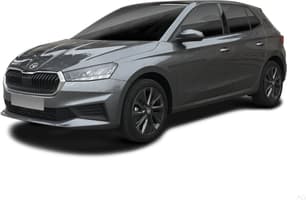
The smallest car in Skoda’s local line-up is also its most affordable, but only just.
When the current generation Fabia launched with the halo Monte Carlo variant at almost $40,000, it was a bit of a surprise for a small hatch from what’s seen as an affordable brand.
Now, there’s a new entry-level version of Skoda’s bub and, while it’s not nearly as cheap as it once was, it offers a choice that’s more within reach for anyone keen on a premium small car.
Can the Fabia Select convince customers looking at the likes of the Mazda 2 or Suzuki Swift to go Euro and cross the $30,000 threshold?
Just like the Kona EV, Hyundai's Ioniq is still one of the best EV options on the market today. It strikes an excellent balance by offering significantly more range and better energy consumption than the more affordable Nissan Leaf or MG ZS EV, while providing the familiarity of the Hyundai spec and drive experience at a price only a little higher than a top-spec Prius.
Its relatively high score is a product of these factors, but also the way in which its interactivity offers the early adopters the engagement they will be searching for.
Once you get past the shock of the Fabia no longer being a sub-$25K car (because let’s face it, what is anymore?), the fact that it remains refreshingly simple to live with and engaging on the road should be celebrated.
It has its downsides if you need space, and you can buy a light (or even small) SUV for the same price, but you’ll be compromising in other areas.
The Skoda Fabia can’t do everything, but what it can, it does well. Plus, it’s certainly less common than the similarly priced Toyota Yaris.
The Ioniq follows in the footsteps of eco hatches before it. You'll note this car's similarity in profile to the Toyota Prius, both shaped as such to secure low drag figures and therefore better economy and longer range.
While the Ioniq is a little more sedate than the wacky angles of the current Prius, there's no getting around the fact it's not exactly a cool shape. You could say it's interesting, perhaps, in the way it warps the low-drag box to Hyundai's styling cues, but dorky nonetheless. The LED headlights help lift it a little, but the filled-in grille and small 16-inch wheels hardly lend this car extra street cred.
The Ioniq is more a proof of concept for early adopters who care a little less about the way the car looks and a little more about its drivetrain and technology, which is clearly the focus here.
This can be seen in the Ioniq's interior, which has been re-worked for its most recent update. The digital features are impressive, with the floating 10.25-inch screen now totally dominating its dashboard.
I also like how the brand has given the instrument cluster a more modern design, with a cool floating bridge element over the top to eliminate glare, and, as always, Hyundai has made ergonomic use of its excellent switchgear and tidy steering wheel from the i30 and Kona ranges.
The climate unit has lost its tactile dials, replaced by touch-panel controls, and the lack of a transmission under the centre console has allowed plenty of negative space for the brand to play with, in this case a huge storage bay. There are also elements from more recently launched Hyundai models, which help to tidy the centre space up further, like an upright wireless-charging bay and shift-by-wire drive selector, which all looks very modern and neat.
It's a step towards things to come from the newly minted Ioniq sub-brand, which will do a lot more of this stripped-back, space-saving stuff with its next vehicle, the Ioniq 5 SUV. For now, though, the Ioniq is good as a half-step into the future. It's not as outlandish as a Tesla Model 3, for example, and will better suit a buyer looking for something a bit more familiar that still has a futuristic edge.
The Fabia’s design hasn’t departed dramatically from its predecessor, but the evolution into the current generation has the little Skoda looking more mature and smoother than before.
Some elements like its grille and headlights are a little sleeker and the car looks less boxy, but still has a unique Skoda design language that’s instantly recognizable.
Its chrome grille trim and its set of unusual 16-inch alloy wheels are the clues that this is the entry Select, plus the lack of much badging.
Inside, the change in generation is most obvious in the step-up in materials and some of the aforementioned tech (screens in particular), though the steering wheel is a carry-over even if it doesn’t look dated.
The new instrument display cowl which features the model name on its side, the round air vents, and the fabric across the dash bring the interior into the current decade, though the centre stack’s modernity is betrayed by climate controls that could have existed in 1998.
There are a fair few hard plastic surfaces, though none of them are in poorly thought-out places and don’t let the cabin down too much.
As mentioned, there's actually quite a lot of space in the Ioniq cabin, and the design has been further stripped back with its most recent updates.
The front seat seems a bit high for a hatch, although ergonomically everything is correct for the driver, with a good amount of adjustability in the seat back and wheel.
The big, bright multimedia touchscreen is easy to use, and the single centrally mounted volume dial is welcome, but I do sorely miss the dials for adjusting fan speed and temperature. Touch-panel controls, to me at least, are always inferior.
As already mentioned, the centre-console area under the climate unit has been almost entirely deleted for the electric variant, granting the driver a little more knee room, and leaving a deep rubberised bay for loose objects, maybe even small bags. This area also houses two 12v power outlets and one USB port. The centre console has been re-worked to include a smart, space-saving upright wireless-charging bay for your phone, the shift-by-wire console, and controls for the heated and ventilated seats. This area also hosts two large bottle holders, and a large centre-console box.
As is usual with Hyundai models, there's also a large bottle holder in the door, alongside a practical bin.
Rear passengers are treated to decent legroom, about on par with what you'd expect in a hatchback. Headroom is a little limited, both for getting in and out, with the descending roofline, so if you have family or friends taller than my 182cm height, they might be less than pleased.
The rear-seat area gets bottle holders in the doors and in the drop-down armrest, although there are no power outlets, just dual adjustable air vents.
The hatch body of the Ioniq makes for a decent boot volume of 357 litres, enough for a large pram or, in the case of my testing, the largest of the CarsGuide luggage cases, with ease. Hyundai gives you a little satchel to tidily store the standard powerpoint to Type 2 charging cable. A Type 2 to Type 2 cable, which you will need to charge at public outlets (up to 7.2kW) is not included.
There are cars in the market that, for around or not much more than $30,000, seem like a bargain given the perceived value of features like big touchscreens and (synthetic) leather.
The Fabia Select doesn’t have those things, but everything in it makes sense and, more importantly, everything works well.
For example, as much as I point out the dated-looking air conditioning controls, the reality is they're much easier to use than an in-screen menu requiring the same amount of attention as replying to a text while driving - something that is rightfully illegal.
Simple controls on the steering wheel, a touchscreen that doesn’t require much attention, a clear driver display and a few shortcut buttons around the gear selector mean you can focus more of your attention on driving, without lacking any of the convenience or features you’d expect in a new car.
Wireless phone mirroring for Apple CarPlay and Android Auto add to this, as you can bypass Skoda’s (fine, but basic) multimedia software easily.
The lack of wireless phone charging is a shame, but not a deal-breaker, as the space under the centre stack is conveniently sized. The same can’t be said for the tiny storage bin under the centre armrest, though.
However, the glove box and door card storage is generous and there’s the Skoda-standard umbrella in the door that’s accessible when open.
The seats in the Fabia have decent bolstering and are ergonomically sound, manual adjustment is easy enough and there’s a turning wheel rather than a lever with increments to adjust the backrest.
Given the Fabia’s diminutive stature relative to most vehicles on the road, it shouldn’t be a surprise that the back seat isn’t the most spacious. But as an average-sized adult it feels like the kind of space I’d be comfortable in for a short trip, with adequate headroom, knee room and even a vent.
There’s no centre armrest, though, and the seats aren’t as comfortable as the fronts.
Behind the 60/40 split-fold there’s a generous (for a hatch this size) 380-litre boot with bag hooks, though the floor has some mildly intrusive angled plastic elements.
Impressively, the Fabia has a spare tyre rather than a repair kit, so kudos to Skoda for not taking the cheap (and less safe) option.
On the one hand, forking out over $50k for a car which looks like this is a tall order. On the other hand, there is no other electric car that really falls into this price bracket, and when you think about it, it's only a few thousand dollars more than a top-spec Prius.
The aggro never-EV types will argue you can have a very good hot hatch, like say, Hyundai's own i30 N for less, but then this car really is for those early adopters who are after a slice of future drivetrain tech rather than a complete value offering.
In the context of the EVs currently available in our market, the Ioniq shines. Yes, it is more expensive than rivals like the Nissan Leaf or MG ZS EV, but it also offers more range than either of those, at 311km measured to the more accurate WLTP standard.
This is short of Tesla's Model 3 standard range, but also more than $10k more affordable, and as I discovered on my week of testing; 311km, and it really is 311km, is plenty for a predominantly urban commuter to get by with either routine maintenance charging, or a once-a-week stop at a DC charger.
So, value then? As this car has probably the minimum electric range you really want for an Australian city at a price only a little above rivals which fall short, it's in quite the sweet spot.
Oh, you probably want to know about equipment, too. Our Ioniq electric Premium scores familiar equipment from the facelifted Hyundai i30 range, including a 10.25-inch multimedia touchscreen with Apple CarPlay and Android Auto connectivity, built-in sat-nav integrated with charging-station distances, a 7.0-inch digital dash cluster, eight-speaker premium audio system, 16-inch alloy wheels, LED headlights and DRLs, single-zone climate control, leather-appointed interior trim with heated and cooled front seats, a heated steering wheel, auto-dimming rear vision mirror, wireless phone charger, opening sunroof, and keyless entry with push-start ignition.
It's a good array of items, and we'll touch on this car's fully equipped safety suite later. The only notable omissions for now are the lack of a holographic head-up display and the lack of dual-zone climate control.
The Skoda Fabia has fallen prey to the same upward-creeping prices as many other light cars have, quite hard.
What was a sub-$25,000 car in its previous generation’s entry grade is now a $32,390 offering, plus on-road costs.
For an entry-level light hatch, the Fabia Select has a decent list of features, though is decidedly more basic than the already-launched Monte Carlo ($39,690 MSRP).
The headline tech features in the base Fabia include an 8.25-inch touchscreen covering multimedia functions, with wireless Apple CarPlay and Android Auto, an 8.0-inch driver display, two USB-C ports, plus drive mode selection and a host of safety features (covered later in this review).
For reference, the Monte Carlo gets a larger 10.25-inch digital instrument cluster and a 9.2-inch multimedia touchscreen.
The Select makes do with manual-adjust cloth seats, but does have keyless entry and start, a leather ‘sports’ steering wheel, automatic windscreen wipers, an auto-dimming rear view mirror and auto LED headlights and LED tail-lights.
Skoda says the Select’s features list aims to line up as “similar to rivals’ mid-specification models” and it’s about bang on. But its price might still be a turn-off for some seeking a budget-friendly light car.
The Ioniq electric has a single motor on the front axle producing 100kW/295Nm. It's the least powerful EV in Hyundai's range, but still out-punches cars like the Toyota Prius on raw power. It drives the front wheels via a single reduction-gear transmission, and the Ioniq electric also has re-worked regenerative braking for its most recent update.
This is powered by a huge-for-its-size 38.3kWh lithium-ion battery pack under the floor.
The Fabia’s turbocharged 1.0-litre, three-cylinder, petrol engine makes 85kW and 200Nm in this guise, mated to a seven-speed dual-clutch transmission driving the front wheels only.
Given the Fabia weighs 1265kg, getting to 100km/h in under 10 seconds - which it should be able to do, just - might depend on how many passengers you have.
While it’s not very fast or powerful, the Fabia’s outputs sit about average for its class and price.
The huge 38.3kWh battery pack and official combined energy consumption of 15.7kWh/100km, grants the Ioniq electric an impressive 311km (WLTP) range. As already mentioned in the pricing section, this lets the Hyundai electric hatch strike a good balance for urban commuters, however, under our mostly urban testing, it's an even better story.
For context, electric cars are far more efficient when operating in an urban scenario than they are on the open road. This is because they can regenerate energy more often and are less susceptible to losses from drag. The Ioniq has a superb regenerative-braking system, which can be completely customised to the user's preference. Want to drive it with no regen braking (like a normal car)? You can. Want to have the full eco experience, and have the car's motor bring it to a halt even without using the brake pedal, thereby maximising the amount of energy recouped? You can absolutely do that, too.
For most of my week, I stuck the Ioniq in its maximum regenerative setting and was very impressed to find it return an efficiency rating of 12.3kWh/100km. Not only is this number well below its claim, it's by far the most efficient electric car I have driven, and the only one I haven't tried yet is the brand-new MG ZS EV.
Colour me very impressed. The Ioniq charges via the most popular socket, the European Mennekes Type 2 combo. On DC, the Ioniq can charge as fast as 100kW allowing for a charge time of 54 minutes from empty to 80 per cent. On AC, its max charge input is a frustratingly low 7.2kW, making for a charge time of six hours and five minutes (more expensive rivals will charge at 11kW or even the max 22kW), while from a 240v wall outlet (~2.3kW) it will charge in 17 hours and 30 minutes.
My single charge session was at a council-supported clean-energy Tritium charger with a max output on DC of 112kW. It charged my Ioniq from about 35 to 80 per cent in 32 minutes, and cost around $7.
The Fabia has a 5.0L/100km combined cycle (urban/extra-urban) fuel consumption figure under WLTP testing, with a minimum 95RON premium fuel grade required.
With its 42-litre fuel tank, that means you could hypothetically expect to cover a touch more than 800km before running out of fuel, though that seems unlikely in the real world.
Despite a particularly lively drive undertaken purely for testing purposes, the highest fuel consumption the trip computer displayed was 7.7L/100km, which isn’t so bad when you consider the Fabia’s not likely to be driven hard most of the time.
The Ioniq's familiar Hyundai switchgear makes it largely feel like the brand's i30 from behind the wheel, and this is a very good thing. This car is immediately ergonomic and user friendly, although the seating position is a little high, preventing it from feeling particularly sporty.
The Ioniq emits a pleasant choral tone at low speeds, which enhances the perception you're steering something from the near future. It also helps alert pedestrians nearby, which was one of my pet peeves about the silent Tesla Model 3. The noise is interesting enough that you'll have people peering closely at it to figure out what's going on. It even gets louder as you accelerate, as though the motor is making it and it's not entirely artificial. Cool.
This EV is silky smooth to drive and accelerate. Like other Hyundai electric cars, it doesn't have the unleashed electric torque of a Tesla, but it feels well attuned to driving around in an urban scenario, with viscous acceleration and regenerative braking. I was surprised to discover how heavy it feels, though.
I was expecting it to be heavier than its hybrid or PHEV counterparts but compared to the hybrid Prius I drove only a week or two prior, the electric Ioniq feels obese.
Upon closer examination, the Ioniq electric weighs 200kg more than the Prius, at 1575kg. It doesn't sound outrageous but it's enough to have this little car's suspension wallowing and occasionally crashing over bumps that wouldn't bother its hybrid versions or, indeed, the Prius.
This is perhaps emblematic of the issues facing smaller EVs like this. To get more than 300 kilometres of range, they need a lot of heavy batteries. Manufacturers can better hide this with the existing heft and better suspension travel of SUVs. The Kona EV, for example, feels less hefty than this little hatch.
Regardless, the electric motor dispatches with the Ioniq's weight easily when you really want to accelerate, and while it doesn't provide the hold-on-for-dear-life acceleration of Teslas, it's more than enough for a daily commuter. Unlike the Prius, the Ioniq does genuinely feel pretty sporty in the corners, thanks to steering that's on the heavier side, and a firm, responsive damper tune.
The regenerative braking is particularly good on the Ioniq. Using paddle-shifters usually reserved for changing gears, the Ioniq instead lets you alter the amount of regenerative braking available. Feel like coasting a bit faster? Flick the Regen braking off. Feel like maximising economy and range? Max it out in the drive mode of your choosing, and you can use it as essentially a ‘single pedal' car (you can go or stop by using the throttle alone).
It even has an auto mode, which I found to be pretty intuitive. Paired with a few different display options to let you get superior feedback on how you're tracking with battery usage, it's brilliant, and more electric vehicles should take note.
So, this is an eco-focused electric car that is reasonably engaging to drive if a little heavy. Most importantly for the electric era, it's highly interactive, helping you really understand how your inputs are affecting its battery usage, and how you can better drive it to maximise range.
If you’re someone who doesn’t need a big car and likes an engaging drive, the Fabia ticks those boxes.
In fact, it feels like it punches above its weight. Well, not literally, because while it actually weighs in at over 1.2 tonnes, it feels lighter than even that.
Tight corners don’t faze the Fabia, and its steering and suspension both feel more dialled-in than a car with 85kW has any right to.
Yep, even though its engine is only slightly more powerful than some budget sports cars from the 1980s it feels peppier than it should.
It has some low-speed hesitancy thanks to its transmission - taking off from a stop sign if you’re not in Sport mode can be annoying - but with shift paddles (or a manual gearbox… ) the Fabia could be a hidden gem for enthusiasts.
Its suspension is firm, but not sharp enough that it allows bumps and rough roads to make their way into the cabin as shocks or rattles, and even holds its own on unsealed surfaces at sensible rural speeds.
The Fabia feels playful even on a commute, and the follow-through from the rear-end on a spirited bit of cornering speaks volumes about its chassis, even in urban driving.
The Ioniq electric comes with the full suite of Hyundai SmartSense safety features, with active items including freeway-speed auto emergency braking (detects vehicles up to 180km/h, detects pedestrians up to 70km/h), lane-keep assist with lane-departure warning, blind-spot monitoring with rear cross traffic alert, adaptive cruise control, driver-attention alert, and auto high-beam assist.
This is backed by the usual stability, brake, and traction systems, as well as seven airbags (the standard dual front, side, and head array, plus a driver's knee) securing the Ioniq a maximum five star ANCAP safety rating dating back to its launch in 2018. It scored highly across all categories.
The Fabia wears a maximum five-star ANCAP safety rating from assessment in 2021, under recent but now-surpassed criteria.
That’s not to say its safety kit is outdated, as occupant protection scored well (58 per cent for adults, 81 per cent for children) while pedestrian and active safety were also adequate (70 ad 71 per cent, respectively).
The Fabia Select comes with autonomous emergency braking (AEB), pedestrian and cyclist detection, multi-collision braking, driver monitoring, lane assist, rear cross-traffic alert and six airbags - though no front-centre airbag.
It also features cruise control, though it’s not adaptive and requires a little more attention than most new cars - not necessarily a bad thing, mind you.
On the road, its safety tech is unobtrusive, leaving you to focus on driving while knowing there are features there to keep you safe should the unexpected happen.
Hyundais are all covered by a competitive five-year and unlimited-kilometre warranty, which includes 12 months of roadside assist. The roadside assist is topped up for an additional 12 months with every genuine service, and the battery pack in EV models like the Ioniq is covered for eight years or 160,000km.
Hyundai's service pricing is amongst the best in the business, and with less moving parts, the electric Ioniq is the cheapest in the range with the first five services for the life of the warranty fixed at just $160 per 12 monthly or 15,000km interval.
Skoda offers a seven-year/unlimited kilometre warranty on all its cars, which is becoming more common in the industry but is quite competitive for a European brand.
The Fabia is also able to be covered by a seven-year servicing pack for $3650, that being the total price you’d need to pay for the first seven years of servicing (occurring every 12 months or 15,000 kilometres, whichever comes first). In other words $521 per workshop visit.
Skoda also offers 12 months of roadside assistance from the new vehicle warranty start date, and another 12 months is topped up every time you service with Skoda.