What's the difference?
Imagine being so focused on optimising a car’s aero performance that you break out the planishing hammer and flatten off the badge on its nose.
No doubt Hyundai found a more sophisticated way of lowering the profile of the new Ioniq 6’s most prominent logo, but the fact is it’s helped produce one of the most aerodynamically efficient production cars ever made… that’s also pure electric, with amazing looks and breakthrough tech.
Yep, the Hyundai Ioniq 6 sedan has arrived in Australia and we’ve taken a first drive on local soil. So, read on to see if the Tesla Model 3 has something to think about.
It may be shrinking but sizable fish still swim in the mid-size luxury sedan pool, with the German ‘Big Three’ (Audi A4, BMW 3 Series, Mercedes-Benz C-Class) joined by the likes of Alfa's Giulia, the Jaguar XE, Volvo S60, and... the Lexus ES.
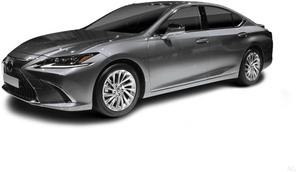
Once the brand's low-key, relatively conservative option, in its seventh-generation the ES blossomed into a full-blown design showpiece. And now it's received a mid-life update with an additional engine choice, upgraded tech, and a refreshed look inside and out.
Has Lexus done enough to bump the ES up the premium sedan ladder? We joined the local launch drive to find out.
The Hyundai Ioniq 6 will stand out in any automotive crowd, thanks to its distinctive aero-influenced design.
It’s well-equipped for the money, surprisingly roomy, energy efficient and notwithstanding some niggles around the ride and steering feel, comes up to scratch dynamically.
Does it do enough to apply the thumb screws to the likes of Tesla's Model 3? I think it’s got a pretty good shot, and it will be interesting to see if EV buyers embrace the car’s unusual streamlined look.
Note: CarsGuide attended this event as a guest of the manufacturer, with travel, accommodation and meals provided.
Since day one Lexus has aimed to prise buyers away from the limpet-like grip of traditional luxury car players. Conventional marketing wisdom says consumers buy brands, with the actual product a secondary consideration.
The updated ES has the value, efficiency, safety, and driving refinement to again challenge the establishment. Amazingly, the ownership package, specifically the warranty, is starting to lag the market.
But for open-minded premium buyers this product is worth a look before following a well-worn brand path. And if it was my money, the ES 300h Luxury with Enhancement Pack is the range sweet spot for value and performance.
Lots of cars are said to be “shaped by the wind” but all you have to do is look at the Ioniq 6 to know that in this case it’s 100 per cent true.
In fact, images of the car in Hyundai’s wind tunnel show it performing more like a perfectly shaped wing than a four door sedan.
With a drag co-efficient (Cd) of 0.21 it’s slicker than the ultra low-drag Tesla Model 3 and Porsche Taycan. And while not conventionally pretty it’s certainly a striking and unusual design.
Flush door handles? Of course. Carefully sculpted spoilers front and rear? Yep. Active air flaps? Check. The RWD Dynamiq’s 18-inch alloy rims are shaped for aero efficiency, while the top-spec Epiq grade even swaps out conventional side mirrors for super-cool digital cameras and interior OLED screens.
And the sleek looks continue inside with a two-section dash divided horizontally by a swoopy winged insert and topped with a pair of 12.3-inch screens covering multimedia and instrumentation.
The look and feel is minimalist. A lot of the controls are on screen or digital, but a physical dial for audio volume gets a big safety and convenience tick.
No gearshift in the bridge-like centre console. A rotary stalk is located behind the steering wheel on the right-hand side.
There’s configurable ambient mood lighting with six pre-selected themes and the materials used inside are suitably eco-friendly.
Cloth seat trim is recycled PET plastic, as is the headliner, the dashboard skin is manufactured using bio-ethanol, the carpet is made from recycled fishing nets (!), and bio paint (partially derived from vegetable oils) is used on the doors.
Yes, there’s leather, but its dyeing process uses biodegradable flaxseed oil rather than conventional pigments, which is a good thing in terms of fewer harmful microorganisms in waste water, and is claimed to reduce CO2 emissions by 3.8kg per car.
On the outside, recycled pigment paint made using ‘end-of-life’ tyres is applied to the body cladding, and bamboo charcoal pigment paint is used in the ‘Digital Green’ pearl colour option.
Speaking of which, there are seven other colours available; three more pearl shades - ‘Abyss Black’, ‘Ultimate Red’ and ‘Biophilic Ink’, as well a single metallic ‘Nocturn Gray’ and a solid ‘Byte Blue’. ‘Gravity Gold’ matt finish is the only extra-cost choice at $1000.
From shy wallflower to life of the party, the Lexus ES was given a comprehensive design makeover for its seventh generation.
A dramatic, angular exterior incorporates signature elements of the Lexus brand's distinctive design language including an unmissable ‘spindle grille’, but is still clearly recognisable as a conventional 'three-box’ sedan.
The jagged headlights now feature ‘tri-beam’ LEDs on F Sport and Sports Luxury grades, adding an extra air of purpose to an already bold face. And the grille on Luxury and Sports Luxury models is now made up of multiple L-shaped elements, mirrored across the top and bottom sections, then finished in gunmetal grey for a close to 3D effect.
The ES is offered in 10 colours - ‘Sonic Iridium’, ‘Sonic Chrome’, ‘Sonic Quartz’, ‘Onyx’, ‘Graphite Black’, ‘Titanium’, ‘Glacial Ecru’, ‘Radiata Green’, ‘Vermillion’ and ‘Deep Blue’ with two other shades reserved for the F Sport only - ‘White Nova’ and ‘Cobalt Mica.’
Inside, the dash is a mix of simple sweeping surfaces contrasted by a flurry of activity around the centre stack and instrument cluster.
Located roughly 10cm closer to the driver, the new multimedia screen is a 12.3-inch unit with touch functionality, a welcome alternative to the laggy and inaccurate Lexus ‘Remote Touch’ trackpad set-up. Remote Touch remains, but my advice is to ignore it and use the touchscreen.
The instruments sit in a deeply hooded binnacle with buttons and dials on and around it. Not the sleekest design in the segment and passable only from an ergonomic point-of-view, but the overall feel is suitably premium.
The Ioniq 6 is just under 4.9m long and the wheelbase is close to three metres, so no surprise there’s an impressive amount of space inside the car.
A flat floor enhances the roomy feel, plus controls for windows and mirrors are located in the centre console or on the dash rather than the front doors, which has allowed the armrests to be trimmed down for some extra breathing space.
As mentioned earlier, there’s no gearshift in the centre console, either. It takes the form of a rotary stalk on the right hand side of the steering column. It doesn’t take long to get used to and I found it pretty handy to use.
There are large bins in the doors with space for bottles, two cupholders in the console and a medium-sized lidded storage box (which doubles as a centre armrest) between the seats.
A lengthy tray underneath the main console keeps additional loose items under control and a generous glove box slides out from the dash rather than flipping open. So, there’s plenty of storage on offer.
Move to the rear and it feels like you’ve teleported into the back of a stretch limo. With the driver’s seat set to my 183cm position there is huge legroom.
Hyundai says thanks to the use of high strength steel the backs of the front ‘relaxation’ seats fitted to the AWD models are appreciably thinner than normal, also increasing rear space.
Rear headroom is fine sitting in a normal, relaxed position, although sitting bolt upright my bonse grazes the headliner.
Three abreast for adults will be okay for short runs, but not a goer for lengthy road trips. Three up to teenage kids will be fine, though.
Speaking of kids, parents will appreciate ‘Quiet Mode’ which limits audio to ‘25’ in front and mutes the rear. Perfect for uninterrupted sleep back there, or keeping the noise to a minimum for those furiously focused on their favourite game or a movie.
Backseaters are provided with bins in the doors, although the section scooped out for bottles is small, there are two cupholders in the fold-down centre armrest, netted map pockets on the front seat backs and a small slot for keys or a phone under the adjustable air vents at the rear of the front console.
Connectivity and power options run to three USB sockets in the front (one Type-A for media and charging, plus two Type-C for power only), a 12-volt socket under the front console, and two Type-C ports in the back. That’s plenty.
Boot space is 410 litres (VDA), and the rear backrest split-folds 60/40 to liberate more room. Worth noting there are no tie-down anchors in the boot, but there is an underfloor storage compartment, plus a 45L ‘frunk’ under the bonnet of the RWD and a 14.5L storage space in the front of AWD models.
The boot lid is powered but there’s no spare, just a mobility kit. Grrrr!
If you want to hook up the tinny or camper trailer, towing capacity is 1500kg for a braked trailer and 750kg unbraked.
A bi-directional ‘Integrated Charging Control Unit’ (ICCU) allows for ‘Vehicle to Load’ (V2L) functionality on the inside and the outside of the car. There’s a house power-style three-pin outlet at the base of the rear seats or a simple adapter plugs into the charging outlet. Super-handy for camping, picnics, you name it.
An overall length just under 5.0m long shows how much the ES and its competitors have crept up in size over recent generations. The Merc C-Class is more a mid-size car than the compact sedan it once was, and at nearly 1.9m wide and standing a bit over 1.4m tall the ES more than matches it for space.
There's plenty of room up front, the car feeling open and spacious from behind the wheel, thanks in part to the low sweep of the dash. And the rear is just as commodious.
Sitting behind the driver's seat set for my 183cm (6'0”) position I enjoyed good leg and toe room, with more than enough headroom, despite inclusion of a tilt and slide glass sunroof on all models.
Not only that, entry to and egress from the rear is a breeze thanks to a large aperture and wide opening doors. And while the back seat is best for two, three adults across is do-able without too much pain and suffering for short to medium journeys.
Connectivity and power options are plentiful with twin USB ports and a 12-volt socket front and rear. And storage starts with two cupholders in the front centre console, and another pair in the fold-down rear centre armrest.
If the remote touch system was (deservedly) given the boot, there would be room for extra oddments space in the front console.
The front door pockets are adequate rather than large (smaller bottles only), the glove box is modest, but the storage box (with padded armrest lid) between the front seats is more generous.
There are adjustable air vents for rear passengers, which you'd expect in this category, but are always a plus none-the-less.
The rear door pockets are okay, except the opening is relatively slim so bottles are a struggle, but there are map pockets on the back of both front seats as another bottle option.
Important to note that while boot space is decent at 454 litres (VDA) the rear seat doesn't fold. At all. A lockable ski port door sits behind the rear armrest, but the lack of a split-folding back seat is a significant practicality compromise.
A reasonably high loading lip into the boot isn't great, either, but there are tie-down hooks to help secure loose loads.
The Lexus ES is a no-tow zone and a space-saver spare is your only flat tyre option.
Hyundai is offering the Ioniq 6 in three grades, the RWD Dynamiq at $74,000, before on-road costs, then the AWD Techniq at $83,500 and top-spec Epiq at $88,000.
At those prices you’re going to want a substantial list of included features, and aside from the performance and safety tech we’ll get to shortly, the standard equipment list is long.
The entry-grade Dynamiq features remote start, capacitive touch front door handles, dual-zone climate control, twin 12.3-inch screens covering multimedia and instrumentation, sat nav, a head-up display, Bose eight-speaker audio (with digital radio), Android Auto and Apple CarPlay, leather-appointed seats, leather-appointed steering wheel, alloy pedal covers, 10-way power-adjustable and heated front seats, LED headlights and tail-lights, auto rain-sensing wipers, a power (hands-free) boot lid and 18-inch alloy wheels.
Hyundai’s Bluelink connected car services are on board as is over-the-air software update capability.
The Techniq adds a glass sunroof, 20-inch alloys shod with Pirelli P Zero rubber, ventilated front ‘relaxation’ seats, a heated steering wheel and heated rear seats.
Then the Epiq tips in digital side mirrors, a battery conditioning system, and high-efficiency (heat pump) heating.
Tesla’s three-grade Model 3 line-up is similar with a RWD entry model. It’s well specified and roughly $10K cheaper, but can’t match the Dynamiq’s driving range. The two more premium Model 3 variants are AWD and close on price to their Ioniq 6 equivalents.
Like the Ioniq 5 this car will be sold via a ‘direct to consumer’ online model, with dealer “delivery partners” charged with getting it into peoples’ hands.
The existing ES 300h (the ‘h’ denoting hybrid) is now joined by a non-hybrid model using the same petrol engine, tuned specifically to run without the support of an electric motor.
The pre-update, hybrid-only ES line-up spanned six model variations across a roughly $15K price spread from the ES 300h Luxury ($62,525) to the ES 300h Sports Luxury ($77,000).
Now there are five models with an ‘Enhancement Pack’ (EP) available on three of them, for an effective range of eight grades. Again, it's a $15K spread, stretching from the ES 250 Luxury ($61,620, before on-road costs) to the ES 300h Sports Luxury ($76,530).
Let's kick-off with the ES 250 Luxury. Aside from the safety and powertrain tech covered later in the review, the ‘entry-level’ grade is loaded with standard features including, 10-way power-adjustable and heated front seats, dual-zone climate control air, active cruise control, a new 12.3-inch multimedia touchscreen, satellite navigation (with voice control), keyless entry and start, 17-inch alloy wheels, a glass sunroof, auto rain-sensing wipers, plus 10-speaker audio with digital radio, as well as Apple CarPlay and Android Auto compatibility. The steering wheel and gearshift are leather-trimmed, while the seat trim is synthetic leather.
An Enhancement Pack adds wireless phone charging, privacy glass, a colour head-up display, and $1500 to the price tag (total $63,120).
The next rung up the price ladder brings the hybrid powertrain into play, so the ES 300h Luxury ($63,550) retains all the features of the ES 250 Luxury EP and adds a rear spoiler and power adjustable steering column.
Opting for the ES 300h Luxury EP then adds a power boot lid (with kick sensor), leather-accented trim, 18-inch rims, panoramic view monitor (overhead and 360-degree), 14-way power driver's seat (with memory settings), ventilated front seats, side blinds and a power rear sunshade, as well as $8260 to the price (total $71,810).
Next, as the name implies, two ES F Sport models dial up the performance personality.
The ES 250 F Sport ($70,860) retains the features of the ES 300h Luxury EP (except side blinds) while adding LED headlights with adaptive high-beam, a ‘wire-mesh’ grille, sports body kit, 19-inch wheels, performance dampers, an 8.0-inch driver display, alloy interior accents and grippier F Sport seats.
Stump up for the ES 300h F Sport ($72,930) and you'll ride on an adaptive suspension system with two driver-selectable settings, Go one step further and select the ES 300h F Sport EP ($76,530) and you'll also be cranking up a 17-speaker Mark Levinson audio system and warming your hands on a heated steering wheel.
Then, the top-of-the ES pyramid, the 300h Sports Luxury ($78,180), puts it all on the table adding top-shelf semi-aniline leather-accented trim, power adjustable, reclining, and heated rear outboard seats, tri-zone climate control, as well as side door blinds and a power rear sunshade. The rear centre armrest also features controls for the sunshade, seat heating (and angle), as well as audio and climate settings.
That's a lot to take in, so here's a table to help clarify the model walk-up. But suffice it to say this ES maintains Lexus’ reputation for value, testing its competitors in the luxury sedan space.
The entry-grade Ioniq 6 is the rear-wheel drive Dynamiq, featuring a 168kW/350Nm permanent magnet synchronous electric motor on the rear axle powered by a liquid cooled lithium-ion battery.
The all-wheel drive Techniq and Epiq models feature an additional permanent magnet motor at the front for a combined output of 239kW and 605Nm.
Drive is fed to the wheels via a single-speed reduction gear auto transmission on the rear or both axles.
The ES 250 is powered by an all-alloy, 2.5-litre, naturally aspirated (A25A-FKS) four-cylinder engine featuring DVVT (Dual Variable Valve Timing) - electrically actuated on the intake side, and hydraulically on the exhaust side. It also uses a combination of direct and multi-point fuel-injection (D-4S).
Maximum power is a handy 152kW at 6600rpm and peak torque of 243Nm is available between 4000-5000rpm, with drive going to the front wheels via an eight-speed automatic transmission.
The 300h features a modified (A25A-FXS) version of the same engine using the Atkinson combustion cycle which plays with valve timing to effectively shorten the intake stroke and lengthen the expansion stroke.
The down-side of this set-up is a loss of low-end power, while the up-side is improved fuel efficiency. Which makes it perfect for a hybrid application where an electric motor can make up for the low-end shortfall.
Here, the result is a combined output of 160kW, with the petrol engine producing its peak power (131kW) at 5700rpm.
The 300h's motor is a permanent magnet synchronous type producing 88kW/202Nm, and the battery is a 204-cell nickel-metal hydride type with a capacity of 244.8 volts.
Drive again goes to the front wheels, this time via a continuously variable transmission (CVT).
All versions of the Ioniq 6 carry the same 77.4kWh lithium-ion Polymer battery and the car’s 800V architecture allows it to use 350kW DC fast charging for a 10-80 per cent fill in 18 min.
The number of genuinely fast chargers available is increasing rapidly and that fill time is impressive.
Drop to 400V (50kW charging) and that time increases to 73 min, while 7.0kW AC charging from 10 to 100 per cent will take close to 12 hours.
The ports behind the not-fuel flap are a Type 2 for AC and CCS Combo2 for higher powered DC charging.
And if all else fails, you’re also equipped with a portable charger/cable so you can access house power for a full charge in, wait for it… 34 hours 20 min.
Quoted WLTP range for the RWD Dynamiq is 614km, that number dropping to 519km for the more powerful, dual-motor Techniq and Epiq models.
The WLTP combined cycle energy consumption figure for the Dynamiq is 14.3kWh/100km, with the Techniq and Epiq models at 16.9kWh/100km.
A ‘Disconnector Actuator System’ (DAS) on the front axle of the AWD grades is able to automatically engage and disengage drive to the front wheels as required, to reduce mechanical drag, lower energy consumption and increase driving range.
On test, in the Dynamiq, over a mix of suburban, b-road and freeway running we saw an average of 16.1kWh/100km which is a pretty good result.
Hyundai's official fuel economy figure for the ES 250, on the ADR 81/02 - urban, extra-urban cycle, is 6.6L/100km for the Luxury and 6.8L/100km for the F-Sport, the 2.5-litre four emitting 150 and 156g/km of C02 (respectively) in the process.
The official combined cycle fuel economy figure for the ES 350h, is just 4.8L/100km, the hybrid powertrain emitting only 109g/km of C02.
While the launch program didn't allow us to capture real-world (at the bowser) figures we did see a dash-indicated average of 5.5L/100km in the 300h, which is brilliant for a car in this class, weighing in at 1.7 tonnes.
You'll need 60 litres of 95RON premium unleaded to fill ES 250's tank and 50 litres to brim the ES 300h. Using Lexus figures that equates to a range of a little less than 900km in the 250 and just over 1000km in the 350h (900km using our dash-indicated number).
To further sweeten the fuel economy equation Lexus provides an Ampol/Caltex five-cents-per-litre discount as a permanent offer via the Lexus app. Nice.
Hyundai claims the RWD Ioniq 6 Dynamiq will accelerate from 0-100km/h in 7.4 seconds, which is not hanging around, and it feels every bit that quick.
In fact, it has more than enough performance for sharp response in the city and easy cruising on the highway.
Step up to the AWD Techniq or Epiq and you’re hitting 100km/h in just 5.1 seconds, which is properly rapid.
A single-speed ‘shift-by-wire’ reduction gear auto transmission sits on the rear or both axles and you have the choice of ‘Normal’, ‘Eco’, ‘Sport’ and ‘Custom’ drive modes, which fine-tune power output, accelerator response, steering weight as well as power distribution between the axles on AWD models.
Hyundai’s ‘E-Active Sound Design’ (e-ASD) changes the ‘sound texture’ as you drive with a noise roughly approximating Luke Skywalker’s Landspeeder coming through the speakers.
It’s fun for a while, but I found myself turning it down, then off, for the majority of the launch drive. And in that silent mode you can feel and hear (or not?) the impact of the car’s super-slippery shape. No wind noise and only modest tyre rumble at 110km/h on the freeway.
The Ioniq 6 sits on Hyundai’s ‘Electric Global Modular Platform’ (E-GMP) which features the flat battery pack mounted low down, skateboard-style, between the axles.
Suspension is strut front, five-link rear, and although the set-up hasn’t been tuned locally, Hyundai Australia says it’s been involved in the development.
The front seat remained comfy after hours behind the wheel, but it must be said bumps and thumps from typical highway surfaces made their presence felt on a regular basis.
That’s not unusual for a full electric vehicle, but with the RWD Dynamiq riding on relatively cushy Hankook 225/55 ventus S1 evo3 rubber, it’s surprising.
In corners you can feel the effect of the car’s low centre of gravity with the battery and motor(s) mounted low in the chassis. It hunkers down and remains beautifully balanced and secure through sweeping bends.
But even though the car points nicely, a meaningful connection between the front tyres and your hands on the steering wheel is MIA.
The physical brakes are vented discs at the front and solid rotors at the rear, adjustable through ‘Normal’ and ‘Sport’ settings, and they’re nice and progressive.
However, there’s more fun to be had with the regenerative braking, adjustable through three levels (‘Strong’, ‘Medium’, ‘Soft’) via steering wheel-mounted paddle shifters.
Move to the highest setting and you’re in ‘i-Pedal’ mode which means for the majority of the time easing off the accelerator is all that’s required to wash off speed before coming to a reasonably prompt halt.
In terms of ergonomics, the simple dash layout works well thanks to a sensible mix of digital and physical controls, the head-up display is crystal clear, and the big screens for media and instrumentation are hard to fault.
A word of warning, though. An over-speed chime fires four times when you even marginally exceed the detected limit. It quickly becomes intensely annoying, the saviour being an off button in the vehicle settings menu. Downside is it defaults to ‘on’ every time you stop and re-start the car. Ugh!
The first thing you notice behind the wheel of this ES is how extraordinarily quiet it is. Sound absorption materials are stuffed all around the body. Even the engine cover has been designed to keep the decibels down.
And ‘Active Noise Control’ (ANC) uses the audio system to generate “noise-cancelling waves” to suppress mechanical clatter from the engine and transmission. The car is eerily EV-like in it's pin-drop interior tranquility.
We focused on the ES 300h for the launch drive, and Lexus claims 0-100km/h 8.9sec for this version of the car. It feels every bit that quick, but the engine ‘noise’ and exhaust note are like the humming of a distant bee hive. With thanks to Daryl Kerrigan, how's the serenity?
Around town the ES is composed and supple, absorbing pock-marked urban irregularities with ease, and on the freeway it feels like a hovercraft.
Lexus makes a lot of noise about the torsional stiffness of the ‘Global Architecture-K’ (GA-K) platform sitting under the ES, and it's clearly more than hot air. Through twisting B-roads it remains balanced and predictable.
Even in non-F-Sport variants the car points nicely and will steer accurately on the throttle through constant radius corners, with only modest body roll. The ES doesn't feel like a front-wheel drive car, with neutral handling up to an impressively high limit.
Luxury and Sports Luxury grades are offered with three drive modes - ‘Normal’, ‘Eco’ and ‘Sport’, tweaking engine and transmission settings for economy or a more spirited drive.
ES 300h F Sport variants add three more modes - ‘Sport S’, ‘Sport S+’ and ‘Custom’, further revising engine, steering, suspension and transmission characteristics.
Despite all the tuning options, road feel is not the ES's strongest suit. Dialing in sportier modes will add steering weight but no matter what the setting, the connection between the front wheels and the driver's hands is less than intimate.
The CVT auto suffers some of that disconnect between road speed and revs, the engine moving up and down the rev range in search of the power/efficiency sweet spot. But wheel-mounted paddles allow for manual shifting through pre-set ‘ratio’ points, and that option works nicely if you prefer to take the reins.
And when it comes to slowing down the ‘Auto Glide Control’ (ACG) system smooths out regenerative braking when you're coasting to a stop.
The conventional brakes are ventilated (305mm) discs at the front and a solid (281mm) rotor set-up at the rear. Pedal feel is progressive and outright stopping power is strong.
Random notes: The front seats are great. Super-comfortable yet neatly bolstered for secure location. The F Sport's chairs, even more so. The new multimedia touchscreen is a winner. It looks good and menu navigation is agreeably straight forward. And the digital instrument cluster is similarly clean and clear.
The Ioniq 6 showcases the latest version of Hyundai’s ‘SmartSense’ active safety suite - Everything from front and rear auto emergency braking (AEB) to a bunch of assists, including lane change, blind spot, rear cross-traffic, and heaps more. No surprise it’s scored a maximum five-star ANCAP rating.
The airbag count runs to seven - dual front for the driver & passenger), front side (covering the thorax and pelvis), full-length side curtains and a front centre/side bag to minimise head clash injuries in a side impact.
There are three top-tether points and two ISOFIX anchors for baby capsules and child seats across the rear row.
The Lexus ES scores a maximum five-star ANCAP rating, the car first assessed in 2018, with updates in 2019 and September 2021.
It received high ratings against all four key criteria (adult occupant protection, child occupant protection, vulnerable road user protection, and safety assist systems).
Active crash-avoidance technology on all ES models includes, a pre-collision safety system (Lexus-speak for AEB) active from 10-180km/h, with pedestrian and daytime cyclist detection, dynamic radar cruise control, road sign assist, lane tracing assist, fatigue detection and reminder, tyre pressure monitoring, a reversing camera, as well as rear cross-traffic alert and parking support brake (including an intelligent clearance sonar).
Other features like blind-spot monitoring, adaptive high-beam and a panoramic view monitor are included on F Sport and Sport Luxury grades.
If a crash is unavoidable there are 10 airbags on-board - dual front, driver and front passenger knee, front and rear side airbags and side curtain airbags covering both rows.
There's also an active bonnet to minimise pedestrian impact injuries, and ‘Lexus Connected Services’ includes an SOS call (driver-activated and/or automatic), and stolen vehicle tracking.
For child seats there are top tethers for all three rear positions with ISOFIX anchors on the outer two.
Hyundai covers the Ioniq with a five-year, unlimited km warranty, with eight-year, 160,000km protection for the high-voltage battery. Both are industry standard these days.
There’s a lifetime servicing plan with maintenance intervals set at an impressive two years/30,000km.
At this stage cost is $560 a throw, which is pretty handy when you consider the lengthy service intervals.
A ‘Premium Roadside Support Plan’ is complimentary for the first 12 months and renewed annually while the vehicle is serviced by Hyundai.
Also complimentary is a ‘Sat Nav Update Plan’ which includes nine updates to be used within 10 years.
From the time it arrived in the Australian market just over 30 years ago Lexus has made the ownership experience a key differentiator for the brand.
Its focus on post-purchase benefits and ease of servicing shook the established luxury players out of their button-backed leather lounge slumber and into a new aftersales mindset.
That said, the Lexus standard four-year/100,000km warranty is some way off luxury newcomer, Genesis, as well as traditional heavyweights Jaguar and Mercedes-Benz, all at five years/unlimited km.
Yes, Audi, BMW and others are at three years/unlimited km, but the game has moved on for them, too. Plus, the mainstream market standard is now five years/unlimited km, with some at seven, even 10 years.
On the other hand, the ‘Lexus Encore Privileges’ program provides 24-hour roadside assistance for the duration of the warranty, as well as, “dining, hotel partnership and luxury lifestyle experience offers exclusive to owners of new Lexus vehicles.”
The Lexus Enform smartphone app also offers access to everything from real-time advice on events and the weather to nav destinations (restaurants, businesses, etc), and more.
Service is scheduled every 12 months/15,000km (whichever comes first), and the first three (capped price) services for the ES are $495 each.
A Lexus loan car is provided while your pride and joy is in the workshop, or a pick-up and return option (from home or office) is available. You'll also receive a complimentary wash and interior vacuum.