What's the difference?
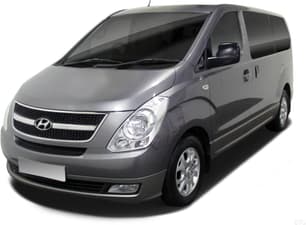
Hyundai’s contender in the under-$60,000 people mover segment boasts a heritage spanning a full decade. During that time it has built a loyal customer base that appreciates its spacious and airy eight-seater cabin, ease of driving, proven durability and five-year warranty.
Even so, the iMax and other well-established people movers are getting clobbered by Hyundai’s sister company Kia and its widely acclaimed Carnival, which with four model grades across a broad pricing spectrum currently boasts a dominant market share of more than 50 per cent.
There are numerous reasons for the Carnival’s popularity but that should not stop a potential buyer from also giving the iMax serious consideration. Its most recent upgrade to Series II specification in 2016 brought styling revisions and new features which made a good people mover even better.
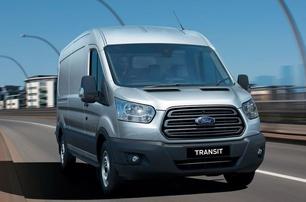
Meet Ford’s electric pioneer for Australia - the E-Transit.
It may not be as exciting as a Tesla Model S, Porsche Taycan or Audi e-tron, but this electric version of the Blue Oval’s large van will help create a new market for zero-emissions commercial vehicles.
This is seen as a major opportunity by Ford to provide an electric alternative to typically diesel-powered vans, which will no doubt prove popular with fleet operators looking to cut fuel costs and corporate emissions. While unlikely to suit all van buyers, thanks to its limited range and recharging restrictions, for those companies with shorter delivery routes it will certainly have appeal.
Ford’s research (performed by YouGov) suggests up to 58 per cent of business “can see EVs becoming part of their vehicle fleet in the future".
But it’s just Ford’s first step into the larger world of electric vehicles. We’ve already had confirmation the smaller E-Transit Custom is headed our way and there are good odds the Mustang Mach-E will eventually find its way to Australian showrooms, so there’s plenty of exciting models in store for Ford.
In the meantime, though, the E-Transit isn’t due in Australia until sometime in the first half of 2023, but CarsGuide was able to take one for a test drive near Ford’s Detroit headquarters recently to get a taste of what’s to come.
It looks a bit old-fashioned in a ‘Tarago’ sort of way and is starting to show its age with a five-speed transmission and in lacking some of the latest safety features. However, if you need to regularly transport up to eight people and expect good comfort, economy, performance, practicality, reliability and warranty as part of the deal, then the iMax still has more than enough going for it to justify top three positioning on any people mover shopping list.
Ford has taken an unorthodox approach to entering the electric vehicle market in Australia, avoiding the hype around the Mustang Mach-E and F-150 Lightning and instead laying the foundations with the E-Transit.
But it’s a savvy move, giving the brand a chance to enter what should be a largely untapped market with a vehicle that should appeal to what buyers are looking for. With unchanged space compared to the diesel-powered Transit, the switch to a more powerful electric powertrain makes the E-Transit a win-win scenario for those with a suitable daily driving routine.
Note: CarsGuide attended this event as a guest of the manufacturer, with travel, accommodation and meals provided.
Compared to the Kia Carnival, which looks like tomorrow’s people mover today, the iMax is looking more like yesterday’s as its tall and minibus-like dimensions are immovably defined by its iLoad commercial van birth twin. Even so, there is still plenty of practicality and ease-of-use inherent in this traditional design, including a bright and airy cabin with generous headroom for all.
The iMax rides on the same 3200mm wheelbase as the iLoad and shares many of its key dimensions along with power-assisted rack and pinion steering and four-wheel disc brakes. However, to provide better ride quality than the van’s leaf springs, for human cargo the iMax’s multi-link live rear axle rides on plusher coil springs. The Series II upgrade also includes restyled 16 x 6.5-inch alloy wheels shod with 215/70 R16C tyres and a full-size steel rim spare.
The large front doors open wide for easy entry and exit and with no console between the front seats the driver and front passenger can literally walk through to the passenger area. Sliding doors on each side, with large windows that can be propped open for extra ventilation, allow generous access to the second and third row seating. These bench seats provide ample head room and adequate shoulder and legroom for medium-sized adults, even with three across the back row, which is a refreshing change from many SUVs that treat third-row adults as extra baggage.
There’s also ample ventilation, with roof and floor-mounted air vents for the second and third rows linked to a separate control panel which allows passengers to adjust the fan speed and air-con temperature independent of the driver. Combined with generous headroom and large rear passenger side windows which can also be propped open, the iMax succeeds in minimising claustrophobic feelings particularly for those in the back row.
Perhaps the most interesting thing about the design is there’s nothing very different about the E-Transit compared to the regular Transit. Which is a good thing, because the Transit is already a popular delivery van so any change for the sake of difference may have messed with the winning formula.
In fact, the design element that is important is the way Ford has laid the battery packs flat inside the ladder-frame chassis which means none of the cargo space has been compromised. This means the E-Transit has the same load area as its internal combustion equivalent, which is key for any delivery van.
The iMax’s hefty kerb weight of 2230kg and GVM (gross vehicle mass) of 3030kg allows for a payload of 800kg and up to 125kg of that can be carried on the roof with a three-rack system. Eight average-sized adults on board would use up most of this payload capacity, so if they need to bring luggage it could easily surpass the payload limit.
It’s also rated to tow up to 1500kg of braked trailer and with a GCM (gross combined mass) of 4530kg it can carry its maximum payload while doing it. However, you also need to keep in mind that the 150kg tow-ball download limit is included in the total payload, leaving 650kg rather than 800kg to play with. Even so, any vehicle that can tow its maximum trailer weight with a full payload gets a big tick from us, particularly one with a cavernous (VDA) 842 litres of cargo volume available behind the third row of seats.
An impressive array of storage solutions includes dual map pockets and a single bottle holder in each front door, a dash top storage compartment, dual glove box compartments, central dash dual retractable cup holders and an overhead felt-lined sunglass holder. Those seated in the second row get dual map pockets and single bottle holders in each sliding door plus mesh-type storage pockets on the rear of each front seat, while third row outer passengers get storage recesses and cup holders.
The cabin is very similar to what you’ll find in the Transit, so there will be familiarity for anyone making the switch from the diesel-powered version. The rotary shifter and 12.0-inch tablet-style multimedia screen make for a smart look but also means minimal space is wasted.
It’s a thoughtfully designed cabin, with plenty of usable storage spaces, including three cup-holders, a pair of bottle-holders and deep storage shelves on the top of the dashboard. The doors are particularly noteworthy, with multiple storage areas carved into the available space.
The seats are comfortable and, naturally with a high-roof van, there’s plenty of head room which creates a spacious feeling.
Behind the seats is the cargo area. In the US-specification E-Transit we drove there was a dividing wall between the cabin and the back of the van, with a small sliding door to access the cargo area, but it’s unlikely this will be offered in Australia. Instead, local models will likely have a hard divider between the cabin and back, with a small window for visibility.
As mentioned earlier, the floorspace in the E-Transit remains the same as the Transit thanks to the battery being laid underneath the floor, so there’s plenty of cargo volume that will please fleet buyers.
In the US the E-Transit’s cargo area measures 11.3-cubic-metres with the medium-height roof and expands to 12.4cu/m with the high-roof body.
Ford says the “targeted payload” will be 1616kg.
Our test vehicle was the premium grade with 2.5 CRDi turbo-diesel four cylinder engine and five-speed automatic transmission at $47,290 plus on-roads, with metallic paint an extra $695.
The Series II upgrade features minor styling tweaks and new equipment including driver and front passenger side (thorax) airbags, driver-front passenger climate control, an upgraded 7.0-inch touchscreen multimedia interface with connectivity including Bluetooth, 'Siri Eyes Free' (iOS) and 'Google New' (Android) but no Apple CarPlay, electric folding door mirrors, premium steering wheel and gear-knob, rear view camera and cruise control (on diesel auto only).
These upgrades boost what was already a well-appointed package including numerous passive and active safety features, tilt-adjustable steering wheel with audio controls, one-touch power front windows and a 12 volt dashboard power outlet to name a few.
Ford Australia originally announced the E-Transit would arrive by “mid-2022” but that date has been pushed back thanks to the ongoing supply challenges faced by most car companies.
While the initial technical details have been confirmed - the first model available will be the 420L long-wheelbase version - the company hasn’t locked in detailed local specifications and pricing yet.
The closest comparison in the current Transit range is the 350L, which is available in both mid- and high-roof variants. Based on the model we test drove in the US, there are similar specifications between the two, including 16-inch steel wheels, partial-leather-trimmed seats and Ford’s SYNC4 multimedia system displayed on a 12.0-inch centrally mounted screen.
While pricing isn't confirmed, it's likely the E-Transit will carry a premium over the Transit so we'd estimate a starting price in the mid-$60,000 range.
The iMax shares the same 2.5 litre common rail four cylinder turbo-diesel found in the iLoad and it’s just as well suited to moving people as it is to shipping heavy cargo. With 125kW at 3600rpm and a bountiful 441Nm of torque peaking at 2000-2250rpm, this refined and torquey engine uses its variable vane turbocharger (VGT) to good effect with great flexibility through the rev range.
The five-speed automatic with sequential manual shift option is the only transmission available with this engine and they are well matched. The torque converter’s stall speed and low 3.730 first gear combine with the 2.929:1 diff ratio to provide lively response from standing starts, making it well suited to stop-start city and suburban duties. The overdriven fifth gear allows economical cruising at highway speeds.
One element of the E-Transit we are clear on is what’s under the bonnet. The E-Transit is powered by an 198kW/430Nm electric motor that powers the rear wheels and draws energy from a 68kWh battery.
That means the E-Transit is the most powerful member of the Transit family, with the rest of the range powered by the 125kW/390Nm 2.0-litre four-cylinder turbo diesel engine.
Ford claims the E-Transit has a range of 317km (on the WLTP cycle), which may not sound like a lot for a commercial van but Ford claims in the US the daily average for such vehicles is only 120km.
In order to save charge, the E-Transit is equipped with an Eco Mode which limits top speed, regulates acceleration and limits climate control settings. Ford claims this allows the driver to cut energy usage by between eight to 10 per cent when driven at highway speeds or when unladen.
Hyundai claims a combined figure of 9.0 litres/100km but our numbers based on trip meter and fuel bowser readings came in at 11.8L/100km. Based on these ‘real world’ figures expect a fuel range of around 640km from its 75-litre tank.
Charging will be a key element of the E-Transit’s appeal (or not) to buyers, with fleets needing to maximise the van’s time on the road. Ford claims that with a 115kW DC fast-charger the E-Transit battery can go from 15 per cent charge to 80 per cent in just 34 minutes.
With the onboard 11.3kW charger it takes 8.2 hours to get the battery back to 100 per cent capacity.
The E-Transit supports bi-directional use of the battery too. In the US the E-Transit is available with its Pro Power Onboard technology as an option. This allows for the driver to draw up to 2.4kW of power from the vehicle’s battery to power tools and other equipment as necessary.
One feature that is confirmed for the Australian-bound E-Transit is what Ford calls, Scheduled Pre-Conditioning. This is a system that allows the operator to pre-set the climate control for the cabin while the van is still on charge so that you can still have maximum charge available when you start driving.
Impressive comfort, refinement and low NVH (noise, vibration and harshness) levels ensure the task of moving people is not a chore. The iMax is well designed for its specific role in life and gets the job done with a minimum of fuss. Loads varied from driver only up to six adult passengers during our test.
Although fitted with rear coil springs the tail stills feel a bit jittery over smaller bumps.
In city and suburban traffic it’s a surprisingly agile and energetic performer that belies its 2.2 tonne-plus kerb weight, with nicely-weighted steering, responsive braking and a sharp 11.22 metre turning circle.
Although fitted with rear coil springs the tail stills feel a bit jittery over smaller bumps and road irregularities when empty or lightly loaded, as those thick coils are designed to cope with a GCM of more than 4.5 tonnes. In other words, ride quality is at its best with a decent load on board.
Wind, tyre and engine noise are well suppressed. The resulting low cabin noise is a big bonus, particularly at highway speeds where conversations between front seat passengers and those in the third row can be conducted at normal voice levels. Along with its comfortable bench seating, this quietness makes longer journeys less tiring and more engaging for all passengers no matter where they’re seated.
Driver and front passenger comfort is excellent with all controls and dash contours thoughtfully placed.
The iMax’s tall highway gearing results in only 1800rpm at 100km/h and 2000rpm at 110km/h where maximum torque also resides. Driver and front passenger comfort is excellent with all controls and dash contours thoughtfully placed, plus supportive seating with inboard fold-down armrests. Those front seats provide a commanding view of the road and all external angles thanks to large door mirrors and a rear view camera.
Our only major gripes are that in wet weather the swept area of the left-hand wiper leaves the front passenger with more than half of their forward view obscured by unswept glass. It also shares the iLoad’s terrible static interference on AM band radio at times. And one iLoad feature we would like to see shared with the iMax is its automatic central-locking mechanism which locks all doors when vehicle speed exceeds about 5 km/h
Electric vehicles have earned a reputation for rapid, exciting acceleration… but that’s not the case with the E-Transit. Performance could best be described as modest, with adequate but unspectacular acceleration.
Which is fine, because the E-Transit is not meant to be a ‘ludicrously’ quick van, instead it’s meant to haul a load as efficiently as possible. On that front it does a good job, with smooth (albeit gentle) acceleration and steady pulling power.
It’s important to note, though, that our test car was unladen - with only some shelving installed in the back. So we’ll have to reserve judgement on how the E-Transit performs with a full load on-board, on Australian roads.
The rest of the driving experience is as you’ll find with the Transit. The steering is nicely weighted and direct, which makes manoeuvring such a huge vehicle straightforward.
The ride is on the firm side, which isn’t unusual for either a van or an electric vehicle as it needs to control so much weight, but it isn’t uncomfortable and offers good control.
The iMax falls one star short of the maximum five-star ANCAP crash safety rating. Even so it’s equipped with numerous passive safety features including front (and now) side airbags for driver and front passenger, full lap-sash seatbelts and head restraints for all passengers, ISOFIX child restraint anchorage points for the two outer seats on the second row and three top-tether child restraint anchorage points.
There’s also the usual electronic active safety features including brakeforce distribution (important for load luggers), rear parking assist and rear view camera with guidelines, but no auto emergency braking (AEB), blind spot detection or collision alert.
The current Transit is not rated by ANCAP, as is the case with most of its full-size van rivals because the safety authority tends to focus on the mid-size vans - such as the Transit Custom, Toyota HiAce and Hyundai Staria-Load.
However, the E-Transit does have a solid safety package, with driver and passenger front, side and curtain airbags all standard. While the E-Transit’s local safety package isn’t locked in, the Transit already boasts autonomous emergency braking with pedestrian detection, lane-keep assist with lane-departure warning, rollover mitigation, side-wind stabilisation, trailer sway control and traffic-sign recognition, so it’s probably a safe bet these will all be included on the E-Transit.
We drove the high-roof E-Transit in the US and with a high-mounted reversing camera it was surprisingly easy to navigate for such a big vehicle.
Standard warranty is five-year/unlimited km, with scheduled service intervals of 12 months or 15,000km, whichever comes first.
A capped-price servicing scheme is in place, with $349 the standard rate ($499 for 60,000km service only).
Roadside Assist is complimentary for the first 12 months, plus there's an optional Roadside Support Plan for up to 10 years, 'Lifetime Service Plan' and 'Sat Nav Update Plan'.
You can also expect a dedicated Customer Care Centre and the ‘myHyundai’ exclusive owner website.
Ford Australia has already confirmed that the E-Transit will be covered by Ford’s now-standard five-year, unlimited kilometre warranty, plus an extended eight-year/160,000km warranty specifically for the battery and high-voltage electric components.