What's the difference?
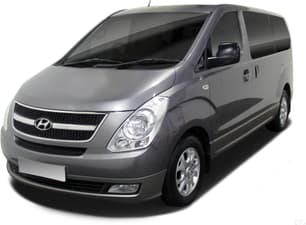
Hyundai’s contender in the under-$60,000 people mover segment boasts a heritage spanning a full decade. During that time it has built a loyal customer base that appreciates its spacious and airy eight-seater cabin, ease of driving, proven durability and five-year warranty.
Even so, the iMax and other well-established people movers are getting clobbered by Hyundai’s sister company Kia and its widely acclaimed Carnival, which with four model grades across a broad pricing spectrum currently boasts a dominant market share of more than 50 per cent.
There are numerous reasons for the Carnival’s popularity but that should not stop a potential buyer from also giving the iMax serious consideration. Its most recent upgrade to Series II specification in 2016 brought styling revisions and new features which made a good people mover even better.
There has never been a better time to be shopping for an electric SUV in Australia, with the avalanche of Chinese brands constantly smashing through the price floor as they bid for the title of Australia’s cheapest.
MG led the charge with its S5, which is $40,490, drive-away. Then Leapmotor upped (or downed?) the ante with its B10 with a $38,990, drive-away, price tag. And now BYD has knocked them both out with its Atto 2, officially Australia’s cheapest electric SUV (at least for now), with a MSRP of $31,990, which, in NSW, translates to a drive-away cost of less than $35K.
Cheap is one thing. But cheerful? Let’s find out, shall we?
It looks a bit old-fashioned in a ‘Tarago’ sort of way and is starting to show its age with a five-speed transmission and in lacking some of the latest safety features. However, if you need to regularly transport up to eight people and expect good comfort, economy, performance, practicality, reliability and warranty as part of the deal, then the iMax still has more than enough going for it to justify top three positioning on any people mover shopping list.
The BYD Atto 2 isn't just the cheapest electric SUV in Australia, it's also one that doesn't feel all that cheap, which is a hell of a magic trick. If it's easy, comfortable city motoring you're after, the Atto 2 delivers in spades. But if your blood type is high octane, there are better driving EVs out there.
Note: CarsGuide attended this event as a guest of the manufacturer, with meals provided.
Note: The author, Andrew Chesterton, is a co-owner of Smart As Media, a content agency and media distribution service with a number automotive brands among its clients. When producing content for CarsGuide, he does so in accordance with the CarsGuide Editorial Guidelines and Code of Ethics, and the views and opinions expressed in this article are solely those of the author.
Compared to the Kia Carnival, which looks like tomorrow’s people mover today, the iMax is looking more like yesterday’s as its tall and minibus-like dimensions are immovably defined by its iLoad commercial van birth twin. Even so, there is still plenty of practicality and ease-of-use inherent in this traditional design, including a bright and airy cabin with generous headroom for all.
The iMax rides on the same 3200mm wheelbase as the iLoad and shares many of its key dimensions along with power-assisted rack and pinion steering and four-wheel disc brakes. However, to provide better ride quality than the van’s leaf springs, for human cargo the iMax’s multi-link live rear axle rides on plusher coil springs. The Series II upgrade also includes restyled 16 x 6.5-inch alloy wheels shod with 215/70 R16C tyres and a full-size steel rim spare.
The large front doors open wide for easy entry and exit and with no console between the front seats the driver and front passenger can literally walk through to the passenger area. Sliding doors on each side, with large windows that can be propped open for extra ventilation, allow generous access to the second and third row seating. These bench seats provide ample head room and adequate shoulder and legroom for medium-sized adults, even with three across the back row, which is a refreshing change from many SUVs that treat third-row adults as extra baggage.
There’s also ample ventilation, with roof and floor-mounted air vents for the second and third rows linked to a separate control panel which allows passengers to adjust the fan speed and air-con temperature independent of the driver. Combined with generous headroom and large rear passenger side windows which can also be propped open, the iMax succeeds in minimising claustrophobic feelings particularly for those in the back row.
I think it’s a sharp-looking thing, this Atto 2. Kudos to BYD for not making the design look like it’s trying too hard, or like the Atto 2 is something it isn’t. It’s just smooth, sensible small SUV with styling that looks like it will age gracefully.
I like the chunky black moulding which makes it look a bit tougher than it is, plus the LED DRLs and swept back (and spoiler-equipped) roofline add a bit of visual drama.
Inside, BYD has made two pretty good choices. The first is that the cabin feels toned down from the one in the Atto 3 (which is all chunky wheel-style controls and vents).
This one feels far more sedate and conventional in its design, which I think is a win.
The other good decision is to equip the Atto 2 with soft plastics, rather than hard scratchy ones, in places like the door panels. In some cheaper cars, you feel your elbows constantly rubbing against cheap-feeling plastics, but that’s not the case here.
Too much stuff is still controlled through that central screen, and BYD has an awkward way of shortcutting functions. They call it a three-finger swipe, meaning that if you run three fingers across the screen horizontally you can adjust the climate-control’s fan speed, while swiping horizontally adjusts temp, but it feels like a weird movement.
The iMax’s hefty kerb weight of 2230kg and GVM (gross vehicle mass) of 3030kg allows for a payload of 800kg and up to 125kg of that can be carried on the roof with a three-rack system. Eight average-sized adults on board would use up most of this payload capacity, so if they need to bring luggage it could easily surpass the payload limit.
It’s also rated to tow up to 1500kg of braked trailer and with a GCM (gross combined mass) of 4530kg it can carry its maximum payload while doing it. However, you also need to keep in mind that the 150kg tow-ball download limit is included in the total payload, leaving 650kg rather than 800kg to play with. Even so, any vehicle that can tow its maximum trailer weight with a full payload gets a big tick from us, particularly one with a cavernous (VDA) 842 litres of cargo volume available behind the third row of seats.
An impressive array of storage solutions includes dual map pockets and a single bottle holder in each front door, a dash top storage compartment, dual glove box compartments, central dash dual retractable cup holders and an overhead felt-lined sunglass holder. Those seated in the second row get dual map pockets and single bottle holders in each sliding door plus mesh-type storage pockets on the rear of each front seat, while third row outer passengers get storage recesses and cup holders.
The Atto 2 measures 4310mm in length, 1830mm in width and 1675mm in height and it rides on a 2620mm wheelbase. It also sits on BYD’s fully-flat EV platform, which helps to maximise space in the back seat.
I’m 175cm tall and could get comfortable behind my own driving position, with enough knee and headroom to ensure I didn’t feel cramped.
There are two ISOFIX attachment points, one in each window seat in the back as well as USB-A and -C connection points.
Boot space is a not cavernous, but also not tiny, 380L with the rear seats in place, growing to 1320L with the rear pews folded flat. Both models also offer a V2L (Vehicle to Load) connection, too, so you can power up household devices.
Our test vehicle was the premium grade with 2.5 CRDi turbo-diesel four cylinder engine and five-speed automatic transmission at $47,290 plus on-roads, with metallic paint an extra $695.
The Series II upgrade features minor styling tweaks and new equipment including driver and front passenger side (thorax) airbags, driver-front passenger climate control, an upgraded 7.0-inch touchscreen multimedia interface with connectivity including Bluetooth, 'Siri Eyes Free' (iOS) and 'Google New' (Android) but no Apple CarPlay, electric folding door mirrors, premium steering wheel and gear-knob, rear view camera and cruise control (on diesel auto only).
These upgrades boost what was already a well-appointed package including numerous passive and active safety features, tilt-adjustable steering wheel with audio controls, one-touch power front windows and a 12 volt dashboard power outlet to name a few.
This thing really is cheap. The BYD Atto 2 arrives with a two-model range kicking off with the Dynamic, at $31,990, before on-road costs, before stepping up to the Premium at $35,990 BOC. They both get the same motor and battery, by the way, so the extra money comes down to extra kit.
The Dynamic rides on 16-inch alloys wrapped in cheaper Westlake rubber, scores LED headlights and DRLs and gets rain-sensing wipers and heated wing mirrors. Inside, there’s a 10.1-inch central touchscreen, an 8.8-inch driver display, synthetic leather seats with manual adjustment up front and wireless Apple CarPlay and Android Auto linked to a four-speaker stereo.
The Premium rides on 17-inch alloys wearing better Hankook rubber, and there’s a panoramic glass roof with a shade and roof racks. Inside, the central screen grows to 12.8 inches, and there’s an eight-speaker stereo and a wireless charge pad. Your seats are now electronically adjusted and heated and cooled. Plus there’s some extra safety stuff, but we’ll cover that off in a second.
The iMax shares the same 2.5 litre common rail four cylinder turbo-diesel found in the iLoad and it’s just as well suited to moving people as it is to shipping heavy cargo. With 125kW at 3600rpm and a bountiful 441Nm of torque peaking at 2000-2250rpm, this refined and torquey engine uses its variable vane turbocharger (VGT) to good effect with great flexibility through the rev range.
The five-speed automatic with sequential manual shift option is the only transmission available with this engine and they are well matched. The torque converter’s stall speed and low 3.730 first gear combine with the 2.929:1 diff ratio to provide lively response from standing starts, making it well suited to stop-start city and suburban duties. The overdriven fifth gear allows economical cruising at highway speeds.
Both Atto 2 models share the same powertrain - a front-mounted electric motor producing 130kW/290Nm which is sent to the front tyres. It feels fairly sedate, even under flat-footed acceleration, though BYD reckons you can knock off the sprint to 100km/h in 7.9 seconds.
Hyundai claims a combined figure of 9.0 litres/100km but our numbers based on trip meter and fuel bowser readings came in at 11.8L/100km. Based on these ‘real world’ figures expect a fuel range of around 640km from its 75-litre tank.
Both models also share the same battery, a 51.1kWh LFP unit, which should unlock a WLTP driving range of 345km. AC charging is pegged at 7.0kW, so a good match for a standard home wallbox, while DC fast charging is 82kW. Using the latter, BYD says you should go from 10 to 80 per cent charged in 38 minutes.
Impressive comfort, refinement and low NVH (noise, vibration and harshness) levels ensure the task of moving people is not a chore. The iMax is well designed for its specific role in life and gets the job done with a minimum of fuss. Loads varied from driver only up to six adult passengers during our test.
Although fitted with rear coil springs the tail stills feel a bit jittery over smaller bumps.
In city and suburban traffic it’s a surprisingly agile and energetic performer that belies its 2.2 tonne-plus kerb weight, with nicely-weighted steering, responsive braking and a sharp 11.22 metre turning circle.
Although fitted with rear coil springs the tail stills feel a bit jittery over smaller bumps and road irregularities when empty or lightly loaded, as those thick coils are designed to cope with a GCM of more than 4.5 tonnes. In other words, ride quality is at its best with a decent load on board.
Wind, tyre and engine noise are well suppressed. The resulting low cabin noise is a big bonus, particularly at highway speeds where conversations between front seat passengers and those in the third row can be conducted at normal voice levels. Along with its comfortable bench seating, this quietness makes longer journeys less tiring and more engaging for all passengers no matter where they’re seated.
Driver and front passenger comfort is excellent with all controls and dash contours thoughtfully placed.
The iMax’s tall highway gearing results in only 1800rpm at 100km/h and 2000rpm at 110km/h where maximum torque also resides. Driver and front passenger comfort is excellent with all controls and dash contours thoughtfully placed, plus supportive seating with inboard fold-down armrests. Those front seats provide a commanding view of the road and all external angles thanks to large door mirrors and a rear view camera.
Our only major gripes are that in wet weather the swept area of the left-hand wiper leaves the front passenger with more than half of their forward view obscured by unswept glass. It also shares the iLoad’s terrible static interference on AM band radio at times. And one iLoad feature we would like to see shared with the iMax is its automatic central-locking mechanism which locks all doors when vehicle speed exceeds about 5 km/h
Your drive experience in the Atto 2 very much depends on what you ask of it.
Or to put it another way, the first half of my drive route was a breezy run through the city and suburbs, then onto the freeway, before arriving at our destination.
It was probably 60 kays or so, and across it all the Atto 2 felt quiet and comfortable, with enough power at its disposal to easily get up to speed and stay there.
In the second half, though, I hunted down some twisting roads and cracks started to appear. The ride is pretty solid and there isn't huge amounts of body roll during more enthusiastic cornering.
But the steering is vague and there's plenty of slack – you can turn the wheel a fair bit without eliciting much response from the tyres.
Interestingly, turning the wheel with a bit of aggression also produced a weird sound up front, like you could hear the mechanicals shifting the tyres.
The tyres make a difference, too, with the Premium's more expensive Hankook rubber far happier to hang on without squealing than the Dynamic's Westlake tyres.
But context is key here. The Atto 2 is an accessible, affordable city-focused EV, and it performs those duties admirably. But if you're sold on a car-driver connection, there isn't much of that on offer here.
The iMax falls one star short of the maximum five-star ANCAP crash safety rating. Even so it’s equipped with numerous passive safety features including front (and now) side airbags for driver and front passenger, full lap-sash seatbelts and head restraints for all passengers, ISOFIX child restraint anchorage points for the two outer seats on the second row and three top-tether child restraint anchorage points.
There’s also the usual electronic active safety features including brakeforce distribution (important for load luggers), rear parking assist and rear view camera with guidelines, but no auto emergency braking (AEB), blind spot detection or collision alert.
The Atto 2 is yet to be assessed by ANCAP but there’s no shortage of stuff. The entry-level car gets six airbags, rear parking sensors and all the usual traction tech. Then there’s active cruise, lane departure warning, blind spot monitoring, cross-traffic alert in both directions - the list goes on. In fact, the only things the Premium adds on top are a 360-degree camera and front parking sensors.
Standard warranty is five-year/unlimited km, with scheduled service intervals of 12 months or 15,000km, whichever comes first.
A capped-price servicing scheme is in place, with $349 the standard rate ($499 for 60,000km service only).
Roadside Assist is complimentary for the first 12 months, plus there's an optional Roadside Support Plan for up to 10 years, 'Lifetime Service Plan' and 'Sat Nav Update Plan'.
You can also expect a dedicated Customer Care Centre and the ‘myHyundai’ exclusive owner website.
BYD’s warranty is an okay six years but just 150,000km, which is underwhelming compared to the best in the business. The battery is covered for eight years or 160,000km.
BYD vehicles typically have 12 month, 20,000km service intervals with capped price servicing, but the details are yet to be confirmed for the Atto 2.