What's the difference?
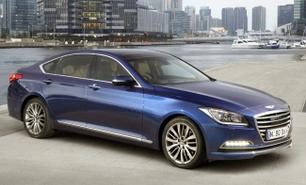
Anybody who doubts that Hyundai is gunning for the number one in the world has rocks in their head. Big heavy ones. Korean companies do not settle for anything less than number one. The second-generation Genesis (our first taste here in the Antipodes as the gen-one had its steering wheel on the wrong side) is proof.
What's different about Hyundai's unstoppable rise is the way they're going about it. They've always done their own thing in Korea, reinventing themselves time and again when they strayed off the beaten path.
The Genesis is a gamble for a Korean company in foreign markets whose default setting for luxury is marked, Britain or Germany. If Hyundai gets the Genesis wrong there will be howls of derision, or at best patronising pats on the back - "Nice try, you'll get there one day". But if they get it right...
In a world of cheap, popular and well-specified Japanese and Korean small hatchbacks, it’s easy to forget the humble French cars that once helped define the segment.
They’re still around, though. You’ve probably seen a few Renault Clios, you might not have seen the tragically underrated new Citroen C3, and there’s at least a chance you’ve seen one of these – the Peugeot 208.
This iteration of the 208 has been around in one form or another since 2012 and is due to be replaced by a second-generation model in the near future.
So, should you consider the aging 208 in a busy market segment? I spent a week behind the wheel of the second-from-the-top GT-Line to find out.
The Genesis is not quite a match for cars twice its price but it makes you think what's possible. It doesn't have the dynamic brilliance of a BMW or the self-assured faultless execution of a Mercedes. Lexus ought to be worried, though - why would you have an LS when you could have this? The only answer is 'badge'.
The Genesis is an epoch-making car for the Korean manufacturer. As the company has got better, there are fewer excuses for overlooking it. While the Genesis is pitched into a shrinking market, it's not really meant for the average i30 buyer to buy, but to see.
It's bristling with tech and is not only a halo car but a shot across the bows of both Lexus and the Germans. Attached to that shot is a note: "We're coming for you." In other words, Hyundai got it right.
The 208 GT-Line is hardly a car purchased on its value offering; it’s an emotional purchase. Fans of the brand know it, even Peugeot knows it.
Here’s the thing, though, the GT-Line looks the part, is true-to-its-roots in how fun it is to drive, and will surprise most with its spacious dimensions and decent spec level. So, while it might be an emotional buy, it’s not necessarily a bad one.
The Genesis is like no other Hyundai. For a start, it's gigantic - it looks easily as big as a BMW 7 Series (it isn't) with the road presence to match. There's a lot of BMW from most directions, but with a sharper approach to the creasing and character of the sheet metal.
Towards the rear it's more BMW 6 Series Gran Coupe and is all the better for it. The style is understated and technocratic.
Inside is also very Germanic, but with a bit more of a Lexus feel
The big wheels from the Ultimate pack help make it look lower and sleeker, too.
Inside is also very Germanic, but with a bit more of a Lexus feel. Our car had the lighter leather which meant that the wood and the metal materials didn't necessarily work well together.
The interior is expertly put together and feels like it will last forever.
The only jarring moment is the gear selector is shared with our long-term Hyundai i30 - it looked a bit cheap in what is otherwise a beautifully executed cabin - it needs more heft.
On Australian-delivered cars there is just one Hyundai badge, sitting proudly on the boot - you get the feeling this was debated long and hard and when the decision was made to go for it, a big one was chosen.
However, the winged Genesis branding takes pride of place everywhere else. When you approach the car at night and the puddle lamps come on, the Genesis logo is projected on to the ground, crisp and clear.
It might not be for you, but I had come around to the 208’s design by the time I handed the keys back. It’s a bit more upright and frumpy than the slick, conservative design of the Volkswagen Polo, or the swish, cutting-edge lines of the Mazda2.
It’s undeniably a European city car in its short and upright stance, but blazes its own path, even compared to French competitors. I grew quite fond of its weird, slopey bonnet, unconventional face and tough rear wheel arches. The way the rear light clusters clasp the rear to bring the design together is quite satisfying, as are the aluminium-brush alloys, recessed lights and the single chrome tailpipe.
It could be argued that this is a path well-travelled, with this 208 mirroring the design cues of the 207 that came before it, but I’d argue it holds its own, even in 2019. If you’re after something radically different, the styling on its replacement, due next year, is one to look out for.
On the inside, things are… unique.
There are cushy, deep seats for front occupants, with a super vertical dash design, leading up from the deep-set shifter (an older look) to the top-mounted media screen, which is slick, with its chrome bezel and lack of buttons.
The steering wheel is awesome. It’s tiny, strongly contoured and covered in nice leather trim. Its small, almost oval shape is super satisfying to wrangle, and enhances the way you interact with the front wheels.
What is extra strange about it is how far separated it is from the dash cluster. The dials are perched way atop the dash in a layout Peugeot refers to as the ‘iCockpit’. This is all very cool and aesthetic and French if you’re my height (182cm), but if you’re particularly short or particularly tall, the wheel begins to obscure vital information.
Other strange things about the cabin mainly involve little bits of plastic of varying quality strewn about the place. While the overall look is very cool, there are some odd bits of chrome trim and hollow black plastics about that probably don’t need to be there.
The only way to describe the Genesis' pricing is aggressive - kicking off at $60,000, it's the most expensive Hyundai money can buy, but with a spec list like this, you won't feel at all short-changed.
Your sixty large buys you a huge cabin with a seventeen speaker stereo, auto headlights and wipers, LED ambient lighting inside and out, dual-zone climate control, keyless entry and start, powered front seats which are heated and cooled, satnav, front and rear parking sensors, and plenty of other bits and pieces.
Our car had the $22,000 Ultimate package, adding 19-inch alloys, blind spot sensor, front and side cameras, around-view display, real leather, more adjustments for the driver's seat, ventilated seats in the front, heated rear seats, panoramic glass sunroof, acoustic glass, heads-up display, powered bootlid and LED foglamps.
The Genesis is like no other Hyundai
You can have a lot of the more useful features in the $11,000 Sensory Pack. It's a good middle ground that, for example, features the excellent heads-up display.
The 9.2-inch screen splits the asymmetric air-conditioning vents. The software is unique to the Genesis and a huge leap forward over the rest of the Hyundai range - classy, smooth graphics, a good responsive screen.
You control the seventeen speaker stereo from here, which kicks out a rich sound and an impressive Bluetooth performance - rear seat passengers can also run the stereo from their armrest. The satnav is detailed and chatty, while the excellent heads-up display shows a configurable information set in strong, clear graphics.
This Peugeot is never going to be as cheap as a Mazda2 or Suzuki Swift. The current range spans from $21,990 for the base Active to $26,990 for the GT-Line, and that’s all before on-road costs.
Safe to say you’re looking at a $30k hatch then. For the same money you could be hopping into a decently specified Hyundai i30, Toyota Corolla or Mazda3, but Peugeot bank on the fact that this car appeals to a special kind of customer; the emotional buyer.
Perhaps they had a Peugeot in the past. Perhaps the quirky styling calls out to them. But they aren’t interested in value… per se.
So do you at least get a decent standard spec? The GT-Line comes with a 7.0-inch multimedia touchscreen with Apple CarPlay and Android Auto support, built-in sat-nav, 17-inch alloy wheels wrapped in some seriously low-profile Michelin Pilot Sport rubber, panoramic fixed glass roof, dual-zone climate control, self-parking function, front and rear parking sensors with a reversing camera, rain sensing wipers, sports bucket seats, auto folding mirrors and GT-Line specific chrome styling touches.
Not bad. The styling is certainly turned up a notch over the regular 208 range and the spec list makes it one of the better-equipped cars in the segment. However, there are some notable omissions which hurt on a car at this price. For example, there’s no option for push-start or LED headlamps.
Safety is okay, but it could use update. More on that in the safety section.
The Genesis is powered by Hyundai's own 3.8-litre V6 developing 232kW and 397Nm, mated to Hyundai's eight-speed automatic transmission.
Despite weighing just under two tonnes, the Genesis completes the dash to 100km/h in 6.5 seconds.
It has a claimed 11.2L/100km on the combined cycle. In what must be a first, we got below that, averaging 10.8L/100km over two weeks. And that's without stop-start fuel-saving to blunt the effect of lot of city driving.
The Genesis is not going to tempt you into a track day, even with rear wheel drive
We'd still like to try the V8 - only available in left-hand drive markets - though.
The regular (that’s non-GTi) 208s are offered with just one engine now. A 1.2-litre turbo petrol three-cylinder, which produces 81kW/205Nm. While that doesn’t sound like an awful lot, it turns out to be plenty for the little 1070kg hatch.
Unlike some notable French manufacturers, Peugeot has seen the light and dumped single-clutch automatics (aka automated manuals) in favour of a six-speed torque converter auto, which does its best to have you not notice it.
It also has a stop-start system, which might save fuel (I couldn’t objectively prove that it did) but will definitely annoy you at the lights.
At five metres long, with a ride firmly pitched in the luxury camp, the Genesis is not going to tempt you into a track day, even with rear wheel drive.
Blindfold your passengers and swap them between a Lexus, a BMW and a Genesis and the overwhelming impression they'll get is one of incredible smoothness.
If you're wanting sudden movements, this isn't the car for you
Sitting in the back of the Genesis, it's easily as good as the German and luxury Japanese competition. The seats are hugely comfortable, there's ample head, leg and shoulder room and it feels lot nicer than anything within a bull's roar of its price.
No matter where you sit, it's an incredibly quiet car. The engine is a distant whoosh, the tyre noise muted and there's almost no wind or ambient noise. It's supremely comfortable and the excellent stereo will wash away what little noise does invade.
It certainly feels its weight from the driver's seat, with a competent, soft turn-in, but if you're wanting sudden movements, this isn't the car for you.
The Genesis is an epoch-making car for the Korean manufacturer
On fast flowing roads you can have some fun, but things will get floaty and that will quickly kill that fun. The ride and isolation from the rest of the world is completely worth it.
The 208 is good fun, and lives up to its heritage of making the most of its lightweight dimensions and small figure to make for an agile city-slicker. The engine outputs might look like just any other hatch in this class, but the turbo comes on nice and strong in an impressively linear fashion.
It makes for reliable and strong acceleration, with the peak 205Nm of torque available at 1500rpm.
A featherweight at 1070kg, you’ll find no complaints from me about its performance. It’s no GTi, but it will still be warm enough for most.
Despite its upright figure, handling is fantastic, too. The low-profile Michelins feel planted at the front and back, and, unlike the GTi, you never really feel at risk of understeer or wheelspin.
This is all enhanced by the intense helm, with the small steering wheel giving it a thoroughly engaging feel. You can chuck this car into corners and down alleyways with enthusiasm, and it feels like it loves it as much as you do.
The suspension is stiff, especially at the rear, and the low-profile rubber makes it noisy on coarse-chip surfaces, but you’ll barely hear a peep out of the little engine. Other notable downsides include the slow-to-react stop-start system (which you can turn off) and the lack of active cruise, which would be nice at this price.
Nine airbags, traction and stability control, lane departure warning, forward collision control, ABS, brake force assist and distribution and traction and stability control bring the ANCAP count to five stars.
The Sensory and Ultimate packs add blind spot sensors and around view cameras.
On the topic of active cruise, this car is showing its age in the safety department. Available active safety is limited to a camera-based city-speed auto emergency braking system (AEB). The lack of a radar, even optionally, means no active cruise or freeway-speed AEB. There’s also no option for blind-spot monitoring (BSM), lane-departure warning (LDW) or lane-keep assist (LKAS).
Sure, we’re talking about a car which largely dates back to 2012, but you can get cars a full size up with all those features for close to the same money from Korea and Japan.
On the more impressive side, you get an above-average set of six airbags, seatbelt pre-tensioners and rear ISOFIX child-seat mounting points, as well as the expected set of electronic braking and stability aids. A reversing camera is also now standard.
The 208 previously held a maximum five-star ANCAP safety rating from 2012, but that rating is limited to four-cylinder variants, which have since been phased out. Three-cylinder cars remain un-rated.