What's the difference?
I’m just going to cut to the chase here. This Honda Civic hybrid is a good car. A great one, even.
But for some reason, nobody is really buying it. And it’s not just because it’s not an SUV – it has been outsold in its segment this year by the the BMW 1 Series, the Mercedes A-Class, the MG4 EV, and the VW Golf. Premium and non-premium alike, they’ve all got the little Honda licked.
So, what’s going on? A CarsGuide investigation is required. Stick around and we’ll try to figure this out together.
It's only in the running for the title of world's best luxury car. No biggie here, then.
Like Rolex and Concorde, S-Class has become a byword for ultimate, and deserved or not, the Mercedes-Benz defines its segment despite the best efforts of the BMW 7 Series, Audi A8, Lexus LS and (sadly now-defunct) Jaguar XJ, as well as pointing the way forward with new technologies that eventually trickle down to more proletarian models.
Replacing the half-million selling W222 unveiled in 2013, the W223 is the latest in a long line since the first W187 Ponton debuted in 1951, and includes the famous ‘Finnies' and Stroke-8 models that followed immediately afterwards, but it is the 1972 W116 that really set the template.
Now, seven generations in, the 2021 S-Class is all-new again, with progressive safety and interior features that should help keep it Australia's bestselling full-sized upper-luxury sedan.
Talk about your new-car unsung heroes – I can't believe Honda's not selling more of these. So, if you can get over the price, and you worry it might be too small for you, I encourage you to check the Civic out. The back seat and boot are both bigger than you might expect, and the drive experience leaves most SUVs in the rear view mirror.
Mercedes-Benz set out to restore the S-Class' place amongst the greatest sedans in the world.
In the heavily-optioned, near-$250K-plus S450 as well as the extended S450L at $300K as tested (the sweet spot of the range for now), we reckon the Germans have succeeded, pushing safety, comfort and technology boundaries, in a package that is true to the heritage of the series.
Tax-fuelled sky-high prices will certainly keep the S-Class niche in Australia, but the car is more than good enough to dominate its tiny corner of the upper-large luxury car sphere.
The best new car in the world? We reckon it's highly likely. Mission accomplished, Mercedes.
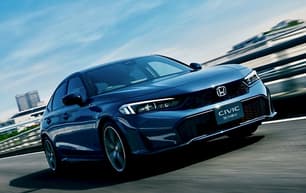
Beauty. Eye. Beholder. All that. But I reckon this Civic looks fantastic. Low-slung and sporty. The perfect antidote to all those bland, beige SUVs currently doing the rounds.
New as part of the most recent refresh is the front-end treatment, a new front bumper, more body-coloured flourishes and new designs for the 18-inch alloys.
I think it looks sleek, premium and purposeful, and not at all boring.
Inside, though, it’s a little less adventurous, though I do adore some of the little design touches, like the perforated metal effect that spans the dash.
The central screen is pretty small by modern standards, and you don't want to push too hard on some of the touch points, like the gloss-black highlights on the doors, which feel flimsy, flexible and pretty cheap.
Now, the screen. Does UX design count in the overall design section? Let's say that it does. I haven’t really experienced less intuitive and user friendly cabin tech lately.
For example, I couldn't figure out (though I must admit I didn't resort to owner's manual) how to get Apple CarPlay to load automatically, if you can.
Instead I had to select my phone, cycle through several screens of approval, and then select my phone again, every single time I got in the car. I had a similar issue using Google maps, which simply wouldn't connect at all for me.
Good tech is easy and intuitive. This wasn't.
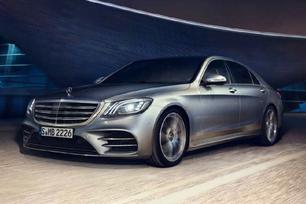
Most Mercedes models have followed the Russian Doll-style cookie-cutter styling theme, and the heavy family look continues with the W223.
Still, the flush door handles do add a touch of Tesla-esque modernity, while the elegant silhouette and clean lines are in keeping with the luxury aspirations. Larger in every dimension compared to the old W222, the S450 is some 71mm-longer in wheelbase (3106mm) than before while the LWB's has stretched out by 51mm (3216mm), benefiting proportions as well as interior packaging.
AMG-branded wheels look sporty but – in the S450 at least – they're perhaps a tad too gangster. A set of flush alloys would give it a more-modern and techier appearance, in our opinion.
Overall, however, the S-Class ‘7' possesses the prerequisite richness of design. It isn't as bold and mould-breaking as models like the W116 were back in their day, but the styling is still a success.
By the way, the latest S-Class is the first Mercedes to employ the MRA2 longitudinal platform, which is rich in lightweight steels (50 per cent aluminium), is correspondingly stronger than before but also 60kg lighter.
With a drag co-efficiency rating as low as 0.22Cd on some overseas grades, the W223 is one of the most aerodynamic production vehicles in history.
The Honda Civic measures 4569mm in length, 1802mm in width and 1415mm in height, and as you've no doubt already noticed, it's not an SUV, rather a liftback-style sedan.
But if you feel like you need an SUV to move a family, I beg to differ. While the middle seat in the second row is too tight for adults (owing largely to the intrusive raised tunnel that runs through the middle of the cabin), the two window seats can absolutely fit adult humans. I'm 175cm, and had absolutely no issue sitting behind my own driving position.
But the biggest surprise is the boot, which opens to reveal a flat and wide storage space that can swallow 409 litres (VDA) of luggage. In real terms, that's more than enough for our pram and the assorted knick-knacks that go with it on a baby day out.
Unfortunately, though, there’s no spare. Instead you’ll find yourself wrestling with a hateful repair kit should you get a puncture, and you don't want to wait for roadside assist.
There's also twin USB ports in the back, as well as air vents, along with twin cupholders in the pulldown divider.
For the beginning of our day with the S-Class, we were chauffeured from home to a mansion in Kew, a blue-chip Melbourne suburb. Our heavily-optioned S450L featured most of the aforementioned extras – including the Business Class Package and Rear Entertainment Package – and the experience was predictably, sumptuously memorable.
Reclining individual rear seats with easy-reach tablets, armrests offering access to all multimedia and available climatised and massaging cushions and backrests... we're no longer in our normal ride, Toto.
Yet, all these trinkets and gizmos are mere add-ons, that can turn a stretched Caprice into a flash hen's night carriage if enough money and glitz is thrown at it.
No, the new S-Class must impress in an altogether less tangible and more philosophical manner, involving all the senses, and not just what we see, hear and touch. It must appeal beyond the superficial. Otherwise, it is not a large Mercedes-Benz luxury sedan in the classic manner.
This is a Herculean task for the Stuttgart designers and engineers. By and large, though, the Three-Pointed Star has succeeded in achieving something special.
In its perception of peerless quality and engineering, the W223 is striving to move forward and look back simultaneously to the glory days of the seminal W126 (1980-1991). This is through meshing traditional virtues like solidity and quality materials while dazzling its passengers with technology that is still friendly enough to want to enhance your experience.
You can sink into the soft lounge seats, watch the world pass by silently outside and never be aware of the road underneath or the engine ahead. Double glazing, exquisite and aromatic fabrics and materials and lush tactile surfaces work their magic inside the car, while an airtight and aero body, solid platform, air suspension and a muted yet muscular powertrain all do their thing underneath. The atmosphere is special and rarefied. That's what an S-Class needs to be and that's what is happening in our $299,000 (as tested) S450L.
The same more-or-less applies up front, as the same trim, leather, wood and technology surrounds the driver and passenger. The spectre of the car that is surely The Car of the Last Decade – Tesla's Model S – is evident in the portrait touchscreen and sparse, almost wallflower dashboard design and layout. No big imposing architectures here.
Yet, while the American upstart actually takes stuff away, the S-Class packs the cabin with subtle features that – like when the planes stopped flying last year and the birdsong subsequently returned – only become obvious once the cabin's design simplicity clears all the white noise for you to be in a better frame of mind to enjoy them.
Take the haptic interface, for example, as it is perhaps the best we've experienced; the sense of well-being garnered from the cumulative effects of profound seat comfort (the massaging function was never switched off), cocooning micro climate environmental control, orchestral levels of audio entertainment and the theatre of light and vision performed by the two available screens; it is an automotive experience like no other. And the eye-tracking 3D-effect navigation set within the electronic instrumentation. No need for cinematic glasses to get the effect. The driving position itself, by the way, is also first class.
Room to stretch and grow for sure, and in every direction. But room for improvement? You betcha.
Your tester had a headache after a little while staring at that woozy 3D map. The central vents – four at the front, two in the rear – look and feel cheap, leaving us mentally redesigning them; they are frightfully out of place here; the carryover column-stalk auto lever should have been binned in 2005. And, even though the digital instruments have a number of options, none are elegant enough for the S-Class. That's an especially subjective criticism, clearly, but one that – in the context of classic Mercedes luxury sedan contenders – is justified given how timeless the Bruno Sacco era of Daimler design was. Look him up, kids.
Still, after a couple of hours behind the wheel, with our senses reset to calm, it is obvious that the S-Class cabin is a unique and wonderful place – as it should be at a cool quarter-of-a-million dollars.
Job done.
PS At 550 litres (20L more than before), the boot is massive and luxurious enough to sleep in.
Ah, so we may have hit the first Honda hurdle. Ours is the entry-level e:HEV L, and it’s a cool $49,900, drive-away. The top-spec LX is $55,900, on the road.
To put that into perspective, Toyota's two Corolla sedan hybrid grades are about $36K and $39K, drive-away, at the moment. The admittedly non-hybrid Golf starts at $39,990, on the road.
The German premium brands are still more expensive, but I think that might be at least part of the Honda’s problem. It now occupies a space between mainstream and premium, which might also be something of a no-man’s land.
Still, the entry-level L is decently equipped, with 18-inch alloy wheels wrapped in quality Michelin Pilot Sport rubber, all-LED lighting all around and key-less entry.
Inside, there’s synthetic leather and fabric seats, dual-zone climate, a 9.0-inch central touchscreen with Apple CarPlay and Android Auto, but also with Google built-in that provides mapping and updates and a 12-speaker Bose stereo.
Both Civic variants also arrive with a three-year subscription to 'Honda Connect', which gives you remote access to your car to lock or unlock it, pre-heat or cool the cabin, or set a geofence alert if your teenagers are borrowing it, that sort of stuff.
But… there are no full-leather seats, there's no sunroof, no wireless charging and you have to open the boot yourself.
The lack of all that doesn’t feel overly premium.
Right now, only two S-Class models are available – the S450 from $240,700 plus on-road costs and the 110mm extended-wheelbase S450L (LWB) for another $24,900 on top. Most buyers overwhelmingly opt for the latter.
Despite what the numbers may suggest, both are powered by a 3.0-litre in-line six-cylinder turbo petrol engine, delivering 270kW of power and 500Nm of torque to all four wheels via a nine-speed torque-converter automatic. Greater choices are coming later, including an all-electric version known as the EQS.
Almost every conceivable safety item is standard on the S-Class, including world-first rear-seat airbags located behind the front seats in the LWB model, taking the surround-airbag count to 10.
You'll also find route-based Speed Adaptation (adhering to the posted speed limits), Evasive Steering Assist (a sophisticated form of crash mitigation), adaptive cruise control with active stop/go, Active Lane Change Assist that automatically moves the car into the lane you indicate to), Mercedes' PreSafe crash-preparation tech that primes all the safety systems for impact, electronic stability program that encapsulates all the active driver-assist tech, Active Emergency Stop Assist, Autonomous Emergency Braking front and rear (including for cyclists and pedestrians), Traffic Sign Assist, Parking Package with Active Parking Assist and 360-degree camera and tyre pressure monitors.
On the equipment front there is the latest iteration of Mercedes' MBUX multimedia system with (another) world-first 3D display, complementing an OLED central display, powered closing doors, leather upholstery, air suspension, leather upholstery, velour floor mats, a multi-beam LED headlight system with adaptive high beams, heated and folding exterior mirrors, heat and noise-insulating acoustic glass for front side windows, dark privacy glass for rear windows, sunroof, roller sunblinds for rear windows, metallic paint and 20-inch AMG alloy wheels on runflat tyres.
Want cutting-edge multimedia? There's MBUX II's augmented reality for navigation and fingerprint scanner, as well as a more natural-speech Mercedes-Me Connect voice activation with global search.
Plus, predictive navigation with live traffic, parked vehicle locator, vehicle tracking, emergency call, maintenance management and tele-diagnostics, digital radio, Burmester 3D surround-sound system with 15 speakers and 710W amplifier, remote door locking/unlocking, geofencing, speed-fencing, valet parking, head-up display, Smart Phone integration with Apple CarPlay/Android Auto, wireless charging, ambient lighting, two-zone climate control, poplar wood trim, electric adjustment for front seats, steering column with memory function, climatised front seats, keyless entry/go with flush-fitting door handles offering hands-free access (including for the electric boot),
Besides the ‘forward facing' airbag for the rear-seat occupants, the S450L also scores electrically adjustable rear seats with memory and automatic rear climate control.
Key options – and the list is massive – include an $8700 Rear Entertainment Package, that brings rear-multimedia access, rear tablets with wireless headsets and rear-seat wireless smart phone charging, an AMG Line pack with a body kit, different alloys and larger front brakes ($6500), Business Class Package that includes aircraft-style reclining rear seating and tray tables ($14,500), Nappa leather ($5000), augmented-reality HUD ($2900), 21-inch wheels ($2000) and four-wheel steering ($2700). There's also a $14,500 Energising Package with contoured seating, heated-everything and massaging seats.
Please keep in mind our test cars featured many such extras. Tick all the boxes and you can add nearly $100,000 to the price of your S-Class.
So, is the S450 good value? Given some of the breakthrough safety and luxury features it offers, it is unique. Too bad the Federal Government's Luxury Car Tax makes them so much more expensive than they need to be.
The Civic range is an all-hybrid affair, which in this case is what Honda calls its 'two-motor hybrid', which pairs a 2.0-litre petrol engine with two electric motors, one being an electric generator, and the other being the actual propulsion motor which sends power to the wheels. Expect a total 135kW and 315Nm, which is sent to the front wheels via a CVT auto.
Where are the V8s?
Right now, the only W223 you can buy is powered by an all-new 2999cc 3.0-litre in-line direct-injection six-cylinder turbo petrol engine dubbed the M256, complete with double overhead cams, an electric compressor intercooler and assistance from a 48-volt mild hybrid system and integrated starter-generator, adding 16kW and 250Nm to the 270kW of power at 6100rpm and 500Nm of torque from 1600-4500rpm.
The 9G-Tronic torque-converter automatic transmission and 4Matic all-wheel drive system combination is a first for the S-Class in Australia.
Top speed is limited to 250km/h, while the 0-100km/h sprint-time takes just 5.1 seconds in both models. Impressive for a two-tonne-plus luxury limo.
Honda says you can expect 4.2L/100km on the combined (urban/extra-urban) cycle, but we found the fuel use was a still impressive 5.5L or so, admittedly mostly in the city.
The 40-litre tank drinks 91 RON 'standard' fuel, meaning its cheapish to fill up, and — using Honda’s numbers at least — should deliver a 950km driving range.
Yesterday, 91 RON was about $1.80 per litre meaning you can theoretically get from Melbourne to Sydney for around $75.
With the aid of the mild-hybrid system, the S450 returned a combined average of an impressive 8.2 litres per 100km, which translates to 187 grams of carbon dioxide emissions per kilometre. 95 RON premium unleaded (or higher) is recommended. In the urban run it consumes 11.3L/100km (11.5 for S450L), and just 6.4L/100km (6.5 for S450L) in the extra-urban result.
At 76 litres, the fuel tank will allow a combined average range of about 927km between refills.
First things first – I really, really like the way this Honda drives. There's a finesse, a confidence, in the drive experience that's sometimes missing from the new brands when they first arrive in Australia.
In short, it feels like it was engineered by people who really know what they're doing. That's the easiest way to describe it.
If you're used to driving older-fashioned hybrid systems you might be used to a bit of shuddering harshness when the engine kicks in, but that's simply not the case here.
Instead, the transition is seamless, with the Honda Civic making the choice for you and largely leaving you out of the process entirely.
Where the powertrain does let itself be more known is under heavier acceleration, with engine thrum seriously invading the cabin, without much in the way of flat-footed performance to accompany it.
But the magic of the Civic drive experience is in its balance. It's not a performance car, but there's real driver engagement to be found in the way it rides and handles. Equally, though, it's never uncomfortable, striking the balance between road-holding confidence and comfort really well.
Happy in the city, happy on a twisting road - this is not one of those smaller cars that leaves the drive experience as a secondary factor. It feels like it really has the driver at heart.
In former times, as the Germans say, a ‘450' on the boot indicated V8 power. In the W116 S-Class era it was one of the world's most evocative badges when ‘SEL' was also attached.
As mentioned earlier, though, it's the M256 3.0-litre turbo-petrol with a 48-volt ‘mild hybrid' electrical system that's doing the driving, to all four wheels. The real V8 W223 will probably surface later this year or in early 2022 with the S580L flagship. Bring it on.
This is not to say that S450 isn't good enough. With that electrified assistance, the blown straight six is smooth and swift off the line and rapid as the auto seamlessly steps up through all nine gears. Because it's so hushed and refined, it doesn't feel 5.1s to 100 clicks quick, but watching the speedo says otherwise – acceleration is assertive and strong right up way past the legal speed limit.
All that's missing is the burbling soundtrack of a classic Benz bent-eight. Oh well. Outstanding economy is a price we're literally willing to pay in lieu.
Even more impressive is the S450's ability to hustle along mountain roads like an overgrown sports sedan.
Now, for Australia, all S-Classes are fitted standard with an adaptive ‘Airmatic' air-suspension set-up, including air springs and self-levelling tech. In Comfort up to 60km/h, the ride height can be raised by 30mm, or lowered by 10mm under the standard 130mm baseline in Sport at any velocity, while in Sport+ it falls another 17mm.
With that in mind, yes, the standard air suspension performs a magnificent job smothering out most surface imperfections around town. Yet its real other party trick is to tighten up the chassis when corners get interesting and Sport mode is selected. Aided by progressively weighted and reassuringly responsive steering, the Mercedes tips into turns with precision and poise, slicing through with virtually no discernible body lean or understeer.
Now, we're not talking a leisurely drive on rural highways here, but Healesville's famous Chum Creek Road, where even a Porsche Cayman would feel like it's had a strenuous dynamic workout. The S-Class can be hurried along with confidence and finesse, displaying outstanding handling and roadholding for a 5.2-metre long limo. And the fact that the ride quality only suffers marginally when the red horns are out is all the more remarkable.
Back in the cut-and-thrust of inner-city peak-hour traffic, the Benz in Comfort mode continued to reveal its driver-orientated yet passenger-focused twin-personalities, zipping in and out of gaps while remaining comfy and composed inside.
Only when parking in tight spots are you truly aware that the W223 is longer than a Mazda CX-9. The optional four-wheel-steering system is claimed to slash the turning circle to A-Class hatchback levels. 10.9 metres is the claim.
The 2021 S-Class never ceases to amaze and delight.
The big safety news surrounding the Civic is that its eight airbags are joined by 'Honda Sensing', which packages up every safety system you can possibly imagine — forward collision warning, lane keeping, adaptive cruise, AEB – and delivers them as standard across the range.
But the bigger news is that, refreshingly, none of it is overly intrusive. Even the speed limit warning, which – as in most cars – always gets the speed wrong, just flashes gently on the driver display, rather than binging and bonging through the cabin.
The Civic Hybrid scored a full five-star ANCAP safety rating, with the score based on crash testing in Europe through Euro NCAP.
The W223 S-Class has not been crash-tested yet by ANCAP or European affiliate EuroNCAP, so does not have a star rating. However, Mercedes-Benz claims it has striven to create one of the safety vehicles on the planet. Who are we to argue?
Almost every conceivable safety item is standard on the S-Class, including world-first rear-seat airbags located behind the front seats in the LWB model, taking the surround-airbag count to 10.
You'll also find route-based Speed Adaptation (adhering to the posted speed limits), Evasive Steering Assist (a sophisticated form of crash mitigation), adaptive cruise control with active stop/go, Active Lane Change Assist that automatically moves the car into the lane you indicate to), Mercedes' PreSafe crash-preparation tech that primes all the safety systems for impact, electronic stability program that encapsulates all the active driver-assist tech, Active Emergency Stop Assist, Autonomous Emergency Braking front and rear (including for cyclists and pedestrians, at speeds from 7km/h to over 200km/h), Traffic Sign Assist, Parking Package with Active Parking Assist and 360-degree camera and tyre pressure monitors.
The Active Lane Keeping Assist works in a speed range of between 60km/h and 250km/h while Active Steer Assist helps the driver follow the lane at speeds of up to 210km/h.
The Honda is covered by a five-year/unlimited-kilometre warranty, and servicing is every 12 months or 10,000km.
There is a capped-price servicing program, called 'Low Price Servicing', which means your first five services are $199, but don't cover things like brake pads and tyres.
Unlike many luxury brands that persist with a sub-par three-year warranty, Mercedes-Benz offers a five-year/unlimited kilometre warranty.
Intervals are every year or 25,000km, with a capped price service plan starting at $800 for the first year, $1200 for the second year and $1400 for the third year, totalling $3400. Alternatively, there is a Service Plan starting at $2700 for the first three years (saving $700 from the normal capped-price service plan), $3600 for four years and $5400 for five years.