What's the difference?
The Holden Colorado is a quiet achiever in the ute market: it has a solid rep as a work-and-play vehicle, generally records positive results in objective editorial reviews and comparisons, and it sells well.
But how does a Z71 do as a tow vehicle? Read on.
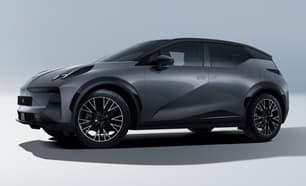
Zeekr is a new electric brand and the X small SUV is one of its first cars to come to Australia.
Owned by the Chinese carmaker Geely, which also has a big stake in Volvo, the X is designed in Sweden, built in China and now sold here.
Rivals to this little electric SUV include the Smart #1, Volvo EX30 and Xpeng G6.
The Zeekr X line-up is currently very simple - there’s the rear-wheel drive version and the all-wheel drive we tested.
The Holden Colorado Z71 is a pretty decent towing machine, handling all aspects of general load-lugging duties with a quiet reliable efficiency. In simple terms, it kept the whole ute-and-van combination trucking along nicely.
The Z71 is a solid Colorado package all-round with some welcome flashiness to its functionality.
The Zeekr X all-wheel drive surprised me in a great way. Not only is this the first Zeekr I've driven, it's also one of the best small electric SUVs I've ever driven. There's so much to like - from the good price and quality design to the high level of safety and how easy it is to drive.
The Colorado is a good-looking unit, so it follows that the Z71, the Colorado line-up's top dog, should be the best-looking vehicle in the entire range. And it is. Look at the photos yourself and make up your own mind.
The Z71's black highlights everywhere, the roof rails, side steps and fold-away tonneau cover add functionality to the flashiness.
Under its slick exterior, the Z71 sits on a steel ladder-frame chassis.
There may be no mechanical differences between the Z71 and other similarly-powered Colorado utes, but this is not merely a sticker-pack special – this is something more substantial than that. Don't believe me? Keep reading.
More than interesting, the design of the Zeekr X is intriguing with styling that ranges from 'ooohhhh' when you see it from the front to 'huh?' when you catch it in side profile.
The nose design, to me anyway, looks exquisite - Porsche-SUV-like in its sporty and luxurious shape and the way the LED running lights are embedded into the bonnet is different and so special it probably makes some prestige brands a bit envious.
That side profile also looks pretty pleasing to me, until I reach that rear quarter where suddenly I feel I’m looking at panel shapes so oddly combined it’s like a puzzle with just five pieces and all of them in the wrong place.
The rear of the X looks good, but more importantly unique compared to the same templated styling many SUVs tend to safely stick to.
Zeekr and Volvo are owned by the massive Chinese car manufacturer Geely and the X is closely related to Volvo’s EX30. Once you know this you’ll see the similarities in the looks, although the less conservatively styled X is more appealing to me.
The X is also 100mm longer and all of that extra length is in the wheelbase which is 2750mm. As for the rest of the key dimensions, the overall length is 4432mm, the height is 1572mm and the width is 1836mm. So, a fairly small car.
The X’s interior is as intriguing as its exterior with the AWD version on test fitted with the no-cost option 'Mulberry & Rose' two-tone upholstery - a colour combination of maroon and off-white which you don’t see often unless it's a bespoke choice in a high-end car.
No, it’s not leather, but I don’t think this upholstery doesn't feel cheap or ‘plasticky’ as some synthetic leather interiors do.
There are high quality touches throughout, from the dotted city scape of Hangzhou where Zeekr is headquartered that glows through the door trim fabric at night to the embossed Zeekr pull tabs on the seats.
The X’s interior feels luxurious and the styling is outstanding.
The Z71 has a Colorado carry-over interior, which is nice and simple, with some Z71 branding stitched in the front seats.
For starters, there are grab handles for the driver and front passenger – I'm a big fan of grab handles.
The dash is a basic layout – but made family-friendly with expanses of tough plastic and soft-touch leather – and it has everything you need. The centre console houses an 8.0-inch colour touchscreen with Apple CarPlay and Android Auto and standard nav.
There is a USB port in the centre-bin, and there's a 12V socket in the back of that bin for back-seat passengers.
The cabin is reasonably comfortable; the front seats – in fact all of the Z71's seats – err on the side of firm rather than being well-cushioned. But, even in the back seat, when I sat behind my driving position, I had ample head- and leg-room.
There are the usual collection of storage spaces around the cabin – sunglasses, glove box, door pockets, seat-back pockets – but a long centre-bin lid impedes access to the cupholders in between driver and front-seat passenger, and there are no cupholders in the back seat's fold-down centre arm-rest.
There are shallow storage spots under the rear seats, one of which contains your jack etc.
Overall fit and finish is impressive without being spectacular, but that's fine with me.
The tray is 1484mm long, 1534mm wide (1122mm between the wheel-arches) and 466mm high. Back there, you get Premium DuraGuard Spray–on tub liner, which seems sturdy and durable, as well as four solid tie-down points.
Small cars don’t generally have the practicality of larger ones because of the obvious space limitations but the Zeekr X has a long wheelbase for the class (longer than the Mitsubishi Outlander’s) making it roomy compared to rivals.
Second row head- and legroom is good and even at 189cm tall I can sit behind my driving position. Back there are two cupholders in the fold down centre armrest, directional air vents in the pillars and bottle holders in the doors.
Back seat downsides? No USB ports and the way the rear door sill kicks up means my two children (both under 10 years old) can’t see out of their windows well.
Up front space is good with plenty of elbow and foot room. Storage is good, too, with big door pockets, a couple of cupholders, a deep centre console bin and even a hook for a handbag or to hang a takeaway bag. There are USB ports up front and a wireless phone charger, too.
Front seat downsides? No glove box, and while we're at it the panoramic glass roof doesn’t have a sun shade and even though it is tinted I found that over summer in Australia the car heated up quickly and I’ve even had to wear a hat while driving to keep the sun off my head and face.
The Zeekr X has a decent-for-the-class 362L rear boot capacity and a tiny 21L front boot which is where the charging cable lives.
The Z71 auto 4x4 dual-cab has a list price of $57,490 MSRP. Our test vehicle is $59,260 MSRP because, over and above its comprehensive list of Z71 features (and those from cheaper variants), it has an electric brake controller ($740), and a towing package ($1030).
The Z71-specific features include a heap of style-based stuff, such as black fender flares, new front fascia, roof rails, and stickers on the bonnet, as well as 18-inch grey alloys (on Bridgestone Dueler H/Ts), sailplane sports bar, black highlights everywhere – including exterior door handles, mirrors and tailgate handle.
But the Z71 buyer gets plenty of useable real-world stuff such as roof rails, soft-drop tailgate, fold-away tonneau cover, and decent underbody protection.
There's also a leather-wrapped steering wheel and leather seats.
It has a 2.8-litre four-cylinder turbo-diesel Duramax engine, six-speed automatic transmission, a part-time 4WD system and a rear limited slip differential.
Bonus: there are plenty of genuine Holden-designed, -engineered and -tested accessories, including frontal protection bars, LED light bars, extended sports bars and more, that are probably available for your Colorado.
The Zeekr X tested is the top-of-the-range all-wheel drive which lists for $64,900. The only other variant in the X model line-up is the rear-wheel drive which lists for $56,900.
Sure, $65K might seem a lot for what is a small SUV, but the X AWD is reasonably priced compared to rivals like the tinier Smart #1 for $58,900, its Volvo EX30 Performance Ultra twin for $69,990 and the Xpeng Long Range for $59,800.
We’ll get to the technical specs soon, but the all-wheel drive variant offers more than just AWD, there’s also more standard features than the RWD.
The RWD X comes with two-tone body colour with a black roof, a panoramic glass roof, a six-way power driver’s seat, an 8.8-inch digital instrument cluster and a 14.6-inch media screen.
There’s also Apple CarPlay and Android Auto, a seven-speaker audio system, dual-zone climate control and wireless phone charging.
The AWD has all of the RWD’s features and adds 20-inch alloy wheels, a 24.3-inch head-up display, an intelligent B-pillar which provides information on charging, a power adjustable front passenger seat, heated and ventilated front seats, a heated steering wheel, a 13-speaker Yamaha stereo and LED ambient lighting.
The RWD has just one motor while the AWD has two and more power, which we’ll cover soon.
The Z71 has a 2.8-litre four-cylinder turbo-diesel Duramax engine (147kW at 3600rpm and 500Nm at 2000rpm), six-speed automatic transmission, a part-time 4WD system and a rear limited slip differential.
On test is the all-wheel drive version of the Zeekr X which has two motors while the rear-wheel drive has just one.
Two motors brings the AWD variant more power and torque than the RWD. A lot more. Zeekr’s specs state the combined output for the AWD is 315kW and 543Nm, while the RWD has 200kW and 343Nm.
Good traction and plenty of grunt means the AWD can accelerate from 0-100km/h in 3.8 seconds, while the RWD gets there in a respectable time of 5.6 seconds.
Electric cars are known for their rapid acceleration but just to put those numbers in context, a new base model Porsche 911 ($280K) has 290kW and 450Nm and does 0-100km/h in 4.1 seconds.
Our dash display read 7.9L/100km, but we recorded actual fuel consumption on test of 9.7L/100km. It has a 76-litre fuel tank, so expect an approximate driving range of 753km (according to our on-test fuel consumption), factoring in a 30km safety buffer.
On our towing loop, of more than 200km total, the dash was showing 14.5L/100km, but we recorded an actual fuel-consumption figure of 15.5L/100km. Expect an approximate driving range of 460km (according to our on-test fuel consumption), factoring in a 30km safety buffer.
The Zeekr X all-wheel drive has a range of up to 470km (WLTP), but if anything under 500km already has you twitching with anxiety, the rear-wheel drive's 540km range might alleviate some of that.
We found the range of the AWD to be fine for the city, but also learnt that we chewed through a lot of energy at an average of 18.4kWh/100km according to the trip computer.
Zeekr says after a combination of open and urban roads you’ll likely use 15.5kWh/100km, but you’d need to be a smooth driver that’s not tempted to test the acceleration at every traffic light and drain the battery.
Speaking of which, the Zeekr X has a 66kWh battery with a DC charging capacity of 150kW and at that rate can be charged from 10-80 percent in about 30 minutes.
The Z71 has a steel ladder-frame chassis, double-wishbone front suspension and leaf-spring live rear axle, so it's more aligned with heavy-duty work than smooth on-road performance.
Having said that, the Z71 is quite settled over most surfaces, including highway bitumen and rough back-road backtop, and at most speeds – rather impressive for an unladen ute.
Steering is a bit floaty, with some play in it, and there is noticeable understeer on corners.
The engine is one of the torquiest in the current-day ute mob – only matched by V6 utes – and it delivers that torque quite evenly and smoothly across the rev range. The Duramax turbo-diesel can, however, be noisy, and because of that it seems like it's working hard, though it never feels too stressed, even when towing a caravan that has a caravan with a tare (empty) weight of 2600kg.
There's plenty of life in terms of acceleration with active pedal-feel but, when it comes time to pulling up to a fast stop on front disc and rear drum brakes, the brake pedals are rather spongy.
The six-speed auto is generally spot-on for all duties, although it did occasionally down-shift with an extra violence of action when it didn't really need to.
Ride and handling are pretty good, with its Aussie-tuned suspension (including traditional-ute leaf-springs at the rear) doing a decent job of sorting everything evenly, and it was only ever rattled by very severe bumps, wash-outs, and ruts at lower speeds, i.e. during low-range 4WDing.
The Z71's on-road performance and refinement are generally not as polished as segment leaders, but that's nowhere near a deal-breaker.
In short, the Zeekr X is outstanding to drive for the class - it’s composed, comfortable as well as easy and fun to pilot.
Everything feels good - from the steering and the pedals to the seats and visibility.
The tech works well - the head-up display is large and shows directions and speed clearly, and the shifter being on the steering column makes three-point turns and just getting out of car parking spaces easy.
The acceleration is ridiculously good, but that novelty wears off after you’ve shown everybody in your family, which is why it’s lucky it's not the only thing this small SUV does really well.
While it’s not as spacious as the other large SUV I was testing at the time - the Zeekr X’s short length means it was the car I picked if I needed to go somewhere close where I knew parking spaces would be a bit squeezy.
The Colorado line-up has a five-star ANCAP rating as a result of testing in 2016.
Safety gear includes seven airbags, front and rear parking sensors, a reversing camera, Forward Collision Alert), Lane Departure Warning, a tyre-pressure-monitoring system, Hill Descent Control, Hill Start Assist, Trailer Sway Control and Roll Over Mitigation.
The Zeekr X scored the maximum five-star ANCAP rating under the stringent 2024 criteria with a high 91 per cent for adult occupant protection and an impressive 87 per cent for child occupant protection.
The advanced safety tech is also impressive with AEB that not only detect pedestrians, cyclists and other cars on a straight road but also while turning at junctions and T intersections.
There’s lane keeping assistance, blind-spot warning, front and rear cross-traffic alert and airbags covering the front and rear occupants including a front centre airbag.
I used the Zeekr X to drive my own kids around and for child seats there are three top tether anchor points and two ISOFIX mounts in the second row.
Holden offers a five-year, unlimited-kilometre warranty across the Colorado range, with servicing required every 12 months or 12,000km. Capped price servicing applies over seven years/ 84,000km with the average annual cost over three years working out to be $405.
The X is covered by Zeekr’s five-year, unlimited-kilometre warranty while the drive battery has an eight-year, 160,000km warranty. Roadside assistance and connected services are also offered for five years.
Servicing is recommended every two years or 40,000km.
Service pricing is $690 at two years/40,000km and $1420 at the four-year/80,000km mark, which covers the warranty period. For reference, the same $690/$1420 sequence is repeated at the six-year/120,000km and eight-year 160,000km intervals.