What's the difference?
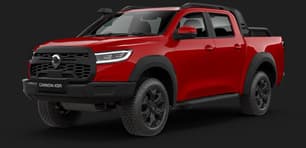
The Cannon XSR is GWM’s new top-shelf ute variant.
This dual-cab 4WD ute is intended as an off-road-focussed vehicle and has visual and mechanical upgrades over the rest of the Cannon stable, including part-time 4WD (not the full-time 4WD on GWM’s lower-spec Cannons), a front differential lock (in addition to the existing rear diff lock), raised air intake (aka a snorkel) and Cooper Discoverer AT3 all-terrain tyres.
It’s priced from $52,990 drive-away, so costs about $7500 more than you’d pay for the standard Cannon X on which this special edition ute is based. But it still undercuts similarly-equipped top-spec Ford Ranger and Toyota HiLux utes by about $20,000.
So, with twin lockers, a snorkel, underbody protection and all-terrain tyres, is the GWM XSR worth the extra cash?
Read on.
Mahindra has long been known as a tractor brand and a maker of rugged utes and SUVs, but it’s now dipping its toe into Australia's light SUV segment.
The MY25 Mahindra XUV 3XO marks a further shift in the Indian brand’s local focus from rural and regional to metropolitan.
This tiny SUV goes up against some stiff competition including the Chery Tiggo 4, Hyundai Venue and Kia Stonic, among others. However, the Indian-made SUV holds a specific title that’ll make it stand out among the crowd.
In a very competitive ute market, the GWM Cannon XSR represents plenty of bang for your buck, but it’s just not as refined as you’d hope.
It should be better at this price-point, especially when it’ll be unfavourably cross-shopped with lower-spec variants in the Ford Ranger, Isuzu D-Max and Toyota HiLux line-ups.
It’s a nice enough vehicle on-road, and the XSR is an effective 4WD on the dirt without ever being truly exceptional – but that’s fine for those who want to save big bucks and still drive away in a well-equipped twin-locked off-road vehicle.
The fact this is Australia’s cheapest SUV is a massive feat for the Indian brand. It also has so much standard kit so this is even more surprising.
In many ways the XUV 3XO is better to drive than its rivals. The three-cylinder turbo engine has plenty of charm and moves this car along with ease, the car feels confident and composed out on the open road, and there aren’t any bings and bongs from intrusive safety systems.
However, things aren’t perfect. I wish the steering column offered reach adjustment, the steering feel wasn’t so inconsistent and the lane-keep assist wasn’t so hands-on.
If you can overlook these quibbles, this tiny Mahindra is an outstanding value buy if you’re considering a first new car.
Note: CarsGuide attended this event as a guest of the manufacturer, with meals provided.
The XSR is 5439mm long (with a 3230mm wheelbase), 1958mm wide, and 1918mm high. It has a listed kerb weight of 1965kg.
It looks like the mongrel child of a HiLux, Ranger and D-Max – in a good way.
The wider-than-standard wheel track, as well as the snorkel, sports bar, substantial bash plates, tyres and even red brake calipers add to this ute’s presence.
From outside it’s surprising just how small this SUV is. At just under four metres long, the XUV 3XO is shorter than a Mazda2, for example.
The reason for this is because in India there are tax breaks for vehicles under four metres long. The Ford EcoSport, sans the tailgate-mounted spare wheel, was another SUV that met this requirement.
As a result of being so short, this has made the rear overhang virtually non-existent. It’s a strange look, especially because the bonnet is so much longer.
Even though the XUV 3XO is based on the KGM Tivoli (formerly SsangYong Tivoli), which was briefly sold in Australia, you’d be hard-pressed to find visual similarities. The former looks more modern from the outside and has more visual interest with the chunky wheel-arch cladding and diamond motifs.
At the front it’s hard to not see the face of a sad panda. The LED headlights are big and plunge down the front fascia, giving it a droopy and sleepy appearance. It’s not helped by the thick black bar connecting them.
Around the side the diamond-cut alloy wheels are a nice touch, along with the contrast black-painted roof on this AX7L tester.
The rear end is a little on the flat side, though the badging is tasteful. I’m not a fan of the full-width LED light bar, however, as it’s an overdone design cue now.
Inside I appreciate the mix of both old-school and new-school. There are dual 10.25-inch screens ahead of the driver for the digital instrument cluster and touchscreen multimedia system, as well as plenty of physical buttons and knobs for shortcuts and the climate controls.
For such an affordable car I’m surprised how many soft-touch finishes there are in this car. In the AX7L you get an extended use of synthetic leather on the door cards and dashboard, which helps make for a pseudo-premium look and feel.
However, one of my biggest gripes with the XUV 3XO interior is the amount of glossy piano black. It’s on the dashboard, centre console, door cards and even the steering wheel.
This may look cool and slick when you pick the car up from the dealer, but it shows up dust quickly and then gets scratched when you try to wipe it clean. Our tester had fewer than 1000km on the odometer and the centre console was already scratched to the wazoo.
The XSR’s five-seat interior is a neat and roomy space but, in line with most utes at this price-point, if you scrutinise it in a critical way you soon discover that some parts feel a bit cheap and flimsy, such as some buttons, dials and switches.
Up front there are two USB ports, a wireless charging pad, a 12V plug and a capacious centre console.
A pair of cupholders can be concealed under a sliding cover and the storage bin is on the right side of big.
The driver gets a six-way power-adjustable seat; the front-seat passenger gets four-way power adjustment. Both seats are comfortable without being too plush.
Second-row passengers get a firm but comfortable seat and amenities include a USB port, a 220V plug, and a fold-down centre armrest.
The second-row seat base can be folded up and out of the way to make room for more gear if only two people are travelling.
Build quality is generally okay, part from the aforementioned flimsy-feeling buttons.
The XSR’s business end, the tub, has a durable-looking tub liner, tie-down points and a handy pop-out step hidden in the top of the tailgate.
But it's worth noting this ute’s tailgate can’t be locked.
Given this SUV is tiny, I’m blown away at how much interior space it has.
Up front both the seats are manually adjustable, which is to be expected at this price point. Despite this, they’re still comfortable and offer an elevated driving position which is something SUV buyers seek.
In front of the driver is a leather-wrapped steering wheel which feels nice in the hand. While it offers tilt adjustment, it disappointingly doesn’t have reach adjustment. This is frustrating if you’ve got long legs and short arms, like myself.
The 10.25-inch digital instrument cluster has an overall dark and minimal look, but you can cycle through a range of informative views. There’s even one that allows you to display a full-width map.
Moving across, the 10.25-inch touchscreen multimedia system appears to be snappy enough. I’ve experienced fewer glitches in this car than in previous Mahindras I’ve driven.
I like the physical shortcut buttons underneath the touchscreen because it allows you to jump around to key sub-menus a lot easier.
As standard there’s both wired and wireless Apple CarPlay and Android Auto connectivity. With my iPhone 15 Pro Max the connection was flawless and only dropped out during known interference points.
This AX7L spec comes with a seven-speaker Harman Kardon sound system which gets this tiny car booming. The subwoofer in the boot is so powerful it almost feels like overkill.
In terms of storage up front there are two cupholders, big door pockets with two bottle holders, a centre armrest and a cooled glovebox. There’s also a USB-A port, 65W USB-C port and a wireless charger.
Moving to the second row there’s a decent amount of space for adults to sit behind adults. You could easily fit two adults along the rear bench, though pushing it to three would get a little too squishy.
Second-row amenities include rear air vents, a USB-C port with a phone slot, as well as a fold-down armrest with cupholders.
At the back there’s a manual tailgate, which is to be expected at this price point, but finding the trigger to open it is a little tricky. It’s a small button that’s hidden away.
Once the tailgate is open, the amount of boot space on offer is generous. Mahindra claims there’s 364 litres with the rear seats upright.
While the loading lip is high, the boot area is deep and wide. Unfortunately there’s no cargo cover available as standard, which means you’ll need to be careful what you boot back there.
Under the boot floor there’s a space-saver spare wheel, which is fantastic peace of mind if you travel long distances away from tyre repair shops.
The XSR has a manufacturer suggested retail price of $52,990 drive-away.
Standard features include a 9.0-inch multimedia touchscreen system (with Apple CarPlay and Android Auto), a 7.0-inch digital driver info display, quilted leather seat trim, quilted leather door trim, 18-inch black alloy wheels, a sports bar, an assisted tailgate (with a pop-out step) and roof rails.
It also has LED headlights with LED DRLs, side steps, powered mirrors, keyless entry, push-button start, power-adjustable and heated front seats, a leather steering wheel, single-zone climate control air conditioning, an auto-dimming rear view mirror, tinted rear glass, and a six-speaker audio system.
As well, the XSR gets a part-time 4WD system (with 2WD high-range, 4WD high-range and 4WD low-range), rather than full-time 4WD, which is on lower-spec GWM utes; a front differential lock (in addition to the existing rear diff lock) and Cooper Discoverer AT3 all-terrain tyres.
It also gets red brake calipers, an underbody bash plate, wheel arch flares, and a sunroof.
Elsewhere, it gets steel front and rear bumpers and a new black grille.
The Mahindra XUV 3XO is currently Australia’s cheapest SUV.
There’s a caveat, however, because this is thanks to an introductory pricing offer that ends on August 31.
Currently though, the XUV 3XO line-up starts at $23,490 drive-away for the AX5L and extends to $26,490 drive-away for the AX7L, as tested here.
After August 31 the drive-away asking price of both of these XUV 3XO variants is set to go up by $500. This will see it share the title of Australia’s cheapest SUV with the Chery Tiggo 4.
Despite the affordable asking price, Mahindra has packed a lot of standard kit. This includes 16-inch diamond-cut alloy wheels, 10.25-inch digital instrument cluster, 10.25-inch touchscreen multimedia system, wireless Apple CarPlay and Android Auto, six-speaker sound system, dual-zone climate control, electric park brake with auto-hold, keyless entry and push-button start, leather steering wheel and gear selector and black cloth upholstery.
For an extra $3000 in the AX7L you get a black-painted contrast roof, 17-inch diamond-cut alloy wheels, LED front fog lights, panoramic glass sunroof, seven-speaker Harman Kardon sound system, 65W USB-C charger, cooled glovebox, black synthetic leather upholstery, and synthetic leather on dashboard and door trims.
The XSR has the Cannon’s 2.0-litre four-cylinder turbo-diesel engine that produces 120kW at 3600rpm and 400Nm from 1500rpm to 2500rpm.
It has an eight-speed automatic transmission.
As mentioned, the XSR has part-time 4WD – with 2WD high-range, 4WD high-range and 4WD low-range – rather than the full-time 4WD set-up that’s in standard Cannons.
All variants are powered by a 1.2-litre turbocharged three-cylinder petrol engine that produces 82kW of power and 200Nm of torque.
This is mated to an Aisin-sourced six-speed torque-converter automatic transmission with drive sent to the front wheels only.
The Cannon XSR has a listed fuel consumption of 9.4L/100km on a combined cycle.
Actual fuel consumption on this test, from pump to pump, was 11.2L/100km but, as is the nature of my testing, I did a lot of low-range four-wheel driving.
The Cannon XSR has an 78-litre tank so, going by that fuel figure above, you could reasonably expect a driving range of about 696km from a full tank.
Note: Drop 30km to 50km from any vehicle’s total calculated fuel-range figure for a better idea of that vehicle’s safe touring range – so, following that advice, the above driving range figure (696km) would become 666km after a 30km safe-distance buffer has been subtracted.
Also, remember that numerous other factors affect your fuel consumption and so impact your driving range, including how much extra weight you have onboard (passengers, camping gear, etc), whether your vehicle is fitted with any aftermarket equipment (bullbar, spare-wheel carrier, etc), whether you are towing (a camper-trailer, caravan, or boat, etc), your vehicle's tyre pressures, and the conditions.
Mahindra claims the XUV 3XO has a combined urban/extra-urban fuel consumption of 6.5L/100km.
During my testing, however, I achieved a real-world fuel consumption figure closer to 6.2L/100km, which is better than the claim.
All XUV 3XOs have a 42L fuel tank that Mahindra claims can take 91 RON regular unleaded petrol, but 95 RON premium unleaded petrol is recommended.
With my as-tested fuel consumption this means the theoretical driving range from a full tank of petrol is around 675km.
If you’re not expecting a dynamic, sporty driving experience from the Cannon XSR, then you won’t be disappointed.
I’m enjoying the fact that off-road vehicles from China and India are improving all the time but there are significant trade-offs when opting for a much cheaper version of the ute you actually want.
The XSR is not an insubstantial ute, but that doesn’t excuse its less-than-ideal steering (which feels too loose) or its stiff ride on upgraded suspension which, even though it increases wheel travel (for 4WDing – more about that later), seemingly hasn’t been tuned to suit the XSR’s bigger tyres, wider wheel track and greater bulk than its lower-spec stablemates.
Also, this ute has an unwieldy turning circle of 13.7m, which makes it an interesting vehicle to manoeuvre along busy urban streets or through a bustling car park.
This is a well priced ute if compared to similarly equipped, much more expensive utes, but that doesn’t excuse its touchy throttle and thrashy transmission.
However, its engine, which can feel underdone when challenged, has a relaxed feel about it when open-road cruising and if you aren’t putting too much pressure on it you likely won’t think it’s much of a let-down.
Overall, the XSR does okay on sealed surfaces, without ever getting anywhere near great – it’s simply not as refined or compliant as it could – or should – be.
On the dirt track leading to our 4WD test track, the XSR was very skippy over corrugations and tended to thump through potholes.
This ute does go well off-road though when it comes time for low-range 4WDing but, equipped with front and rear diff locks, that’s to be expected.
Off-road traction control and other systems including hill descent control, are adequate without being as seamlessly smooth as the equivalent systems in more expensive vehicles.
It also has 'Crawl Mode' (allows for no-pedal, low-speed driving) and 'Turn Assist' (which brakes the XSR’s inside rear wheel to reduce the ute’s turning circle on traction-compromised surfaces).
The over-sensitive throttle is far from ideal during low-speed low-range 4WDing when you need absolute control for safe driving, but I did become used to it – or at least I put up with it.
As mentioned earlier, the upgraded suspension has boosted wheel travel, which means you’re more than likely able in the XSR to stretch a tyre to the dirt for better traction and controlled forward progress.
The XSR’s Cooper Discoverer AT3 all-terrain tyres help, especially when the dirt becomes sticky mud that would gum up a lesser tyre, and we had no strife getting up and over one of our more severe set-piece hill climbs on that rubber.
All in all, the XSR is a capable twin-locked 4WD without ever being exceptional – and that’s fine.
The Cannon XSR has towing capacities of 750kg (unbraked) and 3000kg (braked).
Behind the wheel, the Mahindra XUV 3XO feels refreshingly old-school.
The 1.2-litre turbocharged petrol engine does seem like it would be underpowered, but in practice it’s completely adequate. Peak torque comes on tap from 1500rpm so it doesn’t have to work too hard at all.
It’s fun hearing the noise the three-banger makes when under the boil. You don’t hear it much though because the revs are typically kept down low to minimise fuel consumption.
The key reason why this car feels old-school is the six-speed torque-converter automatic transmission. It’s nice to not drive an affordable everyday car that doesn’t have a continuously variable transmission (CVT) or dual-clutch automatic transmission as these can suck the life out of a car or be jerky.
The gear shifts in the Mahindra are sometimes docile, but are smooth and measured. It just operates like a regular car that doesn’t require you to rewire your brain to drive.
There are three drive modes to choose from. They’re hilariously called ‘Zip’, ‘Zap’ and ‘Zoom’. These correspond to Eco, Normal and Sport, respectively.
While I did eventually get used to driving in the ‘Zap’ mode, it felt a little snoozy at points, taking a beat or two to get the car accelerating with traffic. You can sidestep this with ‘Zoom’ which feels much more lively. If you activate cruise control or restart the car, though, it defaults back to ‘Zap’.
The XUV 3XO makes the most sense in the city where you’re able to use its tiny exterior dimensions to navigate tight urban carparks and narrow laneways with ease.
It almost became a challenge for myself to find the smallest parking spot I could slot this car into. As standard on this AX7L there are front and rear parking sensors, as well as a surround-view camera system.
Where this car is let down, however, is the steering feel. It’s incredibly light at low speeds and then as the speed builds it gets very heavy. So much so it feels like I’m getting an arm workout.
Unlike some of its rivals, there is still a semblance of feel through the steering wheel, but this drastic change from light to heavy steering weight is too stark. Somewhere in the middle would be nice please.
Something Mahindra is very good at is developing a comfortable suspension tune and this car is no different. It can tackle pimply urban road imperfections and speed bumps with no problems whatsoever.
Out on the open road this car surprised me. It feels like a much larger car than it actually is and doesn’t get blown around in the lane like small cars can.
The three-cylinder turbo-petrol engine remains confident at higher speeds, though if you frequently travel up hills the fuel consumption will skyrocket. There’s also a bit of road noise, which is to be expected when a car is this small.
For the most part the suspension does a fantastic job at rounding out road imperfections, but bigger bumps or potholes can unsettle the car. It’s not helped by the larger 17-inch alloy wheels.
Out in the twisties this tiny SUV is fairly agile. It’s not the sportiest thing out there by a vast degree, but it remains planted and solid even when pushed into harder corners.
Lastly, another point that makes this car feel old-school is the lack of obtrusive bings and bongs from the safety systems.
Sure the parking sensors can be a little over-the-top and the traffic sign recognition takes over the entire digital instrument cluster when it picks up a new speed limit, but having no driver attention monitor and intelligent speed limit assist is refreshing.
It’s not all perfect however as the lane-keep assist is too hands on for my liking. It activates from 60km/h and is quite overt in how it directs the car through bends.
The Cannon range has the maximum five-star ANCAP rating from testing in 2021, however the Cannon XSR is not covered by this rating.
Standard safety gear on the XSR includes seven airbags, AEB (sans pedestrian detection) forward collision warning, lane-departure warning, lane-keep assistance, adaptive cruise control, traffic sign recognition, rear parking sensors, a 360-degree camera and tyre-pressure monitoring.
It does not get front parking sensors, lane-change assist or a door-open warning.
The Mahindra XUV 3XO hasn’t been crash-tested by ANCAP just yet.
It was, however, tested by India’s less stringent Bharat NCAP testing authority in 2024 and received a five-star rating.
Standard safety equipment includes autonomous emergency braking (AEB), lane departure warning, lane-keep assist, lane centring, adaptive cruise control, traffic sign recognition, rear parking sensors and a reversing camera.
Stepping up to the AX7L gets you a surround-view camera, blind-spot view camera, and front parking sensors.
Notably absent from the entire range is rear cross-traffic alert, as well as a traditional blind-spot monitor that alerts you when a car is in your blind-spot.
There are two ISOFIX points on the two outboard rear seats, as well as three top-tether child seat anchorages across the rear bench.
The XSR is covered by a seven year/unlimited km warranty.
The first service is scheduled at the six-month/5000km mark (and costs $260), then every 12 months or 10,000km, with each service costing $360 a pop.
Like other current Mahindra models, the XUV 3XO is covered by a seven-year, 150,000km warranty with seven years of roadside assistance.
Logbook servicing is required every 12 months or 15,000km, whichever comes first, though the first service is required after 12 months or 10,000km.
The first seven services are capped-price and total $1994. This averages out to $284.85 per service.