What's the difference?
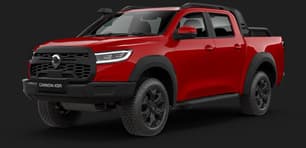
The Cannon XSR is GWM’s new top-shelf ute variant.
This dual-cab 4WD ute is intended as an off-road-focussed vehicle and has visual and mechanical upgrades over the rest of the Cannon stable, including part-time 4WD (not the full-time 4WD on GWM’s lower-spec Cannons), a front differential lock (in addition to the existing rear diff lock), raised air intake (aka a snorkel) and Cooper Discoverer AT3 all-terrain tyres.
It’s priced from $52,990 drive-away, so costs about $7500 more than you’d pay for the standard Cannon X on which this special edition ute is based. But it still undercuts similarly-equipped top-spec Ford Ranger and Toyota HiLux utes by about $20,000.
So, with twin lockers, a snorkel, underbody protection and all-terrain tyres, is the GWM XSR worth the extra cash?
Read on.
Remember when electric vehicles were the next big thing? Well they still are, it's just that hybrids are making a huge comeback and have entered a new era of the super hybrid. These are plug-in hybrids with enormous driving ranges and Chery’s just arrived Tiggo 9 Super Hybrid is one of these.
The Tiggo 9 is a large seven-seater SUV that competes with the likes of plug-in versions of the Hyundai Palisade and GWM Tank 500, only for less money.
The value is excellent, but how does the Tiggo 9 score in other areas such as the way it drives, its practicality and safety, or its styling and interior feel?
We found out in this first Australian drive.
In a very competitive ute market, the GWM Cannon XSR represents plenty of bang for your buck, but it’s just not as refined as you’d hope.
It should be better at this price-point, especially when it’ll be unfavourably cross-shopped with lower-spec variants in the Ford Ranger, Isuzu D-Max and Toyota HiLux line-ups.
It’s a nice enough vehicle on-road, and the XSR is an effective 4WD on the dirt without ever being truly exceptional – but that’s fine for those who want to save big bucks and still drive away in a well-equipped twin-locked off-road vehicle.
The Chery Tiggo 9 Super Hybrid is outstanding in many ways, especially value and the way it drives. I can only stress the importance of charging this vehicle frequently, however, otherwise it will go from super hybrid to super fuel consumer.
The XSR is 5439mm long (with a 3230mm wheelbase), 1958mm wide, and 1918mm high. It has a listed kerb weight of 1965kg.
It looks like the mongrel child of a HiLux, Ranger and D-Max – in a good way.
The wider-than-standard wheel track, as well as the snorkel, sports bar, substantial bash plates, tyres and even red brake calipers add to this ute’s presence.
Chery has crafted a superb-looking SUV here. Sure, the design isn’t ground-breaking or unique, but styling is beautiful from the large grille and multi-spoke wheels to the chrome framed windows and smooth lines of the tailgate.
Our car was painted in 'Aurora Green', which looks stunning in the sunlight. There’s also 'Cosmic Black', 'Star White' and 'Technical Grey'.
The cabin is super modern and luxurious looking, with only a few physical buttons for the hybrid system and climate control. The leather seats are a lovely high-end touch, and while the level of refinement is not up there with the likes of Audi and Lexus flagships the build quality appears to be good.
The Tiggo 9 stretches 4800mm end to end and is 1930mm wide. That classifies it as a large SUV, albeit not an enormous one. A fairly short wheelbase of 2750mm means the cabin space isn’t as voluminous as you might have thought.
The XSR’s five-seat interior is a neat and roomy space but, in line with most utes at this price-point, if you scrutinise it in a critical way you soon discover that some parts feel a bit cheap and flimsy, such as some buttons, dials and switches.
Up front there are two USB ports, a wireless charging pad, a 12V plug and a capacious centre console.
A pair of cupholders can be concealed under a sliding cover and the storage bin is on the right side of big.
The driver gets a six-way power-adjustable seat; the front-seat passenger gets four-way power adjustment. Both seats are comfortable without being too plush.
Second-row passengers get a firm but comfortable seat and amenities include a USB port, a 220V plug, and a fold-down centre armrest.
The second-row seat base can be folded up and out of the way to make room for more gear if only two people are travelling.
Build quality is generally okay, part from the aforementioned flimsy-feeling buttons.
The XSR’s business end, the tub, has a durable-looking tub liner, tie-down points and a handy pop-out step hidden in the top of the tailgate.
But it's worth noting this ute’s tailgate can’t be locked.
The Chery Tiggo 9 is not overly large and with a relatively short wheelbase the cabin room is adequate but not outstanding. I’m tall at 189cm, but there is still room for me to sit behind my driving position and headroom is good, too. That said, the cabin floor is high which raises the knee height for second row passengers.
The third row is really just for children and for those occasional but unpredictable times when as a parent you’re suddenly thrown into having to transport more kids home or to parties.
Cabin storage is good with door pockets and cupholders front and back, while a large storage area under the centre console is great for loose items or even a handbag or small backpack.
The wireless charger is perfectly situated on top of the console and features a grippy soft surface.
I would have liked more physical dials and buttons for climate and the stereo, which are accessed through the central screen.
Boot space, according to Chery, is larger than it looks, with the manufacturer saying with the third row up there is 143 litres of cargo capacity and with five seats in place it's 819 litres.
The XSR has a manufacturer suggested retail price of $52,990 drive-away.
Standard features include a 9.0-inch multimedia touchscreen system (with Apple CarPlay and Android Auto), a 7.0-inch digital driver info display, quilted leather seat trim, quilted leather door trim, 18-inch black alloy wheels, a sports bar, an assisted tailgate (with a pop-out step) and roof rails.
It also has LED headlights with LED DRLs, side steps, powered mirrors, keyless entry, push-button start, power-adjustable and heated front seats, a leather steering wheel, single-zone climate control air conditioning, an auto-dimming rear view mirror, tinted rear glass, and a six-speaker audio system.
As well, the XSR gets a part-time 4WD system (with 2WD high-range, 4WD high-range and 4WD low-range), rather than full-time 4WD, which is on lower-spec GWM utes; a front differential lock (in addition to the existing rear diff lock) and Cooper Discoverer AT3 all-terrain tyres.
It also gets red brake calipers, an underbody bash plate, wheel arch flares, and a sunroof.
Elsewhere, it gets steel front and rear bumpers and a new black grille.
There is only one grade in the Chery Tiggo 9 Super Hybrid line-up - the Ultimate - and it lists for $59,990. It’s remarkably affordable compared to many rivals and the value is outstanding.
As you might imagine the Ultimate is fully loaded with features.
There are leather seats - powered adjustable, massaging, heated and ventilated in the front, while the second row outboard seats are heated and ventilated, too.
There are big screens - a 15.6-inch media display and a 10.25-inch digital instrument cluster as well as a head-up display. There’s Apple CarPlay and Android Auto, sat nav, a 12-speaker Sony sound system and digital radio.
There are LED headlights and tail-lights, 20-inch alloy wheels, a panoramic glass roof, privacy glass and a power tailgate.
The XSR has the Cannon’s 2.0-litre four-cylinder turbo-diesel engine that produces 120kW at 3600rpm and 400Nm from 1500rpm to 2500rpm.
It has an eight-speed automatic transmission.
As mentioned, the XSR has part-time 4WD – with 2WD high-range, 4WD high-range and 4WD low-range – rather than the full-time 4WD set-up that’s in standard Cannons.
The Cannon XSR has a listed fuel consumption of 9.4L/100km on a combined cycle.
Actual fuel consumption on this test, from pump to pump, was 11.2L/100km but, as is the nature of my testing, I did a lot of low-range four-wheel driving.
The Cannon XSR has an 78-litre tank so, going by that fuel figure above, you could reasonably expect a driving range of about 696km from a full tank.
Note: Drop 30km to 50km from any vehicle’s total calculated fuel-range figure for a better idea of that vehicle’s safe touring range – so, following that advice, the above driving range figure (696km) would become 666km after a 30km safe-distance buffer has been subtracted.
Also, remember that numerous other factors affect your fuel consumption and so impact your driving range, including how much extra weight you have onboard (passengers, camping gear, etc), whether your vehicle is fitted with any aftermarket equipment (bullbar, spare-wheel carrier, etc), whether you are towing (a camper-trailer, caravan, or boat, etc), your vehicle's tyre pressures, and the conditions.
The Tiggo 9 Super Hybrid is a plug-in hybrid. There’s a fuel tank for petrol (95 RON minimum) and a charging flap for you to fill up the 34kWh battery.
Super hybrids are so-called because of their relatively big batteries and longer ranges. Chery says on a full 70-litre tank and charged battery the Tiggo 9 Super Hybrid has a range of 1250km (NEDC). The WLPT range isn’t given but while it will still be impressive it would be less than the NEDC. The same goes for the electric-only range of 170km (NEDC).
If you keep the battery charged, fuel consumption is outstanding. In our short time with the car the trip computer was reporting an average 1.4L/100km, which is exactly the manufacturer's claim.
I noticed that once battery charge fell below 20 per cent the fuel economy worsened to 7.1L/100km.
The battery has a 71kW DC charging capacity however and will fill up fast. But you will have to top up frequently to get the good fuel economy.
If you’re not expecting a dynamic, sporty driving experience from the Cannon XSR, then you won’t be disappointed.
I’m enjoying the fact that off-road vehicles from China and India are improving all the time but there are significant trade-offs when opting for a much cheaper version of the ute you actually want.
The XSR is not an insubstantial ute, but that doesn’t excuse its less-than-ideal steering (which feels too loose) or its stiff ride on upgraded suspension which, even though it increases wheel travel (for 4WDing – more about that later), seemingly hasn’t been tuned to suit the XSR’s bigger tyres, wider wheel track and greater bulk than its lower-spec stablemates.
Also, this ute has an unwieldy turning circle of 13.7m, which makes it an interesting vehicle to manoeuvre along busy urban streets or through a bustling car park.
This is a well priced ute if compared to similarly equipped, much more expensive utes, but that doesn’t excuse its touchy throttle and thrashy transmission.
However, its engine, which can feel underdone when challenged, has a relaxed feel about it when open-road cruising and if you aren’t putting too much pressure on it you likely won’t think it’s much of a let-down.
Overall, the XSR does okay on sealed surfaces, without ever getting anywhere near great – it’s simply not as refined or compliant as it could – or should – be.
On the dirt track leading to our 4WD test track, the XSR was very skippy over corrugations and tended to thump through potholes.
This ute does go well off-road though when it comes time for low-range 4WDing but, equipped with front and rear diff locks, that’s to be expected.
Off-road traction control and other systems including hill descent control, are adequate without being as seamlessly smooth as the equivalent systems in more expensive vehicles.
It also has 'Crawl Mode' (allows for no-pedal, low-speed driving) and 'Turn Assist' (which brakes the XSR’s inside rear wheel to reduce the ute’s turning circle on traction-compromised surfaces).
The over-sensitive throttle is far from ideal during low-speed low-range 4WDing when you need absolute control for safe driving, but I did become used to it – or at least I put up with it.
As mentioned earlier, the upgraded suspension has boosted wheel travel, which means you’re more than likely able in the XSR to stretch a tyre to the dirt for better traction and controlled forward progress.
The XSR’s Cooper Discoverer AT3 all-terrain tyres help, especially when the dirt becomes sticky mud that would gum up a lesser tyre, and we had no strife getting up and over one of our more severe set-piece hill climbs on that rubber.
All in all, the XSR is a capable twin-locked 4WD without ever being exceptional – and that’s fine.
The Cannon XSR has towing capacities of 750kg (unbraked) and 3000kg (braked).
The Chery Tiggo 9 Super Hybrid drives silently and smoothly with strong acceleration just like an electric car for the most part while in the city at lower speeds.
Hills and higher speeds call on the engine to help but even then the transition is almost imperceptible.
A comfortable ride with well set up suspension, light and accurate steering make for an impressive and effortless driving experience.
There are downsides, like the brake pedal feel. As in many hybrids there’s a ‘wooden’ sensation and I felt I needed to depress the brake pedal harder and longer to pull up at times. This is a heavy vehicle at 2200kg and brake response could be better.
The active safety tech is also intrusive, as is the case with so many cars these days, but the alerts and warnings can be turned off.
The Cannon range has the maximum five-star ANCAP rating from testing in 2021, however the Cannon XSR is not covered by this rating.
Standard safety gear on the XSR includes seven airbags, AEB (sans pedestrian detection) forward collision warning, lane-departure warning, lane-keep assistance, adaptive cruise control, traffic sign recognition, rear parking sensors, a 360-degree camera and tyre-pressure monitoring.
It does not get front parking sensors, lane-change assist or a door-open warning.
The Chery Tiggo 9 Super Hybrid hasn’t been assessed by ANCAP yet, but the safety tech is in abundance with everything from AEB, front and rear cross-traffic alerts with braking, lane keeping assistance and blind-spot warning.
For child seats there are three top tether anchor points and two ISOFIX points in the second row only.
There are also 10 airbags onboard.
I’ve mentioned the intrusive safety alerts in the driving section, and while they can be turned off, they can also be life saving.
The XSR is covered by a seven year/unlimited km warranty.
The first service is scheduled at the six-month/5000km mark (and costs $260), then every 12 months or 10,000km, with each service costing $360 a pop.
The Chery Tiggo 9 Super Hybrid is covered by a seven-year, unlimited-kilometre warranty, while the battery has an eight-year unlimited-kilometre warranty.
There’s also roadside assistance and capped price servicing for seven years at $3174, or an average of $453 per year.
Chery's national dealer network consists of 86 sites, including 21 in Melbourne, 20 in Sydney and 12 in Brisbane.