What's the difference?
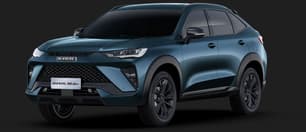
GWM has launched its first plug-in hybrid for Australia and in comes in the form of their mid-size SUV, the Haval H6 GT Ultra PHEV.
There's been a growing coolness towards EVs and their middle-ground counterparts of late but with a class-leading electric driving range of 180km, the new H6 GT Ultra may just warm you up.
GWM’s top-spec Cannon, the XSR, is a dual-cab 4WD ute worth checking out.
At a little more than $50,000, drive-away (nationwide), with twin lockers, a snorkel, underbody protection and Cooper Discoverer AT3 all-terrain tyres, this off-road-focussed Cannon variant also now has a 2.4-litre four-cylinder turbo-diesel engine rather than the previous-generation’s 2.0-litre four-cylinder turbo-diesel.
Lower-spec Cannons have undergone a refresh of sorts, including a revised front, but the XSR’s major change is the new engine. No matter, because there’s enough on offer in this top-shelf package for it to retain its value-for-money appeal.
But does the new engine make a difference to the XSR’s off-road performance?
Read on.
The new GWM Haval H6 GT Ultra PHEV has got to be one of the few plug-in hybrids that makes sense to me, given I live in a regional area. The longer electric driving range and DC charging capability offers far more convenience and practicality than the usual plug-in hybrids I’ve sampled.
It’s well-priced and has enough features for the average family. So, while I don’t love everything about it, it offers decent value for money.
The GWM Cannon XSR is a twin-locked 4WD ute that’s reasonable on-road (it’s getting better all the time) and very capable off-road.
It certainly has enough gear onboard – including front and rear diff locks, a snorkel and all-terrain tyres – to be taken seriously as a 4WD, but it could still be better and more refined in other aspects, even at this price-point.
There are some issues with the Cannon’s general driveability but ultimately it has plenty going for it, not least its appeal as an impressive value-for-money purchase.
The H6 GT is the better-looking cousin to the regular H6 SUV because the swoopy rear end adds some much-needed personality.
It's the 19-inch alloys, Michelin tyres and red brake calipers that add to the sporty vibe.
It looks quite large for the segment and while I’m not a massive fan of the heavy plastic moulding around the base of the car, it’s got enough charm to appeal to a wide audience.
Head inside though and you're immediately hit by a strong plasticky presence, whether it be from actual plastics in the dash and door panels or the synthetic feeling of the upholstery itself.
The sunroof and red-stitched 'GT' on the seats add something but its all rather plain and lacks some personality inside.
I do like though that there’s no transmission tunnel, which means more legroom for middle seaters in the rear.
The XSR is 5439mm long (with a 3230mm wheelbase), 1958mm wide and 1893mm high. Official kerb weight is listed as 2230kg.
This is a substantial ute that resembles an amalgamation of Ford Ranger, Isuzu D-Max and Toyota HiLux.
The wide wheel track gives the XSR a squat stance and its snorkel, sports bar, bash plates, chunky all-terrain tyres and red brake calipers add to this ute’s presence.
Inside, a steering-wheel design tweak (it’s now three spokes) and refreshed dashboard layout help to give the cabin a low-key classy look and feel.
It may lack the all-around polish of something like the Ford Ranger, but the XSR’s much lower price negates that perception.
The XSR holds its own in the looks department across the dual cab ute category.
The most practical aspect of the H6 GT's cabin is its sheer size. It's a spacious cabin for the class and that translates to lots of passenger room in each row. Which is only let down by the relatively small boot capacity of 392L (when all five seats are in use).
The boot does feature a level loading space, a 12-volt power socket, retractable cargo cover and a powered tailgate. The latter I always appreciate with kids in tow.
There are lots of individual storage options with the front featuring a glove box large enough for an owner's manual, a middle console, two cupholders and two drink bottle holders. There's also a large shelf underneath the centre console, a dedicated phone cradle and a sunglasses holder.
In the rear there are two drink bottle holders, two map pockets and a couple of cupholders in a fold-down armrest. So plenty of choices for passengers.
Surprisingly, the most comfortable seats are in the rear which feature thick padding, good lumbar support and long seat beds. The electric front seats have heat and ventilation functions, as well as adjustable lumbar support but the lumbar sits too low and the seat backs curve in too far for them to be called comfortable on a longer journey.
The tech is made up of a 12.3-inch touchscreen multimedia system and 10.25-inch digital instrument panel and while they look nice, they're basic at best. The multimedia system is simply laid out but lacks any real customisation and doesn't have sat nav.
The touchscreen can be laggy and there is wired Apple CarPlay and Android Auto. GWM has confirmed that wireless phone mirroring is due sometime later this year.
Charging options include four USB-A ports (but no USB-C ports), two 12-volt sockets and a wireless charging pad but the pad didn't always work for my iPhone 15 Pro Max (whether that is a user or software issue, I'm not sure).
The XSR’s five-seat interior is neat and spacious but there are parts, such as some buttons, dials and switches, that feel a bit flimsy and cheap.
Up front there are two USB ports, a wireless charging pad, a 12V plug and a deep centre console.
The new 12.3-inch touchscreen multimedia system includes wireless Apple CarPlay and Android Auto and has been improved by increments.
The front seats are power adjustable (driver’s six-way, passenger four-way) and both are comfortable without being too plush.
Second-row passengers get a firm but comfortable seat and amenities include USB charge ports, a 220V plug, air vents, and a fold-down centre armrest (with cupholders). There’s plenty of head, knee and legroom, unless you’re stuck in the middle where knee and foot room is pinched.
The second-row seat base can be folded out of the way to make room for more gear if no one’s in the back seat.
The second-row seat has top-tether points and there are ISOFIX anchors on the outboard seats.
The XSR’s load space (1520mm long, 1520mm wide and 540mm deep) has a durable tub liner, four tie-down points, as well as a pop-out step hidden in the top of the tailgate, and a step-up indent at each corner of the rear bumper.
This Cannon offers just as much all-round practicality and load-space flexibility as the likes of Isuzu D-Max, Mitsubishi Triton and Toyota HiLux.
There is only one grade available for the H6 GT, which is the Ultra and it's available with two powertrains - a 2.0L turbo-petrol engine or the 1.5L turbo-petrol plug-in hybrid powertrain of our test vehicle.
Its sharp drive-away pricing of $53,990 makes it very competitive against its rivals. The BYD Sealion 6 Premium sits at $52,990 MSRP and you have to jump into the Mitsubishi Outlander PHEV Exceed ($69,290 DA) if you want to match on some of the standard equipment of the H6 GT Ultra.
While the PHEV offers a class-leading electric driving range of up to 180km, it features pretty much the same equipment as it's non-hybrid sibling but is $9000 more expensive.
The premium features include a panoramic sunroof, synthetic leather and suede upholstery, electric front seats with heat and ventilation functions, a heated steering wheel, a powered tailgate, powered and heated side mirrors and rear tinted glass.
Technology includes a keyless entry/start, 10.25-inch digital instrument cluster, dual-zone climate control, 12.3-inch touchscreen multimedia system, coloured head-up display, four USB-A ports, two 12-volt sockets, a wireless charging pad, FM/AM radio, Bluetooth, and wired Apple CarPlay and Android Auto.
However, it doesn't have a spare tyre (just a repair kit) or sat nav and there's no wireless phone mirroring. At least, not yet but GWM has confirmed that they are working on getting the phone functionality up and running sometime later this year.
The XSR is the top-spec variant in the Cannon line-up and as such has a price-tag of $50,990, drive-away (offered nationwide).
Standard features include 18-inch alloy wheels, a chrome sports bar, automatic LED headlights, spray-in tubliner, keyless entry, leather-accented upholstery, 12.3-inch touchscreen multimedia system (with wireless Apple CarPlay and Android Auto), a six-way power-adjustable driver's seat and four-way power-adjustable front-passenger seat, ambient lighting, a black sports bar and matt black exterior trim.
Exterior paint choices for the XSR include the standard 'Pearl White', or 'Crystal Black', 'Lunar Red', 'Stealth Grey', 'Sapphire Blue' and 'Pittsburgh Silver'.
This Cannon compares favourably to rivals such as the Isuzu D-Max, Mitsubishi Triton and Toyota HiLux, in terms of standard features offered for the price.
The new H6 GT Ultra has a plug-in hybrid powertrain that combines a 1.5-litre four-cylinder turbo-petrol engine with three electric motors, two at the front and one at the rear.
Together they produce a combined power output of 321kW and 762Nm of torque. That gives this 4WD a 0-100km/h sprint time of 4.9 seconds. So it's a quick SUV but somehow it doesn't manage to feel 'blow-your-hair-back' quick.
The engine is paired with a two-speed dedicated hybrid transmission (DHT) and the switch between the electric and engine components is practically seamless.
The new 2.4-litre four-cylinder turbo-diesel engine produces 135kW at 3600rpm and 480Nm at 1500-2500rpm. It's tractable and well suited to the demands of 4WDing.
Don’t get me wrong, the previous-gen Cannon’s 2.0-litre four-cylinder turbo-diesel engine (120kW/400Nm) was no slouch, either. It’s just that this bigger and more powerful engine is better.
The new engine can easily muster more than enough power and torque on- and off-road when needed. However, there are enough instances of substantial lag at crucial moments – punching off the mark from a complete stop to safely merge into traffic, for example – that when compounded threaten to mar the overall driving experience.
Another thing. The automatic transmission, now a nine- rather than eight-speed, while generally okay, proves patchy in daily driving, not upshifting as slickly as it should and sometimes hunting for the sweet spot, rather than hitting it.
In terms of all-round powertrain performance, the XSR is on par with four-cylinder, turbo-diesel rivals such as the Ford Ranger 2.0L (125kW/405Nm), Isuzu D-Max 2.2L (120kW/400Nm), Mitsubishi Triton 2.4L (150kW/470Nm) and Toyota HiLux 2.8L (150kW/500Nm).
The new H6 GT has a ternary lithium battery with a large 35.43kWh capacity. It also has a Type 2 CCS charging port, which is pretty rare but welcome on a plug-in. This system can accept up to 6.6kW on an AC charger and up to 48kW on a fast DC charger, which is great.
It means you can plug in at a DC fast charger during a road trip like a normal EV and that improves overall efficiency.
The combined fuel cycle figure is just 0.8L/100km and with the 55L fuel tank, you’ll get a theoretical driving range of over 1000km. That’s just something to consider right there. The considerable pure electric driving range of up to 180km also ensures that you can do your daily errands and school run without really touching the fuel tank.
Which I totally proved this week after doing 469km of open-road driving and my daily 'urban' errands and only using 2.3L of fuel all week. I had two full charges during my week and that means my real-world usage beats the claimed figure at 0.49L/100km. Haval H6 GT for the win.
Listed fuel consumption is 8.4L/100km on a combined (urban/extra-urban) cycle, which is better than the 9.4L/100km offered by the previous 2.0-litre four-cylinder turbo-diesel engine and eight-speed auto.
I recorded on-test fuel consumption of 10L/100km which is ahead of the 11.2L/100km I recorded in a Cannon XSR with the 2.0-litre four and eight-speed.
The XSR has an 78-litre tank, so, going by my on-test fuel figure, you could reasonably expect a driving range of about 780km from a full tank of diesel.
The new powertrain took a few days to get used to because it doesn't behave like some of the PHEVs I've driven before. The emphasis is on EV driving rather than the ICE components. The pedals are quite stiff which takes a moment to adjust to, but the auto-hold braking and strong regenerative braking means it's difficult 'creep' forward like you can in a regular ICE car.
The one-pedal function is true one-pedal driving and if you time your deceleration right, you won't touch the brake pedal. You'll either like that or you won't but it's been nice to use this week.
The power delivery is prompt and there's a lot of power available. It doesn’t feel wicked quick like a performance EV but it certainly has enough punch to satisfy. You don’t notice when it switches between the engine or motor, which makes it a very smooth powertrain.
The steering is a little spongy but responsive enough to feel spry for quick lane changes. It's just not particularly dynamic on a winding road with the combination of the firmer suspension and soft steering.
Road noise can creep up at higher speeds and there is an annoying whirring sound from the motors that my son likened to a dull aeroplane engine roar.
The suspension is on the firmer side and you notice the bumps but you also don’t wince when you hit one. Visibility is okay but the thick A-pillar can get in the way when you're scanning the road at intersections, and the back window is narrow. A digital rear-view mirror would be a handy feature for the model.
The H6 GT Ultra PHEV is pretty easy to park because it has a clear 360-degree view camera system and parking sensors at the front and rear. The 12-metre turning circle makes it pretty friendly in a carpark, too.
As noted above, there are some issues with the Cannon’s general driveability, but all in all it’s not atrocious. And if it’s a potential buy for you, you’ll always come back to the value-for-money rationale.
On- and off-road, the new engine has plenty of punch about it, but patchy delivery through the transmission sometimes works against it.
It’s a not a dynamic vehicle. No surprise, it’s a ute after all. But that point has to be made here because some people still drive these vehicles expecting sports car-like ride and handling.
The good news is the XSR’s touchy throttle and too-loose steering of days gone by have been mostly sorted out. But its thrashy transmission, stiff ride and unwieldy 13.7m turning circle remain.
Its bigger engine doesn’t carry over the previous-gen’s underdone feeling when pushed hard and it has a relaxed feel when you’re cruising along on the highway.
Some concerns have been raised over the years about driver-assist tech in Chinese-built vehicles. To the company’s credit, GWM seems to have addressed those issues… at least to some extent.
Suffice it to say, I’ve experienced a few tricky situations as a result of driver-assist tech in GWM vehicles. From annoyingly intrusive traffic sign recognition and jarring adaptive cruise control through to one particularly hair-raising AEB-related incident. (For more, read my yarn)
Overall, the XSR remains okay on sealed surfaces, but it’s not as refined or compliant as it could or should be.
As for off-roading…
On dirt tracks the XSR is jittery over corrugations and tends to thump through deeper potholes. Otherwise it is reasonably composed.
But with twin differential locks, decent underbody protection and Cooper Discoverer AT3 all-terrain tyres, this Cannon handles low-range 4WDing with ease.
The new bigger engine delivers on promised grunt in the dirt, giving the Cannon plenty of punch when the going gets tough.
Ground clearance of 228mm, wading depth of 700mm and off-road angles of 30 degrees (approach) and 26 degrees (departure; rampover is not listed) don’t hurt its 4WDing potential, either.
Off-road traction control and other driver-assist systems including hill descent control are adequate without being as smooth as the equivalent systems in more expensive vehicles.
It has 'Crawl Mode' (allowing for no-pedal, low-speed driving) and 'Turn Assist' (which brakes the XSR’s inside rear wheel to reduce the ute’s turning circle on traction-compromised surfaces).
While 4WDing, swapping between high- and low-range, changing off-road modes or switching diff locks on or off has been at times a clunky process, with the transition taking on a feeling not unlike shunting trains. No big deal, I reckon, but worth mentioning.
Wheel travel is adequate and this ute’s Cooper Discoverer AT3 all-terrain tyres perform well in the dirt and mud.
The Cannon XSR has towing capacities of 750kg (unbraked trailer) and 3000kg (braked).
All in all, off-roading is the one area in which the Cannon eclipses something like the BYD Shark 6 or Kia Tasman and matches, if not bests the Ford Ranger.
The Haval H6 GT has a maximum five-star ANCAP safety rating from testing done in 2022 and scored 90 per cent for adult protection, 88 per cent for child protection, 73 per cent for vulnerable road users and 81 per cent for safety assist.
It features seven airbags, including a front centre airbag.
There are seatbelt reminders (all seats), hill-start assist, tyre pressure monitoring, front and rear parking sensors, surround-view camera system, adaptive cruise control with stop and go, rear cross-traffic alert, lane keeping aid, lane departure alert, rear collision warning, forward collision warning, traffic sign recognition and a driver monitoring system.
The autonomous emergency braking (AEB) with cyclist, pedestrian, car and junction turning assist is operational from 5.0 - 85km/h (up to 150km/h for car detection).
There are two ISOFIX child seat mounts and three top tether anchor points and the rear seat is wide enough to accommodate three child seats side by side.
The driver assist features seem to work smoothly most of the time but I did find the driver attention monitor a bit annoying, as you get a few more chimes than you need and the lane keeping aid feels too jerky.
All GWM Cannons, except the 'untested' XSR, have had the maximum five-star ANCAP safety rating since 2021.
Standard safety gear on the XSR includes seven airbags (dual front, front centre, front side and full-length side curtain), AEB (with cyclist and pedestrian detection), adaptive cruise control, blind-spot monitoring, lane-departure warning, traffic sign recognition, rear parking sensors, a 360-degree camera and tyre-pressure monitoring.
The top-spec XSR misses out on emergency lane keeping, rear collision warning, blind spot monitor, lane change assist, and rear cross traffic alert (with braking).
GWM offers the H6 GT with a seven-year unlimited kilometre warranty, which is becoming the normal term for the class and you will enjoy five years of roadside assistance through Allianz.
There is also a five-year capped-price servicing program that costs $1680, which is competitive. The first service is at 10,000km but subsequent intervals are spaced at every 12 months or 15,000km.
The XSR is covered by a seven-year/unlimited km warranty and five years of free roadside assistance.
The first service is scheduled at the 12 month/10,000km mark, then services are scheduled for every 12 months or 15,000km.
Capped price servicing is available and for a Cannon with a warranty start date on or after January 1, 2026, the costs are $365, $470, $515, $520, and $685 per service. That’s a total of $2555 (and an average of $511 per workshop visit), which is more expensive than some of the Cannon’s rivals on the market.