What's the difference?
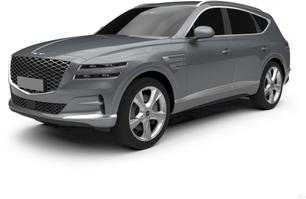
The Genesis GV80 SUV has cultivated a quiet but firm following since its debut but there's a new variant on offer - the coupe.
Offered in one highly-specified grade level for our market, the GV80 3.5T Luxury AWD Coupe proves to be a fierce competitor with luxury and handling for it's European rivals - the BMW X6, Range Rover Velar and Mercedes-Benz GLE Coupe.
However, the price point is starting to creep a little closer to its rivals, which might not be to everyone's fancy.
I've been family testing the GV80 for a week to see if it gets the seal of approval from my little family of three, read on to find out how it went.
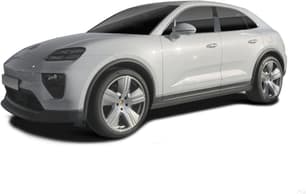
This might be the biggest gamble in Porsche's history. It's the latest version of its best-selling car, the Porsche Macan, only this one has a very big difference.
You see, this time, it’s all-electric. There is not an internal-combustion engine (ICE) in sight. And that makes climbing into an entry-level Macan significantly more expensive than ever before.
So, will this bold shift help or hinder the Macan in Australia? And is this the country’s best all-electric SUV?
There’s only one way find out.
The Genesis GV80 Coupe is a rare breed – it comes packed to the gills with features, has great ownership benefits and can easily accommodate a large family in comfort.
The fuel economy isn’t great but it looks and acts the part of a true luxury SUV. My husband and son were impressed and enjoyed all of the features it has.
There is no doubting the substance of the Porsche Macan Electric. Its ride, steering and poise make it a joy to drive on twisting roads, and it ticks the practicality boxes, too.
The only lingering question is whether enough people are ready to make the all-electric switch. Only then will we know if Porsche's Macan gamble has paid off.
Note: CarsGuide attended this event as a guest of the manufacturer, with travel, accommodation and meals provided.
At first glance, there’s not a lot that separates the external styling of the Coupe and SUV, at least in the front.
The biggest difference is obviously in the rear and it's here Coupe's design shines. The SUV sibling looks nice but is a little boxy at the rear and features a dicky-looking window. The Coupe's rear is pinched but it’s rather softly done compared to some rivals.
It manages to look sleek and sexy as coupes tend to be without losing any of its large road-side presence.
The 'Storr Green Matte' paintwork on our test car highlights the high-end feel, as does the huge LED external lights and chrome accents.
Head into the cabin and you'll find design elements which accentuate the width of the car – like the long air vent strip that runs the length of the dashboard, a wide centre console and the huge 27-inch OLED technology screen that houses the media system and instrument cluster. Even the touchscreen control panel for climate and seat functions is big.
Our test model has a cream-coloured suede headliner and quilted Nappa leather seats that look plush. Contrasting stitching and the seatbelts are a bright red (or dark orange, depending on who you ask) and the panoramic sunroof adds a bright and cheery element.
The ambient lighting surrounds a lot of the features, like the cupholders and the crystal rotary dials. In fact, when you pop the car into reverse, the light changes from whatever it was to red, which is neat.
As far as luxury cars go, this totally looks the part and while design is very subjective, I love how this looks inside and out. Let us know what you think of it in the comments.
The Macan Electric looks sharp, all aerodynamic and swept-back like a range-maximising electric SUV should.
There’s functional method behind all this swoopy styling, too. The headlights look as though they’ve been chiselled into the body work, and at the grille, you’ll find active venting to help with cooling when needed.
There is also a sizeable front splitter that looks very much like the Macan is sticking its jaw out. All of which is to assist with aero and range.
It’s also a dual charging port layout with access left and right, though the latter is AC charging only, while the one on the left does both.
Step inside the Macan and you’ll find a familiar and very welcoming space. I especially like the twin-screen set-up that looks great in the way it's kind of embedded into the dash. Each is big, clear and easy to use.
I also really like the control panel that gives you quick-button access to the climate control, and the haptic feedback is next level, with the whole screen clicking in or out whenever you hit a button.
That said, in Turbo-guise you’re dropping almost $200,000, and some of the materials feel too hard and plasticky at that price point.
With all of its features offering comfort and luxury, practicality is pretty high for the GV80 Coupe.
The cabin feels almost cavernous up front for my 168cm height. As mentioned, the seats are very comfortable and there is a stretching function that briefly comes on during a longer journey to ease any fatigue in your lumbar.
The rear row is almost as large as the front and there's a limo-like quality to the legroom that taller individuals will enjoy. The headroom is good for the outboard seats but a taller adult will be hunched when sat in the middle. Keep that for a kid!
Amenities in this row are excellent with the powered outboard seats that feature heat and cooling functions, directional air-vents, climate control and retractable sun-blinds (my son's favourites).
The individual storage is a little less than you might expect for such a large car, especially up front, as all options are on the shallow/small side.
There is a middle console (think of it as a tray), glove box, two cupholders, two drink bottle holders and a phone cubby that can be closed to keep things looking neat.
The rear row sees two map pockets, two cupholders and a storage cubby in the fold-down armrest, as well as some shallow bin storage.
Technology looks stellar, is easy to use and found throughout.
You're spoiled for choice when it comes to charging as there are four USB-C ports, three 12-volt sockets and a wireless charging pad to choose from.
And new for 2025 is the UV-C feature, which sterilises whatever you place inside the middle console. Handy for anyone who wants to disinfect small items, like a phone, keys or wallet.
The multimedia system takes a while to get used to as the tech has been updated but once you do, it’s an easy system. You can access the media system via the touchscreen or the rotary dial. Climate control and seat functions are accessed via the large control panel that sits underneath, which is handy for when you're on the go.
The GV80 Coupe has built-in sat nav, wired Apple CarPlay and Android Auto, as well as, a 12-inch colour head-up display.
Because of the sleek rear shape, the boot space sits at 644L when all seats are in use. It’s large enough for my gear and weekly errands and I like the powered tailgate's proximity feature. As long as you have the key fob, it will open when you stand at the rear. Great for when you have your hands full.
The loading space is level and the rear seat has a 40/20/40 split, which opens up storage options. But underneath the floor, there are heaps of cubbies for extra storage of smaller items and it’s here the tyre mobility and roadside assistance kits are housed.
There is a little open-sesame magic at play with the Macan, and that starts at the frunk, where, if you lovingly caress the bonnet, it will automatically pop open for you, revealing an 84-litre storage space.
Rubbing the charging port will see it slide open, too, but just in case you’re not the kind of person who likes to fondle their car in public, you can use the key.
The Macan’s boot is a little more traditional, opening to reveal 540 litres (but just 480 litres in the 4S or Turbo) of storage with the rear seats in place, with a wide, flat and very useable area for your goodies.
The back seat of the Macan feels spacious enough, without being outstanding. There’s more than enough space for my 175cm frame, with enough knee and head room, but the way the middle console juts out will definitely eat into leg room for any middle-row passenger.
Elsewhere you get air-con controls with vents, along with bottle storage in each of the doors. There is also a pull-down divider that’s home to two extra cupholders.
The GV80 line-up has seen a model facelift for 2025 and the flagship’s powerful V6 engine now comes standard for all models. There's new tech and some design tweaks, too.
That means the price points are starting to creep a lot closer to their Euro rivals as the 3.5T Luxury AWD Coupe is priced from $136,000, before on-road costs.
However, despite only being offered in one variant for our market, the coupe is is ridiculously well-specified and you don't have to add luxury/enhancement packs at additional costs as you do on some of this car's rivals (I'm looking at you Range Rover).
In comparison, the closest rival, the BMW X6 xDrive40 MHEV, sits at $144,900 MSRP, and then the Range Rover Velar Autobiography comes in at $156,430 MSRP before the most expensive rival, the Mercedes-Benz GLE 450 4Matic Coupe, at $159,900 MSRP.
When I start talking about the GV80 Coupe's standard features I lose breath trying to list them all and you're about to learn why.
For comfort and luxury the Coupe is offered with crystal accents on its dials, Nappa leather upholstery, suede trims, a heated steering wheel and a panoramic sunroof.
The front seats are powered and feature a two-position memory function, lumbar- and side-bolster adjustments, extendable under-thigh supports, heat and ventilation functions... and a massage function.
Rear outboard seats are also powered and can be slide backwards/forwards and recline. They feature heat and ventilation functions as well.
Practical features include a powered tailgate with a proximity opening feature, retractable sun blinds (rear row), tri-zone climate control, keyless entry, push-button start, remote start and parking assist (via key fob), carwash and valet mode, and new for 2025, a biometrics system (fingerprint access for vehicle start and profile selection).
Technology includes a new 27-inch OLED screen that houses the multimedia system and instrument cluster, customisable ambient lighting, wired Apple CarPlay and Android Auto, over-the-air updates, satellite navigation, 12-inch coloured head-up display, digital rear view mirror, four USB-C ports, three 12-volt sockets, a wireless charging pad, Bluetooth connectivity and digital radio.
Phew... told ya there's a lot. Oh, and an 18-speaker Bang & Olufsen sound system. There. Done.
The Macan arrives with four trim levels, the entry-level Macan, the Macan 4, Macan 4S and then the flagship Macan Turbo. The latter is just a name Porsche now applies to its go-fast models — obviously there isn’t an actual turbo in action.
The new electric range opens with the Macan, which lists at $128,400, before on-road costs. A reminder here that the old entry-level Macan with an ICE powertrain would have set you back less than six figures, so this one represents quite the jump.
Now, it should be pointed out that you can still buy the previous-generation ICE Macan, at least until supply runs dry. The brand isn’t getting any more, but suggests there are enough in the country to satisfy demand until around Q2 next year.
Next is the 4, which is $134,400 and adds a second e-motor. Then comes the 4S, yours for $149,300, before the range tops out with the Turbo, which climbs to $184,400. All prices before on-road costs.
Those are big numbers, but at least Australian-delivered cars are some of the best-specified on the planet.
That starts with the Macan, which gets a 12.6-inch digital instrument cluster, and a second 10.9-inch central touchscreen with Apple CarPlay and Android Auto.
It rides on 20-inch alloys, has synthetic-leather seats that are heated up front and Australian cars get things like the clever 'Porsche Active Suspension Management' (PASM) system as standard.
Next up is the Macan 4, which adds a second electric motor, but otherwise largely mirrors the base car’s spec. Next on the list is the 4S, which rides on a different 20-inch alloy, picks up LED matrix headlights, sports a better Bose stereo, a panoramic roof and four-zone climate control.
Finally, the Turbo is the big dog of the electric Macan range, packing serious power, but also arriving with its own 20-inch alloy wheel design (with 21-inch wheels a no-cost option) — an augmented reality head-up display, and things like the 'Porsche Electric Sport Sound', the 'Sport Chrono Package' and a performance-focused 'Sport+' drive mode.
The GV80 model facelift sees all variants enjoy a powerful 3.5L twin-turbo petrol V6 engine that produces 279kW of power and 530Nm of torque.
The Coupe is an AWD, features an eight-speed auto transmission and can do a 0-100km/h sprint in just 5.7 seconds.
It also has different terrain modes and a braked trailer towing capacity of 2722kg. Whether you’d use this car for that sort of stuff is another matter.
The entry-level Macan is equipped with a single rear-mounted electric motor, and it will make a total 250kW (265kW with launch control activated) and 563Nm, which is enough to push the cheapest Macan to 100km/h in 5.7 seconds.
The 4 then adds a second electric motor for AWD, upping the grunt to 285kW (300kW with the launch function) and 650Nm, and drops the sprint to a brisk 5.2 seconds.
The 4S is probably the performance sweet spot, with its dual-motor set-up generating 330kW (380kW in launch) and 820Nm, and a blistering sprint of just 4.1 seconds.
But the Macan Turbo is a true monster. We’re talking 430kW (470kW with launch control), 1130Nm and a sprint to 100km/h that’s as fast as a Carrera Cup race car – just 3.3 seconds.
It’s twin-motor, all-wheel drive and offers the kind of brutal acceleration that gives you a little facelift every time you step on the accelerator.
Aye, here's the rub, as the hefty power comes with a thirsty gullet.
The official combined fuel-cycle consumption figure is a hefty 11.7L/100km and my real-world usage came out at 11.4L/100km after doing a lot of open-road trips this week.
I haven’t held back using the power but it's thirsty compared to its rivals which mostly sport mild-hybrid powertrains.
Based on the large 80L fuel tank and official combined fuel cycle consumption figure this car's theoretical driving range is 684km.
Every Macan is fitted with a big 100kWh lithium-ion battery, which helps deliver a solid driving range no matter which one you choose.
The entry-level Macan will cover the most distance, at a claimed 654km, while the 4, 4S and Turbo will travel 624km, 619km and 616km, respectively.
The Macan rides on an 800V architecture, and is set up for 270kW DC high-speed charging, which will take 21min to go from 10 to 80 per cent. It will also accept 11kW AC charging, which should take 10 hours to go from empty to full.
Worth noting, though, that most home wall boxes are around 7.0kW, which means a full charge would take more like 13 hours plus.
The GV80 Coupe has a deep well of power to dip into and fantastic pick up. The power delivery feels effortless and it’s easy for urban and open-road driving.
The GV80 isn't as dynamic on the road as some of its rivals when it comes to the ‘sporty’ factor and you notice that the most when you hit high winds or tackle a tight turn, as there is some roll, but on the whole it’s a smooth ride. Think of it as more ‘stately’ than sporty.
The cabin is mostly quiet but wind noise can creep in at higher speeds.
The wide windows and high ride mean the visibility is very good and so is the sound quality from the 18-speaker Bang & Olufsen audio system. Every school run is a concert!
The GV80 Coupe is large car and will fill out a parking space but it’s not hard to park because the 360-degree view camera system is so good and the projected parking guidelines add assurance in a tight spot.
There is a remote parking assist feature, where you can move the car remotely from your key fob, which is great for those times someone parks a bit too close and there’s not enough door clearance to get in.
Porsche seemed at pains to prove that, though the all-electric Macan has lost its ICE heart, it's still worthy of the badge, and still very much a Porsche.
First stop, then, was the Norwell race circuit in Queensland, to put the Macan through its paces with 0-100km/h sprints, drifting (well drift attempts... ) on a watered-down skid pan and finally some high-speed running on the circuit.
And two things immediately became very clear. The first, and most obvious, was that, like the first men on the moon, we were likely among only a handful of people that might ever take their all-electric Porsche mid-size SUV to a race track. And second, this is one seriously sorted electric car.
Happily, for the many (read: every) owners who won't be pulling out of a pit garage at their next local track day, the Macan is actually more enjoyable on the road than it is on the track.
On the latter, there's a freedom to push too hard – what with the lack of trees, guard rails or oncoming traffic – and cracks do appear, mostly from the screaming tyres struggling with the two-tonne-plus weight.
But on public roads, where a thick fog of consequence prevents you pushing too hard, the Macan is a gem.
Porsche tends to have a knack for these things, I know, but the Macan is a seriously smooth and satisfying drive.
The ride is bang-on (comfortable enough on rougher surfaces, firm and grippy enough on twisting roads) and the steering is direct and confidence-inspiring.
Body-roll has been largely banished, too, with the Macan staying flat, stable and satisfying, even on the tighter stuff.
In much the same way the ICE Macan defined what it meant to be a driver's SUV, I think this one does the same in the EV space. And the fact that it does it with five seats and a decent boot is a sizeable bonus.
But there's no denying it lacks in the emotion department. That sense of excitement, the sound track, the hard-to-define fizz – as competent its this, and as weaponised as the EV powertrain is – it does feel a little clinical, like a tool doing its job and doing it well.
One important caveat. We've driven the 4 and Turbo to date. The entry-level Macan and the mid-tier 4S are still incoming. And I suspect I wouldn't be dropping my deposit on the Turbo.
Yes, the power is ridiculous, but I don't reckon you need it. For me, the 4 is more than enough, but I suspect the real performance sweet spot will be with the 4S.
For those concerned with safety, you needn’t worry as the GV80 Coupe has a maximum five-star ANCAP safety rating from testing done in 2021 and scored highly for its adult and child protection scores at 91 per cent and 88 per cent, respectively.
Standard safety features include rear cross-traffic alert, lane departure alert, lane keeping aid, traffic sign recognition, intelligent seatbelt warning, a head-up display, adaptive cruise control, blind spot monitoring, blind-spot view monitor, parking assist pilot, driver attention alert and safe exit warning.
Other features include child occupant alert, leading vehicle departure alert, tyre pressure monitoring, LED DRLs, a 360-degree view camera system and front and rear sensors.
The GV80 Coupe comes with AEB with forward collision warning, car, pedestrian, cyclist and backover detection which is operational from 5.0–200km/h (up to 85km/h for car detection).
The GV80 features 10-airbags, which is great for the class!
There are ISOFIX mounts on the rear outboard seats plus three top tethers and you might get three seats installed if they’re not too big but two will fit best.
The Porsche Macan Electric is yet to be assessed by ANCAP, or by Europe’s NCAP, but it doesn’t appear to be missing any key equipment from its safety list.
That includes curtain airbags that extend all the way to the boot, AEB with pedestrian detection, lane keeping assist, a surround view camera and 'Intersection Assist'.
The GV80 Coupe comes with a five-year/unlimited km warranty and complimentary servicing for five-years or 50,000km, whichever occurs first.
There is also complimentary roadside assistance through Assist Australia for five years.
Since this is a turbo, the servicing intervals are a little annoying at every 12 months or 10,000km but it’s rare for a car brand, let alone a luxury one, to offer anything for free. What Genesis offers is a real plus.
The Porsche ownership experience is frankly underwhelming by modern standards, with the brand offering just a three-year/unlimited kilometre warranty, plus an eight-year/160,000km battery warranty.
The positive, though, is that servicing should only be required every two years or 30,000km. You also buy a prepaid service plan for three, four or five years, priced at $1495, $2795, $2995.