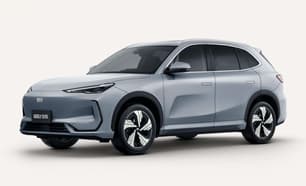
What's the difference?
You’re not alone if you’re struggling to grasp the sheer number of new names from China popping up in the Australian new-car market. There’s more than ten and the list is only growing.
Geely is yet another marque with an ambitious plan to break into Australia's top-10 auto brands. It might have a leg-up on rivals, though, because Geely has been dabbling in international marques for some time.
Volvo, Polestar, Lotus and Zeekr are either majority or entirely owned by Geely, and the father brand — like Volkswagen in its eponymous group — therefore benefits from years of engineering know-how from other brands. Clever.
The first car launching here Australia is the EX5, an electric mid-size SUV pitched at families. Think of it as a direct rival to the Tesla Model Y, Kia EV5 and XPeng G6 but (yet unconfirmed) sharp pricing might see buyers cross-shopping with Toyota RAV4s and Mazda CX-5s.
Geely even proclaims Australian-tuned suspension, something Ford, Toyota, Hyundai and Kia have used to huge success. But does that mean the 2025 Geely EX5 is top-10 material? A spin in an early production model should give us some answers.
It’s fair to say Mazda didn’t exactly rush into the electric vehicle market with a flourish. Its first battery-powered offering, the MX-30, was a small SUV with a big price and it sold in small numbers.
But with EV sales on the rise in 2026, the timing is perfect for its second electric offering to land in Australia, and the Mazda 6e is a very different proposition to the MX-30.
The 6e is a mid-size sedan, with a very competitive price and it has plenty of influence from the booming Chinese EV industry. The 6e is a product of the long-time joint-venture between Mazda and Changan and is the first car built in China sold in Australia by the Japanese brand.
The 6e (which is known as the EZ-6 in China) shares its underpinnings with the Deepal L07, with Deepal being the electric brand for Changan Automobiles.
So, can this second EV, with Chinese influence, help Mazda catch up lost ground in the electric car race? Read on to find out…
The Geely EX5 has good bones. It’s well packaged, sturdily built, efficient and jam-packed with technology. But questions remain. The EX5 really needs work on its safety systems and another round of chassis revisions to be competitive.
Pricing, too, will be crucial for the EX5 to succeed in today’s savage new electric car market.
If the list of nagging complaints can be fixed and Geely is able to back up its product with solid aftersales support, it could be a winner. The jury is still out on the EX5.
Note: CarsGuide attended this event as a guest of the manufacturer, with meals provided.
Mazda never had high hopes for the MX-30, it was always intended as a niche offering, but that is not the case with the 6e. The company is keeping its expectations in check, with sales of EVs seemingly returning to pre-oil crisis levels, but clearly there is a hope that this new-generation EV can help it catch up in the electric car race.
Certainly there is a lot to like with the 6e, starting with the price. It’s a cheaper alternative to both the BYD Seal and Tesla Model 3, so it starts strongly and then builds on that with the kind of design and driving experience we expect from Mazda.
There are definitely elements that need improvement, primarily the active safety calibration, but overall Mazda’s second electric car has a much better chance of success.
Given the similarities between the two, the cheaper price of the GT makes it the pick of the pair.
Note: CarsGuide attended this event as a guest of the manufacturer, with travel, accommodation and meals provided.