What's the difference?
Are you in the market for a cheap SUV? Are you ambivalent about what badge it wears? Do you like taking risks?
If you're answered yes to all those questions, do I have the car for you!
It's called the GAC Emzoom (that's e-m-zoom, so back off Mazda lawyers), and it's the latest in a seemingly endless list of new cars from new Chinese brands.
But unlike so many new models that fail to leave an impression, there are several reasons why the Emzoom is worth paying attention to.
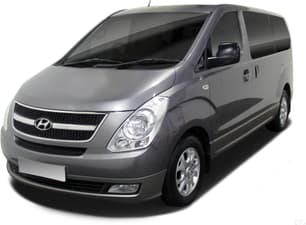
Hyundai’s contender in the under-$60,000 people mover segment boasts a heritage spanning a full decade. During that time it has built a loyal customer base that appreciates its spacious and airy eight-seater cabin, ease of driving, proven durability and five-year warranty.
Even so, the iMax and other well-established people movers are getting clobbered by Hyundai’s sister company Kia and its widely acclaimed Carnival, which with four model grades across a broad pricing spectrum currently boasts a dominant market share of more than 50 per cent.
There are numerous reasons for the Carnival’s popularity but that should not stop a potential buyer from also giving the iMax serious consideration. Its most recent upgrade to Series II specification in 2016 brought styling revisions and new features which made a good people mover even better.
Candidly, I really didn’t want to like the Emzoom. I think Australia has too many car brands already and the market is in danger of becoming overwhelmed with mediocre products at bargain prices that will squeeze out better but more expensive products.
But I cannot help but really be impressed by what GAC is offering. There’s no doubt the brand faces a major challenge expanding its dealership network to grow sales, but if it continues to deliver vehicles as nice as the Emzoom then it at least has a shot.
Not only is it affordable but it has style, space and is enjoyable to drive. For anyone in the market for a small SUV or just a sub-$30k new car, this should definitely be on your short-list.
Note: CarsGuide attended this event as a guest of the manufacturer, with accommodation and meals provided.
It looks a bit old-fashioned in a ‘Tarago’ sort of way and is starting to show its age with a five-speed transmission and in lacking some of the latest safety features. However, if you need to regularly transport up to eight people and expect good comfort, economy, performance, practicality, reliability and warranty as part of the deal, then the iMax still has more than enough going for it to justify top three positioning on any people mover shopping list.
Unfortunately one of the common themes for many of the new Chinese brands entering the Australian market is inoffensive but uninteresting design. The cars tend to be quite generic and lacking in style and statement.
That’s not the case with the Emzoom, which stands out with its bold, angular design that really sets it apart from its direct rivals. For a brand looking to make an immediate impression and attract a new demographic, GAC has made a strong opening move with the Emzoom.
It’s not limited to the exterior either, with an equally design-forward cabin. There’s only a smallish 7.0-inch LCD instrument display integrated into a wider panel, but it’s all housed within a single unit alongside the 14.6-inch multimedia display to create a hi-tech look.
Yes, there are other elements from rival brands that are evident in the design, but borrowing a few cues from other places isn’t something unique to GAC and the overall look and feel of the Emzoom is very likeable.
Compared to the Kia Carnival, which looks like tomorrow’s people mover today, the iMax is looking more like yesterday’s as its tall and minibus-like dimensions are immovably defined by its iLoad commercial van birth twin. Even so, there is still plenty of practicality and ease-of-use inherent in this traditional design, including a bright and airy cabin with generous headroom for all.
The iMax rides on the same 3200mm wheelbase as the iLoad and shares many of its key dimensions along with power-assisted rack and pinion steering and four-wheel disc brakes. However, to provide better ride quality than the van’s leaf springs, for human cargo the iMax’s multi-link live rear axle rides on plusher coil springs. The Series II upgrade also includes restyled 16 x 6.5-inch alloy wheels shod with 215/70 R16C tyres and a full-size steel rim spare.
The large front doors open wide for easy entry and exit and with no console between the front seats the driver and front passenger can literally walk through to the passenger area. Sliding doors on each side, with large windows that can be propped open for extra ventilation, allow generous access to the second and third row seating. These bench seats provide ample head room and adequate shoulder and legroom for medium-sized adults, even with three across the back row, which is a refreshing change from many SUVs that treat third-row adults as extra baggage.
There’s also ample ventilation, with roof and floor-mounted air vents for the second and third rows linked to a separate control panel which allows passengers to adjust the fan speed and air-con temperature independent of the driver. Combined with generous headroom and large rear passenger side windows which can also be propped open, the iMax succeeds in minimising claustrophobic feelings particularly for those in the back row.
The Emzoom offers a surprisingly spacious interior for a small SUV.
We were required to travel with four adult occupants at one stage and even in the back seat there was enough room for this six-foot tall reviewer to ride comfortably.
It feels more spacious thanks to the panoramic sunroof which can let in a load of natural light and get rid of the cramped feeling you sometimes have in these smaller models, particularly in the back seats.
While the seats are trimmed in PVC, they look and feel fine for this price point, and the driver’s seat is ventilated and has six-way power adjustment.
There are two USB ports in the front (one A and one C) as well as a 12V outlet, and there’s one USB-A in the rear.
The boot measures 341 litres, which is a respectable size for this type of SUV. While the inclusion of a power tailgate is a very nice touch at this price and makes life easier.
The iMax’s hefty kerb weight of 2230kg and GVM (gross vehicle mass) of 3030kg allows for a payload of 800kg and up to 125kg of that can be carried on the roof with a three-rack system. Eight average-sized adults on board would use up most of this payload capacity, so if they need to bring luggage it could easily surpass the payload limit.
It’s also rated to tow up to 1500kg of braked trailer and with a GCM (gross combined mass) of 4530kg it can carry its maximum payload while doing it. However, you also need to keep in mind that the 150kg tow-ball download limit is included in the total payload, leaving 650kg rather than 800kg to play with. Even so, any vehicle that can tow its maximum trailer weight with a full payload gets a big tick from us, particularly one with a cavernous (VDA) 842 litres of cargo volume available behind the third row of seats.
An impressive array of storage solutions includes dual map pockets and a single bottle holder in each front door, a dash top storage compartment, dual glove box compartments, central dash dual retractable cup holders and an overhead felt-lined sunglass holder. Those seated in the second row get dual map pockets and single bottle holders in each sliding door plus mesh-type storage pockets on the rear of each front seat, while third row outer passengers get storage recesses and cup holders.
GAC has kept it simple and offers the Emzoom in a single model grade - Luxury - which is priced from $25,590 plus on-road costs. Even at roughly $28,000 on-road, the Emzoom is among the dozen or so cheapest new cars in Australia, and certainly one of the most affordable SUVs of this size.
GAC didn’t skimp on equipment to achieve that price too, with such luxuries as a panoramic sunroof and power tailgate included, along with 18-inch alloy wheels, LED lights and dual-zone climate control.
Other equipment includes wireless phone charging, wireless Apple CarPlay and Android Auto, Bluetooth and a six-speaker sound system.
Our test vehicle was the premium grade with 2.5 CRDi turbo-diesel four cylinder engine and five-speed automatic transmission at $47,290 plus on-roads, with metallic paint an extra $695.
The Series II upgrade features minor styling tweaks and new equipment including driver and front passenger side (thorax) airbags, driver-front passenger climate control, an upgraded 7.0-inch touchscreen multimedia interface with connectivity including Bluetooth, 'Siri Eyes Free' (iOS) and 'Google New' (Android) but no Apple CarPlay, electric folding door mirrors, premium steering wheel and gear-knob, rear view camera and cruise control (on diesel auto only).
These upgrades boost what was already a well-appointed package including numerous passive and active safety features, tilt-adjustable steering wheel with audio controls, one-touch power front windows and a 12 volt dashboard power outlet to name a few.
Bucking the trend for electrification, the Emzoom is powered by a 1.5-litre four-cylinder turbocharged petrol engine that makes 125kW/270Nm. This provides adequate performance for a small SUV, without offering anything special.
The engine is paired to a seven-speed dual-clutch transmission, which sends its power to the front wheels. More on that set-up under ‘Driving’...
The iMax shares the same 2.5 litre common rail four cylinder turbo-diesel found in the iLoad and it’s just as well suited to moving people as it is to shipping heavy cargo. With 125kW at 3600rpm and a bountiful 441Nm of torque peaking at 2000-2250rpm, this refined and torquey engine uses its variable vane turbocharger (VGT) to good effect with great flexibility through the rev range.
The five-speed automatic with sequential manual shift option is the only transmission available with this engine and they are well matched. The torque converter’s stall speed and low 3.730 first gear combine with the 2.929:1 diff ratio to provide lively response from standing starts, making it well suited to stop-start city and suburban duties. The overdriven fifth gear allows economical cruising at highway speeds.
Slightly confusingly GAC quotes a claimed combined urban/extra urban figure of 6.6L/100km, but based on the WLTC testing protocol, which is similar but marginally different to the more common and real-world-focused WLTP.
However, in our actual real-world test drive we instead saw a return of 7.6L/100km, so expect to use slightly more than the claim, regardless of testing protocols.
The Emzoom has a 47-litre fuel tank, which means if you can hit the claimed economy, you’ll have a range of just over 700km on a single tank. Our real-world average would still be good for more than 600km, which is a respectable range for what is designed to be a city-friendly SUV.
Hyundai claims a combined figure of 9.0 litres/100km but our numbers based on trip meter and fuel bowser readings came in at 11.8L/100km. Based on these ‘real world’ figures expect a fuel range of around 640km from its 75-litre tank.
What makes the Emzoom really impressive, particularly at its price, is the way it drives. GAC has been in partnership with both Toyota and Honda in China for decades, and clearly the brand has been paying attention to how those more established global brands do things.
The net result is a small SUV that is genuinely enjoyable to drive and a far cry from the dull, unresolved offerings from other Chinese newcomers.
The Emzoom’s ride is nothing short of remarkable, given this is an all-new brand to Australia. It managed to soak up some very nasty-looking bumps without any notable fuss in the cabin. There is still some fine-tuning that could be done to make it class-leading in terms of both comfort and responsiveness, but the overall first impression is very, very positive.
It’s a similar story for the steering, with responsiveness and good weighting, not the occasionally numb and dull steering other Chinese competition offer up.
The engine is fine, nothing special to report, it does the job steadily but does need to be worked hard at times. The gearbox, on the other hand, is more notable.
While a dual-clutch transmission is better on paper, providing faster gear changes for more responsive driving and lower fuel consumption, in practical terms they can be more challenging to operate smoothly.
That’s very much the case with the Emzoom, with the clutch tending to ‘slip’ when you take-off from standstill, often resulting in wheel spin - and a more dramatic-sounding departure than you intended.
This is probably not helped by the tyres, a Chinese brand that this reviewer had never experienced before but felt light on grip.
Once on the move, it works well enough, although occasionally it gets caught between gears when you’re trying to drive more spiritedly, but most of the time it’s fine.
By far the biggest foible of the Emzoom is the noise. GAC clearly saved money on what’s known in the business as ‘NVH’ (or noise, vibration and harshness), with a noticeable amount of tyre roar, wind noise from mirrors and poor sound deadening underneath.
It’s not ideal but there was always going to be a compromise to get this type of SUV for this price.
Impressive comfort, refinement and low NVH (noise, vibration and harshness) levels ensure the task of moving people is not a chore. The iMax is well designed for its specific role in life and gets the job done with a minimum of fuss. Loads varied from driver only up to six adult passengers during our test.
Although fitted with rear coil springs the tail stills feel a bit jittery over smaller bumps.
In city and suburban traffic it’s a surprisingly agile and energetic performer that belies its 2.2 tonne-plus kerb weight, with nicely-weighted steering, responsive braking and a sharp 11.22 metre turning circle.
Although fitted with rear coil springs the tail stills feel a bit jittery over smaller bumps and road irregularities when empty or lightly loaded, as those thick coils are designed to cope with a GCM of more than 4.5 tonnes. In other words, ride quality is at its best with a decent load on board.
Wind, tyre and engine noise are well suppressed. The resulting low cabin noise is a big bonus, particularly at highway speeds where conversations between front seat passengers and those in the third row can be conducted at normal voice levels. Along with its comfortable bench seating, this quietness makes longer journeys less tiring and more engaging for all passengers no matter where they’re seated.
Driver and front passenger comfort is excellent with all controls and dash contours thoughtfully placed.
The iMax’s tall highway gearing results in only 1800rpm at 100km/h and 2000rpm at 110km/h where maximum torque also resides. Driver and front passenger comfort is excellent with all controls and dash contours thoughtfully placed, plus supportive seating with inboard fold-down armrests. Those front seats provide a commanding view of the road and all external angles thanks to large door mirrors and a rear view camera.
Our only major gripes are that in wet weather the swept area of the left-hand wiper leaves the front passenger with more than half of their forward view obscured by unswept glass. It also shares the iLoad’s terrible static interference on AM band radio at times. And one iLoad feature we would like to see shared with the iMax is its automatic central-locking mechanism which locks all doors when vehicle speed exceeds about 5 km/h
Thankfully, GAC didn’t cut too many corners on safety. There’s airbag coverage for all outboard occupants and a 360-degree parking camera system as well as a decent amount of driver assistance features for a sub-$30k SUV.
It must be noted that there is no ANCAP or Euro NCAP score, but the Emzoom comes with autonomous emergency braking (AEB), forward collision warning, lane keeping assist, lane departure warning, high beam assist and adaptive cruise control.
However, that's the extent of the list, so it doesn't have the comprehensive list of active safety systems that its rivals can claim.
The iMax falls one star short of the maximum five-star ANCAP crash safety rating. Even so it’s equipped with numerous passive safety features including front (and now) side airbags for driver and front passenger, full lap-sash seatbelts and head restraints for all passengers, ISOFIX child restraint anchorage points for the two outer seats on the second row and three top-tether child restraint anchorage points.
There’s also the usual electronic active safety features including brakeforce distribution (important for load luggers), rear parking assist and rear view camera with guidelines, but no auto emergency braking (AEB), blind spot detection or collision alert.
GAC has tried to be proactive and match the market with a seven-year/unlimited kilometre warranty, but strangely offers an even longer warranty for its electric and plug-in hybrid models.
It is an unusual decision and raises question marks over the longevity of its internal combustion engine models for no apparent reason.
As we wrote when we tested the Aion V, GAC is starting from scratch in Australia with less than a dozen dealers set to operate in the first 12 months. That means limited opportunities to both buy and service a GAC vehicle.
Standard warranty is five-year/unlimited km, with scheduled service intervals of 12 months or 15,000km, whichever comes first.
A capped-price servicing scheme is in place, with $349 the standard rate ($499 for 60,000km service only).
Roadside Assist is complimentary for the first 12 months, plus there's an optional Roadside Support Plan for up to 10 years, 'Lifetime Service Plan' and 'Sat Nav Update Plan'.
You can also expect a dedicated Customer Care Centre and the ‘myHyundai’ exclusive owner website.