What's the difference?
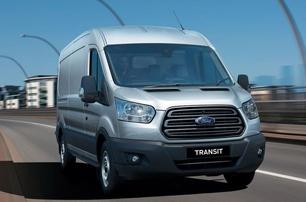
Meet Ford’s electric pioneer for Australia - the E-Transit.
It may not be as exciting as a Tesla Model S, Porsche Taycan or Audi e-tron, but this electric version of the Blue Oval’s large van will help create a new market for zero-emissions commercial vehicles.
This is seen as a major opportunity by Ford to provide an electric alternative to typically diesel-powered vans, which will no doubt prove popular with fleet operators looking to cut fuel costs and corporate emissions. While unlikely to suit all van buyers, thanks to its limited range and recharging restrictions, for those companies with shorter delivery routes it will certainly have appeal.
Ford’s research (performed by YouGov) suggests up to 58 per cent of business “can see EVs becoming part of their vehicle fleet in the future".
But it’s just Ford’s first step into the larger world of electric vehicles. We’ve already had confirmation the smaller E-Transit Custom is headed our way and there are good odds the Mustang Mach-E will eventually find its way to Australian showrooms, so there’s plenty of exciting models in store for Ford.
In the meantime, though, the E-Transit isn’t due in Australia until sometime in the first half of 2023, but CarsGuide was able to take one for a test drive near Ford’s Detroit headquarters recently to get a taste of what’s to come.
Never talk to strangers. That's (hopefully) what your parents taught you. Luckily some people ignored that good advice when it came to the Toyota Granvia VX people mover and me.
As you'll see in the video above, I tested it on the public – people I didn't know from a cake of soap or whatever the saying is. Seriously, I drove a bus route and somehow talked people into not getting on their regular bus and letting me give them a lift to wherever they were going instead.
I don't often conduct social experiments like this, but I figured the Granvia VX was different. First, here was a new-generation people mover based on the Toyota HiAce that effectively replaces the long-serving Toyota Tarago. Second, it's different from the Tarago and rivals such as the Kia Carnival and Hyundai iMax in that it seems like it's purpose in life could be more of a hire car 'shuttle bus' as it is for a Mercedes-Benz Valente.
So, either way its job is to carry more than one person nearly all the time and that's what I did. You can watch the video above and below is the full review taking into account how I found the Granvia VX to drive, along with its practicality when it comes to cargo capacity, fuel economy and passenger comfort.
Ford has taken an unorthodox approach to entering the electric vehicle market in Australia, avoiding the hype around the Mustang Mach-E and F-150 Lightning and instead laying the foundations with the E-Transit.
But it’s a savvy move, giving the brand a chance to enter what should be a largely untapped market with a vehicle that should appeal to what buyers are looking for. With unchanged space compared to the diesel-powered Transit, the switch to a more powerful electric powertrain makes the E-Transit a win-win scenario for those with a suitable daily driving routine.
Note: CarsGuide attended this event as a guest of the manufacturer, with travel, accommodation and meals provided.
The Granvia VX is great at being plush, comfortable and easy to drive, but it's not as practical as a people mover should be. And while the engine provides a great driving experience, you'll be filling up the tank often if your trips are mainly urban and city focused.
Perhaps the most interesting thing about the design is there’s nothing very different about the E-Transit compared to the regular Transit. Which is a good thing, because the Transit is already a popular delivery van so any change for the sake of difference may have messed with the winning formula.
In fact, the design element that is important is the way Ford has laid the battery packs flat inside the ladder-frame chassis which means none of the cargo space has been compromised. This means the E-Transit has the same load area as its internal combustion equivalent, which is key for any delivery van.
The Granvia is a new-generation people mover based on the Toyota HiAce commercial van and arrived in Australia in 2019. The resemblance to the HiAce is obvious although dressed up in its Granvia clothes it's a handsome and professional looking little bus.
I'm a fan of the protruding nose (which helped it earn the five-star ANCAP rating, see more on safety below) and I even like its big, shiny Transformer face and the 'L-shaped' tail-lights which aren't to everybody's taste.
Also, when I say little bus that's only in comparison to actual buses, like the one I convinced people not to get on in my video. Compared to a seven-seater SUV such as the Kia Sorento or Toyota Kluger, the Granvia is enormous.
Look at the dimensions. The Granvia is 5300mm long, 1990mm tall (not counting the aerial) and 1970mm wide, not counting the wing mirrors (which can be folded in).
While the length was hardly ever a problem for me while driving it over the week, the height saw me just make it under the 2.0m clearance in our underground carpark and I had to fold the aerial down to do it. Beware, many carparks have a max headroom of just 1.9m.
The cabin of the VX is impressively plush from the quilted leather reclining second-row seats to the 'woodgrain-look' trim throughout.
During my test I played bus driver to a number of passengers (no, seriously I picked up random strangers off the side of the road – see the video) and all were impressed by the Granvia's premium-feeling interior.
The cabin is very similar to what you’ll find in the Transit, so there will be familiarity for anyone making the switch from the diesel-powered version. The rotary shifter and 12.0-inch tablet-style multimedia screen make for a smart look but also means minimal space is wasted.
It’s a thoughtfully designed cabin, with plenty of usable storage spaces, including three cup-holders, a pair of bottle-holders and deep storage shelves on the top of the dashboard. The doors are particularly noteworthy, with multiple storage areas carved into the available space.
The seats are comfortable and, naturally with a high-roof van, there’s plenty of head room which creates a spacious feeling.
Behind the seats is the cargo area. In the US-specification E-Transit we drove there was a dividing wall between the cabin and the back of the van, with a small sliding door to access the cargo area, but it’s unlikely this will be offered in Australia. Instead, local models will likely have a hard divider between the cabin and back, with a small window for visibility.
As mentioned earlier, the floorspace in the E-Transit remains the same as the Transit thanks to the battery being laid underneath the floor, so there’s plenty of cargo volume that will please fleet buyers.
In the US the E-Transit’s cargo area measures 11.3-cubic-metres with the medium-height roof and expands to 12.4cu/m with the high-roof body.
Ford says the “targeted payload” will be 1616kg.
The Granvia VX tested was an eight-seater (four rows of two seats) and being so tall and long would mean the space inside is going to be good, right? Nup. The Granvia doesn't seem to make the best use of its enormous cabin.
Seating, while undeniably comfortable and luxurious in the second and third rows, doesn't offer great legroom when you have a full load of people on board. I could only just sit behind my driving position in the second row and then behind that in the third row, but there was no way I could then fit in the fourth row.
And while cabin storage is great with the biggest centre console bin I've ever seen – I could fit my head in it (see the video) – and there are 10 cupholders, six coat hooks and a folding table, there isn't a boot or any room for cargo, not in the eight-seater (with all seats in use) I tested anyway. With all four rows in place there is only enough room for a few items no wider than a box of cereal (watch the video, to see what I mean).
Folding up the base on the fourth row seats means they can slide forward and that does free up a little bit of space for cargo, but if you are only going to be using the Granvia for six people, then my advice is to go with the six-seater and have a big boot at your disposal all of the time.
The Granvia VX is outfitted well with charging points – there are seven USB ports all the way back to the third row and two 12-volt outlets.
We'll get to what the Granvia is like to drive in a moment, but what I can say here is that the driver and passengers sit high, like looking-down-on-four-wheel-drive-utes high.
Access into the front seats is a bit of a climb up and proved tricky for my 75-year-old Dad with his gammy knee, but entry into the second-row seats was easy thanks to a wide step and a large aperture.
The small table between the second-row seats blocks the aisle, so the only way to get to the third row is by sliding the second row forward. Fourth row access is more difficult but compared to entry into the back row of most seven-seater SUVs it's a breeze.
Ford Australia originally announced the E-Transit would arrive by “mid-2022” but that date has been pushed back thanks to the ongoing supply challenges faced by most car companies.
While the initial technical details have been confirmed - the first model available will be the 420L long-wheelbase version - the company hasn’t locked in detailed local specifications and pricing yet.
The closest comparison in the current Transit range is the 350L, which is available in both mid- and high-roof variants. Based on the model we test drove in the US, there are similar specifications between the two, including 16-inch steel wheels, partial-leather-trimmed seats and Ford’s SYNC4 multimedia system displayed on a 12.0-inch centrally mounted screen.
While pricing isn't confirmed, it's likely the E-Transit will carry a premium over the Transit so we'd estimate a starting price in the mid-$60,000 range.
We tested the Toyota Granvia VX eight-seater which lists for $74,990, before on-road costs, and sits at the top of the range. That said, there are only two grades in the line-up – the entry point known simply as Granvia which comes in six- ($62,990) and eight-seat ($64,990) versions and the Granvia VX which also comes in those two seating configurations and costs the same for both.
Standard features on the VX eight-seater include LED head and tail-lights, proximity unlocking, auto sliding side doors, power retractable heated wing mirrors, 17-inch alloy wheels, sun shades for all rear side windows, a 7.0-inch touchscreen with sat nav, Apple CarPlay and Android Auto, and a 12-speaker Pioneer stereo.
A special shout-out goes to the seating. Coming standard are quilted leather seats for the first, second and third rows, while the rear (fourth row) is a vinyl bench seat with a 60/40 split.
The second row consists of power adjustable ottoman style recliners - think business class airline seats, while the third row is a pair of manually adjustable captain's chairs, similar to the front seats which are power adjustable. My passengers loved the second-row seats. One even said, "I've never flown business class by I feel like I have now."
Is it good value? Well, not really. See $75K is a lot to spend on a Toyota people mover, especially considering the Tarago (which has been axed and effectively replaced by the Granvia) at its priciest is $65,261.
The top-of-the-range Kia Carnival Platinum lists for $62,790 and a Hyundai iMax Elite is even cheaper at $48,490. But the Granvia is a more premium offering, up there with the likes of the Volkswagen Multivan Highline for $79,890 or Mercedes-Benz Valente for $59,850
One element of the E-Transit we are clear on is what’s under the bonnet. The E-Transit is powered by an 198kW/430Nm electric motor that powers the rear wheels and draws energy from a 68kWh battery.
That means the E-Transit is the most powerful member of the Transit family, with the rest of the range powered by the 125kW/390Nm 2.0-litre four-cylinder turbo diesel engine.
Ford claims the E-Transit has a range of 317km (on the WLTP cycle), which may not sound like a lot for a commercial van but Ford claims in the US the daily average for such vehicles is only 120km.
In order to save charge, the E-Transit is equipped with an Eco Mode which limits top speed, regulates acceleration and limits climate control settings. Ford claims this allows the driver to cut energy usage by between eight to 10 per cent when driven at highway speeds or when unladen.
The Granvia has a 2.8-litre four-cylinder turbo-diesel engine – the same one found in the Toyota HiAce van and with 130kW/450Nm I found there was more than enough grunt to handle city duties or overtaking on motorways.
Equipped with a diesel particulate filter there's a burn-off switch located near the driver's right knee. The Granvia will tell you when it's time to activate the burn-off function.
The 2.8-litre diesel is fairly quiet and responsive while the six-speed automatic shifts smoothly. There's not much to complain about in terms of the usability of the engine and transmission, they performed well – it's just that with it having to carry around a vehicle weighing nearly 2.7 tonnes fuel economy was never going to be great (you can read about this below).
Charging will be a key element of the E-Transit’s appeal (or not) to buyers, with fleets needing to maximise the van’s time on the road. Ford claims that with a 115kW DC fast-charger the E-Transit battery can go from 15 per cent charge to 80 per cent in just 34 minutes.
With the onboard 11.3kW charger it takes 8.2 hours to get the battery back to 100 per cent capacity.
The E-Transit supports bi-directional use of the battery too. In the US the E-Transit is available with its Pro Power Onboard technology as an option. This allows for the driver to draw up to 2.4kW of power from the vehicle’s battery to power tools and other equipment as necessary.
One feature that is confirmed for the Australian-bound E-Transit is what Ford calls, Scheduled Pre-Conditioning. This is a system that allows the operator to pre-set the climate control for the cabin while the van is still on charge so that you can still have maximum charge available when you start driving.
The specifications given by Toyota give the Granvia's combined fuel consumption as 8.0L/100km from the 2.8-litre four-cylinder turbo-diesel.
That sounds fantastic, but in reality after a combination of motorways and urban use the trip computer was reporting 12.9L/100km. A separate fuel test (carried out by myself) saw the Granvia use 21.4L over 127km of city and urban driving (measured at the fuel pump), which comes to 16.8L/100km.
That sounds like a lot, but it makes sense when you consider how heavy the Granvia is. It's 2660kg without anybody on board! If you're carrying eight people weighing 60kg your total mass is tipping the scales at 3140kg and your fuel economy is going to be significantly higher again. The GVM, by the way, is 3500kg.
Really, the Granvia is the perfect argument for a hybrid powertrain, because tour operators or parents ferrying their family around the city are going to want better fuel economy.
Electric vehicles have earned a reputation for rapid, exciting acceleration… but that’s not the case with the E-Transit. Performance could best be described as modest, with adequate but unspectacular acceleration.
Which is fine, because the E-Transit is not meant to be a ‘ludicrously’ quick van, instead it’s meant to haul a load as efficiently as possible. On that front it does a good job, with smooth (albeit gentle) acceleration and steady pulling power.
It’s important to note, though, that our test car was unladen - with only some shelving installed in the back. So we’ll have to reserve judgement on how the E-Transit performs with a full load on-board, on Australian roads.
The rest of the driving experience is as you’ll find with the Transit. The steering is nicely weighted and direct, which makes manoeuvring such a huge vehicle straightforward.
The ride is on the firm side, which isn’t unusual for either a van or an electric vehicle as it needs to control so much weight, but it isn’t uncomfortable and offers good control.
For a 5.3m long, 2.0m tall box on wheels the Granvia sure is easy to drive. I live in Sydney's Inner West (get your chai latte jokes out of the way now, please) and drove it daily through horrendous traffic on potholed roads, navigated through the tiniest streets and squashy car parks, went fishing in it and ate up motorway kays on the weekends.
There are going to be people who snort at that eight of 10, but I'm telling you it's down to three things: comfort, ease and engine.
The seats were comfortable and supportive (my passengers felt the same way – again see the video of me being a bus driver), the ride is composed thanks to the suspension and no doubt the weight and the wheelbase of the Granvia.
The visibility is excellent thanks to those giant windows, the ride height and tech such as that digital rear view mirror, while the steering is light, and the turning circle is excellent at 11.0m.
Finally, that 2.8-litre turbo-diesel engine. Yes, it's thirsty but from a driving perspective only it's great – smooth and responsive.
Often vans are prone to a booming sound reverberating around the cabin and the Granvia VX was also a victim of this phenomenon with road noise echoing around inside. It's not bad and I could still hear people in the second and third rows, however.
The current Transit is not rated by ANCAP, as is the case with most of its full-size van rivals because the safety authority tends to focus on the mid-size vans - such as the Transit Custom, Toyota HiAce and Hyundai Staria-Load.
However, the E-Transit does have a solid safety package, with driver and passenger front, side and curtain airbags all standard. While the E-Transit’s local safety package isn’t locked in, the Transit already boasts autonomous emergency braking with pedestrian detection, lane-keep assist with lane-departure warning, rollover mitigation, side-wind stabilisation, trailer sway control and traffic-sign recognition, so it’s probably a safe bet these will all be included on the E-Transit.
We drove the high-roof E-Transit in the US and with a high-mounted reversing camera it was surprisingly easy to navigate for such a big vehicle.
The Granvia scored the maximum five-star ANCAP rating when it was tested in 2019. The amount of standard safety equipment is outstanding, particularly for a van with commercial origins.
Coming standard are nine airbags including ones which go all the way back to cover the fourth row and for child seats there are four ISOFIX points (second and third rows) and four top tether points (second and third rows).
The level of advanced safety equipment is also outstanding. Coming standard is Toyota's 'Safety Sense' pack which brings AEB with cyclist and pedestrian detection, lane departure alert with steering assistance, road sign recognition, auto high beam and active cruise control.
A full-sized spare wheel is located under the Granvia VX.
Ford Australia has already confirmed that the E-Transit will be covered by Ford’s now-standard five-year, unlimited kilometre warranty, plus an extended eight-year/160,000km warranty specifically for the battery and high-voltage electric components.
The Granvia is covered by Toyota's five-year, unlimited kilometre warranty. Servicing is recommended by Toyota at six-month/10,000km intervals with capped price servicing of $240 per service for three years or 60,000km.