What's the difference?
There aren’t as many Ferraris on the road in Italy as you might think. There’s the purchase price, per-kW taxes and poisonously expensive fuel. So, usually, they’re a rare sight, except around Maranello in the northern province of Modena.
Because that’s Ferrari’s home and in getting to grips with the subject of this review - the twin-turbo V8 Roma - I enjoyed a smile-inducing moment with a local milk truck driver.
On a narrow section, part way into a road test drive through local villages and twisting B-roads to the west of Maranello, the tanker pulled over to let me through.
Gave a thank you double blink of the hazard lights on passing and received a quick headlight flash in return. They almost certainly thought I was putting kays on a test mule in the same way camouflaged prototypes so often do on the same stretch of road.
Maybe I’d inadvertently sipped some Prancing Horse Kool-Aid, but it felt special. Ferrari is so close to Italian hearts and the Roma is such a sleek and engaging example of its current output.
But is this ‘iron fist in a velvet glove’ 2+2 capable of tearing you away from its well-credentialled high-end competitors? Stick with us to find out.
For those merely gazing up to the lofty, ivory-tipped towers of high society, it would be easy to think that the mere ownership of a plush, premium vehicle, like the Lexus LC 500h for example, is a reward in and of itself.
The truth, though, is that Australia's premium manufacturers then sweeten the ownership pot even further, often inviting new owners into a secret club filled with tickets to exclusive events, seats at the fanciest of dining tables and concierge-style car maintenance, to name but a few of the perks on offer.
Lexus, though, sits atop the pile when it comes to offering ownership perks to its owners, and now more than ever, with the brand's existing Encore Club today welcoming a new and more-exclusive tier, called Encore Platinum.
We'll circle back to all of this under our 'Ownership' sub heading, but the short answer is that anyone who has bought a RC F, GS F, LX, LS or LC, like this 500h, since January 1 this year is automatically signed up, and is in line for some serious goodies.
Perhaps the most pressing question, though, is will it be the new ownership program that lures customers into a LC 500h? Or can the luxurious Lexus performance coupe stand on its own four wheels?
Let's find out.
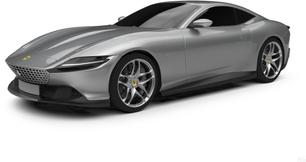
The Ferrari Roma is like a trained assassin in a Zegna suit - capable and clinical yet stylish and effortlessly superior. We believe there’s a replacement coming later this year and it will have to be doing well to top this superb machine.
A truly fuel-efficient performance car, who’d have thought? There are some obvious trade-offs for trying to exist in two seperate worlds, but the Lexus LC 500h largely handles its dual roles with aplomb.
If you’re looking for a flash Fazza with spoilers and vents at all points of the body, you’ve come to the wrong coupe.
The Roma is a subtle, beautifully balanced and delicately detailed two-door inspired by all-time Ferrari classics like the 250 GT Lusso and 275 GTB.
Its proportions are impeccable with complex curves and sweeping lines combining to produce an exquisitely pure shape.
Slimline LED headlights are divided by horizontal DRL strips, the broad bonnet incorporates a quietly muscular power bulge and the minimalist ’egg crate’ grille sits below a sharply chiseled nose.
I’m a particular fan of the split wedge-shaped tail-lights, seamlessly incorporated into the upper deck of the rounded rear end. The active rear spoiler is also neatly hidden away in the leading edge of the boot lid. No shoutiness here, even the exterior badges are works of art.
Crack open the bonnet and the engine sparkles like a jewel in a display case. Scarlet red crackle finish on the intake plenums and cam covers make it pop like a firecracker.
The interior follows a dual cockpit theme with twin curved sections divided by a flying buttress style console between them housing the gear selection gate and central media screen.
Flashes of carbon-fibre and chromed alloy add a touch of overt raciness, Alcantara on the dash and doors echoes the ‘mouse fur’ of Ferraris past and the contrast stitching around the cabin is flawless.
The sleek front seats feel as good as they look, the typography of the Roma badge on the passenger side of the dash is super cool, and overall the interior is snug and ultra classy.
It's a little curious, the LC 500h. For mine, it's stunning from a distance. All gleaming alloys and bulging rear arches and sharp snout angled downward like its caught the scent of its prey.
But weirdly, it can start to look a little less impressive the closer you get to it - a little swollen and vague in its lines. It's very likely it's eye-of-the-beholder stuff (fellow CarsGuide scribe Richard Berry adores it from every angle, for example).
Inside, the front of the cabin is a busy but stylish space, with multiple textures layered on top of each other to produce a premium-feeling, sporty space. The low-feeling dash juts out, giving the front passengers an ensconced, cockpit feel.
Everything is predictably leather-wrapped and lovely, and while it's not as streamlined as, say, an Audi interior, it's not without a genuine sense of Japanese charm in the cabin.
At close to 4.7m long, the Roma isn’t compact but its supercar stance comes courtesy of a close to 2.0m width and low-riding 1.3m height (with a 2670mm wheelbase).
The cabin is cozy, as intended, but at 183cm I still have ample headroom in the front. The rear is a different story with the two ‘+2’ seats serving as occasional emergency spots only or a handy option for smaller kids.
For storage there are slim but long pockets in the doors, a surprisingly generous glove box, a wireless charging pad under the centre console, phone-size slits on either side of that console, a single cupholder between the front seats with a lidded box (containing 12V and USB-A outlets) behind it.
There’s a recess for oddments on the transmission tunnel between the rear seats, and armrests either side in the back.
The boot holds 272 litres, which is enough for several soft bags, rising to 345 litres with the 50/50 split-folding rear seatbacks lowered. There are tie-down anchors, which is handy but be aware there’s no spare, only a repair/inflator kit.
Overall, not exactly SUV-like in terms of day-to-day practicality but at least on par with its key competitors.
It's not really. Especially in the backseats, which would make more sense if they were painted on. I'm no giant, but even my 175cm-tall head was pushed into the ceiling, and while there’s ample shoulder space for two adults, you’re unlikely to be able to convince two to get back there.
Lexus has included something called the "Easy Access" function for 2020, which sees the front seats slide forward automatically to help with accessing the rear seats, and they do lower the Cirque du Soleil antics required to get back there, but this realistically not a car for carrying more than two adults, save an emergency. There are two ISOFIX attachment points in the rear, so child seats can be locked in there.
That's not necessarily a drawback, though. This is a two-door sporty coupe, after all, and elsewhere, the sizeable dimensions (4770mm length x 1920mm width x 1345mm height) provide plenty of space for up-front riders.
You'll also find hidden cupholders, bottle holders in the doors, and all the power and connection points you need.
A word on the tech, though. The LC 500h is crying out for a touch screen, though the brand's traditional mousepad system is improving.
At $453,000 before on-road costs, the Roma Coupe lines up almost directly with a trio of well-credentialled, well-equipped and ultra-fast 2+2 supercars - the Aston Martin DB12 ($455,000), Maserati GranTurismo Trofeo ($450,000) and Porsche 911 GT3 ($446,700).
If you prefer a roofless experience, the Roma Spider convertible will set you back $520,300 (BOC).
And as you’d expect, the standard features list is impressive; the options list even more so.
Aside from the safety and performance tech covered a little later, highlights include 18-way power front seats, full-grain Frau leather trim, eight-speaker JBL audio (with digital radio), dual zone climate control, an 8.4-inch hi-definition central media display, a 16-inch (highly) configurable instrument cluster, adaptive cruise control and 20-inch forged alloy rims.
There’s also LED exterior lighting (including auto dusk-sensing headlights), Android Auto/Apple CarPlay connectivity, rain-sensing wipers and built-in nav, as well as Alcantara, chromed aluminium and carbon-fibre trim details. There’s more, but you get the idea.
And when it comes to options, the sky’s the limit with the likes of carbon-fibre everything, beefier audio as well as custom colour and trim options available through Ferrari’s ‘Tailor Made’ and ‘Special Equipment’ programs.
One popular addition is an 8.8-inch HD touchscreen for the front passenger (co-pilot?) displaying data on the car’s performance and status as well as allowing selection of music, sat-nav info and climate functions. Super cool and it will set you back $9500.
Value is all about perspective, of course, and viewed the right way, the $195k sticker price of the Lexus LC 500h does provide a certain amount of value.
Yes, it's a lot of money. But Lexus' flagship coupe doesn't just get a performance-focused hybrid setup (pairing with a thumping V6 engine), but also just about every high-end feature the brand has in its deep bag of tricks.
It starts outside with giant 21-inch alloys, a glass roof with a sun blind, LED headlights with cornering lights, hidden door handles, keyless entry, and rain-sensing wipers.
Inside, you'll find leather-accented seats, a colour head-up display, a 10.3-inch multimedia screen with Apple CarPlay and Android Auto, another 8.0-inch screen in the driver's binnacle, a heated steering wheel, heated and cooled front seats, DAB+, satellite navigation system with live traffic, and a killer 13-speaker, 918-watt Mark Levinson stereo.
Enzo Ferrari famously said “aerodynamics are for people who can’t build engines” and notwithstanding the fact the Roma is slippery in the wind tunnel (Cd .30), its front-mid mounted 3.9-litre turbo-petrol V8 engine would surely meet with il Commendatore’s approval.
Sending drive to the rear wheels via an eight-speed dual-clutch auto transmission, this all-alloy, 90-degree unit features dual twin-scroll turbos, a flat plane crank, dry sump lubrication, direct fuel-injection and a single-piece cast exhaust manifold to produce 456kW from 5750rpm to the 7500rpm rev ceiling, and 760Nm from 3000-5750rpm.
Worth noting its 'front-mid' placement as the entire block is positioned low down and behind the front axle centre line.
The LC 500h is powered by a hybrid setup that combines a 3.5-litre V6 engine with a 650-volt "Lexus Hybrid Drive" system and a lithium-ion battery. That setup delivers 264kW of power, and somewhere north of 350Nm in torque when the engine and motor outputs combine.
That power is sent to the rear wheels via a CVT automatic, and will produce a sprint to 100km/h of around 5.0 seconds.
According to Lexus, 10 clear improvements were made the way the 2020 LC 500h drives, including a new transmission tune, more structural bracing added for rigidity, new suspension components and spring rates, and altered stabiliser bars.
Has it made a difference? Read on.
The Roma’s official (WLTP) fuel consumption figure on the combined (urban/extra-urban) cycle is 11.2L/100km, the 3.9-litre turbo-petrol V8 emitting 255g/km of CO2 in the process.
Not exactly miserly, but even with that engine begging to be revved we saw an average of 12.9L/100 over a combination of urban shuffling, twisting B-roads and some freeway running.
A start/stop function is standard and with an 80-litre fuel tank on board, the Roma’s theoretical range is around 715km, dropping to approximately 620km using our real-world number.
Lexus says the LC 500h will sip 6.8 litres per hundred kilometres on the combined cycle - very impressive for what is ostensibly a performance coupe - and emit 152g/km.
The LC 500h is equipped with an 82-litre fuel tank.
Press the PS (Partenza Sportiva) button on the console, slip the manettino control on the steering wheel into ‘Race’ mode, left-foot brake (hard) and floor the throttle. Wait for the PS light on the dash, keep the accelerator pinned and lift off the brake.
Ferrari says the Roma will then proceed to accelerate from zero to 100km/h in 3.4 seconds, and in the interests of a thorough assessment I may have found a quiet light commercial area near Maranello, replicated this procedure and validated the claim.
Yes, even at 1570kg, with 760Nm of pulling power available from 3000-5750rpm, the Roma is exceptionally fast in a straight line. And the twin-turbo V8 that’s been so reserved and docile around town lights up to deliver glorious engine noise and a characteristic exhaust howl.
A flat-plane crank arrangement often makes a vee engine lumpier than a more conventional cross-plane design, but it will rev hard and fast, and in this case the compact size of the Roma’s twin turbos enhances throttle response even further.
Speaking of the turbos, variable boost management helps to smooth acceleration while keeping an eye on fuel economy and despite the flat-plane configuration this engine is perfectly civilised.
A tall top (eighth) gear makes for easy cruising but the tight B-roads and lesser highways we spent most time on didn’t allow for any high autostrada speeds.
But how’s this for a flex? Ferrari says the active rear spoiler will stay in its low-drag position until the car hits 100km/h, then pushing through medium and high drag (135-degree) positions as speed rises. But… “over 300 km/h, the spoiler is always in MD mode because in such conditions it is preferable to have a more balanced car”.
Suspension is by double wishbones at the front with a multi-link set-up at the rear and twin solenoid (magnetic) adaptive dampers all around.
Rubber wrapping the 20-inch forged alloys is top-end Michelin Pilot Sport 4 S (245/35 fr / 285/35 rr) and front-to-rear weight distribution is 50/50.
What that all adds up to is a comfortable, responsive and deeply satisfying drive experience. In standard Ferrari fashion the dual-clutch transmission is rapid-fire perfection, the steering is light but accurate and feelsome, while the in-cabin ergonomics are superb.
Push as hard as you dare in tight, flowing corners and the car just continues to grip and bait you to try harder. And if you do give in and start to run out of talent the ‘Active Yaw Control’ and limited-slip ’E-diff’ will step in to imperceptibly save your bacon.
Moving the manettino through its five positions - ‘Wet’, ‘Comfort’, ‘Sport’, ‘Race’ & ‘ESC-Off’ rapidly transforms levels of ride comfort, steering, transmission and engine response. You can also set the ride to Comfort with other attributes dialled up to 11 for a cross-country sweet spot.
And when it comes to slowing rather than going, the Brembo brake set-up is circuit ready with vented carbon ceramic rotors all around (390mm fr / 360mm rr) clamped by six-piston calipers at the front and four-piston units at the rear. They take a while to warm up, but never feel anything other than mega.
There’s something very strange about hitting the start button in what is ostensibly a sports car, and being greeted not by the bark of an exhaust, but by the gentle whirring on the car’s electronics coming to life.
But then, the Lexus LC500h is not your average performance car.
It essentially trades the out-and-out grunt of its V8-powered sibling (which produces a monstrous 351kW and 540Nm) for a kind of best-of-both-worlds approach that pairs the punch of the V6 engine with the fuel efficiency of a hybrid powertrain.
If that sounds like an compromised approach to pure performance, you're right. But reframe the way you look at the LC 500h and it all starts to make a bit more sense.
Remember, this isn't a track-attack weapon, but a potent on-road bruiser, and the flow of power on offer always feels ample, and you never want for too much more off-the-line pace on public roads.
Among the biggest selling points of the LC 500h is the sheer distance between its various personalities. Engage Eco, or even Normal, drive modes, and it’s a quiet, mostly very comfortable (though it can be unsettled by bigger bumps) kilometre-eater, but engage Sport or Sport Plus and it rightly transforms into something significantly angrier.
It might not be the absolute sharpest tool in the performance car shed, but the LC 500h does bristle nicely when those modes are engaged, the hybrid factor seemingly replaced by a satisfyingly meaty exhaust note and an accelerator that’s suddenly far more sensitive to the touch.
The steering feel is nice and the inputs direct, but there is something about the car’s 1980kg weight that doesn’t inspire the deepest of confidence, at least not on the rain-slicked roads we were travelling along .
A pure performance coupe? Perhaps not. But a sporty, stylish and, when you want it to be, comfortable cruiser with the ability to turn the volume up when you come across a twisting road? Bingo.
No surprise, ANCAP and Euro NCAP have not assessed the Roma, but you could mount a solid case that the car’s high-level dynamic ability is its greatest active (crash avoidance) safety system.
Over and above that there are the usual anti-lock brake, traction and stability control systems (the latter is Ferrari’s adjustable SSC ‘Side Slip Control’) as well as AEB (with vehicle and cyclist detection), adaptive cruise control, lane-keeping assist, lane departure warning, blind-spot monitoring and traffic sign recognition plus front and rear parking sensors.
Also worth calling out ‘FDE’ (Ferrari Dynamic Enhancer) which works in parallel with the SSC to help modulate lateral movement in extreme circumstances.
If a crash is unavoidable there are four airbags - dual front and dual side front (head). That’s an acceptable count in a 2+2 coupe, but it would be nice to see a front centre bag.
The Lexus LC 500h is yet to be ANCAP tested (the price would likely prove a sticking point), but the Japanese brand has fine form in attracting top marks, and there's certainly no shortage of safety features on offer here.
There's a total eight airbags and a reversing camera and parking sensors, as well as a host of high-tech kit like AEB, Lane Keep Assist, Blind Spot Monitoring, active cruiser control and a bonnet that will sense pedestrian and pop up before impact in an attempt to minimise injury.
As the name implies, Ferrari’s ‘7-Year Genuine Maintenance’ program means you won’t have to worry about servicing costs for the first seven years of ownership. Everything from labour and parts to lubricants and brake fluid is included in the free-of-charge package.
For reference, maintenance is recommended every 12 months/20,000km, which is a healthy distance and roadside assistance is complimentary for the first 12 months.
Warranty cover is three years/unlimited kilometres, which trails the mainstream market but matches high-end competitors like Aston Martin, Lamborghini, McLaren and Porsche.
So, to ownership. Let's start with the basics first, before we move onto the new Encore Platinum benefits.
The LC 500h is covered by a four-year/100,000km warranty, and servicing (capped for three years at $595 a pop) is required every 15,000km.
You will know already the Lexus's stellar Encore ownership program includes handy features like valet (pick-up and drop-off) servicing, but the new Encore Platinum level for owners of its more exclusive models unlocks some seriously cool stuff.
One is a new On Demand service, which allows owners to book a different style of car when heading off on a holiday or business trip. So, say you own the LC 500h, but want to take the family to the snow and need a seven-seat 4WD like the RX L, then Lexus will lend you one at no charge, which you can keep for eight days.
The loans are available in your state or somewhere else in Australia if you're travelling, with your car waiting for you at Qantas Valet for you when you arrive.
The One Demand service is available on four occasions over your first three years of ownership (which is also the length of the Encore Platinum membership).
The Platinum level also provides eight examples of free valet parking at select shopping centres, as well as hotel and restaurant benefits, and invitations to Lexus' drive days around the country.