What's the difference?
This is Australia’s most affordable plug-in hybrid vehicle.
It’s the Chery Tiggo 7 ‘Super Hybrid’ and you can have one for just $39,990 drive-away at the time we put this review together.
It beats the BYD Sealion 6, MG HS, and Mitsubishi Outlander when it comes to plug-in hybrid value then, but is it too good to be true?
Is the Tiggo 7 plug-in marred by caveats, or is it the new bar to beat when it comes to fuel-sipping hybrid value?
Stick with us as we find out.
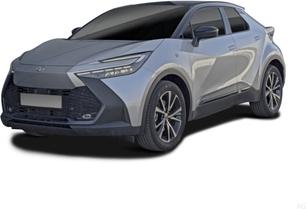
According to the chief engineer for the Toyota C-HR, a second generation was never guaranteed for this uncharacteristically (for Toyota) design-led small SUV.
After the Corolla Cross came into existence, the top brass didn’t think the brand needed two similarly sized models in the line-up. So, why is it here, and is it any good?
The first question is easy to answer - the team drew the new C-HR up as a European model, built in hybrid-only and with enough key differences from the Corolla Cross to avoid the models competing.
The second question? Let’s find out.
Is the Chery Tiggo 7 just cheap, or is it cheerful too?
Well, not only does this plug-in hybrid break new ground for pricing, but it’s more than a one-trick-pony with a cleverly-tuned hybrid drivetrain that saves fuel, even when the battery is depleted.
The Tiggo 7 still needs work in some areas, from the average software, to the spongy driving dynamics, but there’s no denying this SUV will put the pressure on its rivals.
Which variant would I pick? Actually I’d probably splash the extra cash for the Tiggo 8 plug-in, which seems slightly better at everything and is physically more car for not a lot of extra outlay.
Note: CarsGuide attended this event as a guest of the manufacturer, with accommodation and meals provided.
There’s not much in terms of practicalities that are going to convince you the C-HR is a better option than Toyota’s other small SUV, the Corolla Cross.
Even other ‘stylish’ small SUVs like the Mazda CX-30, fuel savers like the electric MG ZS EV, or performance small SUVs like the Hyundai Kona N are more affordable than the GR Sport version of the C-HR.
In the case of this car, unlike most of its Toyota stablemates, buyers will likely be making a decision from the heart based on exterior styling and its interior rather than value or practicality.
And who would anyone be to tell you not to buy a car you like for its styling?
The Tiggo 7 hybrid sticks to the combustion car’s relatively tame styling. Chery hasn’t followed rivals like BYD, MG, and Kia down the track of having more extreme designs, instead choosing something that will appeal to many people. It still has a glitzy grille, big wheels, and a contemporary light bar across the tailgate, but maintains a pretty standard boxy visage.
It’s even difficult to tell the plug-in hybrid apart from the combustion car, with the main differences being the more aerodynamic wheel designs, and a different and more sleek light-bar piece across the rear.
The inside is much the same story, looking nearly identical to the combustion version.
If you look closely, you’ll see the lack of an ignition button, because you just put your foot on the brake to start the car, but other than that it’s a familiar and contemporary synthetic-leather-clad space.
If anything there’s an element of Mercedes worship, with the door trims, switchgear, and even dual-panel screen layout looking like an homage to something like an A-Class.
Again, it shoots for mass appeal rather than choosing to make a statement on design direction, and for many will be nice enough.
There’s a fair bit going on here compared to most of Toyota’s other products, much like the first generation, but being designed with Europe as the key market and Australia as a secondary means the styling team needed to take on some fairly fashionable brands.
All three variants of the C-HR are relatively close in aesthetics, with major differences being two-tone paint or specific trim elements for the top-spec GR Sport.
It uses new Toyota design elements that have been seen on some models already, the ‘c-shape’ lights have been used on the new Prius, which we no longer get in Australia, for example.
The black roof was also available on the previous generation, where this car has carried over the ‘egg-like’ silhouette from.
The overall relatively aquatic styling and shape must be for aerodynamic advantage - its chief engineer told us the drag coefficient is just 0.318Cd - but the removal of the rear wiper to lower drag might have been unnecessary for a city-focused small SUV.
The cabin isn’t as wild as the outside, which may be a let-down in some ways, though it’s still a little more visually interesting than its more mainstream stablemates.
The 64-colour ambient lighting changes based on settings including time of day or drive mode, but can be set to a specific single colour if you wish.
The centre stack on the dash is gently angled towards the driver with a small separation between it and the passenger, creating a slight ‘cockpit’ feeling.
Seats are made from different materials depending on the grade, though no real leather is used even in the GR Sport, where synthetic suede and leather are the main upholstery.
The cloth textiles are made from entirely recycled materials, while the synthetic suede is made from a little less than half recycled materials.
They don’t look cheap, but they also don’t look particularly luxurious.
There are a few quirks that mean the Tiggo 7 isn't the most practical option in the space, but it hits on some key things regardless.
For a start, the seating position is a little odd. It’s a bit too high which is good for visibility, but not so great if you don’t want to feel like you’re being tossed side-to-side in corners.
And while the seat and wheel have a reasonable range of motion for adjustability, the fixed nature of the dual screens and how close the wheel sits to them will make taller drivers feel like they're peering down on the screens, or that they’re blocked by part of the steering wheel.
At least visibility is excellent out of the cabin and the plush seat trim makes for a comfortable drive.
Also a little strange is the shifter. You need to properly depress the brake pedal to get it to shift into drive or reverse. Simply holding the brake pedal enough for the car to be stopped isn’t good enough, which can be frustrating when you’re trying to do a quick three point turn.
Weird ergonomics aside, there’s enough cabin storage. This consists of a large bottle holder in each door, a further two with spring-loaded edges in the centre console, and there’s a bay for your phone which is also the wireless charger on higher grades. Covering the bottle holder and phone area is a somewhat old-school rolling shutter. Good for cable management, I suppose.
Underneath the bridge-style console is another textured storage area, which is good for loose objects or small bags, and the armrest box is nice and deep too.
This brings us to the screens and lack of dials. On the plus side, there is a dedicated touch panel with shortcuts for most of the core climate functions. This is never as good as having actual tactile buttons and dials, but it’s better than full touchscreen controls.
The screens, meanwhile, are fast and sharp, but the software is downright ordinary, and not good enough if you’re going to make screens such a focal point of the car.
The sheer number of different menus and confusingly labelled tabs within them makes adjusting things on the fly pretty frustrating and there’s something of a learning curve to try and figure all the bits out. The worst part is it’s not even consistent in terms of menu layouts and locations between the Tiggo 7 and Tiggo 8.
The Tiggo 7's digital dash is fine. It’s a dual-dial layout with a few screens on the right side to toggle through. Weirdly the trip computer seems to only record the last 50km in this panel. I wish it was more customisable and presented data in a more attractive way.
At least the wireless Apple CarPlay was seamless and worked well in my time with the cars.
The back seat is a highlight of the Tiggo 7. The abundance of synthetic leather trims continue into the rear doors, as do the soft seat bases. Behind my own driving position (I’m 182cm tall) I had leagues of legroom and headroom was great too. Amenities are okay, with a pocket on the back of each seat, a single USB port, adjustable air vents, and two storage trays. There’s a large bottle holder in each door and in the drop-down armrest, too.
At the time of writing, Chery was yet to provide official figures for the boot space, which is thought to be slightly different from the combustion car. For reference, the combustion car’s boot measures in at 356 litres to the top of the seat backs, which is far from the largest in the category. and frustratingly there’s only a tyre repair kit under the floor as well as the 12-volt battery and high-voltage inverter for the charging system.
It’s important to also call out that the Tiggo 7 Super Hybrid doesn’t get a household power outlet anywhere in the cabin or boot, which feels like a missed opportunity to make the most of its battery.
When it comes to interior layout and ergonomics, there’s never much to criticise in a Toyota, unless playing it safe is a downside for you.
The buttons you’re most likely to use regularly, across the climate control, centre console and steering wheel, are all very obvious and easy to find, if a little uninspiring, as is wheel design itself - form definitely doesn’t sacrifice function here.
Welcome are the two large screens, the multimedia touchscreen a large 12.3-inch unit and the driver display either 7.0-inch or another 12.3-inch version depending on variant.
Toyota’s software is simple and accessible, using a few main menu sections, though many will likely bypass this with wireless phone mirroring.
Everything’s in a sensible place: a tall bottle in the cupholders won’t block access to anything, the phone charging pad is tucked away to minimise distraction, and Toyota has kept things like the gear selector and stalks behind the steering wheel relatively traditional.
While the interior feels a little dated by its many buttons and some of its simple graphics, there’s certainly something to be said for a welcome change from distracting screens and menus - if the aim was to not exclude Toyota’s older market, it seems like mission accomplished.
In terms of comfort and space, the C-HR makes pretty good use of its interior from the front, the seats are relatively comfortable and visibility is fine, though the back seat starts to feel a bit cramped.
While cupholders and door bottle storage is plentiful in the front, there’s no armrest and no bottle storage in the rear, only relatively shallow cupholders on the armrests in the doors.
Visibility is also relatively poor with high windows, a narrow rear window, and not a lot of light unless there’s a sunroof.
Behind that, with the seats up, the C-HR’s boot has a claimed VDA capacity of 388 litres in the GXL and Koba, or 362L in the GR Sport. Total volume with the seats down is 1154L and 1490L respectively.
Yep, you’ll pay $39,990 drive-away for an entry-level Tiggo 7 Urban in plug-in hybrid guise, and while some brands might offer you a pretty barren spec for this sort of price, it’s absolutely not the case here.
Even this entry-level version is stacked with kit, including LED headlights, 18-inch alloys with aerodynamic design, synthetic leather interior trim with power adjust for the driver, dual 12.3-inch screens for the multimedia suite and digital instruments, wireless Apple CarPlay and Android Auto connectivity, dual-zone climate control, acoustic glass for the windscreen, tyre pressure monitoring, keyless entry and auto-start, a six-speaker sound system and a decent reversing camera.
Not shabby at all. The top spec in the hybrid’s two-variant range is the Ultimate, wearing a price tag of $43,990 drive-away. It adds some arguably unnecessary touches like a panoramic sunroof, colour-selectable ambient interior lighting, heated and ventilated front seats, memory functions for the driver’s seat, an eight-speaker Sony-branded sound system, a wireless phone charger, puddle lamps, privacy glass, and a 360-degree parking camera.
The best value in the range? It’s hard to go past the base car, but if I were to choose, I’d pick the larger and more luxurious Tiggo 8 plug-in hybrid seven-seater instead, which starts from $49,990, still excellent value.
While a Corolla Cross starts at $33,980 before on-roads, or $36,480 for a hybrid, the C-HR is just under $43K in its lowest spec.
And even though you’re paying more for a new hybrid drivetrain and some fun Euro styling, the Corolla Cross’ drivetrain isn’t far behind, and it still looks good enough to sell quite well.
So what’s the C-HR got going for it that the Cross doesn’t?
The base GXL starts from $42,990 plus on-road costs and comes with a bit more than you might expect from a base variant Toyota.
A 12.3-inch touchscreen, a 7.0-inch driver display and wireless Android Auto and Apple CarPlay have things covered for multimedia, while dual-zone climate, keyless entry and start, rain-sensing wipers, and USB-C and 12-volt ports and chargers cover off convenience.
The GXL has manually adjustable seats with recycled fabric - which I’ll come back to later - plus a synthetic leather-accented steering wheel.
The Koba, at $49,990, scores heated sports seats with synthetic suede trim, plus power adjustment for the driver seat and a digital rearview mirror as well as cabin ionisation via the climate control.
A wireless smartphone charger, a head-up display above a larger 12.3-inch driver display, plus adaptive high-beam all add to the convenience, while a nine-speaker JBL sound system and 64-colour ambient lighting add to the vibes.
Atop the range is the GR Sport, which starts from $54,990.
As well as being more powerful - we’ll come back to that, too - it gets unique styling outside, plus synthetic leather-accented and suede seats inside, aluminium scuff plates, and a heated GR Sport steering wheel.
Underneath a plastic cover there’s a mass of nearly unrecognisable stuff, but under the bright orange cablework and an enormous black plastic air box, there’s a 1.5-litre turbocharged four-cylinder engine (105kW/215Nm) mated up to what Chery calls a one-speed ‘dedicated hybrid transmission’.
I think Chery is underselling it by calling a quite clever hybrid transaxle a ‘one-speed’ transmission, because it’s far more complicated than that and makes this car more than a one-trick pony.
You see, with clutch packs and software and an electric motor that can put out even more power than the engine (150kW/310Nm), this hybrid system makes this version of the Tiggo 7 the best one to drive, and makes it remarkably efficient, even when the battery is drained, and not all plug-ins can claim the same.
The difference in boot space is likely because the hybrid-only C-HR comes with two drivetrain options, depending on which variant you have.
The GXL and Koba both use Toyota’s 1.8-litre four-cylinder engine aided by a front-mounted electric motor to produce a 103kW output at the front wheels via a continuously variable transmission.
The GR Sport, however, gains a rear electric motor (taking up some boot space) and a more powerful front motor, helping a larger 2.0-litre four-cylinder petrol engine make a total 146kW - still via a CVT.
Don’t expect to be getting to 100km/h from a standstill in any less than 8.0 seconds in either variant, but both have a claimed top speed of 170km/h.
Officially, the Tiggo 7 Super Hybrid can travel up to 93km in purely electric mode thanks to its big 18.3kWh battery, although this is on the more lenient NEDC standard.
We’ll need to get the car back for a longer test to see how far it can travel in EV mode in real-world conditions as results tend to vary greatly between PHEVs, especially on a launch drive.
Regardless, the clever hybrid system I was talking about before is important because unlike some of its rivals, this Chery is still pretty efficient even if you forget to charge up.
The battery maintains a reasonably high level of reserve charge, which allows the car to draw from a deeper reservoir for electric acceleration, which it can then replenish with regenerative braking or when using the engine idle time as a generator.
Chery says it will consume less than 6.0L/100km even with a depleted battery and that’s about what we saw on all of our test cars, which hovered between 4.1 and 5.8L/100km, despite being driven hard on country roads.
The pitch is it’s as efficient as any plugless hybrid anyway, regardless of whether you charge it. An interesting shift in mindset.
Officially, the Chery Tiggo 7 consumes just 1.4L/100km (although this accounts for the battery being charged), and it can drink entry-level 91 RON fuel, too.
Charging is also a good story, with the Tiggo 7 able to top up on both a slow AC charger, and a fast DC charger, slashing charging times when you’re on the go. On a fast charger, it can charge at a maximum speed of 40kW, allowing a quoted 30 to 80 per cent charge time of just 20 minutes.
Toyota says the C-HR uses just 4.0L/100km on the combined cycle test, which is 0.3L less than the previous generation’s claim, but it should be noted the 2.0-litre in the GR Sport drinks a claimed 4.1L/100km.
During testing on the launch drive, but without being able to measure properly from fill to fill, one quite spirited leg of driving netted a 6.9L/100km reading on the trip computer, while a more sedate drive returned 5.4L/100km.
This plug-in version of the Tiggo 7 is the best to drive, although it’s not free from quirks and is still far from the front of the pack when it comes to driving dynamics.
As previously mentioned, the high and upright driving position hardly sets the scene for a sporty drive, with even rivals like the Mitsubishi Outlander nailing this key ergonomic factor.
On the flipside, visibility out of the cabin is excellent, as you can peer down on things and easily manoeuvre in tight spaces.
The steering is also too artificial, communicating very little feel from the front wheels to the driver, and this conspires with an overly-soft suspension tune for a floaty, disconcerting feeling in corners.
A driver’s car this is not, but the trade-off for the lack of dynamism is a car that's pretty comfortable over adverse road conditions. The Tiggo 7’s spongy ride has it simply floating over rough bits of road, and compressing relatively nicely on larger bumps and undulations.
Certainly a choice has been made to make this car better for urban commuters than trying to strike a balance for country roads and cornering and risk making the ride unpleasant on daily bumps. Still, there are rivals that strike a better balance out in the market.
Perhaps the most interesting element of driving this car though is its electrified engine and transmission. Effectively this system behaves like a continuously variable transmission (CVT), but it feels as though it uses its big electric motor far more than it uses the engine.
Chery says they’ve used software to tune the car in such a way that it makes better use of the electric components. The car can draw more deeply from a bigger battery reserve compared to a plugless hybrid for stronger acceleration, and it can also store far more energy from regenerative braking or engine idle time.
The other side effect is a high level of cabin refinement. The Tiggo 7 is a surprisingly quiet place to be, to the point that it’s hard to tell when the engine is even running, it’s so quiet.
It’s also quick in a straight line, primarily using electric drive for the take off, with the engine coming to life only when it really has to for support. Even under extremely heavy acceleration the engine doesn't scream to life in an unpleasant way, instead whirring along in the background.
It’s not insanely fast, nor would you want it to be with its slightly unsettling suspension and steering, but it has enough power in Sport mode to easily overwhelm the halfway decent Maxxis tyre it scores from the factory.
Road noise is more of a problem than the engine, noticeably picking up at speeds above 80km/h.
In conclusion, this car is comfortable but dynamically uninspiring, with a clever and quiet hybrid system. It will suit family buyers looking for a comfortable, quiet, and efficient car, but keen drivers might want to look elsewhere if budget allows.
There’s nothing particularly offensive about the way the new C-HR drives, but there’s nothing riveting either.
If you’ve driven anything on the Toyota TNGA platform, this will feel familiar to you - and that’s not a bad thing, it’s generally pretty stable, comfortable and controlled.
The modified Corolla platform it rides on is a very good thing, but the C-HR doesn’t have anything in the way of sporting tendencies its styling might suggest.
The hybrid drivetrain in the two 1.8-litre versions of the small SUV don’t offer up a whole lot in terms of keen acceleration, but even the GR Sport and its 146kW drivetrain need a push to get things feeling properly quick on a twisty road.
The added stability of the all-wheel drive in the top variant is noticeable, the front-drive variants feeling a little less planted when pushed.
Steering is on the slightly lighter side of still being well-weighted - it doesn’t wow, but Toyota’s engineers know what they’re doing and it does everything it needs to in terms of communicating feeling to the driver.
Some particularly rough roads on the test drive showed the suspension to handle short, sharp bumps well and not feel crashy over larger imperfections.
The suspension has been retuned in this TNGA-C platform to be stiffer for more control but also more compliant in terms of comfort.
But it’s around urban and suburban streets where the C-HR will spend most of its time, and neglected streets, speed bumps, or tram lines won’t shake you too much from in the cabin.
The Tiggo 7 CSH is equipped with the usual laundry list of active safety gear, including auto emergency braking, lane keep aids, blind spot monitoring with rear cross-traffic alert (with auto braking), and many of the more recent systems like door open warning, traffic jam assist, driver monitoring, and speed limit information.
It also scores adaptive cruise control and a reversing camera on the base Urban, with a 360-degree suite appearing on the top-spec Ultimate.
Of course, what you really want to know is whether these systems are well calibrated. Chery, after all, made headlines when it launched in Australia with some wily safety kit on its Omoda 5.
But the brand has clearly listened, because the usual offenders, like lane keep assist and driver monitoring were relatively tame in our time with the car. The interrupted occasionally, but in much more reasonable intervals. It’s vastly improved, if a little inconsistent at times.
One thing I don't like is how much the system tries to centre the car in the lane when in adaptive cruise mode. The steering would fight you with some strength if you disagreed with its interpretation of the lane. It’s not as deal breaking as some systems I’ve used, but could definitely use a bit of leeway regardless.
The Tiggo 7 Super Hybrid comes equipped with eight airbags (the standard front, side, and curtain, plus a knee and centre airbag).
This new plug-in hybrid Tiggo 7 is yet to be rated by ANCAP at the time we put this review together, but the combustion Tiggo 7 Pro holds a current maximum five-star rating to the now-outdated 2023 standards.
All three variants of the C-HR come with a version of the Toyota Safety Sense suite of tech which includes things like pre-collision, active cruise control, speed limit sign assist, a surround-view parking camera, plus all the expected inclusions like ABS, blind-spot monitoring and rear cross-traffic alert.
The rear outboard seats are equipped with ISOFIX tethers, too, while the ADR-necessary top tethers are also present.
It hasn’t been tested by ANCAP, but in the case of a collision the C-HR does have a pretty decent airbag count of 10.
Chery continues to use favourable ownership terms to help establish itself in the market. The Tiggo 7 Super Hybrid is covered by seven years and unlimited kilometres of warranty, seven years of roadside assist, and seven years of capped-price servicing.
The servicing program varies year-on-year, with a surprisingly expensive service of nearly $1300 due at the 90,000km mark. All said and done it works out to be $453.45 per year to service over the seven year duration, which isn’t super affordable, but it’s also not overly expensive.
Toyota has a five-year/unlimited-kilometre warranty which covers the C-HR, as well as capped-price servicing for the first five years or 75,000km, whichever comes first, with each 12-month/15,000km service costing $250.
The C-HR also comes with a 12-month subscription to Toyota Connected Services, with features accessible through the myToyota Connect smartphone app.