What's the difference?
Okay, this is getting crazy. It feels like barely a week of 2024 is going by without another value-focused, pure-electric SUV hitting the Australian new-car market.
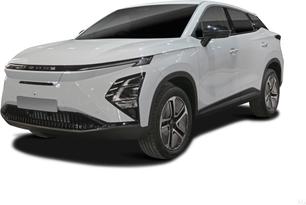
And this is the latest, the Chery Omoda E5, a compact, five-seater with the performance and range to challenge some other relatively recent arrivals.
It joins the internal combustion Omoda 5, variations of which have proliferated in the roughly 18 months it’s been on sale here.
This is CarsGuide’s first look and we’ve assessed everything from value and practicality to safety and driving performance. So, stay with us to see if this EV could be your entree into the world of battery-electric SUVs.
Let’s be honest, medium SUVs are the bread and butter of the Aussie new car market and there are a lot of rivals to choose from.
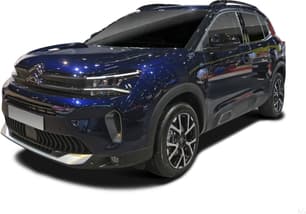
Which is why the Citroen C5 Aircross Sport’s much-needed update is welcomed with open arms, especially since it’s the only model in the range.
It boasts more space than a lot of its rivals but it’s been let down in the past by a sparse safety sheet and older tech.
The facelifted model sees tweaks to the design, safety and tech, making it more of a true competitor against the likes of the Kia Sportage, ever-popular Mazda CX-5 and practical Nissan X-Trail.
But are the changes enough for it to be considered as a family SUV? I’ve been testing it this week with my family of three to find out for you!
The Chery Omoda E5 gets solid ticks for value, practicality, performance, efficiency and a great ownership promise.
But its suspension compliance isn’t in line with class standards and some of its safety assist features aren’t as refined as they should be. Both of which matter in a car likely to be used by families day-to-day. Its price and specification are strong drawcards and that will get it over the line for many. But we think this Omoda E5 would still benefit from some judicious fine-tuning.
Note: CarsGuide attended this event as a guest of the manufacturer, with travel, accommodation and meals provided.
So, what did my family think about the Citroen C5 Aircross Sport?
I love how it looks and its updated safety list. It’s fairly spacious inside and has a great boot space but it’s lacking a lot of family-orientated practicality in the back seat. The lack of individual storage and amenities is noticeable when you have a kid or two but even as an adult, not having a cupholder for your coffee/drink on a trip feels odd.
The multimedia system and reversing camera need to be improved, too. Overall, it will suit a small family which is out of the baby stage but can’t yet justify upgrading to a larger SUV. It gets a 6.5/10 from my family.
While retaining the fundamental shape of its internal combustion siblings the Omoda E5 does away with the petrol-powered car’s huge, rear-sloping grille, replacing it with a wrap-around forward-pointing nose proudly branded with the model name and hiding a pop-out battery charging port door.
The rear is more or less unchanged save for some detail tweaks to the bumper design, with a more noticeable change being the addition of aero-inspired 18-inch rims which I for one like a lot.
Parts of the interior are markedly different to combustion Omoda models with the front of the cabin dominated by an enlarged twin-screen array, both 12.3-inch, one covering multimedia and another in front of the driver for instrumentation.
The gearshift has also been moved to a steering column stalk which frees up additional space in the centre console.
Soft touch materials on the dash and upper part of the doors is a high quality touch often missing in this part of the market and overall this Omoda E5 has a contemporary exterior design (without necessarily breaking new ground) while the interior exudes a suitably techy vibe.
The facelifted model sees a sportier front with the grille redesigned to highlight the double chevron badge.
The bonnet curves around the badge, as do the two long LED strip lights that connect the headlights. The bonnet also sports new divots that give it a gruffer edge.
The wide profile at the rear and new three-pronged tail-lights create some interest.
The black plastic moulding that runs along the base of the car could look unfashionable on a lighter colour but on our blue paintwork, it looks good. As does the contrasting black roof!
The interior trims are finished in a combination of synthetic and Nappa leather but boast a two-tone colour which might not land with everyone. Particularly given the navy portions seem to be glittery in certain lights.
Sitting at 1859mm wide, 1695mm high and just 4500mm long, the overall exterior design is sporty but cute. It should appeal to those who want a nice-but-not-loud-looking car and something that is easy to park.
There’s plenty of space up front for the driver and co-pilot, the sleek, twin-screen dashtop array increasing the feeling of space and openness.
And when it comes to storage, there’s plenty with decent bins in the doors that have enough room for a medium-size bottle, a good-size glove box, two cupholders in the top of the centre console, a lidded (and cooled) storage box between the seats as well as a lower shelf under the upper ‘flying buttress’ part of the console unit.
For power and connectivity there are USB-A and -C inputs, located on the passenger side of the lower console, a USB-A plug in the mirror unit for a dashcam, a 12-volt socket and a wireless charging pad.
Move to the rear and at 183cm tall I have more than enough head and legroom behind the driver’s seat set to my position. That said, my legs sit up at a fairly steep angle, missing out on much support from the seat cushion.
Three full-size adults will be a short journey-only tight squeeze in the back, although a trio of up to mid-teenage kids will be fine.
For storage, again, there are bins in the doors with room for bottles, there’s a pair of cupholders in the fold-down centre armrest and map pockets in the front seat backs.
USB-A and -C jacks are onboard for power and adjustable ventilation for back-seaters is always a welcome addition.
Boot capacity with all seats up is 300 litres to the cargo cover which is appreciably less than its key competitors all of which hover around the 450-litre mark.
That number rises to 1079 litres with the 60/40 split-folding second row backrest lowered and there’s a 19-litre frunk in the nose. And Chery deserves a big pat on the back for including a full-sized spare wheel because the Omoda E5 is the only EV on the market that does.
And if you need to hook up that box trailer for a trip to the tip the E5 is rated to tow a 750kg unbraked trailer.
The interior is spacious for a medium SUV but the back seat knocks off some points for family practicality. So, let’s start in the back.
Despite there being plenty of headspace for my 168cm (5’6’’) height, the legroom is cosy behind my driving position.
Meaning a 0-4 rearward facing child seat will encroach on front passenger space. It’s probably best suited to a family which is out of the baby stages but it was cumbersome fitting my big harnessed-booster seat in there, too.
It has ISOFIX child seat mounts on the outboard rear seats and three top tethers but two seats will fit best. The floor is flat, which offers far more comfort for a middle seat passenger and I love how the seats can be individually shifted.
The amenities and storage in this row are sparse. You get directional air vents, reading lights, netted map pockets and shallow storage bins in the doors.
Siblings may squabble over the single USB-A port on a long road trip but more than that, there are no cupholders or drink bottle holders back there or even a centre armrest.
That said, the 182mm ground clearance made it an easy car for my six-year-old to get in and out of; plus, the stadium-like seating and wide windows meant he had an awesome view this week.
Now for the front. It has ample amenities, storage and tech. You get plenty of head- and legroom, plus with the panoramic sunroof the cabin manages to feel airy, too.
Individual storage is great with an extra deep middle console, glove box, two cupholders, bins in each door and two very handy utility trays situated near the toggle-type shifter.
Charging options are much better up front, too, and you can choose between a wireless charging pad, two USB-A ports and a 12-volt socket to charge your device.
It's super easy to connect to the wired Apple CarPlay and there’s wired Android Auto for those users.
The built-in satellite navigation is straightforward but that’s where the simplicity ends. I did not find the multimedia system or the digital instrument panel to be terribly intuitive to use and the touchscreen controls can be laggy.
I’m sure you could get used to it over time but I felt flustered.
For this size SUV, the boot space is great at 580L with all seats in use but you can bump it up to 1630L if you fold the back row.
The floor can be adjusted to make a level load space or dropped to give you greater depth for bulkier items and there is a temporary spare tyre underneath the floor.
There are luggage tie-down anchors, a cargo blind and I always like having a powered tailgate.
The Omoda E5 is offered in two grades, the entry-level BX at $42,990 and the top-spec EX at $45,990, both prices before on-road costs.
That undercuts the BYD Atto 3 ($44,499 - $47,499), overlaps the MG ZS EV line-up ($39,990 - $49,990) and sits well under the (non-N Line) Hyundai Kona Electric range ($54,000 - $68,000).
And aside from the safety and performance tech we’ll get to shortly, the BX offers up a handy standard equipment list.
Highlights include fabric trim (with synthetic leather accents), dual-zone climate control air, twin 12.3-inch screens covering multimedia and instrumentation, built-in sat nav, six-speaker Sony audio (with digital radio), wireless (and wired) Android Auto and Apple CarPlay, a ‘Hello Omoda’ voice command function, wireless device charging, alloy wheels, all LED exterior lights, rain-sensing wipers plus keyless entry and start as well as power folding and heated exterior mirrors.
The EX adds more fruit including full synthetic leather trim, power front seats, ambient lighting, a heated synthetic leather trimmed steering wheel, eight-speaker Sony audio, a power sunroof, power tailgate, a 360-degree camera view, sequential rear indicators and puddle lamps.
Those included features stack up well for the category and the Omoda E5’s specific competitors.
There is only one model for the C5 Aircross Sport and it will set you back $54,990, before on-road costs.
That prices it as the most expensive compared to its rivals with the Mazda CX-5 GT SP ($51,810) coming in closest but the Nissan X-Trail ST-L ($46,790) and the Kia Sportage SX+ ($41,850) are even more affordable.
The only included paint colours are 'Polar White' and 'Nera Black'. Our model’s 'Eclipse Blue' will add on $690.
However, the C5’s price tag doesn’t feel too cheeky because of the feature-heavy specification, including heated front seats, electric driver’s seat with massage function, a panoramic sunroof and a mix of premium Nappa leather and synthetic leather interior trim.
You also get a powered tailgate, rear privacy glass tinting, full LED lights on the exterior, individually sliding seats on the back row and black 19-inch alloy wheels.
The technology has been upgraded with the dashboard being headlined by a 10-inch touchscreen multimedia system and a 12.3-inch digital instrument panel.
Built-in satellite navigation, as well as wired Apple CarPlay and Android Auto are also included as standard equipment.
On top of that, the safety list has been significantly improved, but more on that later.
The Omoda E5 is powered by a single permanent magnet synchronous electric motor in the nose driving the front wheels through a single-speed reduction gear transmission.
Outputs of 150kW/340Nm are solid without being spectacular for a car of this size and close to 1.8-tonne weight.
The C5 Aircross Sport has a 1.6-litre, four-cylinder turbo-petrol engine with a maximum power output of 133kW and 250Nm of torque. It’s not super grunty but there’s plenty here to keep you up to speed on the open road.
It is a front-wheel drive and has an eight-speed auto transmission but the gear changes can feel a bit jerky at lower speeds.
The Omoda E5 is powered by a 61kWh lithium iron phosphate battery and it can accept an 80kW DC charge which translates to a 30-80 per cent charge time of around 28 minutes.
And the Type 2 port in the centre of the nose makes charging a breeze, allowing you to park in front of a charger without having to think about which side of the car the plug has to go into.
Connect to AC at the E5’s maximum 9.9kW capacity and you’ll be looking at a 10-100 per cent charge time in excess of 30 hours.
Official energy consumption on the WLTP combined (urban/extra-urban) cycle is 15.5kWh/100km and claimed range is a handy 430km.
Over a mix of urban, suburban and freeway running on test we saw a real-world average of 16.8kWh/100km which is roughly what you’d expect for a reasonably rapid electric SUV of this size.
Ah, this is where it earns back some points!
I was very impressed by the efficiency of this because the official combined cycle fuel figure is 5.7L/100km and my real-world usage came to 6.2L! That’s fantastic for this sized SUV and for a turbo.
With a fuel tank of 53L and based on the combined fuel figure, you should be able to get a driving range of around 930km, which is good for those families who like to do road trips.
Chery says the Omoda E5 will accelerate from 0-100km/h in 7.6 seconds which is pretty rapid and there’s plenty of thrust from a standing start and for dodgem car-style city manoeuvring. There’s also ample oomph for safe highway cruising and overtaking.
There are three powertrain modes - Eco / Normal / Sport - with the latter adding some extra urgency but there’s not a dramatic difference between the three.
The column-mounted gear selector is in the style of a Mercedes lever rather than a rotary controller and it initially takes conscious effort to avoid flicking it like an oversize indicator stalk.
Once settled in, though, it becomes second-nature and its location frees up extra space for storage in the console between the front seats.
Chery says it spent eight months on local testing and development of the suspension tune, powertrain integration and safety assistance systems and we believe the car could be better in aspects of all three.
The Omoda 5 rides on a platform designed to accommodate combustion and electric propulsion from day one and the front-wheel-drive E5 is suspended by struts at the front and multi-links at the rear.
It takes a lot to manage close to 1.8 tonnes of mass in a relatively small car. Walking the tightrope between body control and ride comfort is tricky with a beefy battery onboard and the E5’s around town ride is best described as jittery, upset by even moderately rough surfaces, although things improve as road speed rises.
The 18-inch rims are shod with 215/55 Kumho PS71 EV rubber and despite its relatively stubby sidewall we’ve driven this tyre on other cars without issue, so it’s likely not the culprit.
Steering weight can be adjusted but road feel is modest and quick cornering isn’t the E5’s forte. But it’s not that kind of car. Urban duties rather than slicing through a favourite set of corners will be its more likely primary purpose, and for that, the steering’s fine.
Then, no matter which drive mode you’ve selected, or the level of regen braking, it’s hard to be 100 per cent smooth with accelerator and brake inputs. They can be sharp on application and lift-off.
And when it comes to assist systems, lane-keeping intervention when using cruise control is abrupt and annoying. The centring function can be switched off but, ideally, you shouldn’t have to.
And likewise, the driver attention warning is intrusive. To the point where it fired an alert at times where I was looking directly at the road ahead. Again, it can be turned off (which is what I’d do 100 per cent of the time) but the calibration could be better.
Physical braking is by vented discs at the front and solid rotors at the rear and three levels of regen braking are available. Snag is you have to work through multiple screen options to get to the point where you can adjust it. Wheel-mounted paddles would be far more effective but the bean counters must have won the arm wrestle with engineering.
Once you apply the most aggressive regen level, even it is relatively low-key, so no i-Pedal-style single-pedal driving here.
In terms of miscellaneous observations, strategic inclusion of acoustic glass on the EX grade seems worthwhile as the mild highway wind noise we noticed on the BX wasn’t apparent in the top-spec model.
And the lack of a conventional dial for audio volume control is a miss. Far safer to quickly adjust a dial than sliders or buttons (even on the steering wheel).
Interesting to note Euro NCAP is lining up to make inclusion of physical controls for things like audio volume, turn signals, hazard lights, wipers and the horn mandatory for a maximum five-star safety assessment from 2026 onwards.
Despite its city-friendly size, the C5 Aircross Sport is just as happy cruising on the open-road as it is in an urban environment.
The ride is smooth enough once you get up to a steady speed but the suspension can feel harsh on a bumpy road.
Also, the auto stop-start function can make it feel sluggish to respond, so I disabled this on most trips.
There is plenty of power so you'll feel confident overtaking or getting up to speed on the open road. However, you have to be a little more aggressive with the accelerator when you’re hitting hills.
The steering can, at times, feel vague when you’re at lower speeds but is otherwise responsive.
The cabin space is quiet and nice to be in on the highway and you’ll be able to chat with your passengers with ease.
What I like most about this though is the visibility – the windows are large and I feel like I have a clear view most of the time, which isn’t always the case in an SUV.
Parking this is a cinch with entry to tight car parks helped by a 10.7m turning circle!
However, the 180-degree view camera isn’t great and near hopeless at night time. A clearer image would be welcome but front and rear parking sensors ease the annoyance.
Petrol powered versions of the Omoda 5 received a maximum five-star ANCAP score from testing in 2023, but the E5 isn’t included in that assessment.
Chery expects an ANCAP rating for the E5 by the end of the year and is anticipating a five-star result.
Active (crash avoidance) tech highlights include auto emergency braking (AEB), lane keeping assist, adaptive cruise control, blind-spot monitoring, rear cross-traffic alert, rear AEB, driver monitoring, tyre pressure monitoring, front and rear proximity sensors and a range of other alerts, warnings and assists.
Those other features consist of forward collision warning, lane keeping assist, lane departure warning and prevention, ‘Traffic Jam Assist’, ‘Lane Change Assist’, ‘Door Opening Warning’, ‘Speed Control Assist’, ‘Intelligent Headlamp Control’ and ‘Smart High beam’.
Having said all that, there are the features, and then there’s how well they operate, and interestingly Chery has confirmed it has worked to evolve its ‘ADAS’ safety functions on the internal combustion Omoda 5 since its launch around 18 months ago.
And as hinted at in the driving section it could be a similar scenario with this car, especially when it comes to lane keeping and driver monitoring.
If a crash is unavoidable there are seven airbags onboard including a front centre bag to minimise head clash injuries in a side-on crash as well as multi-collision brake which lowers the chances of secondary collisions following an initial impact.
For baby capsules and child seats there are three top tethers and two ISOFIX anchors across the second row.
Overall, the Omoda E5’s safety report card gets more than a pass mark but there’s room for improvement.
The updated safety list is most welcomed, especially on a family SUV.
The C5 Aircross Sport has the following as standard - daytime running lights, forward collision alert, lane keeping aid, lane departure alert, blind-spot monitoring, rear cross-traffic alert, intelligent seat belt reminders, traffic sign recognition, 180-degree view reversing camera, front and rear parking sensors and adaptive cruise control with stop and go function.
Special mention for the new fatigue detection alert. When it triggers it doesn’t stop sounding until both of the driver's hands are detected on the steering wheel.
The autonomous emergency braking with car, pedestrian and cyclist detection is operational from 10 – 80km/h (5.0 -140km/h for car detection), however the pedestrian and cyclist functions are only detectable in the day time. It’s usual to see it operational at night, as well.
Despite the new safety items, it still only has six airbags, which includes curtain airbags covering both rows but that’s pretty low for a family car nowadays.
It was awarded four from a maximum five-star ANCAP safety rating back in 2019 but didn’t have all of the new items at the time of testing.
Chery covers the Omoda E5 with a seven-year/unlimited km warranty, which is ahead of the mainstream market norm, with a separate eight-year/unlimited km warranty for the drive battery; again, ahead of the pack.
You’ll also pick up seven years roadside assist (if you service the car at a Chery dealership) and the brand’s seven-year capped-price servicing program is super-competitive.
The scheduled service interval is 12 months/20,000km, which is shorter in terms of time than many EVs which stretch the interval to two years. But each workshop visit averages around $227 and that’s sharp.
The on-going costs are super-reasonable on the C5 Aircross Sport, with a five-year/unlimited km warranty included.
You can also choose to pre-purchase a three- or five-year capped-priced servicing plan, both significantly cheaper than the pay-as-you-go option.
On the three-year plan, services are $1100 or an annual average of $366.
It’s a flat $2000 for the five-year plan, (averaging just $400 per service), which is very competitive for the class.
Servicing intervals are every 12 months or 15,000km, whichever occurs first.
The Aircross also comes with a five-year roadside assistance plan that is offered through Digicall Assist, for added peace-of-mind.