What's the difference?
This is the new Chery C5.
Not a Chevy C5 Corvette, Citroen C5, Sinclair C5 city trike or even a Lockheed C-5 Galaxy bomber, but a facelifted Omoda 5, with a fresh nose and a few (largely) welcome upgrades underneath.
But do they address the old model’s flaws? Which, for many reviewers, made it difficult to recommend, even against other equally cheap and cheerless small SUV rival alternatives, including the previous-shape MG ZS and GWM Haval Jolion.
Read on to find out.
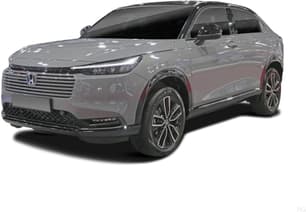
Like many car brands, Honda is storming the hybrid field. The new HR-V brings with it a hybrid powertrain and external facelift but is it enough to keep it competitive in the small SUV segment?
As with any cosmetic surgery you may wonder whether the facelift has been successful.
No tricks – I’ll tell you straight up the new external design might be what you’re looking for if you’re on the hunt for a small SUV that doesn’t look like it moonlights as an Uber for Mr Big Ears (a Noddy reference for any youngsters out there).
We're testing out the top hybrid model, the L, to see what else this urban dweller gets right and what it sometimes gets wrong.
Can a new name, fresh face and suspension update save Chery’s sleek SUV coupe from the ignominy of being one of the least pleasant options in its ultra-competitive class?
Sadly, not enough has been done for us to recommend the new C5.
As an affordable, stylish, roomy and zoomy SUV, the Chery definitely provides showroom appeal, especially given the decent warranty.
But, with lots of little niggles still present to distract and frustrate, the C5 is far from A1. Plus, with prices now creeping up, it doesn’t even have the cheap pricing of the old Omoda 5 to get it over the line.
Heading into 2026, Chery still needs to do better than this.
The Honda HR-V e:HEV L offers a respectable driving experience in the city but compared to its rivals, it’s features list and safety don’t always stack up. It sort of straddles the fence between basic and lux at times, which is an odd place for a top-model to be but its sharper styling will win hearts and the cabin is still practical.
The new and narrower nose treatment is better, banishing the Omoda 5’s insectoid face straight into the bin. As an example of coupe-SUV design, the unaltered silhouette remains contemporary and is a defining signature for the series.
But, as before, the C5’s styling is hobbled by its narrow-gutted track width and highish (at 184mm) ground clearance, that give it a muffin-top and tippy-toed appearance respectively from most angles. Flashbacks to a Holden VN Commodore. Stance be damned.
Let’s look at the newcomer’s dimensions, compared to the Tiggo 4 for perspective: length is 4351mm (plus 44mm), width is 1831mm (+6mm), height is 1662mm (+2mm) and wheelbase is identical at 2610mm.
Still, there’s a positively Pollyanna-esque perspective to be gained here as well, since the C5’s extra size translates to a biggish small SUV inside a cabin that seems stylishly minimalistic. Or fairly basic. It all depends on your point of view.
Let’s take a closer look.
The small SUV segment can often be littered with odd-looking cars that highlight pillowy or severely angular body-shapes (lookin' at you C-HR) but the HR-V offers something stylish and modern instead.
The 2025 HR-V has a sharper design that accentuates the coupe styling, slim LED headlights and crisp-looking grille. A feature highlight is the eye-catching full-length tail-light treatment which makes the design pop at the back.
The interior is gorgeous with a streamlined dashboard that features just the right number of buttons and dials for those who want more tactility in a world where screens rule.
While the technology screens are on the smaller end, they look great against the synthetic leather trims and soft touchpoints that are liberally splashed throughout the cabin.
The cockpit is driver-orientated with everything within reach and easy to use while on the go. The steering wheel looks sporty and feels wonderful.
Everything looks well-built and feels solid; it's a cabin you’ll be pleased to spend time in.
Three things struck me the moment I stepped inside the C5.
Firstly, though the silhouette suggests a low-slung car, the tall stance means getting in and out isn’t a drama at all, with the seats being up high enough for this to deserve its SUV/crossover status.
Secondly, the Chery emits a somewhat repellent plastic off-gas odour, a bit like a cheap toy. The smell never goes away. Perhaps it was just our test car? Unlikely though, as it reminds me of pre-2000s Kias and Hyundais.
And in stark contrast, thirdly, there’s an arresting elegance to the dashboard’s minimalist layout and presentation. Nothing’s changed visually and nothing needed to.
Let’s concentrate on the many positive points first.
There’s plenty of space around you for a comparatively small and narrow SUV, including ample legroom and head room for your 178cm tester front and back. It doesn't feel cramped at all.
Finding the ideal driving position is easy, with most of the (available) switches and controls where you’d need them to be without having to stretch to reach. Helping things out here is an adjustable steering wheel for rake as well as reach. Unlike in an MG ZS.
The dash layout looks great, given that this car is of a 2022 vintage, with the large, twin 10.25-inch integrated displays for both the electronic instrumentation and the multimedia system seamlessly presented. Both are fairly clear and easy to work out and operate. And, despite being an older-generation vehicle (it’s now well into year four of production), the instruments still look fresh.
And though the C5 runs a software-based operating system for vehicle functions, climate, audio, multimedia and other settings, the few buttons provided are well integrated and mostly work logically.
Below the touchscreen is a row of haptic switches for the main heating and cooling elements, meaning just one touch is necessary and with no complicated and time-consuming sub-menus to navigate. That's good.
You do need to dive into sub-menus for some drive settings and modes, though, and that's disappointing, but at least the C5’s is not as complicated as some others we’ve experienced of late.
Other plus points include excellent ventilation and loads of storage, including a big old glovebox, a cavernous centre console bin, a vast lower area to hide things on, deep cupholders and a ‘wall’ to lean two phones or a tablet while still being visible for the driver to glance at, with one side providing wireless charging on the Ultimate grade.
Along with pleasant cloth seats that are surprisingly comfortable, all show a reassuring degree of thoughtfulness.
Additionally, the poor side and rear vision is at least aided by large side mirrors and a crisp reverse-camera views.
However, there are some serious downsides too, starting with the C5’s aforementioned phone/tablet wall. The rubber backing in our test car was misshapen and dog-eared, undermining the otherwise exemplary build quality.
Until you learn its weird ways, the gear shifter can be unfathomable. It looks like it would operate as per a regular T-bar, but pressing the side button to engage Drive or Reverse instead locks them out, meaning the uninitiated will inevitably find themselves panicking manoeuvring in traffic with impatient drivers wondering why a Chery is blocking the road during a cheeky three-point turn. Embarrassing and, yes, super frustrating.
In the Ultra at least, the lofty front passenger seat has no height adjustment. The digital radio did not work for the entire week we had the C5. Maybe it was just our car, but even in inner Melbourne, reception proved elusive.
And the touchscreen-based secondary climate settings that aren’t supported by physical buttons are a stretch away, including temperature adjustment, meaning these and other items are arranged for left-hand-drive access.
This means it is fiddly to operate, as concentration is not on the road ahead, resulting in the driver monitor sounding off, leading to more frustration. An unvirtuous circle of distraction ensues, highlighting the folly of software-based vehicle systems that have not been tailored to Australian road conditions. Fail.
But nothing is as aggravating as the Chery’s voice control system. Like we said earlier, when turned on, it mishears or misunderstands words to almost a comical degree… if it wasn’t so constantly intrusive. As with paranoid and/or trigger-happy ADAS warnings, you end up switching off such irritating tech. Which beggars the question: what is their point?
Moving to the back seat, things look up again, with sufficient space for most smaller families to settle into.
The bench is fine, offering adequate comfort for shorter journeys. Legroom is generous, helped out by room for boots to tuck underneath the front cushion. And most amenities are present for a base model car, including a folding armrest with two cupholders (again, unlike in an MG ZS), as well as one-touch electric windows, overhead grab handles, coat hooks, decent size door bins, a USB port and face level ventilation.
All those go towards making the C5 well-packaged, small family transport.
Further back, Chery has managed to liberate an extra 10 litres of cargo capacity compared to the old Omoda 5, so 360 litres is available – which is not bad for a small SUV. That rises to 1075L in two-seater mode.
It’s also a practical and easy boot to use, with a space saver spare wheel.
For a small SUV, the cabin is large. Both seating rows feature excellent access with the 195mm ground clearance not eliciting one grunt from my occupants (even the oldies).
Head- and legroom is decent in both rows but taller passengers might brush the ceiling on bumps when seated in the back.
The only area that lacks this feeling of space is the boot, as it only has 304L of capacity available when all seats are in use and that's on the tiny side compared to its rivals. The Kia Niro has 425L which rivals some sedans!
Seat comfort is best in the front where thick padding and a longer cushion offer more comfort on a longer journey, despite lacking lumbar support.
The rear seats are harder and shorter and you should expect some big stretches from adults after a road trip. However, the directional air vents and other amenities keep it from feeling too basic on comfort.
There are lots of storage options with a glove box that's large enough to fit a manual with room to spare, a small middle console, two large 'stacked' shelves in front of the gearshift, four cupholders, four drink-bottle holders and two map pockets that also feature a device holder large enough to fit my iPhone 15 Pro Max.
The HR-V has 'Magic' seats in the rear which means the base can fold up or the backs can be folded flat. It’s a cool feature that opens up extra storage options.
The technology is simple to use and responsive. The touchscreen multimedia system has built-in satellite navigation, the Honda Connect app, wireless Apple CarPlay and wired Android Auto. The CarPlay is easy to set up and maintains a steady connection.
Charging options are good with a single USB-A and three USB-C ports, as well as, a 12-volt socket but you miss out on a wireless charging pad despite the L being the top grade.
In its latest guise, Chery’s small SUV coupe range has been reduced to just two grades, Urban and Ultimate.
This one’s the Urban. At $29,990 drive-away at the time of publishing, it undercuts the Ultimate by $5000, but does cost $2000 more than the old base Omoda 5 FX. And the competition is becoming fiercer by the month.
Consider, for example, the redesigned and vastly-improved MG ZS, facelifted Jolion and all-new Suzuki Fronx, as well the less expensive if smaller rivals such as the Mahindra 3XO, Kia Stonic, Hyundai Venue, Mazda CX-3, Nissan Juke and Chery’s own Tiggo 4.
Frankly, the Omoda 5 needed to improve.
To that end, the C5 ditches the old torsion beam rear suspension for a multi-link independent set-up that promises better comfort and control. That’s a big step in the right direction.
And while long-term durability and reliability remain unknowns with such gearboxes, a switch from a continuously variable transmission (CVT) to a six-speed dual-clutch transmission (DCT) may be a nod to driving enthusiasts. Let’s see about that.
The entry-level Ultra includes a nicely integrated electronic display and central touchscreen at 10.25 inches apiece, wireless Apple CarPlay/Android Auto, DAB+ digital radio, rear air vents, powered folding mirrors, noise-cutting acoustic front door glass and 17-inch alloys.
There’s also “Hello, Chery” voice control, that can thankfully be silenced as our example’s inability to differentiate 'Chery' from 'Cher', 'chair' and 'care' fast became a pain in you-know-where, since it insisted on constantly butting in.
Seven airbags and a decent level of advanced driver assistance systems (ADAS) are also standard – more on those in the safety section below.
For the record, the $35K-drive-away Ultimate adds better audio, a powered tailgate, heated front seats, dual-zone climate control, a 360-degree monitor, sunroof with sunshade, wireless charger, imitation leather, bigger wheels and more.
However, they are also necessary sweeteners against sophisticated rivals like the Toyota Yaris Cross Hybrid, Mazda CX-30, Subaru Crosstrek, Hyundai Kona, Nissan Qashqai and Renault Duster.
More importantly for some, the closely related and virtually identically sized Chery Tiggo 4 costs several thousand dollars less, and mostly matches the C5’s spec at each corresponding grade, undermining the newcomer's value. A strange own-goal, Chery.
Oh well. For some buyers, this swoopy crossover is all about image. At least the facelift addresses the old Omoda 5’s odd appearance from some angles.
There are three HR-V variants available, starting with the petrol base-model Vi X, moving to the mid-spec e:HEV X and on to the top-grade e:HEV L; which is the model on test here.
The L is priced from $42,900, drive-away (2000, NSW postcode), which positions it as the most affordable compared to its similarly graded rivals. The Kia Niro HEV GT-Line is $55,487, drive-away, and the Toyota C-HR Koba is $55,180, drive-away.
Despite having a much higher price tag, the rivals sport a few extra features including electric front seats, ventilated front seats, larger media screens, wireless Android Auto, a wireless charging pad and upgraded sound systems... just to name a few.
Oh, and the HR-V is only a four-seater, so the rivals also boast a fifth seating position.
That being said, the L isn't a total lump in the features department and the standard equipment is still pretty good (just not full-bodied like it's rivals).
The L comes with synthetic leather and cloth mixed upholstery and trims, heated front seats, a heated steering wheel and 18-inch alloy wheels.
Technology includes a 9.0-inch touchscreen multimedia system with satellite navigation, wireless Apple CarPlay, wired Android Auto, six-speaker sound, the 'Honda Connect' app, a 7.0-inch digital instrument cluster, one USB-A port, three USB-C ports, a 12-volt socket and Bluetooth connectivity as well as AM/FM and digital radio.
Practicality feels well-rounded with keyless entry and start, rain-sensing windscreen wipers, dusk-sensing headlights, dual-zone climate control and a powered tailgate.
The C5 is powered by a 1.5-litre four-cylinder turbo petrol engine, delivering 108kW of power at 5500rpm and 210Nm of torque from 1750-4000rpm.
As part of the MY25 facelift, the Chery swaps out the old Omoda 5’s CVT for a six-speed dual-clutch transmission, complete with a handy manual mode. It drives the front wheels only.
Tipping the scales at 1462kg (kerb), the C5 Ultra offers a power-to-weight ratio of 73.9kW/tonne – which is slightly less than, say, a Haval Jolion, but quite a bit behind a Mazda CX-3.
With a slight helping hand from a strong northerly wind, we managed to record a 0-100km/h sprint time of 9.9 seconds. This figure suggests the Chery feels faster than it is.
The L is a hybrid which combines a 1.5L four-cylinder petrol engine with an electric motor and together they produce up to 96kW of power and 253Nm of torque.
Which is plenty to make the L feel like a zippy city car but on the open road, the engine has a tendency to over-rev and can get whiny going up a hill, which may be a by-product of the continuously variable auto transmission.
The C5’s combined average fuel consumption figure is 6.9L/100km, for a carbon dioxide emissions rating of 160 grams/km. And that’s on regular 91 RON standard unleaded. Topping the 51-litre petrol tank should result in nearly 740km of range between refills.
During our week with the Chery, we managed 9.0L/100km, which is very disappointing, though that did include highway and performance driving.
The HR-V L has a low combined (urban/extra-urban) fuel cycle figure of just 4.3L/100km which is not far off the 4.0L/100km claims of its rivals. Combined with the 40L fuel tank, you have a theoretical driving range of up to 930km, which is pretty darn good!
After doing a lot of urban driving, with a couple of longer trips thrown in, my real-world usage came out at 5.1L, which is isn't too far off the claimed figure, is still a good result overall and computes to a range in excess of 780km.
Chery has made some pretty fundamental changes underneath, so we had higher hopes of the C5 compared to the preceding Omoda 5. However, expectations ought to be tempered here.
Let’s begin with the Chinese SUV’s performance.
After a moment’s hesitation, the C5 feels punchy from the get-go, with a decent amount of muscle as the revs rise. Throttle response is brisk, even at higher speeds. And the brakes do a great job. This is quite the rapid little runabout.
Some of that initial lag is down to the dual-clutch transmission, since it needs time for the turbo to spool up. Once sorted, it shifts swiftly and smoothly, and without delay. Only the aforementioned gear selector complication will catch out new drivers, as the operation is needlessly complicated.
But the engine is never really quiet, and can even feel coarse when extended under hard acceleration, betraying this Chery’s station as a cheap SUV. And the stop/start tech is especially jerky.
The steering, meanwhile, is a mix of disgruntle and delight.
When driving on the motorway, it can feel lumpy, with the driver-assist system tugging away endlessly at the wheel. The sudden jolts make it feel like a pinball as the vehicle feels like it is ricocheting off the white lines. Such constant correction is both tiring and irritating, leading to fatigue and, if your fuse is really short, aggravation.
For steering smoothness or linearity, you need to dive into a sub menu and opt out of several ADAS modes. Or otherwise pull over and wonder why Chinese car companies especially seem to have such disdain for Australian drivers. If this sounds like a nightmare, the C5 is not for you.
Furthermore, there’s no point choosing a steering setting. Comfort is light enough for easy driving and weighty enough for the driver to feel in control, but feedback and feel are absent. And selecting Sport just adds needless heft and makes it all feel way too heavy.
Now, that said, the C5 offers some dynamic compensation, and likely courtesy of its multi-link suspension upgrade.
At higher speeds, the steering, for instance, is pleasingly direct and precise, meaning it turns exactly where you choose it to. The handling feels controlled and the tyres grip well, for some unintentional scrappy fun through really tight corners, to a certain extent anyway. It’s a side to the Chery the Omoda 5 never seemed capable of delivering.
But, inevitably, this comes at a price, and that is a busy and at times agitated ride, with the suspension failing to soak up bumps and irregularities on anything other than smooth roads, despite its new-found independence, adding to further fatigue. For the record, our test car rode on 215/60R17 Giti tyres.
Would higher-quality rubber help fix this? If you’re buying a sub-$30K Chery SUV, would you even care? Basically, unless you enjoy the occasional hoon, the C5 lacks dynamic sophistication as well as sufficient Australian road tuning. Much like its predecessor. Such a letdown.
The HR-V L is an SUV perfectly suited to city life. Its power delivery is responsive around town, allowing for quick bursts when needed and the well of power feels deep until you get onto the open road. And as mentioned, that’s when it’s let down a bit.
The HR-V has a tendency towards mild understeer in quicker sweeping bends but is otherwise surefooted on the road. The suspension is firm, and you’ll notice the bumps here and there, but ride comfort still manages to be okay most of the time. Also road noise isn’t too high around town.
The visibility is great until you’re trying to look out of the back window and have a passenger to your left or a car seat installed. A digital rearview mirror would have been quite welcome in these scenarios.
Like most small SUVs the HR-V is easy to park and it’s small enough to be your best friend in a tiny car park. However, the reversing camera doesn’t reflect the grade level as the quality of the feed isn’t the best.
Considering that it is merely a facelift with a new badge, the Chery C5 conveniently adopts the preceding Omoda 5’s five-star ANCAP crash-test rating.
Note that was conducted in 2022 using earlier performance parameters compared to today.
Anyway, there is little doubt that Chery has done its homework here, with a host of advanced driver-assist systems (ADAS) being fitted.
These include autonomous emergency braking (AEB), forward collision warning, emergency lane keeping, lane departure warning and prevention, blind spot detection, lane change assist, rear cross-traffic alert and braking, adaptive cruise control with traffic jam assist, traffic sign recognition, speed control assist, a driver monitor and auto high beams.
This cannot be understated: most of this ADAS tech requires Australian road tuning, because they interfere and distract to the point of being a nuisance.
Note that the AEB (encompassing pedestrian, cyclist and back-over braking) operates from 4km/h to 65km/h, whilst the car-to-car braking is between 4km/h and 150km/h. The lane-support systems work between 60km/h and 150km/h.
Seven airbags are present (including a front-centre and full head/curtain coverage but no rear side airbags), as are anti-lock brakes, stability control and traction control systems.
Finally, a pair of ISOFIX child-seat latch points and a trio of hooks for tether straps across the rear seat are also part of the C5 package.
The HR-V has a four- out of a possible five-star ANCAP safety rating from testing done in 2022. It only features six airbags and its individual assessment scores aren’t as high as its rivals.
In fact, both the rivals I’ve mentioned performed much better and have additional safety features to boot, including safe exit assist, 360-degree view camera systems and rear occupant alert. Which the HR-V misses out on.
The top model HR-V benefits the most in safety compared to the lower grades and includes blind-spot monitoring, front fog lights, forward collision warning, rear cross-traffic alert, lane keeping aid and departure warning, traffic sign recognition, intelligent seatbelt warning, adaptive cruise control and a reversing camera as well as front and rear parking sensors.
Some notes, though. The lane departure and keeping aids seem to 'activate' whenever they feel like it. I had them come on more on unmarked roads than marked.
The adaptive cruise control can be too sensitive at times and having the car slam on brakes when you're passing a parked car on the highway going 100km/h is a scary experience to say the least.
The HR-V has AEB with car, pedestrian, and cyclist detection which is operational from 5.0 to 100km/h (170km/h for car).
Being a four-seater, you only get two ISOFIX child seat mounts and two top-tether anchor points and while it is easy to fit a child seat in, the top of it wipes out your rearview vision.
The safety is pretty disappointing as it lets down an otherwise solid SUV.
Very competitive if not quite as class leading as the conditional Nissan, Mitsubishi and MG 10-year warranty, the C5 comes with a seven-year/unlimited kilometre warranty.
Chery also offers seven years/105,000km of capped-price servicing and a year’s free roadside assistance, though up to seven years is available should owners choose to have their vehicle maintained at an authorised dealer during that period.
Service intervals are at every 12 months or 10,000km, and cost $280 per visit for the first five, extending to nearly $370 and $290 for the final two.
Honda offers the HR-V with a five-year/unlimited km warranty and an eight-year battery warranty which is on the lower end considering it's rivals can get up to seven-years unlimited km warranty now.
The five years capped-priced servicing program offers excellent value, however, as services are a flat $199, which is great for the class.
Servicing intervals are at every 12 months or 10,000km, whichever occurs first and that should be fine for the average city dweller. But it could get annoying if you put higher than average kays on your car every year.