What's the difference?
It was, perhaps, a matter of time before BYD joined the seven-seat SUV brigade. In fact, the real surprise is that it has taken the Chinese brand as long as it has to begin mining the rich vein of Aussie car buyers looking for a full-sized SUV with the ability to seat a bigger family across three rows. But here it is, finally, anyway, the Sealion 8.
Interestingly, BYD hasn’t started its quest for seven-seat dominance by offering a traditional hybrid driveline. Instead, it’s gone straight for the throat with a pair of plug-in hybrid drivelines, both offering their own distinct take on the concept.
The first is a front-drive variant of the Sealion 8. With a single electric motor and a useful range, it stands as the sensible choice. But for those who want more performance, there’s the almost comically-fast all-wheel drive version with a pair of electric motors and monstrous acceleration. Interestingly, there doesn’t seem to be much in the middle, but the brand’s typically sharp pricing means there’s not a huge price-gap to negotiate in any case.
Of course, this is a pretty crowded marketplace right now, and standing out is the key to success. Whether that’s through value-for-money, performance, practicality or just shock value is open to debate, but it remains that BYD is launching the Sealion 8 into seriously competitive seas.
When it comes to Mazda’s luxury aspirations, the CX-90 is it. The big Kahuna. Seven seats of what should be the Japanese brand’s exceptionalism amongst its mainstream rivals.
But does this more than five-metre-long Mazda have what it takes to elevate the brand beyond the likes of Toyota, Hyundai, Nissan and Kia?
Importantly, is this base version - which is closer to Mazda’s traditional price point - a bit of a luxury seven-seat SUV bargain?
We drove a CX-90 G50e Touring (the most affordable CX-90 of the lot) for a week to find out.
There’s quite a bit to like here. There’s plenty of equipment, and lots of choice in price, trim level and mechanical complexity.
The driving dynamics are fine if you’re not looking for anything sporty although the performance offered by the dual-motor variants must be considered excessive, even if it’s pretty exciting the first time.
Perhaps what’s missing from the Sealion 8 experience is anything that stamps the car as something special within its hotly-contested market segment. Which is another way of saying it offers up the same limitations, most notably in the third row accommodation and access.
You only need to drive a one-box people mover and utilise the rearmost seat, to understand that the two-box SUV, while a pretty marketable thing, is compromised once the passenger count exceeds five. Nothing new there, but nothing new in the BYD, either, to change that narrative.
At which point, the front-wheel drive variant emerges as the most pragmatic choice and probably the one that meets all the important family tasks headed its way for the smallest outlay.
Note: CarsGuide attended this event as a guest of the manufacturer, with meals provided.
There are many reasons I quite like this CX-90. It sells the plush luxury promise when it comes to its interior and design, it feels big and purposeful, and has a refreshingly minimalist approach to its cabin tech. As a seven-seat SUV it’s particularly impressive, with plenty of amenity and a third row that can genuinely fit an adult in comfort.
However, there are areas where it could use more polish, from the drivetrain to the ride, and it ultimately strikes an odd point for price and ownership which feels lost between the premium segment and the mainstream rivals.
If you’re a long-term Mazda owner, I still think you’ll love it, and this Touring grade is definitely the best value in the range. It offers the lion’s share of equipment at a price more comparable to Mazda’s traditional mainstream rivals.
BYD has done its best to give the Sealion 8 its own character and vibe. In fact, it’s a pretty smart looking thing - although still very much a two-box wagon concept - and that’s no given when you consider how much some big SUVs can start to look like large blobs of nothing when you look closely.
There’s the usual Darth Vader stuff at the front, but in profile, the diagonal vent across the front door makes a bit of a statement. The 'plaited' motif of the tail-lights might be stretching things a bit, though.
Inside, the modern board-room feel is invoked by the angular lines and high-tech look and feel of the large info-screens. The panoramic sunroof of the Premium grade also helps brighten up an otherwise pretty dark space.
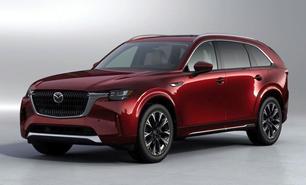
The CX-90 is an impressive car to behold. Moving things onwards and upwards from its CX-9 predecessor, the CX-90 is bigger and even more refined in a lot of ways.
Mazda’s signature design language has evolved into something a bit beefier, trading out the delicate sharp angles and chromes of its front-wheel-drive predecessors for something a bit more upright, with a wide stance and tough proportions.
The long bonnet and expansive body panels stress the long-engined, fluid nature of this car’s design language. It certainly gives it a more premium vibe than the boxy American-influenced style of the Hyundai Palisade, and leans more European than the science-fiction styling of something like the Kia Sorento.
If anything, there’s some clear BMW influence in the shape of the tail and light fittings. Light lashings of chrome keep it in-line with Mazda’s previous design language, and on this base model at least, plastic claddings over the arches toughen it up a bit.
Inside is plush. In fact, it’s treading on Lexus territory when it comes to the design and feel of the seats, dash, doors and there are even padded leather touches down the sides of the centre console for your knees to rest against. Even the standard leather seats are nice (with softer Nappa leather available on higher grades), and I actually find the somewhat monochrome interior treatment on our test car to be the most modest option. It’s off-set by silver trims and a touch of chrome in the steering wheel and doors.
The dash is in a more traditional style (again, it feels influenced by BMW here) with a padded insert across the front, inset vents and a climate control panel leading down to a nice wide console with tasteful patterned trims, and an electronic shifter. The screen in this base car is of modest dimensions compared to most cars today, but those who aren’t sold on giant touchscreens will love it.
Even the digital dash elements are tastefully executed, although they’re not particularly customisable, which is a shame.
BYD has made sure all three rows of the Sealion 8 are fit for purpose while attempting to make the rearmost row (traditionally the trickiest to get right) less of a downmarket place to be. With that in mind, both rear rows get air vents and climate-control adjustment for that part of the car. There's also a pair of USB-C charge ports in the second row and a single USB-C and USB-A port in the third row. The third row also has cupholders bult into the wheel arch on each side.
With the third row in place, there’s a decent amount of luggage space (270 litres) largely thanks to the Sealion’s five-metre overall length. There’s no spare tyre, but a puncture repair kit lives under the floor (as does the removable cargo blind) and the rearmost luggage space also incorporates a 12-volt socket and luggage hooks.
A pair of pull-tabs drop the headrests and then the entire split third row in a single movement, at which point you suddenly have a five-seater with a huge, 960 litres of luggage space. And if you need to cart gear over people, the second row also folds flat to open up 1960 litres of space.
Up front, the feeling of spaciousness is amplified due to the low scuttle height and what the aviation industry calls the glass cockpit (no analogue dials or gauges at all). The 15.6-inch central info-screen runs the usual apps and control displays but, thankfully, the climate control touch-controls are tethered to the bottom of the screen, so they’re always visible regardless of what else is going on.
The 10.2-inch driver’s display adds a head-up function in Premium trim and displays the usual array of information required to operate the vehicle. But even better is the steering wheel which features a thick, well-padded rim that looks and feels pretty luxe. It also houses the usual buttons for stereo, phone and cruise-control functions.
A really nice touch is the addition of an extra set of tilt controls on the inside of the passenger’s front seat, allowing the driver to control that seat to allow people in or out without leaving their own seat. Nice one.
It is, of course, the centre row of seats that will make or break a car like this for many families. Even though many clans will not use the rearmost seat much of the time, the central row will get a huge workout. So it’s nice to see that leg, foot and headroom are all sufficient for even growing teenagers. Again, the car’s overall length appears to be the key, but it’s also worth noting the centre row seat is comfy and supportive. The outboard positions in the second row also feature heating and ventilation functions.
The third row, however, follows SUV tradition by being strictly for smaller kids. Access past those huge wheel arches is tight, and once you’re in, there’s a combination of dark trim and tiny windows to limit joy.
While it won’t matter to many buyers, the front-drive Sealion 8 is rated to tow 1800kg with a braked trailer, and up to two tonnes in the all-wheel drive version. But there’s no spare tyre fitted, and roadside flats need to be addressed by the included tyre repair kit.
The CX-90 is enormous, but despite its long bonnet, it feels on the inside like it makes good use of its dimensions.
Up front, it’s easy to find a seating position thanks to an array of adjustability, from the seats to the telescopic adjust for the wheel, and the cabin is wide and tall enough to accommodate pretty much anyone with ease.
Unlike some Mazdas which have a strange zoom-factor on their rear vision mirrors, the CX-90 doesn't have this problem, and visibility generally out the windows is impressive. I can see the long, tall bonnet and cosy dash design creating visibility issues for shorter drivers, however.
Padded materials are everywhere they should be (and more), and when it comes to storage there’s a large bottle holder in each front door, two more cupholders in the centre console (with a flip-out cover), a split-opening centre console box (which hides USB-C connections, great for cable management) and a wireless charging bay up front below the climate unit.
It’s rare these days to see a full array of physical buttons and toggles for a dual-zone climate set-up, but the Mazda has the whole lot. It’s a breeze to adjust on the fly and integrates into the design in a subtle way.
It’s also worth calling out the multimedia screen isn’t a touch unit. Instead, you need to control it through a handful of buttons and a rotary dial on the centre console. It’s nice to have a physicality to it, and it works well for the relatively simple base operating system, but it’s a clumsy way to interact with phone mirroring.
In my experience Apple CarPlay has simply too many icons and menu features to work around with a dial-operated system, to the point where it’s distracting to use on-the-go (thus, defeating the purpose of having physical controls).
The second row is a real highlight. Set to its default position, I have leagues of legroom behind my own driving position (at 182cm tall). Again, heaps of width and headroom here, and even the huge rear doors open nice and wide, which should make loading luggage and fitting child seats easy.
The seat trim is just as good as it is in the front, with decent side bolstering, and top-notch amenities, with shades built into the windows, decent-sized bottle holders in each door, a further two in the drop-down armrest, soft pockets on the backs of each front seat, and a separate climate zone with independent temperature and fan speed controls.
There are two adjustable air vents with a lock-off, as well as two USB-C ports for power. Top marks.
The third row is usually where things get tricky for SUVs like this, but the CX-90 isn’t out of tricks yet.
Access isn’t the easiest. The second row can fold forward, but the left over aperture for clambering in, even though the doors are quite large, isn’t great, which will make it a no-go for anyone with mobility issues.
However, once you’re back there, I was surprised to find a full-sized adult like me can fit in relative comfort. With the second row set as far back as it can go, my knees are hard up against the back, but when rolled forward for more third-row space, there's still plenty of room in the middle. I was left with ample room for my knees and feet in the back seats. The seat trim also offers decent padding and comfortable trims, which is rare for most three-row SUVs, and while you wouldn’t want to be too much taller than me, the roof was just tall enough to have a little airspace above.
The armrests are hard plastic, unfortunately, but offer two large bottle holders on each side, as well as a USB-C port, and vents with decent air flow, which is again, quite rare for a three-row SUV.
I’d go so far as to say this is one of the best SUV third rows I’ve been in when it comes to space, comfort and amenity.
Now for the luggage space. I was pleased to find, even with the third row up, I could fit the largest (124 litre) CarsGuide luggage case with room to spare on either side. Officially, space here is 257L, but it’s rare to fit a case this size in a three-row SUV.
With the third row folded down, space comes in at 608 litres, which is on-par for this segment, and with the second and third row down, it tops out at 2025L.
With such space on offer it’s probably worth keeping in mind the payload, which is 580kg, and for those who want to add a trailer to the mix, the maximum towing capacity is 2500kg braked or 750kg unbraked for the 50e petrol straight-six versions like the one we’re testing here.
BYD will offer the Sealion 8 in three trim levels, starting with the front-drive Dynamic at $56,990, before on-road costs, then moving to a pair of all-wheel-drive variants, the first with the same Dynamic trim level at $63,990 and the range-topping Premium AWD at $70,990.
The Dynamic trim level on both the front-wheel drive and the all-wheel drive variant gets you three-zone climate-control, air vents in both rear rows, full connectivity including wireless Apple CarPlay and Android Auto. There’s also wireless phone charging. The Dynamic specification also takes on 20-inch alloy wheels and there’s full LED lighting as standard.
Pony up for the Premium trim and you make the switch to 21-inch alloys, a 21-speaker sound system and even a massage function for the first two rows of seats. The Premium also includes a head-up display for the driver.
Not as easy to quantify is the level of plush inside the cabin. There are lots of soft-touch surfaces and the whole interior design looks pretty fresh and modern and well put together. But more than that, there’s a bit of design flair that makes the BYD feel perhaps a bit more expensive than it really is. That’s not an easy thing to pull off. But it seems to work here, even in the entry-level Dynamic trim.
Against the competition, the Sealion 8 can't match the similarly specified Chery Tiggo 8 on price, even though on performance and EV range, the Tiggo 8 and the entry-level Sealion 8 are quite similar. The more expensive Sealion 8 Premium, meanwhile, lines up pretty neatly on price with the Kia Sorento S PHEV. But that vehicle can't get close to the epic straight-line performance of the BYD.
We’ve reported on Mazda’s march upmarket at CarsGuide for quite some time, and while the brand has always led the charge on the pricing front, it’s sometimes surprising how quickly rivals catch up, following Mazda into pricing territory.
Remember when premium mid-size SUVs started at $74,550? It doesn’t feel that long ago, and yet here we are on the eve of 2025 with Mazda asking this price (before on-road costs) for its CX-90, and for a base model Touring G50e no less.
Honestly, this base version is the pick of the range. You still get the big powerful inline six engine, but with a more modest trim on the inside, free of luxuries you might not actually need when you think about it.
And yes, $74,550 before on-roads used to be BMW X5 territory, and it surprised us when the CX-90 launched. But now some of its key rivals are playing in the same space, although their ambition isn’t quite as stratospheric as Mazda in the seven-seat SUV space.
The new-generation Land Rover Discovery-aping Hyundai Santa Fe, for example, has crept up to this price point, although you can have the very plush top-spec Calligraphy for $75,000 and it’s a real hybrid too (as opposed to this Mazda’s sort-of hybrid drivetrain - more on this later), you can also get the Kia Sorento hybrid in top-spec AWD GT-Line form at $73,330, or even a Toyota Kluger hybrid in mid-spec GXL grade at a significantly more affordable $70,990.
Finally of course, and closer on a size and price basis, is Hyundai’s other seven-seat SUV, the more American-styled Palisade, which comes in at $75,900 in petrol six-cylinder 2WD form (also in top-spec guise). In terms of premium rivals, you could also step into a size-down seven-seater like a Mercedes-Benz GLB or a Land Rover Discovery Sport, but they’re nowhere near as big as this giant Mazda family hauler.
At this price you can also shop in the off-road 4x4 segment, which in the mid-to-late $70,000 mark offers anything from GWM’s Tank 500 to Ford’s Everest.
Even though this Touring version of the CX-90 is a base model, it’s packed with standard equipment. Key highlights include the 19-inch wheels, 10.25-inch multimedia screen with wireless Apple CarPlay and Android Auto connectivity, built-in sat-nav, a 7.0-inch info display in the dash, a wireless phone charger, tri-zone climate control, auto-dimming rear-vision mirror, leather seat trim with power adjust and heating for the front two positions and memory settings for the driver, LED headlights, front and rear parking sensors, and a power tailgate.
There’s even some rare stuff, like a 150W full-size power outlet, and if you look further up the spec tree the additional equipment you gain is mainly luxuries like larger wheels, larger screens, additional heated seats, premium audio and a sunroof.
I’d even say some things on this grade, like the smaller wheels which improve ride quality, are an improvement over the higher specs.
Is it a lot of money for a seven-seat family SUV? Still yes, but I can understand the allure of the Mazda against its rivals, especially with the way it looks and feels.
BYD has managed to keep a lid on the price of the entry-level version of the Sealion 8, by specifying it with front-wheel drive rather than the all-wheel drive of the other two variants. It still gets the same driveline beyond the lack of a driven rear axle, although battery capacity is the other difference.
As such, you’re looking at a 1.5-litre petrol engine (kind of the default powerplant for Chinese SUVs right now) with a turbocharger. With the 19kWh battery chiming in to power the electric motor, the driveline can achieve outputs of 205kW and 315Nm.
In the case of the AWD variants, the larger 35.6kWh battery and extra electric motor ups the potential outputs to 359kW and 675Nm which is a huge jump any way you look at it and gives the Sealion 8 a huge bandwidth when it comes to matching buyer performance aspirations.
All the variants have the potential for a claimed electric-only range of greater than 100km if owners use the plug-in facility to charge either at home or at work. For the AWD variants, the larger battery stretches the EV range to a claimed 152km. On longer journeys or whenever the battery has reached about 25 per cent capacity, the Sealion 8 acts just as any other hybrid with regenerative braking and electric assistance to aid performance.
In suspension terms, the BYD is pretty conventional but if you do pay the extra for the Premium variant, you’ll gain adaptive dampers.
The CX-90 gets a bit exciting under the bonnet with its big 3.3-litre in-line six-cylinder turbocharged petrol engine. It produces a whopping 254kW/500Nm, well above par compared to its mainstream rivals.
This engine is mated to an eight-speed automatic transmission. This is no run-of-the-mill transmission though. Instead of the usual smooth hydraulic coupling this style of transmission is known for, the Mazda uses a hybridised single clutch set-up instead.
This is in the name of efficiency. A single-clutch plate has less loss, and is therefore more fuel efficient, with a small electric motor helping to push things along as part of the mix.
The catch is, like the sometimes-derided dual-clutch automatics, it’s not as smooth to operate. More on this in the driving section.
Efficiency – What is its fuel consumption? What is its driving range? 8/10
As a result of this unusual transmission set-up, fuel efficiency isn’t bad for such a big and powerful engine, and for such a large vehicle.
The official combined fuel consumption for the CX-90 G50e is 8.2L/100km, which is already impressive, and in my week with the car over a few hundred (mostly urban) kilometres it landed close, at just 8.9L/100km.
It’s seriously impressive and runs rings around the six-cylinder Hyundai Palisade (10.7L/100km combined) while producing significantly more power than the more efficient Toyota Kluger Hybrid (5.6L/100km). On the flipside, you’ll need to fill its massive 75L fuel tank with mid-shelf 95RON fuel.
The first thing you’re going to do in a Sealion 8 is wonder where the gearshift is. It’s a column-shift, but it's not only located where a traditional indicator stalk would be, it looks very much like one, too.
This promises two things. One, you’ll spend a few seconds finding it and two, you’ll try to turn the indicators on with it at least once every drive. (The real indicators are on the other side of the steering column.)
Another note to those test driving a Sealion 8. Sample the front-drive version first. (I’ll get to why in a minute.) When you do, you’ll soon figure out this is a driveline that prioritises electric running. That is, the petrol motor barely ever actually drives the wheels (only at full throttle and higher speeds). Any other time, if the petrol engine is running, it’s to charge the battery that keeps the electric motor purring away. This is how efficiency is defined by BYD.
You’ll also find that the Sealion’s acceleration is purposeful in that electric-motor way, but hardly startling. And when you do smash the throttle and force the petrol engine to drive the axle, you’ll notice that this takes a fair time to play out, and that when everything is grunting as hard as possible, the petrol engine is quite noisy and even a little harsh sounding. Use the driveline sensibly, though, and it’s all smooth and quiet, even if that then means you can hear a little suspension noise creeping into the cabin.
That done, you’re now free to drive the AWD variant. Why wait? Because this thing is seriously off the leash. Bear in mind that 359kW of power is getting on for the thick end of 500 horsepower in the old money, so even though the Sealion 8 is a hefty critter at about 2.5 tonnes, all that power and torque will get it from rest in under five seconds, or thereabouts. The relevance of this to family-car technology is hugely debatable, but it’s one heck of a party trick the first time you try it.
The huge torque also magnifies the Sealion 8’s natural tendency to lift its inside front wheel when accelerating out of a turn. A small tyre squeak can sometimes be heard before the traction control gathers it all together, but even the single-motor variant displays the same trait.
In steering and suspension terms, it’s probably fair to say the Sealion 8 doesn’t unlock any new depths of talent. The ride is pretty comfy but at the expense of body control and the steering points the wheels but doesn’t convey much else to the driver.
That said, the fact everything seems to be tuned to the same frequency means it all works okay. You don’t have too-fast steering fighting the tyres or too firm suspension upsetting the interior calm. Use it as a family would, and it’s 100 per cent fit for purpose.
For all its clever, efficient drivetrain, the CX-90 has a bit of a mixed drive experience. Initially, it comes off as impressive. It’s plush and quiet from behind the wheel, and the primarily rear-drive nature of its drivetrain gives it the big premium steering response missing from its mostly front-drive rivals.
The flaws with its tricky transmission quickly become evident, though. The clutch constantly needing to engage in stop-start scenarios makes for a slightly jerky and uneven experience, similar to the feel of a dual-clutch auto, particularly in traffic, while the at-speed gear shifts, which in a dual-clutch tend to be much smoother are telegraphed more physically by this Mazda system.
As evidenced by the actual fuel consumption, it’s clear this system does what it sets out to, and it even feels like it could be significantly better, but Mazda will need to invest some time in calibration. For what it’s worth, it feels better than its original implementation I drove at the launch of the CX-60, which was the first car to get this system.
A subsequent software update has solved some issues, but it still can’t compare to a regular auto when it comes to smoothness.
However, the engine is immensely satisfying. The big six has a low roar when pushed, and motivates the big CX-90 with ease when you step on it. It pairs nicely with the weighty steering to make for a car which feels purposeful and satisfying to steer when it gets going.
In this sense it nails the brief of elevating Mazda out of the regular crop of front-drive seven-seat SUVs, giving it a distinct and more premium edge.
As also noted with the CX-60 though, the CX-90 has the same issue with its ride quality. It’s a little too hard to give it the kind of refined response to road imperfections we’ve come to expect from brands like Lexus and BMW. The firm response to the road helps this big heavy SUV feel controlled in the corners, but it doesn’t deal with suburban bumps how it should.
Larger hits in particular are often communicated to the cabin. The CX-90 is better than its smaller CX-60 sibling, which went so far as to have its rear dampers recalled, but the brand is even considering similar updates to this large SUV, so keep an eye out.
While this version of the CX-90, the base Touring with its smaller alloys and larger tyres, is more comfortable than any other Mazda on this new platform I’ve driven, it still leaves room for improvement.
It’s a shame, because otherwise the CX-90 is a lovely and luxurious SUV to drive, with a quiet, plush interior and a satisfying engine. It’s so close to greatness that it’s frustrating.
Any family car needs to be safe, so BYD has thrown the kitchen sink at the Sealion 8 in terms of its active and passive safety gear. That starts with nine air-bags including full-length curtain side bags and a centre-front airbag to help prevent head clashes.
There’s also a 360-degree camera on all grades, front and rear parking sensors, and the full line-up of current driver-assistance functions including autonomous emergency braking, lane-keeping assistant, rear-cross-traffic alert and assistance, blind-spot monitoring, driver attention monitoring and a tyre-pressure monitoring system.
To that lot, you can add adaptive cruise-control, traffic-sign recognition, adaptive headlights, front and rear collision warning, anti roll-over systems and hill-hold functions. It’s also worth mentioning that the overhead camera system is very, very good with a clear, crisp display and no processing delay.
The driver-attention monitoring seems to behave itself better than some of the over-active systems other makers specify, but the lane-keeping assistance function is still far form perfect. To be fair, it is less aggressive than some such systems and the intervention is more subtle, but the recued aggression seems to be packaged with lower sensitivity. As in, the cameras seem to sometimes miss a critical white line, particularly if its faded or less than freshly painted.
There are also ISOFIX child restraint tether points in both the second and third rows, as well as seat-belt warnings for every position and an electronic child-safety switch for the doors.
The Sealion 8 is yet to be crash tested locally, so no ANCAP star rating is available.
Safety equipment is mostly standard across the CX-90 range. Even this base Touring grade scores auto emergency braking with cross traffic assist, lane keep assist, blind spot monitoring, front and rear cross-traffic alert, front and rear parking sensors, driver attention alert, traffic sign recognition, and a 360-degree parking camera.
The mid-spec GT gains adaptive LED headlights, while the top-spec Azami grade scores a stop-and-go function for the cruise (dubbed cruising and traffic support), and a see-through function for the 360-degree parking cameras. Like the rest of the CX-90 range, these are purely luxury items which I don’t consider to be dealbreakers either way.
Eight airbags feature (dual front, side, and curtain, with a far side and knee airbag for the driver), with the curtain set extending the whole way to the third row.
The CX-90 is yet to be rated by ANCAP, but its smaller CX-60 relation secured a maximum five-star rating in 2022.
Servicing any hybrid can be a bit more expensive thanks to the presence of two propulsion forms.
In any case, the Sealion 8 requires routine servicing every 12 months or 20,000km.
Warranty is BYD’s normal six-year/150,000km cover, although there’s also eight years and 160,000km of cover for the EV battery.
BYD also claims its 'Blade' battery technology is among the safest in the business, and says the design resists damage (and, therefore, the risk of fire) better than the competition.
The usual five-year and unlimited kilometre warranty applies to the CX-90 range, with a matching five years of roadside assistance.
Servicing is required once every 12 months or 15,000km, whichever occurs first, and a schedule of costs on Mazda’s website extends to seven years. Over the first five years, prices fluctuate between $469 and $1304 annually, with an average yearly cost of $693.30. The price puts this big-engined Mazda up the premium end of mainstream automakers when it comes to service costs.