What's the difference?
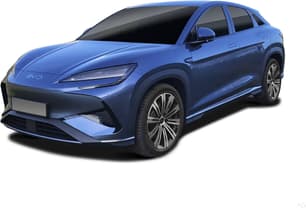
Looking across BYD's line-up, you'd think you were reading the attractions for the local aquarium! And now the Sealion 7 has entered the splash zone, or more accurately, the most popular car segment - the mid-size SUV.
It fights for pole position against the long-running electric favourite, the Tesla Model Y but newcomer Cupra Tavascan also offers some sporty competition.
For this review we're testing the flagship Performance grade to see whether or not it offers family-friendly fun.
Four years is a long time in the Australian automotive sector. Back in 2022, the Kia EV6 made a big splash as a cool, edgy EV with a focus on driver engagement.
It won a bunch of awards and was praised for its dynamism and design. Kia’s first dedicated EV was a winner! But in the years since it’s been overshadowed by a gaggle of newer and cheaper electric cars, largely from China.
More than a year after it made its global debut, Kia Australia has finally launched the facelifted EV6 in Australia. It brings with it a number of changes, most notably a new front end design, as well as a multimedia and software upgrade, chassis refinements, local ride and handling tuning tweaks and bigger batteries for more driving range.
But is it too little, too late for the Kia EV6? Have buyers moved on from this once ground-breaking EV to more affordable Chinese options? Read on to find out why this EV shouldn’t be so easily forgotten.
The BYD Sealion 7 Performance is well-priced and well-equipped. It more than holds its own against its mid-size electric SUV rivals. It has great motor outputs and it handles comfortably on the road. There's a lot to like here but some of the technology needs to be tweaked.
It’s fair to say the Kia EV6 is not the most affordable mid-to-large electric SUV money can buy. Especially in the era of cheaper Chinese models.
It also lacks some of the practicalities of a few rivals. If that’s your focus and you’re dead set on buying a Kia, then the EV5 is the clear choice.
But that’s not the sole purpose of this car.
It doubles as family transport and a car for driving enthusiasts. It’s the sort of EV that can convert EV non-believers.
After a week with the EV6, it’s not a car I’ll forget easily. And I urge buyers looking in the EV space not to overlook this pioneering model. It’s a brilliant car to drive and the GT-Line RWD is the value pick of the whole line-up.
It may be named after a sea lion but it doesn’t resemble the blubbery cuteness of the creature itself. However, its sleek dynamic styling and performance outputs do call forth some of the creature's water prowess.
This prowess is hinted at by the 20-inch alloys which are fitted with Michelin tyres and red brake calipers. There’s some Porsche-like design notes in the wide swoopy nose and LED headlights. The rear is also quite handsome with its long LED band strip and narrow window giving it a sporty silhouette.
Head inside and the Performance showcases the best BYD cabin I've sampled. There are no strange accents or panelling like there are in the Atto 3. This proves that BYD can do premium well.
The quilted leather upholstery feels supple underhand and the sports seats with integrated headrests reminds you what it can achieve in a sprint.
The swoopy design is carried over inside with the door panels. The dashboard is simply styled but headlined by an enormous 15.6-inch display that can rotate between landscape or portrait mode. Some may liken it to an iPad but it works.
The panoramic sunroof keeps things bright and cheerful but there are some simplistic elements that are hard to ignore. Like the lack of buttons, minimalist mirror cover design on the sunvisors and a rather plain-looking centre console.
Everything else flows and my favourite feature inside is surprisingly the lever door handles! They're functional but cute.
When I first saw the Kia EV6, I have to admit I wasn’t a massive fan of the design. I was, and still am, a massive fan of the mechanically related Hyundai Ioniq 5. Perhaps one of the many reasons that model won Best Medium SUV Under $130,000 at the 2026 CarsGuide Car of the Year Awards!
But the 2026 facelift has given me a renewed appreciation of the Kia’s design.
The overall shape is the same but the front, which was arguably its least appealing angle, has been redesigned.
It’s 15mm longer thanks to the new front bumper design, and it has adopted a completely new headlight signature that's in keeping with the EV3, EV4, EV5 and EV9. The front looks meaner, more aggressive, but in a really hot way.
There’s also a new bumper at the rear but the tail-lights are pretty much the same.
Overall it’s a much sharper look, helping to breathe new life into the EV6.
The visual changes are more subtle inside, but it was already a nice cabin to begin with. The big changes include the new version of Kia’s dual-screen set-up which is more modern and centred than the previous version, and there’s more visually appealing graphics.
The other key change is the steering wheel. For GT-Line and GT grades, Kia’s dropped the polarising two-spoke wheel in favour of a sportier and more premium three-spoke, dual-tone wheel found in other models, including the EV3. The base Air retains the two-spoke wheel.
The cabin has space, space and then more space. Passenger comfort is all but guaranteed with the available leg- and headroom in each row.
The functions for the electric front seats means it's easy to find a comfortable position. Door apertures are wide for each row and despite a relatively low 140mm ground clearance, it's still an easy SUV to slide in and out of.
Technology looks great and the large 15.6-inch multimedia display is what catches your eye first. Graphics are sharply rendered and the touchscreen responsive. There's a lot of information and menus embedded into the display which means it's a system that will take you a beat to get used to.
It's not unique but the in-built voice assistant rarely works as it should and needs some work. Also, because of the lack of buttons and dials, all functions are accessed via the screen. I don't like this because it tends to draw your eyes from the road far more often than it should and some functions - like the heat and ventilation for the front seats - are buried in a few menus.
There is wireless Apple CarPlay and Android Auto but there are some gremlins that need to be ironed out. The connectivity is easy enough but the steering wheel mounted phone control didn't access Apple CarPlay. So, I couldn't hang up my phone call properly, it would instead access the Bluetooth phone menu and dial my last call. I had a few 'butt' dials this week because of it.
Storage is on par with the Performance rivals and up front the burden falls across the large glovebox and middle console but there is also a shelf underneath the centre console for bigger items, like a handbag. There are two phone cradles, although only one offers wireless charging, and two height-adjustable cupholders two drink bottle holders and small storage bins.
In the rear, you get two device pockets and a map pocket on the back of each front seat. There is a fold-down armrest with retractable cupholders and a small storage pocket (think Kindle-size) and there are storage bins in each door.
The boot capacity is a decent 500L and the floor can be adjusted to two heights, one offering a level loading space. There is also a frunk storage of 58L for any cables or random bits you don't use often. Under the boot floor there is also enough room for cables and the tyre repair kit. The powered tailgate can be access via your keyfob as well.
For a flagship grade, I would have expected a few extra amenities in the rear, like climate control and sunshades but it does have directional air vents, reading lights and a USB-A and C port.
Under Australia’s vehicle categorisation, the Kia EV6 is classed as a large SUV. Which is not correct. Yes, it’s long and wide but it isn’t large. It’s medium. Also, is it an SUV? Or is it a low-slung coupe-style fastback? Perhaps a bit of both.
The EV6 has a decent amount of space in the cabin, but family-friendly practically might not be its strongest suit.
In the front row, headroom is limited. The sunroof is partly to blame for this, but the EV6’s front seats have always felt a little cramped for taller folks. Finding my perfect driving position took a bit longer as a result. Popping your sunglasses on your head is a no-no for a six footer like me. There is, however, plenty of space across the front of the cabin.
The front seats offer excellent upper body bolstering but could do with a little more for the thighs. But they are delightfully comfortable and look gorgeous.
The elevated centre console provides a high-set armrest and under that is a massive central bin, then there is a huge amount of open space underneath.
It houses two shallow and narrow cupholders with a phone charger, gear shifter, vehicle on/off and seat/steering wheel heating buttons. Yay buttons!
Climate control is managed via a digital panel separate to the main screen. It features smart dials that switch between air con and audio and sat-nav controls. Speaking of which, the air con flow is excellent.
Kia’s updated multimedia system brings it into line with other newer models. It’s a pleasure to use this system. Large tiles drill down into logical sub-menus, you can swipe every which way and the resolution is excellent. It’s also easy to navigate.
There are three USB-C charge ports under the centre stack.
Taller passengers might need to duck their head when getting in the second row, due to the lower sloping roofline. Once seated, the EV6 features that quirk of some older EVs where the rear seats are heavily bucketed and your knees sit up high because of the positioning of the under-floor battery. A lot of newer EVs keep the rear footwell free of battery packs to ensure more foot room and a more comfortable rear-seat experience.
There’s heaps of leg room behind my seating position, and headroom isn’t bad back there. It’s certainly better than the front. I had about 2.0cm between my head and the roof liner.
It feels a little dark back there due to the high window line, privacy glass and small rear window.
The rear seats are comfy but on the firmer side. There’s a fold-down arm rest with two shallow cupholders, and a small bottle will fit in the door.
You get two map pockets, USB-C ports on the back of both front seats, and chest-level side air vents.
You can lower the 60/40 split rear seats via a lower lever on the seat base. They fold almost flat, too. You can also lower the seats via a lever in the boot which is a handy feature.
The EV6 Air RWD’s boot can swallow 490 litres of cargo, and that drops to 480L for all other grades.
The boot area allows for a decent amount of usable space but the sloping tailgate means you won’t fit tall items.
Under-floor storage is limited but could easily fit flatter items like a charging cable. It also houses the tyre repair kit which is sadly what you get instead of any form of spare wheel. The boot also has a number of bag hooks, speakers and a light.
A front storage compartment under the bonnet can take 52 litres in the RWD grades, dropping to 20L in AWD versions.
The Sealion 7 is being offered in only two grades, the base Premium and the flagship Performance that we're testing for this review.
There are only four points of difference between the two grades. The Premium isn't all-wheel drive and doesn't include heated rear outboard seats, a heated steering wheel or dual electric motors like the Performance gets. That creates a $9K price hike to jump into the top-spec grade, bringing it to $63,990 before on-road costs.
It might be starting to sound expensive but it's still more affordable than most of its main rivals. This is because the Cupra Tavascan VZ is priced from $74,490 MRSP and the outgoing pre-update Tesla Model Y Performance comes in at $82,900 MSRP.
What do you get in the Sealion 7 Performance? A lot, it seems. Standard equipment includes electric front seats with heat and ventilation functions, adjustable under-thigh and lumbar supports, panoramic fixed sunroof and leather upholstery, a leather-wrapped steering wheel with mounted controls.
Technology looks top-notch with a crystal clear 360-degree view camera system, a rotating 15.6-inch multimedia system, 10.25-inch digital instrument cluster, coloured head-up display, dual-zone climate control, two USB-A and -C ports, 12-volt socket, V2L capability (via adapter), wireless Apple CarPlay and Android Auto, 12-speaker Dynaudio sound system, over-the-air updates, and satellite navigation.
There's also keyless entry and start, powered tailgate, BYD digital key (via smartphone app), tyre repair kit, rain-sensing wipers, dusk-sensing LED headlights and soundproof double glazed glass on both the windshield and front windows.
One of the challenges for Kia and the EV6 is price and positioning. In the four years since its launch, the price of EVs of a comparable size has come down considerably.
You can get a medium-to-large electric SUV in the low-$40K range these days from one of a number of new Chinese players.
But not many of those cars have the same focus on driveability as the EV6.
Wisely, Kia has kept prices essentially as they were as part of the 2026 facelift. Each grade has only gone up by $70 apiece.
The EV6 kicks off with the Air RWD (rear-wheel drive, single motor) from $72,660, before on-road costs. The GT-Line RWD (the grade I will focus on for this review) costs $79,660 and the GT-Line AWD (all-wheel drive, dual motor) is $87,660 - an $8000 jump from the RWD.
It tops out at $99,660 for the performance-honed GT.
This pricing puts the EV6 somewhere between the new crop of affordable EVs like the BYD Sealion 7, Zeekr 7X and more premium offerings like the BMW iX3 or Audi Q4 etron.
It’s closer in price to another sporty EV, the Cupra Tavascan ($60,990-$82,490), as well as the Kia’s mechanical cousin, the Hyundai Ioniq 5 ($76,200-$115,000).
The facelift ushers in new standard gear including fresh 19 to 21-inch alloy wheel designs, vehicle-to-load (V2L) functionality, new twin 12.3-inch driver and multimedia screens, updated software with enhanced graphics, wireless Apple CarPlay and Android Auto (it was previously wired) and over-the-air updates.
Other standard gear in the base Air includes reclining rear seatbacks, synthetic leather seats, manual front seat adjustment, five USB-C ports, a wireless phone charger, a retractable cargo cover, six-speaker audio, digital radio and dual-zone climate control.
The GT-Line RWD I am testing adds a 14-speaker Meridian audio system, heated and ventilated front seats, a heated steering wheel, ambient lighting, alloy sports pedals, a sunroof, hands-free power tailgate, eight-way power driver and front passenger seats, synthetic black suede/white leather seats and remote park assist.
The flagship GT gains special sports bucket seats, two more USB-C ports in the rear, heated rear seats and a bigger dollop of performance.
When you look at the base pricing compared to the fully-loaded standard kit of the more affordable EVs, it doesn’t look like great value. But the GT-Line RWD is the pick of the EV6 grades as it isn’t missing much. You could also argue the overall build quality, gripping performance (more on that in the Driving section), reliability and Kia’s extensive dealer network is worth the extra spend.
The Performance is all-wheel drive and is fully electric with dual motors, a squirrel cage induction motor located at the front and a permanent magnet synchronous motor at the rear. Together they produce up to 390kW of power and 690Nm of torque.
This gives the flagship grade a 0-100km/h sprint time of just 4.5 seconds. There’s obviously ample power to be had here which will delight EV fans who like that tummy-falling sensation when accelerating.
The EV6 has a range of powertrains depending on the grade. The Air and GT-Line RWD have a single motor set-up offering 168kW of power and 350Nm of torque, and the GT-Line AWD dual-motor pumps out 239kW and 605Nm.
Kia has boosted power in the high-performance GT by 18 kilowatts to a bonkers 448kW.
These figures are higher than some cheaper rivals and on par with other similarly priced EVs.
The 0-100km/h sprint time for the rear-drive grades is 7.7 seconds, dropping to 5.3 seconds for the GT-Line AWD, while the GT can do it in a blistering 3.5 seconds when engaging Launch Control.
The Sealion 7 Performance has a blade battery with a large 82.56kWh capacity which supports a 456km WLTP driving range. This isn’t terrible for city drivers but a regional driver will likely want a longer range. BYD includes a portable charging cable with the model.
Charging is sorted via a Type 2 CCS charging port which accepts up to 11kW on an AC charger and up to 150kW on a DC charger. On a 150kW DC charger, you can go from 10 to 80 per cent in as little as 32 minutes and that increases to more than eight hours on an 11kW AC charger. All of the figures are quite good and help with the general day-to-day convenience.
The official energy consumption figure is 20.4 kWh per 100km but after doing a healthy mix of open-road driving and city stuff, my average has popped out at 19.1kWh. I reckon it's a solid result for a ‘performance’ grade but I didn’t find the regenerative braking to be particularly strong on this model.
All EV6 grades get a bigger under-floor lithium-ion battery, up from the 77.4 kilowatt hour unit in the previous model to 84kWh.
Driving range is up more than 50km in rear-wheel drive variants to 582km in the Air and 560km in the GT-Line, according to the WLTP testing cycle.
The GT-Line AWD’s range is now 522km (up from 484km), and the range-topping dual-motor GT offers 450km of range - a 26km increase.
All EV6 grades have vehicle-to-load charging via a port under the rear seating row or by using an extender for the external CCS Type 2 charging port.
Maximum DC charging is 10.5kW but the EV6 supports AC charging infrastructure up to 400 and 800 volts.
Using a 50kW fast charger should take 80 minutes to get from 10 to 80 per cent full, while a 350kW charger takes 18 minutes. Slow AC charging at home with three-phase power should take about seven-and-a-half hours.
Official energy consumption varies between grades. The Air RWD is 15.9kWh/100km, GT-Line RWD is 16.9kWh, GT-Line AWD is 17.7kWh and GT is 20.9kWh.
The car’s trip computer recorded an efficiency figure of 19.1kW/h when I handed it back, but I engaged in some enthusiastic driving. Factoring in the usable battery capacity (80kWh), the EV6 GT-Line RWD’s theoretical range is 473km.
It has multi-mode regenerative braking that is exceptionally smooth, including one-pedal driving, various EV sounds to choose from and a utility mode function to save battery life.
There’s even a soft close function for the charge flap that’s integrated nicely in the driver’s side rear tail-light.
The Performance grade offers plenty of power that is delivered wickedly quick without feeling overwhelming when you have to accelerate. You still feel in control, which is very important when you have outputs like this does.
The steering is responsive and light enough for quick lane changes. The general on-road handling is quite refined but there is more roll in corners than you’d expect and this is the only time the power can make the handling feel a tad wobbly.
Surprisingly, there isn't a one-pedal function and the regen braking isn’t particularly strong. It’s difficult to ‘creep’ forward in this in stop/start traffic where it can feel a bit jerky at times, so it handles best on the open road.
Visibility is mostly good but the rear window is narrow and a digital rear-view mirror would have been welcomed in this model. Suspension is sports-firm but forgiving over bigger bumps.
The 360-degree view camera and surrounding sensors makes this super easy to park and honestly, you shouldn’t have any trouble manoeuvring the Sealion 7.
This is where the EV6 excels. There’s a lot more competition out there now, but the good news is the EV6 still impresses on the road.
I am purely focusing on the GT-Line RWD for this section as it’s the grade I had for a week.
It’s not brutally quick from a standing start, but it offers a nice, linear build up of speed. It adds speed quite quickly when at pace and this is more than enough poke for most people.
If you are intent on more power and speed, but without stretching to the GT flagship, the GT-Line AWD might be your cup of Jarrah. Although that is an $8000 premium over the RWD.
If you want to save the cash the RWD has drive modes ('Eco', 'Normal', 'Sport', 'Snow', 'MyDrive'), so you can add some spice with Sport mode.
The EV6’s precise steering has a little weight to it and good feedback.
On dynamically engaging roads the EV6 doesn’t feel its two-tonne weight. It has loads of grip when you lean into a corner and remains flat through the twisty stuff. There’s the tiniest hint of lateral movement in the car but there’s a lack of top-heavy body roll.
Thanks to the rear-wheel drive configuration, it’s also playful. The rear flicked out briefly when turning in wet conditions, but otherwise the stability control keeps everything in check.
This car has clearly been engineerd by driving enthusiasts for driving enthusiasts.
The ride quality is a little jittery on uneven roads. It’s not cushy like the EV5. You will feel tram/train tracks, potholes and random bumps. I detected a little vibration through the steering wheel on crumby roads. The Continental Premium Contact 6 (255/45 R20) tyres have a decent sidewall but they can’t soak up everything.
As well as being dynamically excellent, it’s also a lovely cruiser on smooth freeways and roads.
Other related points - it has a large turning circle (11.6m) and visibility is impeded by enormous B- and C-pillars, small rear windows and a middle-seat headrest.
The new Sealion 7 has a maximum five-star ANCAP safety rating from testing done in 2025 and scored well across its individual assessment criteria, scoring 87 per cent for adult protection and 93 per cent for child protection, respectively.
The Sealion 7 features nine airbags, including side chest airbags for both rows but it’s common to see these just on the front, so this is excellent.
When it comes to standard safety equipment, it's almost a case of what doesn't it have? Some stand-out features include front and rear cross-traffic alert, blind-spot view monitor (which pops a video feed of your left blind spot onto the multimedia display) and child detection alert.
Other standard features include lane keeping aid, lane departure warning, adaptive cruise control, forward collision warning, rear collision warning, driver attention monitoring, 360-degree view camera system, and multiple parking sensors.
The autonomous emergency braking has car, pedestrian, motorcyclist and cyclist detection. For pedestrian, motorcyclist and cyclist detection, it is operational from 8.0 to 80km/h. For car detection, it is operational between 4.0 to 150km/h.
There are ISOFIX child seat mounts and three top-tether anchor points and the rear row is wide enough to accommodate three child seats side by side.
The EV6 doesn’t gain anything too new from a safety perspective with this update but it comes standard with the usual driver aids like auto emergency braking with car, pedestrian, cyclist and junction turning, lane keep assist, ‘Lane Following Assist’, blind-spot collision warning and assist with rear cross-traffic alert and assist, safe exit warning, multi-collision braking, adaptive cruise control, a speed limiter, reversing camera and front and rear parking sensors.
The lane keeping aid tugs a little at the wheel and it subtly moves the car to the left line marking on motorways, but it’s not too intrusive.
There are seven airbags including a side centre airbag, three top tether anchors and two ISOFIX points.
The EV6 was awarded a maximum five-star rating from ANCAP back in 2022 and that rating should carry over until it expires at the end of 2028.
As with any modern Kia - or Hyundai and Genesis for that matter - I turn off a bunch of the driver aids as soon as I get behind the wheel to ensure I remain sane. Thankfully, there is a configurable favourite button (a star) on the steering wheel that takes you straight to the driver safety menu, otherwise you have to dig through multiple menus.
I turn off the infuriating overspeed warning and the driver attention alert every single time I drive this car because they are so deeply annoying.
If safety features are too distracting to leave on, are they really safe?
The Sealion 7 is covered by a six-year/150,000km warranty which is good for the class. The battery is covered by an eight-year/160,000km warranty which is a normal term.
The Sealion 7 gets a 10-year capped price servicing but it’s expensive compared to some of its peers at $4157.
Servicing intervals are spaced at every 12 months or 20,000km, whichever occurs first.
The EV6 is covered by Kia’s solid seven year/unlimited kilometre warranty and it has a battery warranty of seven years or 150,000 kilometres, whichever occurs first.
The service schedule is every 12 months or 15,000km.
Kia offers service plans of three, five and seven years with pricing for Air and GT-Line of $728 for three years, $1391 for five years and $2055 for seven years.
The GT is a little pricer at $842, $1570 and $2319, respectively.
This pricing isn’t astronomical, but it is more expensive than the Cupra Tavascan and MG IM6.
Kia has 147 dealerships across the country covering metro, urban and rural areas and all of them service EVs.