What's the difference?
BYD has made a big impact in a short space of time in Australia and the arrival of this all-new mid-size SUV opens the door for an even bigger future.
BYD has taken the fight to Tesla in the electric vehicle contest, and while still some margin behind the American brand the Atto 3 and Seal remain amongst the most popular rivals to the Model 3 and Y, respectively.
At the same time it has out-sold established brands including Honda, Skoda and Renault, as well as fellow Chinese newcomers LDV and Chery.
Now BYD has its sights set on upsetting the established order in one of the biggest segments in the Australian market - mid-size SUVs.
The Sealion 6 is not a name that rolls off the tongue but it does leave an impression, as does the car, as we discovered when we drove it.
Sometimes it really is all a matter of timing.
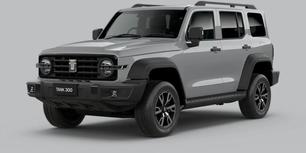
GWM was always going to offer up the plug-in hybrid version of its Tank 300 4X4, but for it to arrive in showrooms right now must be being looked on as some kind of blessing at GWM HQ.
Consider the circumstances: The Tank 300 Hi4-T PHEV (to give it its full name) not only saves fuel by making use of plug-in hybrid tech, but the fossil stuff it does use is petrol, not diesel with that fuel’s buck-a-litre cost penalty right now.
And with the planet on a knife’s edge waiting for the next increase in brinkmanship from those referred to as our world leaders, overseas travel has never seemed sketchier to the average Aussie. Which is when keeping it local and hitting the outback in a four-wheel drive suddenly looks really, really good. Except for the cost of fuel, that is, which is where we circle back to square one.
All of which means the GWM Tank 300 Plug-in hybrid concept could not really have come at a better time. But does the reality match the promise?
So, should Toyota, Tesla, Hyundai and others be worried about the arrival of the Sealion 6 and BYD’s new DMi powertrains? Yes, but not because it represents any major breakthrough in technology or dynamic prowess.Â
Instead, the strength of the Sealion 6 is how average it is. It may not be the obvious class-leader in any particular area, but it does a good job in almost every measurable aspect and doesn’t possess any major flaws.
Yes, there are still questions about the long-term dependability of BYDs but that’s a risk any new owner will need to accept. But the very sharp pricing should tempt plenty of buyers to take that chance and continue BYD’s steady upwards trajectory in the Australian market.
There’s a lot to like here. The GWM Tank 300 in any of its forms is a competent vehicle from the helm and backs up its off-road claims with real ability. The ride quality, in particular, is a highlight, and it’s a good size for couples or young families. Its value for money is also quite brilliant.
Add this plug-in hybrid driveline to the mix and the performance is quite astounding, while the petrol engine and EV potential have arrived at a critical point in history where such things carry more weight than ever before. It remains to be seen what happens globally and what effect that has on fuel prices, specifically the price gap between petrol and diesel. There’s also the question of what happens electronically when you dunk the Tank into Nolan’s Brook on the track to Cape York. But for now, this is a car whose time appears to have come.
But while the overall concept deserves praise, there’s still some work required in terms of the way the car drives and in its attempts at keeping its occupants safe. The calibration of both the throttle response and some of the driver aids is, frankly, in need of some final polish. And though it sounds odd, the Tank 300 would be a better thing to live with if GWM ditched the contentious driver aids and took the points hit on its ANCAP rating. Even better would be to stick with the tech but refine it to the point where it works in the background and not as an irritant.