What's the difference?
To say the BMW M4 CS is a hot ticket in Australia is something of an understatement.
Consider this. There is an even more expensive one, the M4 CS Edition VR46 – at a cool $346,900 – and it sold out in less than an hour. Now, granted, Australia only got four examples, but still, demand was running hot.
That car makes this one, the regular M4 CS, seem like an absolute steal. It's only $254,900 (yes, the word 'only' is doing a lot of heavy lifting in that sentence), and it shares the same upgrades, and makes the same monstrous power, as the VR46 – for Valentino Rossi’s 46th birthday – only it does it for around $100K less.
See? A bargain. At least, that's how I'd be justifying it to myself if I had a quarter of a million burning a hole in my pocket.
So, this or a Porsche 911? Read on.
Sales figures show Australian buyers are moving away from pure internal combustion engine power for their family cars. Instead they’re looking for hybrid, plug-in hybrid and electric models.
While a number of brands - mostly newer manufacturers from China - are going down the plug-in hybrid route, others are focusing on regular or 'plugless' hybrids. Think models like the GWM Haval H6, Hyundai Tucson, Kia Sportage, MG HS and Toyota RAV4.
KGM (formerly SsangYong) is also headed down this path and the first hybrid model from the Korean carmaker is the Torres.
The Torres is a mid-sized five-seat SUV with unusual, rugged looks, but it hasn’t had an impact on the sales charts as yet. This hybrid version could change that. It’s affordable, spacious and offers a serious point of difference from its compatriots, as well as rivals from China and Japan.
But is it as good as those popular rivals?
Brutal, bruising and utterly brilliant, the M4 CS will be an acquired taste due to its no-compromise approach, but those willing to take the leap will find a performance car like few others at their disposal.
The KGM Torres Hybrid represents yet another choice for buyers in the family SUV segment, as if there aren’t already enough! But the Torres offers a level of value its mainstream competitors can’t match. The hybrid powertrain is a winner, however KGM needs to iron out a few issues, like tyre choice and the advanced driver assist tech. But there is a lot to like about the Torres Hybrid. And it’s definitely the pick over the pure petrol version.
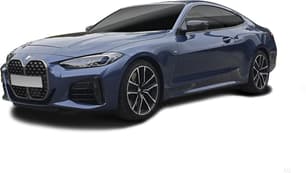
The M4 CS is familiar in all the right ways, but definitely looks significantly jacked up compared to its lesser siblings.
Part of that is the extensive use of carbon everywhere, from its bonnet panels to its roof, front lip, side skirting and boot spoiler. But also because of its super-muscular angles and creases, including the huge dome in its bonnet.
Also exclusive to this M4 CS is the light treatment, with the front LEDs lighting up with yellow highlights the brand says are supposed to be reminiscent of GT racing cars.
At the back, the rear lights are flush with fibre optic lighting, lending a flowing and unique light signature that looks epic at night.
Inside, it's a sea of carbon, with the lightweight racing seats, the dash inserts and the centre console all lined in it. It is a perfectly finished space, though, and one that's also flecked with red, including a 12 o'clock band on the thick-rimmed steering wheel, the seat backs, the contrast stitching and the paddle shifts.
Be warned, though, it takes some acrobatics to climb into or out of the CS. The seat bottoms have these super high edges that double as grab handles, but require some awkward contortions to navigate.
In short, it looks angry, this M4 CS, inside and out.
What a curious thing the KGM Torres is. It has typical medium SUV proportions but with over-the-top styling designed to give the impression of a rugged off-roader. But this is no off-roader.
It has a Jeep-like slotted grille, faux winch hook in the lower grille, squared-off wheel arches, a boxy shape and weird grab mounts on the bonnet that serve no discernible purpose.
It also has what appears to be a rear-mounted spare wheel with a side-opening tailgate. But it’s all an illusion. It’s just a chunky addition to the tailgate which opens upwards, like a regular SUV boot.
If you discount the fake 4x4 bits, the Torres is quite a handsome SUV, especially from the front. The grille surrounded by cool integrated LED headlights makes for a nice front end.
The tail-lights sit a little low at the rear, and the pointlessly massive C-pillar is a bit much. But there are some appealing elements.
Inside, there’s a bit of a nod to fellow Korean brands Hyundai and Kia with the dual 12.3-inch multimedia and driver display screens.
There are no buttons to be found on the console and centre stack so it’s a clean look. The screens and air vents are angled towards the driver, too.
Bronze is a feature throughout and it breaks up the dash nicely, as does the ambient lighting. Matching stitching is a lovely visual touch on the nicely patterned cloth seats.
It doesn’t look or feel like a base model. It definitely feels a step up from the Korando and the Musso in KGM’s stable, as well as some rivals.
It all boils down to how you classify practicality in a car like this. I mean, the basic stuff is all there – it's got two doors, four seats and a boot capacity of 440 litres.
It measures 4801mm in length, 1918mm in width and 1399mm in height, and room for front seat riders is good, but less so for anyone you squeeze into the back. There are even ISOFIX points for a child seat.
But if you consider practicality the practical pursuit of performance, then the M4 CS has plenty of perks.
The KGM Torres Hybrid sits at the smaller end of the medium SUV set, but it still offers decent levels of space throughout, especially when it comes to headroom.
Storage is something KGM gets right with the Torres. The centre console has an armrest with large under-lid storage. There are a couple of good sized cupholders and a small slot for the phone to sit in, however it’s not super deep so it’s better for keys.
Further under the console is a large tray and two USB-C ports, plus another smaller shelf just above. There’s heaps of space in the doors for two bottles, plus additional space. And the glove box can hold the vehicle manual.
When it comes to in-car tech it’s a bit of a mixed bag. The multimedia screen takes way too long to boot up, especially when it’s hot. Which is not great because you need the screen to crank the air-con as most vehicle functions are housed in the screen. That display delay also frustrates if you want to reverse immediately after turning the car on, meaning sometimes there’s no camera display for a few seconds. It’s just not good enough by today’s standards.
The system is fine in terms of navigation and menus but not super intuitive. Swipe down for drive modes ('Comfort', 'Sport' and 'Eco'), plus some quick access options. You can always swipe down even when Apple CarPlay is active.
You can also hit the fan from left of screen to open the air con settings.
As mentioned, there’s no digital radio and no wireless Apple CarPlay. Also no wireless charger in the K30. Having to use a cord can be a pain but at least it means flawless CarPlay connection and a properly charged phone - something most charging pads fail to achieve.
The digital Instrument cluster is clear enough, but there is no head-up display.
Steering wheel controls are clearly labeled on the lovely looking thin-rimmed, four-spoke wheel.
In the back seat you’ll find ample leg, knee and toe room. There’s plenty of space behind my 183cm driving position. The rear bench is flat so there’s not as much side support as the lovely front seats.
That rear space has quite a high window line so small kids may struggle to see out.
Amenities back there include two map pockets, rear knee-level air vents, two USB-C ports, ISOFIX anchors on the two outboard seats, three top tether points and enough room in the doors for one big and one small bottle.
You get 465 litres of space (to the top of the seat back) with all seats in place. It is ample space for luggage or a big shopping haul. Drop the 60/40 split-fold rear seats and the front seats and that grows to 1526L.
You’ll find a 12-volt outlet in the boot as well as nooks on the side, a light and a cargo blind. What you won’t find, disappointingly, is a spare wheel of any kind. Just a tyre repair kit. This puts KGM behind the pace of brands like Toyota and Hyundai that at least offer a temporary spare wheel for their hybrid models.
Another quirk is adjusting to the tailgate opening upwards, not sideways as the rear 'handle' suggests.
We're talking a $254,900 entry price for the M4 CS, which – despite my attempts at justification – is a lot. Remember, the regular M4 is $168,700, and the M4 Competition is $186,500, so we're talking a sizeable premium here.
BMW justifies that price increase in two ways. The first is scarcity, with the M4 CS limited to just 50 examples in Australia. And the second is by dialling up every aspect of the M4's performance to terrifying levels.
The engine outputs are up, the weight is 20kg down, there are better brakes, better seats, a louder exhaust, a stiffer chassis – it goes on and on.
We'll get to some of the performance stuff in a moment, but here's what else your money buys you with the M4 CS.
It starts outside with staggered alloys, 19-inch up front and 20-inch at the rear, wrapped in track-ready rubber. There's also hi-po 'M Compound' brakes with red calipers, lightweight carbon racing seats that are heated up front, an Alcantara-trimmed steering wheel, the 'M Carbon' exterior package with carbon bonnet and roof, adaptive 'M Suspension' and a titanium exhaust that howls like the winds of hell.
The less performance-focused stuff is similar enough to the other M4 models including a 12.3-inch centre screen with digital radio, Apple CarPlay and Android Auto, a second 14.9-inch screen that handles your driving data and a head-up display. There's also twin-zone climate control, Merino leather upholstery and ambient interior lighting.
But all of that is secondary, really. This is about performance, specifically of the brutal kind.
The hybrid version of the Torres is available in two model grades, the K30 from $45,000 drive-away and the K40 at $48,000. We tested the K30 Hybrid.
The non-hybrid turbo-petrol Torres is available in three grades and ranges from $38,000 to $47,000. There’s also a fully-electric Torres called the EVX that costs $58,000. Keep an eye out for our review of the EV in the coming weeks.
In terms of other hybrid rivals, the Torres lines up against the GWM Haval H6 ($40,990-$47,990, drive-away) and MG HS ($42,990-$46,990, d/a). Some more established models have more hybrid grades, like the Hyundai Tucson, Kia Sportage, Nissan X-Trail and Subaru Forester but they creep up dangerously close to $60K for the priciest grade.
KGM offers solid value for money across its model range and that’s definitely the case with the Torres Hybrid. The standard features list is healthy without being jaw-droppingly generous.
In the K30 you get 18-inch alloy wheels, LED headlights and daytime running lights, dual-zone climate control, interior ambient lighting, leather steering wheel, heated, power-adjustable and power-folding door mirrors and rain-sensing wipers.
It also has dual 12.3-inch screens, one for driver instrumentation and the other for multimedia, wired Apple CarPlay and Android Auto, a retractable cargo blind, fabric seats, manual adjust front seats, six-speaker audio and USB-C ports.
It misses out on digital radio and the lack of wireless connectivity is a miss.
The K40 adds synthetic leather front seats, heated seats, a heated steering wheel, rear sunblinds, a hands-free power tailgate and auto up-down front power windows.
The Torres Hybrid also has a lengthy standard safety features list, but more on that in the Safety section below.
BMW has found yet more grunt lurking in its trusty 3.0-litre 'M TwinPower' six-cylinder petrol engine, with the M4 CS now pumping out 405kW and 650Nm.
That's a decent jump from the 390kW and 620Nm served up by the M4 Competition, and a giant leap from the outputs of the 'base' M4 – 353kW and 550Nm.
Predictably, then, the CS is the fastest of the lot, knocking off the run from 0-100km/h in 3.4 seconds, compared to 3.5 and 4.2 in the Competition and M4, respectively. The top speed is also dialled up to 302km/h.
All that power is channeled through an eight-speed automatic and sent to all four wheels on demand, with the help of an 'Active M Differential'.
Powering the KGM Torres Hybrid is a 110kW/220Nm 1.5-litre, four-cylinder turbo-petrol engine paired with a permanent magnet synchronous motor delivering 130kW/300Nm, for a combined power output of 150kW. KGM does not provide an overall torque figure but clearly pulling power is healthy.
It also has a 1.8kWh lithium iron phosphate battery as part of its hybrid set-up. As mentioned. this is not a plug-in.
That’s a little less than the Hyundai Tucson (172kW) and GWM Haval H6 (179kW) hybrids, but more than the Honda CR-V (135kW).
It uses a ‘dedicated hybrid transmission’ and drives the front wheels only.
The M4 CS is fitted with a 59-litre fuel tank, which – given the BMW's official fuel claim of 10.2 litres per hundred kilometres – should deliver a driving range on a full tank of 541 kilometres.
But... BMW also says the regular M4 – you know, the one that makes 52 fewer kilowatts and 55Nm less torque – uses 10.1L/100km, so do with that information what you will.
KGM says the Torres Hybrid consumes 5.6 litres per 100 kilometres on the combined (urban/extra-urban) cycle. After a week of mixed urban and freeway driving I recorded a figure of 7.0L/100km. Not bad, but it could be better.
The Torres’s Euro 6 powerplant uses 95 RON premium fuel and taking into account the 50-litre fuel tank, you could theoretically get a total driving range of about 890km.
The hardest and angriest M4 of all time is, perhaps unsurprisingly, hard and angry. This is a race track specialist, but because I don't happen to own one of those, my first experience with the barking (and barking mad) M4 CS was navigating my way back from BMW's inner-city dealership.
Like it or lump it, you're going to read some Porsche comparisons here, because you're talking not too far off base 911 Carrera money, and suddenly I find the two Germans doing battle for a spot in my dream garage.
First things first, the BMW won't be much chop for daily driving for most people. Happily, I have a sickness for uncomfortable sports cars. It tells me that no compromises have been made in the pursuit of punishing performance.
A good thing, too, because the BMW, at city speeds, can be punishing. Everything feels heavy, the seats aren't overly comfortable – especially the hard bits that tend to dig in when cornering – and it stiff-arms its way over road imperfections, that exhaust booming and barking as it does.
Again, I loved it, and you probably will, too. But it's still not the kind of car I'd relish sitting in the morning peak hour rush in.
But escape the confines of the city and the BMW M4 CS suddenly makes a whole heap of sense. The acceleration is genuinely brutal, and wonderfully theatrical, with that quad-tipped titanium exhaust barking and snarling as you rocket towards 100km/h.
The steering is brilliant, with feedback fed to your wrists via that thick-rimmed wheel, and the entire experience feels sharp, super engaging and edgy.
You can push the M4 hard and fast, and I'm certain my limited talents would run out far before the BMW's would, but there's this thrilling sense of peril sparked by the aggression of the experience, that I love.
It's like the magic of a roller-coaster, I guess. Even if you know nothing is going to happen, you never really know, right? And in that lies the magic.
But back to original question, this or a Porsche 911? There's no doubt a Carrera is a better all-rounder, in terms of comfy commuting and race track fun, but this angry M4 is all shouty theatrics, all of the time.
I bloody love it.
While this might be CarsGuide’s first time behind the wheel of the KGM Torres Hybrid, we have driven the petrol version. Andrew Chesterton lived with one for three months. You can read his take on it here.
As predicted by Chesto, the hybrid powertrain does sort out some of the issues with the pure petrol version. Regular acceleration is smooth and lacks any of the jerkiness experienced in the pure-combustion model, thanks in part to the hybrid transmission.
There is, however, tyre squeal when you give it a boot full. That could be fixed with better tyres than the 225/60R18 Nexen Roadian GTX rubber on the hybrid grades. There was also axle tramp when I tested the Torres under hard acceleration.
The transition between petrol and electric power is seamless. Only when pushed hard up a hill does the petrol engine sound a little rough.
Of the three drive modes - Comfort, Eco and Sport - the latter only adds mild spice. Best stick with Comfort.
The Torres Hybrid’s brakes are strong and lack the spongeyness of some hybrids. It has regenerative braking which just feels weird in a hybrid. I kept it at a lower setting as a result.
It steers nicely, offering a good amount of feel and it’s sharp without overdoing it.
I noticed some light vibration through the steering wheel on coarse chip and uneven roads. But the cabin is well insulated and relatively quiet. A particularly windy Melbourne spring day was the only thing that unsettled the peace in the cabin.
Suspension is MacPherson strut up front and multi-link at the rear and in terms of handling, there’s subtle lean in corners but it feels pretty hunkered down for a family SUV. More so than a number of its rivals.
The Torres Hybrid’s ride quality is variable, depending on the road quality. On some average roads, it handles better than others. You’ll definitely notice sizeable ruts, but there’s little to complain about in urban settings.
In terms of visibility, the C-pillar is way too big. I get that it’s a design element but that, combined with the tiny rear third-quarter windows, make a head check all but useless.
Expect no ANCAP rating here, I'm afraid. But the BMW 4 Series does wear a five-star rating from 2019.
The M4 CS gets six airbags (driver and passenger, side airbags, head airbags), along with what BMW calls its 'Driving Assistant Professional', which bundles active cruise control (with stop and go function), front and rear cross-traffic warning, 'Steering & Lane Control' and 'Lane Keeping with Side Collision Warning'.
The Torres has not been tested by ANCAP for a crash safety rating, but it comes with a long list of safety gear as standard.
Hybrid grades get autonomous emergency braking (AEB), adaptive cruise control, lane keep assist and lane departure warning, forward collision warning, driver attention alert, multi-collision braking, trailer stability assist and front and rear parking sensors.
Disappointingly the K30 misses out on a rear cross-traffic alert, blind spot warning and lane change-collision warning that are all standard in the K40.
It comes with eight airbags including a front centre bag to help avoid injury in a side collision.
On the road, some of the driver aids need improving.
The seatbelt warning is annoying, beeping loudly until you put your belt on. I could not find a way to change that in the settings.
The driver attention alert pops up every so often with a coffee icon and audible alert. The alert stays on for way too long and is annoying.
Adaptive cruise is pretty smooth, slowing and speeding up at just the right time and speed.
The lane keeping aid is twitchy and tugs at the wheel too much. It’s not as bad as systems from some other carmakers but it needs further calibration.
There’s no self-steering function, just the lane keep and you can’t alter the level of that system. You can turn it off and just use the lane departure warning which is what I did.
KGM covers the Torres with its seven-year, unlimited kilometre warranty and the high-voltage battery is backed by seven-year, 150,000km cover.
Servicing is recommended every 12 months or 10,000km, whichever occurs first. The category standard is every 15,000km. KGM's service pricing is available for the first seven years with prices ranging from $349 to $454. Over that seven years it should cost $2758, which is not bad.
KGM’s dealer network consists of 65 sales and service outlets across the country, with a number in regional and rural Australia.