What's the difference?
To say the BMW M4 CS is a hot ticket in Australia is something of an understatement.
Consider this. There is an even more expensive one, the M4 CS Edition VR46 – at a cool $346,900 – and it sold out in less than an hour. Now, granted, Australia only got four examples, but still, demand was running hot.
That car makes this one, the regular M4 CS, seem like an absolute steal. It's only $254,900 (yes, the word 'only' is doing a lot of heavy lifting in that sentence), and it shares the same upgrades, and makes the same monstrous power, as the VR46 – for Valentino Rossi’s 46th birthday – only it does it for around $100K less.
See? A bargain. At least, that's how I'd be justifying it to myself if I had a quarter of a million burning a hole in my pocket.
So, this or a Porsche 911? Read on.
Ford relaunched the F-150 pick-up in Australia in 2023 after a decade long hiatus and this time it’s converted from left- to right-hand drive on local soil.
A first for the Blue Oval globally, Ford partnered with RMA Automotive to remanufacture the F-150 in a facility in Mickleham, on the northern outskirts of Melbourne.
This is in contrast to the F-150’s rivals, the Ram 1500, Chevrolet Silverado and Toyota Tundra. They are all remanufactured in Australia by Walkinshaw in Dandenong, in Melbourne's south-east.
Three years and numerous recalls and stop-sales later, Ford has finally introduced an update to the F-150. Badged as a model year 2024 (MY24) update, it’s technically two years behind what’s being offered in the US.
The Blue Oval claims to have thoroughly checked over its local remanufacturing process and added more quality checks, among other things, so let’s find out if it's worth considering against its rivals.
Brutal, bruising and utterly brilliant, the M4 CS will be an acquired taste due to its no-compromise approach, but those willing to take the leap will find a performance car like few others at their disposal.
This update to the F-150 is long overdue and while it does a lot to address previous faults, Ford is going to have a hard time winning back the public’s trust on this vehicle.
Given the pre-update car was subject to so many recalls and stop-sales, it’s hard to shake that somewhat tarnished reputation.
In saying that, the F-150 is arguably the pick out of its rivals. It’s bold with lots of nifty features, has acres of space, plenty of towing capabilities and is surprisingly efficient.
Just be prepared for your hip pocket nerve to ache when you see the price tag, especially if you opt for the flagship Platinum trim.
Note: CarsGuide attended this event as a guest of the manufacturer, with accommodation and meals provided.
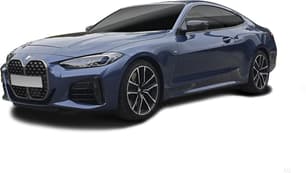
The M4 CS is familiar in all the right ways, but definitely looks significantly jacked up compared to its lesser siblings.
Part of that is the extensive use of carbon everywhere, from its bonnet panels to its roof, front lip, side skirting and boot spoiler. But also because of its super-muscular angles and creases, including the huge dome in its bonnet.
Also exclusive to this M4 CS is the light treatment, with the front LEDs lighting up with yellow highlights the brand says are supposed to be reminiscent of GT racing cars.
At the back, the rear lights are flush with fibre optic lighting, lending a flowing and unique light signature that looks epic at night.
Inside, it's a sea of carbon, with the lightweight racing seats, the dash inserts and the centre console all lined in it. It is a perfectly finished space, though, and one that's also flecked with red, including a 12 o'clock band on the thick-rimmed steering wheel, the seat backs, the contrast stitching and the paddle shifts.
Be warned, though, it takes some acrobatics to climb into or out of the CS. The seat bottoms have these super high edges that double as grab handles, but require some awkward contortions to navigate.
In short, it looks angry, this M4 CS, inside and out.
The F-150 has a very typical, American pick-up silhouette. It’s boxy, large and long, especially in long-wheelbase guise.
The fundamentals of this pick-up's overall design have carried over but the update has helped to improve the visual appeal, especially at the front. It’s great to see LED headlights now feature as standard across the line-up.
XLT and Lariat trims still feature a lot of chrome highlighting which looks somewhat tacky in 2026.
Thankfully the new Platinum gets blacked-out accents instead, along with a slightly different front fascia which is more contemporary. However, I don’t know if this flagship version of the F-150 necessarily looks like it’s worth more than $160K.
Inside the design is more unified across the line-up. Notably the entry-level XLT finally picks up the larger 12.0-inch touchscreen multimedia system which fits the expansive dashboard better.
A 12.0-inch digital instrument cluster is also standard across the line-up now. Previously the XLT had analogue dials with a small screen sandwiched between.
Although there are a range of high-end and plush touches around the cabin, it’s harder to justify on the higher-end Platinum as there is a sea of black finishes. It would be nice to have some different finishes to create some more contrast.
It all boils down to how you classify practicality in a car like this. I mean, the basic stuff is all there – it's got two doors, four seats and a boot capacity of 440 litres.
It measures 4801mm in length, 1918mm in width and 1399mm in height, and room for front seat riders is good, but less so for anyone you squeeze into the back. There are even ISOFIX points for a child seat.
But if you consider practicality the practical pursuit of performance, then the M4 CS has plenty of perks.
The F-150 is an incredibly practical vehicle that has inherent American touches throughout. The most obvious are the front seats which are cushy and comfortable, though they’re very broad, meaning you can slide about on winding roads.
The driver’s seat offers plenty of electric adjustment across the line-up, while the Platinum adds a massage function that not only works on the backrest, but also the seat base. This feels a little weird on the move.
Ahead of the driver is a big and chunky steering wheel that feels substantial in the hand, plus there are large and obvious buttons that are easy to interact with.
This is complimented by the 12.0-inch digital instrument cluster which is clear, high-res and easy to understand. There are a range of different layouts and menus that you’re able to cycle through.
Moving across, the 12.0-inch touchscreen multimedia system is similarly high-res and has a user interface that’s clean and hard to get lost in thanks to the shortcut buttons at the bottom of the screen.
There’s wireless Apple CarPlay and Android Auto as standard, along with satellite navigation.
When you adjust the front-seat lumbar or turn on the massage function, it takes over the entire touchscreen display. This isn’t ideal if the driver is trying to use the screen at the same time.
Looking around the cabin, it’s great to see so many physical buttons and switches for key functions, like the climate, media and four-wheel-drive controls. So many of these are now getting integrated into the touchscreen.
Like before, the F-150 XLT has a column-mounted gear selector, while the Lariat (and now the Platinum) gets an electronically folding gear selector. When folded, this allows you to fold out the centre console lid to create a desk-like space to work on.
In terms of storage, there is acres of it. Under the centre console is one of the biggest spaces I’ve ever seen in a new vehicle, plus there are two cupholders, large door bins, as well as dual gloveboxes on the passenger side. You’ll definitely find a place for all of your stuff.
The second row of the F-150 is incredibly spacious, even for adults, and regardless of which wheelbase option you choose, it stays the same. This is because the extra wheelbase length is specifically for the tub area.
At 182cm tall, I have oodles of legroom behind my own driving position, though headroom is a little tight in the F-150 Lariat and Platinum due to the panoramic glass sunroof.
You’ll easily fit three people across the rear bench seat, plus the floor is completely flat.
In terms of amenities, there are air vents on the back of the centre console, heated outboard seats (Lariat and Platinum only), a 12V socket, USB outlets, as well as cupholders galore on the centre console, door pockets and fold-down centre armrest.
At the back, the F-150 XLT retains a manual tailgate with a fold-out step ladder and while the Lariat and Platinum still have a power tailgate, they also pick up a new party trick.
There’s a new central section that’s side-hinging, allowing you to more easily access the tub from ground level. It’s a similar set-up to what GWM offers on the Cannon Alpha.
In the SWB, the tub measures 1700mm long, 1650mm wide (1285mm between the arches) and 543mm tall. The LWB gains 300mm of length, bringing the total tub length to 2000mm.
Payload varies depending on the wheelbase length and trim level. It has received a slight bump compared to the pre-update model, however it’s still only between 704kg and 878kg. The smaller Ranger, for example, overlooking the beefy Super Duty, has higher payload figures.
Where the regular Ranger can’t match the F-150 though is with its 4500kg braked towing capacity. This is something that has been addressed with the Ranger Super Duty.
We're talking a $254,900 entry price for the M4 CS, which – despite my attempts at justification – is a lot. Remember, the regular M4 is $168,700, and the M4 Competition is $186,500, so we're talking a sizeable premium here.
BMW justifies that price increase in two ways. The first is scarcity, with the M4 CS limited to just 50 examples in Australia. And the second is by dialling up every aspect of the M4's performance to terrifying levels.
The engine outputs are up, the weight is 20kg down, there are better brakes, better seats, a louder exhaust, a stiffer chassis – it goes on and on.
We'll get to some of the performance stuff in a moment, but here's what else your money buys you with the M4 CS.
It starts outside with staggered alloys, 19-inch up front and 20-inch at the rear, wrapped in track-ready rubber. There's also hi-po 'M Compound' brakes with red calipers, lightweight carbon racing seats that are heated up front, an Alcantara-trimmed steering wheel, the 'M Carbon' exterior package with carbon bonnet and roof, adaptive 'M Suspension' and a titanium exhaust that howls like the winds of hell.
The less performance-focused stuff is similar enough to the other M4 models including a 12.3-inch centre screen with digital radio, Apple CarPlay and Android Auto, a second 14.9-inch screen that handles your driving data and a head-up display. There's also twin-zone climate control, Merino leather upholstery and ambient interior lighting.
But all of that is secondary, really. This is about performance, specifically of the brutal kind.
The 2026 Ford F-150 is now offered in three trim levels in Australia – XLT, Lariat and new flagship Platinum trim.
Pricing starts at $114,950 before on-roads for the XLT which is up to $8000 more than it was previously. This then jumps up to $143,950 before on-road costs for the now mid-spec Lariat.
The flagship F-150 Platinum is priced from a dizzying $163,950 before on-road costs. This is more than the top-spec Ram 1500 Limited HHO, but less than the Toyota Tundra Platinum.
With this update, the XLT now receives a considerably higher level of standard specification. New inclusions are LED headlights and tail-lights, a 12.0-inch digital instrument cluster and a 12.0-inch touchscreen multimedia system.
This is above and beyond other highlights like 20-inch alloy wheels, a spray-in bedliner, seven-speaker sound system, fold-out centre console, column-mounted gear selector, power-adjustable foot pedals, fabric upholstery, 12-way power-adjustable driver’s seat and 10-way power-adjustable front-passenger seat.
The Lariat gets a wide range of chrome highlights, plus a panoramic glass sunroof, foldable gear selector, 14-speaker Bang & Olufsen sound system, as well as a swing door tailgate to compliment the powered regular tailgate.
The Platinum can be distinguished from the rest of the line-up with its blacked-out accents and different fascia. It also gets adaptive dampers, powered side steps, a folding hard tonneau cover, as well as a massage function for the front seats.
BMW has found yet more grunt lurking in its trusty 3.0-litre 'M TwinPower' six-cylinder petrol engine, with the M4 CS now pumping out 405kW and 650Nm.
That's a decent jump from the 390kW and 620Nm served up by the M4 Competition, and a giant leap from the outputs of the 'base' M4 – 353kW and 550Nm.
Predictably, then, the CS is the fastest of the lot, knocking off the run from 0-100km/h in 3.4 seconds, compared to 3.5 and 4.2 in the Competition and M4, respectively. The top speed is also dialled up to 302km/h.
All that power is channeled through an eight-speed automatic and sent to all four wheels on demand, with the help of an 'Active M Differential'.
Although there are a wide range of other engine options available in the US, including hybrid and V8s, the sole engine available in Australia continues to be a 3.5-litre twin-turbo V6 petrol. It produces 298kW and 678Nm which is competitive among its rivals.
This is mated to a 10-speed automatic transmission as standard with drive sent through a four-wheel-drive system The XLT gets a part-time system with a shift-on-the-fly function, whereas the Lariat and Platinum get a full-time system which allows for ‘4A’ functionality on sealed surfaces.
The M4 CS is fitted with a 59-litre fuel tank, which – given the BMW's official fuel claim of 10.2 litres per hundred kilometres – should deliver a driving range on a full tank of 541 kilometres.
But... BMW also says the regular M4 – you know, the one that makes 52 fewer kilowatts and 55Nm less torque – uses 10.1L/100km, so do with that information what you will.
Ford claims the F-150 consumes an average of 13.4L/100km, according to ADR 81/02 testing. During our testing on regional and rural roads at the launch we recorded between 11-12.5/100km, which is surprisingly good for a ute this big.
There’s a mammoth 136L fuel tank as standard. Using the claimed fuel consumption this means the F-150 can theoretically travel more than 1000km on a tank.
A minimum of 91 RON regular unleaded petrol is required.
The hardest and angriest M4 of all time is, perhaps unsurprisingly, hard and angry. This is a race track specialist, but because I don't happen to own one of those, my first experience with the barking (and barking mad) M4 CS was navigating my way back from BMW's inner-city dealership.
Like it or lump it, you're going to read some Porsche comparisons here, because you're talking not too far off base 911 Carrera money, and suddenly I find the two Germans doing battle for a spot in my dream garage.
First things first, the BMW won't be much chop for daily driving for most people. Happily, I have a sickness for uncomfortable sports cars. It tells me that no compromises have been made in the pursuit of punishing performance.
A good thing, too, because the BMW, at city speeds, can be punishing. Everything feels heavy, the seats aren't overly comfortable – especially the hard bits that tend to dig in when cornering – and it stiff-arms its way over road imperfections, that exhaust booming and barking as it does.
Again, I loved it, and you probably will, too. But it's still not the kind of car I'd relish sitting in the morning peak hour rush in.
But escape the confines of the city and the BMW M4 CS suddenly makes a whole heap of sense. The acceleration is genuinely brutal, and wonderfully theatrical, with that quad-tipped titanium exhaust barking and snarling as you rocket towards 100km/h.
The steering is brilliant, with feedback fed to your wrists via that thick-rimmed wheel, and the entire experience feels sharp, super engaging and edgy.
You can push the M4 hard and fast, and I'm certain my limited talents would run out far before the BMW's would, but there's this thrilling sense of peril sparked by the aggression of the experience, that I love.
It's like the magic of a roller-coaster, I guess. Even if you know nothing is going to happen, you never really know, right? And in that lies the magic.
But back to original question, this or a Porsche 911? There's no doubt a Carrera is a better all-rounder, in terms of comfy commuting and race track fun, but this angry M4 is all shouty theatrics, all of the time.
I bloody love it.
Although the F-150 retains the same 3.5-litre twin-turbo V6 engine as the pre-update model, this is no bad thing as it’s a sweet and perky unit with plenty of rolling acceleration.
It gets this large, lumbering pick-up moving with no problems and makes you wonder why you wanted a V8 engine in the first place.
In the Lariat and Platinum some fake engine noise is pumped into the cabin through the speakers. I don’t hate it as it adds an almost V8-like gargle to the note.
Like before there’s a 10-speed automatic transmission which has a lot of ratios to choose from and sometimes can take a beat to kick down if you punch the accelerator harder.
It also feels like the transmission is constantly changing gears when you’re accelerating and as a result it almost sounds like a vehicle equipped with a continuously variable transmission (CVT).
In saying this though, the transmission is just keeping the engine within its torque band so acceleration is punchier.
With this update Ford was required to change the steering rack fitted to the locally converted F-150. Previously it was a Ranger unit and while Ford hasn’t detailed what the new steering rack is, it said it’s an amalgamation of existing Ford parts.
It’s hard to say definitively how different the steering feels from the pre-update model without driving them back to back, however, it does feel just a touch heavier than before. This isn’t bad as the F-150 is a big unit and it makes steering feel more substantial.
While you may be lulled at times into thinking this is just an overgrown Ranger on the open road, if you start driving with more intent and on twisty roads, this is far from a dynamic car. It also fills the lane quite generously, leaving minimal space between the painted lines.
The suspension, especially at the front end, is rather American and feels floaty, taking multiple movements to settle over bumps or undulations.
Thankfully this is where the flagship F-150 Platinum’s adaptive dampers come to save the day. In the Tow/Haul and Sport drive modes, the dampers are stiffened to create a more compliant ride and in reality they do iron out road imperfections better.
I particularly like how the ride in the Sport drive mode feels from behind the wheel, however there’s no way to split out the Sport suspension from the Sport engine calibration. This means you’re always driving around with the revs flared.
I wish there was a custom drive mode where you could pick and choose the engine, transmission and suspension calibrations. This would be a game changer for F-150 Platinum buyers.
In terms of towing, it’s the F-150’s bread and butter. With a 4500kg braked towing capacity, you can tow virtually anything without the pick-up breaking a sweat.
The Tow/Haul drive mode makes it feel even easier, plus having the Pro Trailer back-up assist takes the hard work out of reversing with a trailer.
Around town and even out on the highway, the F-150 is an incredibly quiet and serene car to drive, despite its heft. The transmission usually opts for the highest gear possible and you can barely hear it whirring away under the bonnet.
Surprisingly there’s barely any wind or tyre noise present in the cabin. Ford seems to have done an excellent job at insulating the F-150.
The only note I’ll make is the lack of noise makes you pick up on minor interior creaks and rattles more obviously. This isn’t ideal in a brand-new car.
Expect no ANCAP rating here, I'm afraid. But the BMW 4 Series does wear a five-star rating from 2019.
The M4 CS gets six airbags (driver and passenger, side airbags, head airbags), along with what BMW calls its 'Driving Assistant Professional', which bundles active cruise control (with stop and go function), front and rear cross-traffic warning, 'Steering & Lane Control' and 'Lane Keeping with Side Collision Warning'.
The Ford F-150 received a 'Platinum' collision avoidance score from ANCAP in 2025. This only applies to Lariat and Platinum trims and not the base XLT.
Standard safety highlights include six airbags, autonomous emergency braking (AEB), blind-spot monitoring, rear cross-traffic alert, rear parking sensors and a surround-view camera.
The latter is a new feature to the XLT, however it’s disappointing it still misses out on features like adaptive cruise control, lane-keep assist, traffic sign recognition and front parking sensors. You need to step up to the Lariat or above to get these.
It’s not ideal when the F-150 XLT already costs around $115,000 before on-road costs and the full safety suite isn’t on offer.
The F-150 is covered by a five-year, unlimited-kilometre warranty which is fairly average now for mainstream brands, however in the world of American pick-ups this is still generous.
There’s also 12 months of complimentary roadside assistance which gets extended every time you service the car when required.
Logbook servicing is required every 12 months or 15,000km, whichever comes first.
You can purchase a five-year pre-paid service package for $1968, which averages out to just under $400 per service.
This is considerably better than its rivals which typically don’t offer any form of capped-price servicing.
Ford has an expansive dealer network across urban, regional and rural Australia. It currently has around 180 sites.