What's the difference?
Can you believe the 1 Series is already in its fourth generation? It might not look incredibly like it, because this new car looks a little like the third.
But it’s been more than half a decade since the F40 1 Series debuted, so BMW decided it was already time for a new kid on the block. Meet the F70.
It’s just landed in Australia and it promises new-gen tech and features compared with its predecessor. We checked out BMW’s new baby at its Australian launch to find out if it delivers.
Do you like swimming against the tide? Do you like to zig when everyone else is zagging? Are you unafraid of making the unpopular choice?
Well, if you align with the above, I have just the car for you.
The Volvo ES90 pushes against most current trends. The luxury sedan used to be the measure of a brand, but not anymore. These days the luxury market is defined by SUVs and sedans have been reduced to an afterthought for many.
But if you’re willing to think outside the SUV-shaped box, there is a lot to like about Volvo’s new luxury offering. Whether it’s a true sedan or not is open to debate, but what it isn’t is an SUV and for those willing to live that counter-culture lifestyle this may be right for you.
A brief dalliance with the 1 Series has left me impressed, if wanting to spend more time with it to get a better assessment of the day-to-day liveability of BMW’s entry-level model.
It’s a compelling offering if you’re after a premium small car, and even without the performance of the M135, the 118 is feature-packed.
Keeping pricing competitive should help the 1 Series buck the trend of buyers opting for small SUVs, but ultimately it’s just refreshing to see BMW putting effort into keeping a hatchback relevant (and up-to-date).
Note: CarsGuide attended this event as a guest of the manufacturer, with meals provided.
More stylish than ever before, as quiet and refined as you'd expect from a luxury car and yet the stand out feature might once again be safety. Despite seemingly every new car being loaded to the gills with safety features, Volvo has managed to demonstrate industry best-practice and leads the way again.
I would encourage engineers from every other car brand to drive the ES90 to learn how to better integrate the modern suite of active safety features like forward collision warning and lane departure warning.
But beyond that, is the ES90 a car worthy of consideration? Well, pretty much everything it does the EX90 does too, so if you prefer an SUV that’s definitely worth consideration. But if you don’t want an SUV, if you prefer a sedan or just love to be different, the ES90 is a very attractive proposition in more ways than one.
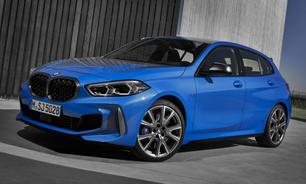
The 1 Series has worn many faces over the generations and, like a lot of BMW designs that depart from tradition, this one might need to grow on some people.
That’s not to say there’s not a lot to like about the F70, but as BMW evolves its design language some changes might ruffle feathers - a lack of the iconic ‘angel eye’ headlight style being one.
But there’s still a kidney grille up front, with new design elements, plus those headlights that have a new vertical light signature are now sleeker than before, giving the new 1 a different ‘character’.
But from the rear, there are baby 3 Series Touring vibes, and it’s hard to find anything that might upset purists - there’s even the 'Hoffmeister kink' at the c-pillar. That’s the way the window angles back towards the front at the bottom.
Inside, the 1 Series has some proper sporty elements, even in the 118, that reference the M development that went into it.
There’s M-coloured stitching up over the dash fabric, for example, and illuminated aluminium panels with M-coloured lighting.
The steering wheel, wrapped in leather, is also an M feature, plus sporty seats are even present in the 118.
The interior is an overall cleaner look, in part thanks to the proliferation of features accessible by touchscreen, but BMW is refraining from going full ‘Tesla’ and removing all the buttons from the cabin.
Discussing Volvo design will draw different opinions depending on your age. As a millennial, I grew up at a time when Volvos were, to quote a famous movie line from the 1990s, ‘boxy, but good’.
But over the past two decades Volvo has smoothed off those boxy edges and become one of the most style-conscious car companies in the world. It has embraced its now-unique place as a Scandinavian carmaker and uses softer edges and more Nordic design themes (such as light coloured interior woods) to ensure the ES90 is simply a good-looking car.
What it isn’t, at least not technically-speaking, is a sedan. That’s because it has a liftback rear-end design, rather than a traditional ‘three-box’ sedan with a conventional boot. That shouldn’t be a deal-breaker for anyone and it means it’s a far more practical design.
It also sits taller than a conventional ‘sedan’, which is an increasingly common trait for modern European sedans as they try to woo would-be SUV buyers. It’s not a lot, you certainly wouldn’t call it a tall or high-riding car, but it is noticeable.
Ends up as an ‘in-between’ design, neither one thing or the other. The closest thing it reminds me of is the short-lived BMW 5-Series GT, which is damning with faint praise, but it speaks to the challenge of making something that simply isn’t an SUV appealing to the modern SUV-obsessed market.
The very stylish cabin features that previously mentioned light coloured wood (at least in our test car) and that unique Scandinavian look. It’s the closest you’ll get to sitting in a Swedish lounge room on wheels.
Yes, a brand like BMW would probably find it hard to do away with buttons for things like drive modes and things like volume controls or car settings.
Even though a lot of them are shortcuts to a touchscreen menu, it means not needing to scroll or hunt for important driving-based features and options on the 10.25-inch screen.
Even the climate controls are permanently available on the screen so that there’s minimal distraction.
For most non-essential features, however, BMW’s Operating System 9 is a far cry from the easy-to-use iDrive system of just a few years ago, the media control wheel that fell easily to hand and navigated a simple multimedia system of only a few sub-menus.
Fortunately, the screen and everything in the cabin is within reach of the driver, so there’s no awkward leaning or stretching to do anything mid-drive.
The cabin’s physical space is otherwise nicely laid-out, the phone charger pad is out of the way, cupholders fit most receptacles nicely and the door card can hold two regular water bottles plus other small items.
There’s even a small storage ‘shelf’ under the central vents, and near the wireless charger are two USB-C ports and a 12-volt plug.
The ergonomics of the driving position and steering wheel are well-sorted, and seat adjustment and height feels good for both engaged or relaxed driving positions.
Behind that, the second row could be more spacious, even though I managed to fit my 178cm frame behind my own seating position just fine.
There’s not a lot of room to move or stretch out, so most adults will probably find the back seat suitable for short trips only.
Behind that, there’s 380 litres of boot space, or 1200L with the seats folded down.
In terms of space the ES90 is very generous, which it should be given it's a five-metre long car. There’s loads of room front and the back so you’ll seat four adults in absolute comfort, and can squeeze in a fifth if needed. Thanks to the relatively flat floor, as well as the panoramic roof that can either be opaque or clear, the cabin feels spacious and bright even in the rear.
As for luggage space, the boot measures 424 litres, and obviously it’s very easy to access via the power liftgate. But it’s still not as big as an SUV. The EX90 offers up 655 litres of space in its five-seat configuration. Which is at least a small part of the explanation why SUVs have become the more popular choice.
But what really stands out in the cabin isn’t the space, it’s the technology. The ES90 Ultra’s multimedia system is centred around a 14.5-inch touchscreen that runs all the car’s key functions; you also get a 9.0-inch driver’s display.
Notably, Volvo has opted to offer Google’s operating systems built-in, which means while you can still run Apple CarPlay or Android Auto, if you have a Google account you can sign-in and have your contacts, address book and other details integrated into the car.
It’s a really fast system, too, supported by the most powerful software Volvo has ever put inside one of its cars. Having a big tablet-style screen is great and feels very modern, but if it runs slowly, with lag between commands, it’s not as useful. This Volvo system, particularly the transitions between menus and even the voice assistant, reacts with lightning-fast speed.
Then there’s the sound system we mentioned earlier. It’s a 25-speaker Bowers & Wilkins set-up with 'Dolby Atmos' and an app called Abbey Road Studios. This app has been produced in conjunction with the iconic recording studio made famous by The Beatles. The speakers and the app were all developed together to provide a superior audio experience.
The speakers themselves are incredibly powerful while staying crystal clear, with the Abbey Road app providing the ability to change the sound between 'Modern' and 'Vintage' settings that make you feel like you’re inside a recording studio.
Put simply, it is as impressive a sound system as I’ve ever experienced in a car.
The 1 Series isn’t much more expensive than before, despite a decent uptick in kit.
At $56,500 before on-roads for the entry grade 118, it’s less than $2000 pricier than its predecessor. It’s about the price of a VW Golf GTI or Subaru WRX, but trades engine power for badge power, as well as a series of features you’d expect from a premium small car.
A 10.25-inch multimedia touchscreen and 10.7-inch driver display are standard, with wireless phone charging, electric heated seats in Veganza synthetic leather, adaptive suspension and plenty of sporty styling thanks to the M Sport pack.
There’s a few more helpful features for keen drivers, even in the 118. Adaptive LED headlights with high beam assist, a head-up display, BMW’s 'Parking Assist Plus' function, speed limit recognition and tyre pressure monitoring.
The 1 Series also has keyless entry and start, an automatic tailgate, plus some standard stuff like a 40/60 split-fold rear seat and (unfortunately) a tyre repair kit under the boot floor rather than a spare tyre.
Then there’s the M135 xDrive, the hot hatch of the pair.
It starts at $82,500 and comes with extras like a massage seat for the driver, a heated steering wheel, a Harman/Kardon sound system, racier styling and a black roof, plus performance goodies like a bigger engine.
The M135 is a bit more expensive than before though, by almost $6000, and comparable rivals like the Audi S3 remain in the mid-$70K range.
Two options packs are available, with the 118's $5000 Enhancement Pack adding Metallic paint, 19-inch M alloys, a heated steering wheel, a sunroof, massaging front seats, a Harman/Kardon sound system and Driving Assistant Professional.
There's also an M Sport Package Pro able to be added to either variant, which adds sportier M styling, a black roof for the 118, and M Sports seats for the front row. This pack costs $2462 for the 118 or $2700 for the M135 xDrive.
Two options packs are available, with the 118's $5000 Enhancement Pack adding Metallic paint, 19-inch M alloys, a heated steering wheel, a sunroof, massaging front seats, a Harman/Kardon sound system and Driving Assistant Professional.There's also an M Sport Package Pro able to be added to either variant, which adds sportier M styling, a black roof for the 118, and M Sports seats for the front row. This pack costs $2462 for the 118 or $2700 for the M135 xDrive.
The ES90 range consists of two models at the time of publication both powered by a single, rear-mounted electric motor, with the twin-motor option available on the EX90 SUV currently not offered in Australia (emphasis on the word ‘currently’).
The range begins with the Pure from $88,880, before on-road costs, and is completed by the current range-topping Ultra variant, which we're testing, priced from $107,990, plus on-roads.
That means it’s cheaper than its direct rivals in the luxury electric sedan market. Audi’s e-tron GT starts at more than $200,000, the BMW i5 line-up is priced from $155,900 and the Mercedes-Benz EQE range begins at $134,900. So, even with this more expensive Ultra variant, Volvo has a clear head-start on the competition.
And Volvo hasn't managed that by skimping on standard equipment. The ES90 comes loaded with adaptive air suspension, 22-inch alloy wheels, a comprehensive safety package (as you’d expect from Volvo) as well as an electrochromic panoramic roof, a smart key you can add to your phone and 'Nordico' upholstery - Volvo’s sustainable synthetic leather.
There’s also a 25-speaker Bowers & Wilkins sound system, but more on that later…
The two 1 Series variants have rather different running gear.
The 118 comes with a 1.5-litre three-cylinder turbo petrol engine that drives the front wheels via a seven-speed dual-clutch transmission (DCT).
It makes 115kW and 230Nm, and BMW says it’ll hit 100km/h in 8.5 seconds.
That’s in comparison to the beefier 2.0-litre four-cylinder unit in the M135, also turbocharged, but driving all four wheels via a similar seven-speed DCT.
It makes 233kW and 400Nm, and it’ll crack 100km/h in 4.9 seconds according to the Bavarian brand.
As the name suggests, the ES90 Single Motor is powered by a single, rear-mounted electric motor that drives the rear wheels via a single-speed transmission. The motor makes a healthy 245kW and 480Nm, so the 0-100km/h sprint time is 6.6 seconds - sprightly for such a big car.
As alluded to earlier, there is a Twin Motor, all-wheel drive ES90 variant available in overseas markets, with 500kW, but Volvo Australia is yet to confirm when, or even if that will arrive here.
BMW says the 118 will sip 6.4 litres of recommended 95 RON fuel for every 100km covered, with its 49-litre tank the same as the M135’s.
In that variant, fuel use increases to 7.8L/100km, as does recommended fuel quality to 98 RON.
We didn’t get a chance to test fuel consumption properly on the launch, so keep an eye on a future review for that, but given the relatively high claim even for the 118, we’d expect the 1 Series isn’t the most frugal drinker.
Built on Volvo’s 800-volt electrical architecture, the first Volvo to feature the technology, the ES90 is powered by a 92kWh battery that provides up to 554km of driving range on a single charge.
Volvo quotes an NEDC energy consumption of 18.5kWh/100km, with 300kW DC charging able to take the battery from 10 to 80 per cent in 22 minutes. A full, empty to 100 per cent charge using a 16A outlet will take 10 hours.
It should be noted that the EX90 SUV will be upgraded to the 800V architecture with the 2026 model year introduction.
The launch drive for the 1 Series included some outer-suburban Melbourne traffic, a stint of highway driving down towards the Mornington Peninsula, and a semi-rural road loop for each variant before the return journey.
So, noting that we didn’t quite get the chance to really work out what it might be like to live with the 1 Series day-to-day, first impressions showed good signs.
Both variants still drive much like you’d expect from even a front-drive BMW, let alone the AWD M135, but the chassis and suspension seem like they’d be good counterparts on a daily drive.
In the M135, communication and compliance seemed well-balanced with each other for even some particularly rough surfaces, and after torrential rain there were some potholes that would properly upset most cars that didn’t faze the 1 Series too much.
The 118 seemed to let a little more road noise into the cabin, but that might have been a symptom of different road surfaces.
The steering is accurate, but the feel in both is a little heavier than needed, especially with the thick-rimmed BMW steering wheel that you’ll know about if you’ve driven anything from Munich in recent years.
It’s a very easy car to drive fast, especially with the combination of 233kW, 400Nm, and all-wheel drive at the M135’s disposal.
The chassis and tyres work quite well together to not only hold a corner at impressive speed, but also keep the car stable so that traction isn’t an issue when launching out.
There’s also the joy of hearing a turbo spool and flutter under load, which is hard to deny as a draw for petrolheads.
As you’d expect from a luxury, electric car the ES90 is a quiet and refined vehicle to drive. Being a Volvo, the company has used its experience where it matters, and there is excellent insulation from the outside world. Unlike some EVs that lose the engine and hope that just makes things quieter, the ES90 gives you a genuine feeling of insulation from the exterior hustle and bustle.
Performance is adequate from the single motor but it’s by no means a sports sedan with only 250kW/480Nm and such a big vehicle. But it has the instant response that is an EV trademark so it has all the performance this type of car and the drivers it will attract would likely need. If buyers start banging on the door for more power, Volvo can oblige, but for now it does the job you expect of a luxury four-door.
While it has the sedan silhouette, the taller body and raised ride height on the air suspension are noticeable. You will find yourself looking up at SUV drivers, but not all of them. It’s roughly the same seat height as you’ll find in a modern small SUV, so a slight elevation rather than a big boost.
The ride is what you expect from this type of car. You can adjust the suspension and steering between ‘soft’ and ‘firm’ settings, but even with the latter selected there is a lot of compliance and the ride remains comfortable.
The steering is fine most of the time, but when you have to do parking maneuvers you certainly notice the ES90's steer-by-wire technology. The steering literally feels like an old computer game steering wheel set-up, with very little resistance as the wheel lightly spins from lock-to-lock. It’s not a bad feeling, but it is a bit odd and takes some getting used to.
The ultimate take-away from the driving experience is just how relaxed it is - quiet and effortless are the two words that probably best sum it up.
There’s plenty of active safety in the new 1 Series, new kit includes an updated 'Driving Assistant Plus', BMW calls it.
It features all the driving assist functions like lane departure warnings and rear cross-traffic alert, but the M135 gets a higher-spec version with extras like front cross-traffic alert, side collision prevention, and evasion assist.
This can be added to the 118 for $5000 in the Enhancement Package, but it seems a bit stiff to put safety features behind a paywall alongside items like a sunroof and a high-end audio system.
Mercifully, the 1 Series’ active safety systems are all pretty unobtrusive. There are very few ‘bings and bongs’ as we’ve come to call them, and any warnings are generally subtle.
There’s a quick way to turn most of them off via a physical button near the gear selector, and its adaptive cruise control is well tuned for urban, highway and rural driving.
Otherwise, the third-gen 1 Series scored five stars with ANCAP in 2019, so we will wait and see if its successor maintains that score.
It’s also got six airbags including front and side, as well as curtain airbags covering both rows.
This is obviously the area that Volvo is famous for, but with seemingly every other brand forced to raise their own safety features over the years, does the Swedish brand still do anything special on this front?
Absolutely.
Put simply the Volvo suite of active safety systems is better developed and better integrated. Every rival car to the ES90 will have a similar list of features, including adaptive cruise control, forward collision warning, lane departure assist, road sign information and more. But Volvo has made it work so well that unlike rival models, you never even think of turning them off, they don’t beep and bong ad nauseum, they only work if you need them in an emergency - which should be the standard.
One thing to note is the ‘bump’ on the roof (you may see in the images) to house a Lidar system. However, Volvo split with its supplier and has decided to abandon this technology for the ES90. That means the 2026 model year examples will not have the roof bump, but still come loaded with five radars, seven cameras and 12 ultrasonic sensors for the excellent coverage of the surrounding environment.
The only thing that stops the ES90 being worthy of a 10/10 safety score is the lane keeping assist could do with some fine-tuning, as it has a tendency to move in the lane slightly too much.
There is no current ANCAP score for the ES90, but the EX90 SUV does, and given the organisation's previous sharing of scores between different models based on the same core underpinnings, there is no reason to believe the ‘sedan’ wouldn’t be just as safe.
BMW’s got a fairly standard five-year/unlimited kilometre warranty.
The brand also uses a condition-based servicing system, which uses the multimedia to alert the owner when maintenance is required.
There are servicing packages which remove some of that uncertainty, in the 1 Series’ case a five-year, 80,000km pack costs $2210.
The ES90 is covered by Volvo’s five-year, unlimited kilometre warranty, which is competitive for the luxury market even if it’s shorter than the cover some mainstream brands offer.
Servicing costs are currently unclear, at the time of publication. Volvo Australia typically offers five-year servicing plans for its models but is yet to finalise the cost for its electric vehicles.
Despite its long history in Australia, Volvo still has a relatively small footprint in this country with only 28 dealers/service centres spread across the country. However, more are planned to expand that coverage in the coming years.