What's the difference?
Can you believe the 1 Series is already in its fourth generation? It might not look incredibly like it, because this new car looks a little like the third.
But it’s been more than half a decade since the F40 1 Series debuted, so BMW decided it was already time for a new kid on the block. Meet the F70.
It’s just landed in Australia and it promises new-gen tech and features compared with its predecessor. We checked out BMW’s new baby at its Australian launch to find out if it delivers.
Range Rover has developed a bit of an image problem in the last few years.
To many the brand is still the face of a quintessentially British aspirational luxurious off-roader. But to a growing group, it has become synonymous with the concept of an environmentally reckless fuel-guzzling SUV.
They’re big, heavy, and still feature V8 engines, but Range Rover knows all too well the writing is on the wall for its increasingly infamous range of combustion vehicles.
The trouble is, customers love them, and while the I-Pace from sister brand Jaguar is a big leap into the future, there needs to be a happy medium for easing some of its existing customers away from combustion, while still offering the kinds of excess and aspirational performance the Range Rover brand is associated with.
Enter this car, the Evoque HSE P300e. It’s a plug-in hybrid, notably only available in the top trim level, with top-shelf performance, too.
Is it the right car to represent Range Rover’s entry-level model at a critical time of technological transformation? Let’s take a look.
A brief dalliance with the 1 Series has left me impressed, if wanting to spend more time with it to get a better assessment of the day-to-day liveability of BMW’s entry-level model.
It’s a compelling offering if you’re after a premium small car, and even without the performance of the M135, the 118 is feature-packed.
Keeping pricing competitive should help the 1 Series buck the trend of buyers opting for small SUVs, but ultimately it’s just refreshing to see BMW putting effort into keeping a hatchback relevant (and up-to-date).
Note: CarsGuide attended this event as a guest of the manufacturer, with meals provided.
The Range Rover Evoque is more highly specified and more luxurious than ever, and this plug-in hybrid version makes the most of what’s on offer with its slick but familiar feel from behind the wheel.
Unfortunately, it does have an eye-watering price tag to go with its classy design and the options list is a bit rude, all things considered, but the core offering is a solid luxury buy for city-slickers, nonetheless.
What makes the Evoque P300e stand out for me is its impressive EV driving range and excellent charging specs which make it as convenient as possible to make the most of its electrified features.
It’s up to the buyer whether these conveniences and the Range Rover badge are worth swapping into a car a full size down from its luxury plug-in rivals for the same money.
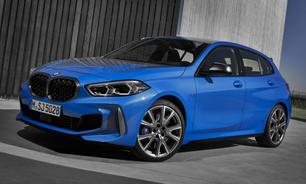
The 1 Series has worn many faces over the generations and, like a lot of BMW designs that depart from tradition, this one might need to grow on some people.
That’s not to say there’s not a lot to like about the F70, but as BMW evolves its design language some changes might ruffle feathers - a lack of the iconic ‘angel eye’ headlight style being one.
But there’s still a kidney grille up front, with new design elements, plus those headlights that have a new vertical light signature are now sleeker than before, giving the new 1 a different ‘character’.
But from the rear, there are baby 3 Series Touring vibes, and it’s hard to find anything that might upset purists - there’s even the 'Hoffmeister kink' at the c-pillar. That’s the way the window angles back towards the front at the bottom.
Inside, the 1 Series has some proper sporty elements, even in the 118, that reference the M development that went into it.
There’s M-coloured stitching up over the dash fabric, for example, and illuminated aluminium panels with M-coloured lighting.
The steering wheel, wrapped in leather, is also an M feature, plus sporty seats are even present in the 118.
The interior is an overall cleaner look, in part thanks to the proliferation of features accessible by touchscreen, but BMW is refraining from going full ‘Tesla’ and removing all the buttons from the cabin.
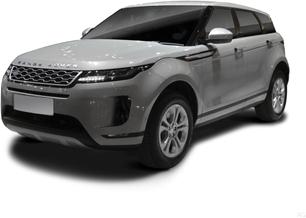
The Evoque has always been a car all about its sleek, city-slicking design, an iconic piece of modern SUV art from Jaguar Land Rover head of design, Gerry McGovern.
With its shapely proportions, clever descending roofline, and a silhouette which successfully reflects a miniaturised version of the Range Rover, the Evoque is at once classy with a faint suggestion of toughness under the skin.
The blacked-out grille, slimline headlights, and contemporary strip across the tailgate all serve to add intrigue to this SUV, and the extra detailing in the front bumper, shapeliness of the bonnet, and contrast black trims (with extra contrast panels on our test car matching the gloss black wheels) serving to add to its premium appeal.
It’s important to remember, while the Evoque slides into a busy small SUV landscape now, it was one of the first to make a premium car so successfully appealing in this small SUV space way back in 2011 with the first Evoque, following Land Rover’s historic trend of being in front of the SUV curve.
Rival small SUV designs may have caught up in the minds of many with the likes of the Audi Q3, BMW X2, and Volvo XC40 shining in recent years, but few have won as many design accolades as the Evoque.
Range Rover seems to be leaning into a more upper luxury trend, not just with the pricing, but with the vibe of the car’s interiors, too.
The new generation Evoque, for example, took a big jump in the look and feel of its interior appointments when it launched in 2019, and over time has only consolidated its market positioning.
The HSE grade which our P300e hybrid arrives in is lavish on the inside, with lovely suede-like seats, intricate contrasting grey cloth trims in the doors (do I detect an influence from Volvo here?) and a plush-looking dash, all finished in soft-to-the touch materials.
Attention to detail, like the silver bezels which adorn the centre console and media screen, add to the premium flair which lifts the Range Rover badge above the Land Rover one, and I do like the way the additional function screen seamlessly melts into the piano finish and integrated dials. While it’s always a nightmare to keep gloss piano finishes clean, it looks oh-so primo.
It’s a little odd the P300e has analogue dials, which seems to miss the premium edge which a fully digital dash might provide although the 7.0-inch centre dash screen has a great resolution and speed, as well as a mostly well laid out operating system.
I found the R-Dynamic modes, which can sharpen up the accelerator response and steering buried two menus deep, unnecessarily hard to find, as were various EV information screens and other less important functions.
Yes, a brand like BMW would probably find it hard to do away with buttons for things like drive modes and things like volume controls or car settings.
Even though a lot of them are shortcuts to a touchscreen menu, it means not needing to scroll or hunt for important driving-based features and options on the 10.25-inch screen.
Even the climate controls are permanently available on the screen so that there’s minimal distraction.
For most non-essential features, however, BMW’s Operating System 9 is a far cry from the easy-to-use iDrive system of just a few years ago, the media control wheel that fell easily to hand and navigated a simple multimedia system of only a few sub-menus.
Fortunately, the screen and everything in the cabin is within reach of the driver, so there’s no awkward leaning or stretching to do anything mid-drive.
The cabin’s physical space is otherwise nicely laid-out, the phone charger pad is out of the way, cupholders fit most receptacles nicely and the door card can hold two regular water bottles plus other small items.
There’s even a small storage ‘shelf’ under the central vents, and near the wireless charger are two USB-C ports and a 12-volt plug.
The ergonomics of the driving position and steering wheel are well-sorted, and seat adjustment and height feels good for both engaged or relaxed driving positions.
Behind that, the second row could be more spacious, even though I managed to fit my 178cm frame behind my own seating position just fine.
There’s not a lot of room to move or stretch out, so most adults will probably find the back seat suitable for short trips only.
Behind that, there’s 380 litres of boot space, or 1200L with the seats folded down.
While it still plays the role of Range Rover’s smallest SUV, the current Evoque is much bigger than the car it replaced in 2019. I would go so far as to say it’s deceptively large on the inside.
Front occupants are treated to a cabin which now feels almost as wide as an actual Range Rover, with plenty of room for elbows on either side, which are, of course, met by lovely soft-touch surfaces.
The raised console helps with the upmarket feel, as does the plush dash. The standard 14-way adjust front seats help to accommodate most passengers, with my only criticism being the large A-pillars and height of the dash can make it feel a little bit claustrophobic compared to some rival luxury SUVs.
Storage is offered through a set of large door pockets, a centre console box, dual bottle holders behind the shift lever, and a healthy nook underneath the climate controls, which also hosts a wireless charging bay.
The rear seats share the same comfortable rim as the front ones, and also have large pockets in the doors. Despite the descending roofline, I had just enough room for my head at 182cm tall although it is notable the space in the PHEV feels smaller with the raised floor needed to accommodate the batteries.
I had a little airspace for my knees behind my own driving position, too. The main drawback for rear passengers is the large transmission tunnel, making it difficult to accommodate an adult in the centre position.
There are adjustable air vents for rear passengers, but it is frustrating Land Rover has chosen to make rear USB-C charging ports an arbitrary $270 option.
The boot is also deceptively large for such a small SUV, measuring in at 472 litres (VDA), it’s above average for the small SUV class and fits the full CarsGuide luggage set, provided you remove the parcel shelf as it's just a smidge too high.
You'll also need to keep your charging cables in the boot, as there's no underfloor storage, the entire space being taken up by a space-saver spare wheel.
The 1 Series isn’t much more expensive than before, despite a decent uptick in kit.
At $56,500 before on-roads for the entry grade 118, it’s less than $2000 pricier than its predecessor. It’s about the price of a VW Golf GTI or Subaru WRX, but trades engine power for badge power, as well as a series of features you’d expect from a premium small car.
A 10.25-inch multimedia touchscreen and 10.7-inch driver display are standard, with wireless phone charging, electric heated seats in Veganza synthetic leather, adaptive suspension and plenty of sporty styling thanks to the M Sport pack.
There’s a few more helpful features for keen drivers, even in the 118. Adaptive LED headlights with high beam assist, a head-up display, BMW’s 'Parking Assist Plus' function, speed limit recognition and tyre pressure monitoring.
The 1 Series also has keyless entry and start, an automatic tailgate, plus some standard stuff like a 40/60 split-fold rear seat and (unfortunately) a tyre repair kit under the boot floor rather than a spare tyre.
Then there’s the M135 xDrive, the hot hatch of the pair.
It starts at $82,500 and comes with extras like a massage seat for the driver, a heated steering wheel, a Harman/Kardon sound system, racier styling and a black roof, plus performance goodies like a bigger engine.
The M135 is a bit more expensive than before though, by almost $6000, and comparable rivals like the Audi S3 remain in the mid-$70K range.
Two options packs are available, with the 118's $5000 Enhancement Pack adding Metallic paint, 19-inch M alloys, a heated steering wheel, a sunroof, massaging front seats, a Harman/Kardon sound system and Driving Assistant Professional.
There's also an M Sport Package Pro able to be added to either variant, which adds sportier M styling, a black roof for the 118, and M Sports seats for the front row. This pack costs $2462 for the 118 or $2700 for the M135 xDrive.
Two options packs are available, with the 118's $5000 Enhancement Pack adding Metallic paint, 19-inch M alloys, a heated steering wheel, a sunroof, massaging front seats, a Harman/Kardon sound system and Driving Assistant Professional.There's also an M Sport Package Pro able to be added to either variant, which adds sportier M styling, a black roof for the 118, and M Sports seats for the front row. This pack costs $2462 for the 118 or $2700 for the M135 xDrive.
While we’re on the topic of excess, the Evoque HSE P300e certainly reflects it in the price tag. This plug-in starts from a whopping $105,060 price-wise putting it in the same league as luxury PHEV rivals a full size up.
Because there are no small luxury segment small SUVs in this league currently, we’re in fact forced to compare the Evoque to cars like the Volvo XC60 Recharge (from $100,990), BMW X3 xDrive30e ($107,000), or the particularly good-value Lexus NX 450h+ (from $88,323).
All are larger than our Evoque here, so it’s automatically at a disadvantage, and as is the usual case with Land Rover products, there’s an extensive and occasionally rude options list which can add thousands more to the price.
Our test vehicle, for example, had over $10,000 worth of options attached to it, only three of which (dual-zone climate with second row vents - $1000, and the additional Type 2 charging cable - $528) I would bother to add.
The included equipment at the HSE grade is good, with 20-inch alloy wheels, 14-way electrically adjustable front seats, Matrix LED headlights, a 10-inch tiltable ‘Pivi Pro’ touchscreen with wireless Apple CarPlay and Android Auto connectivity, as well as built-in navigation, and a second screen for the climate and car functions.
There’s also a semi-digital dash (oddly, with analogue dials for engine rpm and road speed, but a 7.0-inch digital element for everything else), the choice of either leather or suede interior trim, a leather-bound steering wheel, and keyless entry with push-start ignition.
It’s nice to see the Matrix LEDs as standard here, as well as a swish set of screens and a premium feeling interior. But it’s also frustrating things like digital radio ($520), a head-up display ($1690), data plan ($1040), and USB-C for the rear seats ($351) are optional on a car north of $100,000, especially since most of these are standard on its rivals.
One major catch is how long you might be waiting for one. Some dealer sources tell us customers will need to wait up to 12 months for delivery at the time of writing, so be prepared for this if you want one.
The two 1 Series variants have rather different running gear.
The 118 comes with a 1.5-litre three-cylinder turbo petrol engine that drives the front wheels via a seven-speed dual-clutch transmission (DCT).
It makes 115kW and 230Nm, and BMW says it’ll hit 100km/h in 8.5 seconds.
That’s in comparison to the beefier 2.0-litre four-cylinder unit in the M135, also turbocharged, but driving all four wheels via a similar seven-speed DCT.
It makes 233kW and 400Nm, and it’ll crack 100km/h in 4.9 seconds according to the Bavarian brand.
The Evoque now sports Jaguar Land Rover’s hybridised ‘Ingenium’ engine family across the range, and the set-up which appears in the plug-in hybrid model might be the most interesting.
It consists of a 1.5-litre three-cylinder combustion engine which is said to produce 147kW/280Nm, and an electric motor powering the rear axle producing 80kW, the two of which combine for an impressive quoted total output of 227kW/540Nm, driving all four wheels.
The motor sources its power from a 15kWh lithium-ion battery pack under the floor of the car, which provides a claimed 62km of fully-electric driving range.
Land Rover also replaced the mechanical brake pedal with a drive-by-wire one to allow for improved ‘blended’ regenerative braking.
BMW says the 118 will sip 6.4 litres of recommended 95 RON fuel for every 100km covered, with its 49-litre tank the same as the M135’s.
In that variant, fuel use increases to 7.8L/100km, as does recommended fuel quality to 98 RON.
We didn’t get a chance to test fuel consumption properly on the launch, so keep an eye on a future review for that, but given the relatively high claim even for the 118, we’d expect the 1 Series isn’t the most frugal drinker.
Claimed energy consumption on the combined WLTP cycle for the Range Rover Evoque P300e is 2.0L/100km. As with all plug-in hybrids though, this will heavily depend on how it is driven.
The 15kWh battery is said to provide a 62km driving range (again, on the WLTP cycle), which seems healthy for a PHEV, and I was pleased to find that my car was reporting about 56km on a full charge, not far off the claim.
Importantly, the Evoque has stellar charging specifications, which make it ideal for a city-slicker with minimal time to conveniently charge.
I was shocked to find a DC charging port when I flipped open the panel, which is capable of charging the tiny battery up in just 20 minutes (at a peak rate of 35kW), while on a slower but easier-to-find AC charger, it can extract 7kW allowing a charge time of around two hours.
This is well above par for a plug-in hybrid, and makes charging quick, painless and convenient, even for those who can’t charge at home.
As a result of this ease-of-charging and therefore minimal time spent in the hold or hybrid modes, my car reported an astounding 1.0/100km of fuel consumption during my week, covering mostly urban kilometres.
The only drawback is the need to fill this small turbo engine with mid-shelf 95RON fuel.
The launch drive for the 1 Series included some outer-suburban Melbourne traffic, a stint of highway driving down towards the Mornington Peninsula, and a semi-rural road loop for each variant before the return journey.
So, noting that we didn’t quite get the chance to really work out what it might be like to live with the 1 Series day-to-day, first impressions showed good signs.
Both variants still drive much like you’d expect from even a front-drive BMW, let alone the AWD M135, but the chassis and suspension seem like they’d be good counterparts on a daily drive.
In the M135, communication and compliance seemed well-balanced with each other for even some particularly rough surfaces, and after torrential rain there were some potholes that would properly upset most cars that didn’t faze the 1 Series too much.
The 118 seemed to let a little more road noise into the cabin, but that might have been a symptom of different road surfaces.
The steering is accurate, but the feel in both is a little heavier than needed, especially with the thick-rimmed BMW steering wheel that you’ll know about if you’ve driven anything from Munich in recent years.
It’s a very easy car to drive fast, especially with the combination of 233kW, 400Nm, and all-wheel drive at the M135’s disposal.
The chassis and tyres work quite well together to not only hold a corner at impressive speed, but also keep the car stable so that traction isn’t an issue when launching out.
There’s also the joy of hearing a turbo spool and flutter under load, which is hard to deny as a draw for petrolheads.
The second-gen Evoque is still the lovely, luxury, small SUV it was when it launched in 2019, and this plug-in hybrid version only serves to improve the formula, adding sleek electric driving characteristics to the already-smooth turbo engine and torque converter automatic.
Interestingly, and like its Volvo XC60 rival, the electric motor is located on the rear axle, giving this car the odd characteristic of being rear-wheel drive when driven electrically, or predominantly front-wheel drive when driven in combustion mode.
Speaking of modes, this car does the bulk of the management, with only three driving modes available to the pilot. These include the default ‘hybrid’ mode, which as the name suggests, blends the two power sources with more of an emphasis on electric driving when the battery is charged.
There's also an electric mode, which will only use the rear axle motor until the battery runs out, and a ‘Hold’ mode which will still blend the two sources but predominantly rely on the combustion engine to maintain the car’s state of charge.
You might want to use the last mode if you're travelling long-distance, to maintain the electric range for where it is most efficient - in low-speed stop-start driving.
The regenerative braking is not adjustable, having just a single mild level. It’s far from the single-pedal driving you can experience in a fully electric car, but Land Rover has made the brake pedal fly-by-wire so it can blend increased regen with the mechanical brakes.
It makes for a familiar experience from behind the wheel for those coming straight out of a purely combustion vehicle.
The electrified brake pedal does have the consequence of removing a bit of feel for a keen driver, and the same can be said for the rather slow steering tune in the default settings which makes the Evoque feel more luxurious and less sporty or reactive than it could be.
It’s a shame, because the two power sources combine to make for a thumping amount of power when you stick your boot in, and the all-wheel drive system and nicely balanced suspension keep this little SUV well under control in the corners.
As with my original Evoque range review in 2019, though, it is notable how heavy this SUV feels, particularly compared to some rivals like the Audi Q3.
The heftiness suits the Evoque's expanded dimensions and even more upmarket feel, but despite the power on offer it’s not an agile SUV to be carving corners in.
At least the ride quality and quietness is superb, making the Evoque an ideal SUV for driving around the centre of pothole-stricken Sydney, with a notable amount of poise. At the end of the day, isn’t that what this Range Rover was built for?
There’s plenty of active safety in the new 1 Series, new kit includes an updated 'Driving Assistant Plus', BMW calls it.
It features all the driving assist functions like lane departure warnings and rear cross-traffic alert, but the M135 gets a higher-spec version with extras like front cross-traffic alert, side collision prevention, and evasion assist.
This can be added to the 118 for $5000 in the Enhancement Package, but it seems a bit stiff to put safety features behind a paywall alongside items like a sunroof and a high-end audio system.
Mercifully, the 1 Series’ active safety systems are all pretty unobtrusive. There are very few ‘bings and bongs’ as we’ve come to call them, and any warnings are generally subtle.
There’s a quick way to turn most of them off via a physical button near the gear selector, and its adaptive cruise control is well tuned for urban, highway and rural driving.
Otherwise, the third-gen 1 Series scored five stars with ANCAP in 2019, so we will wait and see if its successor maintains that score.
It’s also got six airbags including front and side, as well as curtain airbags covering both rows.
Despite its long options list, thankfully all key safety equipment is standard on the Evoque. Active items include auto emergency braking, lane keep assist with lane departure warning, blind spot monitoring with rear cross-traffic alert, traffic sign recognition, driver attention alert, a clear exit monitor, and adaptive cruise control.
Only two items which could be considered under the safety umbrella remain on the options list (the options list becoming a recurring theme in this review), a 360-degree parking camera ($500), and the ‘ClearSight’ rear view mirror, which is able to show a camera view out the rear if the mirror is obscured by luggage or people in the cabin ($1230).
Elsewhere, the Evoque scores two ISOFIX child seat mounting points on the outer rear seats, and three top tethers across the rear row.
There are six airbags, and despite notably missing a front centre airbag, which is often required for a maximum safety rating to today’s standard, the Evoque maintains the maximum five-star ANCAP safety rating it was awarded in 2019. For the record, it scored very highly across all categories.
BMW’s got a fairly standard five-year/unlimited kilometre warranty.
The brand also uses a condition-based servicing system, which uses the multimedia to alert the owner when maintenance is required.
There are servicing packages which remove some of that uncertainty, in the 1 Series’ case a five-year, 80,000km pack costs $2210.
As of April, 2021 all Land Rover products are finally covered by an industry-standard five-year and unlimited kilometre warranty, matching its key rivals, and beating out BMW which persists with an old three-year warranty promise. Five years of roadside assist is also included for the duration.
When it comes to servicing, the P300e is available to be purchased with a five-year plan ($2650 - $530 annually) which covers 102,000km of visits.
This pack is well worthwhile as Land Rover servicing is generally quite expensive when purchased a-la-carte.