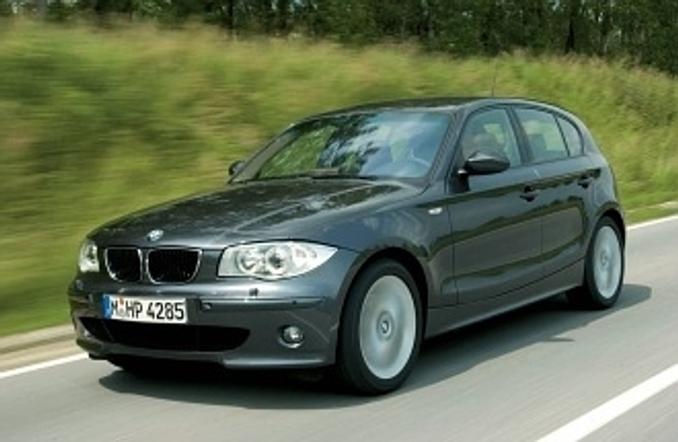
BMW 1 Series 2010

BMW 1 Series 2010

FROM $4,620

The 2010 BMW 1 Series range of configurations is currently priced from $4,620.

Our most recent review of the 2010 BMW 1 Series resulted in a score of 7.5 out of 10 for that particular example.

You can read the full review here.

The 2010 BMW 1 Series carries a braked towing capacity of up to 1200 Kg, but check to ensure this applies to the configuration you're considering.

7.6L/100km (combined)
Hatchback
6 Speed Automatic
Premium Unleaded Petrol

BMW 1 Series 2010 Reviews

LUXURY
Used BMW 1 Series review: 2004-2015
7.5/10
22 May 2017
LUXURY
Used BMW 1 Series review: 2004-2011
6.0/10
29 Apr 2016
LUXURY
Used BMW 1 Series review: 2004-2015
7.0/10
11 Jan 2016
CAR REVIEWS
Used BMW 1 Series review: 2004-2011
26 Jun 2015
CAR REVIEWS
Used BMW 1 Series review: 2004-2014
7.0/10
18 Nov 2014
LUXURY
Used BMW 135i review: 2008-2012
8.0/10
25 Mar 2014
LUXURY
Used BMW 1 Series review: 2004-2010
7.0/10
30 Aug 2013
CAR REVIEWS
Used BMW 1 Series review: 2004-2012
7.0/10
1 Feb 2013
LUXURY
5 best soft-tops
9 Sep 2010
LUXURY
BMW 118d 2010 Review
16 Jul 2010
LUXURY
BMW 123d 2010 Review
25 Jun 2010
See all BMW 1 Series 2010 Reviews

BMW 1 Series 2010 FAQs

Where is fuse diagram for a 2010 BMW 1 Series?

The fuse box in this car is fiendishly located behind the glove box. To access it, you first need to unclip the strut that controls the glove box lid’s action, unclip the two sides of the glove box where it pivots (there’s a plastic tab on each side) pull the glove box inner down and then you should be able to see the fuses laid out deep inside the dashboard. Next to the access panel, there should be a folded chart showing which fuse does what. There are some excellent online tutorials on how to do this.

If this chart is missing (and it’s possible as it’s a loose-leaf sheet of paper) there are lots of online guides to show you what fuse protects what circuit.

To remove or replace the fuses themselves, I’d recommend a specific set of long-nosed pliers designed for this job as there’s very poor access to the actual fuses and getting at them by hand is going to be a pain.

Show more

Smokey exhaust on a 2010 BMW 120i

The engine is probably worn and needs honing and new rings.

Show more

Punctured tyre can't be repaired

Some run-flat tyres are marked that they can't be repaired, but that's not necessarily correct we've been told. Run-flats can be repaired providing the sidewall hasn't been damaged by being driven too far after the tyre deflated. There are tyre dealers other than Bridgestone dealers who have the equipment to remove run-flats from the rims and repair the tyres. Bridgestone have an equivalent conventional tyre to your run-flat and these can be fitted to your car.

Show more

See all BMW 1 Series 2010 FAQs
Disclaimer: You acknowledge and agree that all answers are provided as a general guide only and should not be relied upon as bespoke advice. CarsGuide is not liable for the accuracy of any information provided in the answers.

BMW 1 Series 2010 Fuel consumption

Fuel consumption for the 2010 BMW 1 Series is dependent on the type of engine, transmission, or model chosen. The BMW 1 Series currently offers fuel consumption from 5.4L/100km.
BMW 1 Series Model Body Type Specs Fuel Consumption
118d 18D Body Type: Hatchback Specs: 2.0L Diesel 6 SP AUTO Fuel Consumption: 5.4L/100km
118d 18D Body Type: Hatchback Specs: 2.0L Diesel 6 SP MAN Fuel Consumption: 4.5L/100km
118i 18I Body Type: Hatchback Specs: 2.0L ULP 6 SP AUTO Fuel Consumption: 7.5L/100km
118i 18I Body Type: Hatchback Specs: 2.0L ULP 6 SP MAN Fuel Consumption: 7.4L/100km
118i 18I Body Type: Hatchback Specs: 2.0L PULP 6 SP MAN Fuel Consumption: 7.6L/100km
120d 20D Body Type: Hatchback Specs: 2.0L Diesel 6 SP AUTO Fuel Consumption: 6.1L/100km
120d 20D Body Type: Hatchback Specs: 2.0L Diesel 6 SP MAN Fuel Consumption: 4.8L/100km
123d 23D Body Type: Hatchback Specs: 2.0L Diesel 6 SP AUTO Fuel Consumption: 5.6L/100km
123d 23D Body Type: Hatchback Specs: 2.0L Diesel 6 SP MAN Fuel Consumption: 5.2L/100km
130i Sport Body Type: Hatchback Specs: 3.0L ULP 6 SP AUTO Fuel Consumption: 9.2L/100km
120i 20I Body Type: Hatchback Specs: 2.0L PULP 6 SP MAN Fuel Consumption: 7.9L/100km
118d 18D Body Type: Convertible Specs: 2.0L Diesel 6 SP AUTO Fuel Consumption: 5.6L/100km
125i 25I Body Type: Convertible Specs: 3.0L PULP 6 SP AUTO Fuel Consumption: 7.9L/100km
118d 18D Body Type: Convertible Specs: 2.0L Diesel 6 SP MAN Fuel Consumption: 4.9L/100km
120i 20I Body Type: Convertible Specs: 2.0L PULP 6 SP AUTO Fuel Consumption: 8.2L/100km
120i 20I Body Type: Convertible Specs: 2.0L PULP 6 SP MAN Fuel Consumption: 8.1L/100km
135i 35I Body Type: Convertible Specs: 3.0L PULP 6 SP AUTO Fuel Consumption: 9.8L/100km
123d 23D Body Type: Convertible Specs: 2.0L Diesel 6 SP AUTO Fuel Consumption: 5.9L/100km
123d 23D Body Type: Convertible Specs: 2.0L Diesel 6 SP MAN Fuel Consumption: 5.4L/100km
125i 25I Body Type: Convertible Specs: 3.0L PULP 6 SP AUTO Fuel Consumption: 8.4L/100km
135i 35I Body Type: Convertible Specs: 3.0L PULP 7 SP AUTO Fuel Consumption: 8.6L/100km
125i 25I Body Type: Coupe Specs: 3.0L PULP 6 SP AUTO Fuel Consumption: 8.7L/100km
123d 23D Body Type: Coupe Specs: 2.0L Diesel 6 SP MAN Fuel Consumption: 5.2L/100km
123d 23D Body Type: Coupe Specs: 2.0L Diesel 6 SP AUTO Fuel Consumption: 5.6L/100km
135i Sport Body Type: Coupe Specs: 3.0L PULP 6 SP AUTO Fuel Consumption: 9.6L/100km
125i 25I Body Type: Coupe Specs: 3.0L PULP 6 SP AUTO Fuel Consumption: 8.2L/100km
135i Sport Body Type: Coupe Specs: 3.0L PULP 7 SP AUTO Fuel Consumption: 8.5L/100km
show more