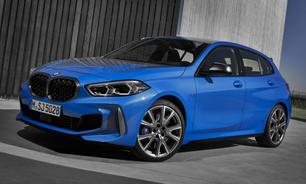
What's the difference?
Can you believe the 1 Series is already in its fourth generation? It might not look incredibly like it, because this new car looks a little like the third.
But it’s been more than half a decade since the F40 1 Series debuted, so BMW decided it was already time for a new kid on the block. Meet the F70.
It’s just landed in Australia and it promises new-gen tech and features compared with its predecessor. We checked out BMW’s new baby at its Australian launch to find out if it delivers.
Coupes are back.
Heading into the second half of the 2020s, buyers of affordable sports cars seem better-served for choice than when the current BMW 2 Series Coupe surfaced earlier this decade.
Mazda’s MX-5 keeps gently evolving. Toyota and Subaru have rejuvenated their respective firecracker 86/BRZ twins. The glorious Nissan Z is as evocative as it is entertaining. The recent Ford Mustang revamp serves rousing American muscle car. The reborn Honda Prelude looms as a hybrid hero. And even Audi’s TT is set for resurrection soon.
All reinvigorate the genre. Just like the (G42) 2 Series Coupe, the third in the series since 2007, released during 2021 and facelifted in 2024.
Here we revisit the M240i xDrive, our favourite version (sorry, M2 owners), to see if it remains the definitive brand experience.
A brief dalliance with the 1 Series has left me impressed, if wanting to spend more time with it to get a better assessment of the day-to-day liveability of BMW’s entry-level model.
It’s a compelling offering if you’re after a premium small car, and even without the performance of the M135, the 118 is feature-packed.
Keeping pricing competitive should help the 1 Series buck the trend of buyers opting for small SUVs, but ultimately it’s just refreshing to see BMW putting effort into keeping a hatchback relevant (and up-to-date).
Note: CarsGuide attended this event as a guest of the manufacturer, with meals provided.
It may be expensive for a small coupe. And EVs have reframed performance standards to the detriment of most internal combustion engine sports cars like this – at least for acceleration times. But the M240i xDrive Coupe is far more than just about numbers, imbuing the soul and spirit of what makes this brand’s vehicles so enjoyable and memorable to drive.
A unique and most-welcome survivor today, the MY25 makeover takes all that, and improves the interior, to be at the heart of what BMW has traditionally done best (styling aside). We found parting with it at the end of our term very difficult.
The 1 Series has worn many faces over the generations and, like a lot of BMW designs that depart from tradition, this one might need to grow on some people.
That’s not to say there’s not a lot to like about the F70, but as BMW evolves its design language some changes might ruffle feathers - a lack of the iconic ‘angel eye’ headlight style being one.
But there’s still a kidney grille up front, with new design elements, plus those headlights that have a new vertical light signature are now sleeker than before, giving the new 1 a different ‘character’.
But from the rear, there are baby 3 Series Touring vibes, and it’s hard to find anything that might upset purists - there’s even the 'Hoffmeister kink' at the c-pillar. That’s the way the window angles back towards the front at the bottom.
Inside, the 1 Series has some proper sporty elements, even in the 118, that reference the M development that went into it.
There’s M-coloured stitching up over the dash fabric, for example, and illuminated aluminium panels with M-coloured lighting.
The steering wheel, wrapped in leather, is also an M feature, plus sporty seats are even present in the 118.
The interior is an overall cleaner look, in part thanks to the proliferation of features accessible by touchscreen, but BMW is refraining from going full ‘Tesla’ and removing all the buttons from the cabin.
BMW has iconic form when it comes to coupe, err, form.
Consider the timeless E9 Coupe of 1968, its elegant E24 6 Series successor of 1976 and the chiselled E31 8 Series of 1990.
Even the sinewy E82 1 Series Coupe of 2007 still resonates.
But, despite boasting long-nose/short-tail proportions, today’s G42 looks awkward from some angles, like a Lego version of the preceding F22 of 2014, complete with cartoonishly aggressive detailing that don’t sit happily on the car.
Not Munich’s finest moment. Still, as one of the last surviving small coupes, we’re still very glad it exists. And, in a rare case of more being more, this M240i’s body kit disguises some of the heavy-handedness.
So, what’s new here? Barely earning the facelift tag outside, the MY25 2 Series Coupe gains extra colours, restyled alloys and revised exterior trim, with more body paint in the lower parts and rear apron, as well as high-gloss black for the M240i’s mirror caps.
Inside, the modifications are more profound, updating to BMW’s 'Operating System 8.5', offering improved functionality and all housed within a fetching, single-piece rectangular display screen that also takes in the instrumentation.
Along with a flat-bottomed steering wheel, redesigned air vent knobs, fewer buttons, revised trim and different ambient lighting, they refresh what was a dated-looking cabin.
Yes, a brand like BMW would probably find it hard to do away with buttons for things like drive modes and things like volume controls or car settings.
Even though a lot of them are shortcuts to a touchscreen menu, it means not needing to scroll or hunt for important driving-based features and options on the 10.25-inch screen.
Even the climate controls are permanently available on the screen so that there’s minimal distraction.
For most non-essential features, however, BMW’s Operating System 9 is a far cry from the easy-to-use iDrive system of just a few years ago, the media control wheel that fell easily to hand and navigated a simple multimedia system of only a few sub-menus.
Fortunately, the screen and everything in the cabin is within reach of the driver, so there’s no awkward leaning or stretching to do anything mid-drive.
The cabin’s physical space is otherwise nicely laid-out, the phone charger pad is out of the way, cupholders fit most receptacles nicely and the door card can hold two regular water bottles plus other small items.
There’s even a small storage ‘shelf’ under the central vents, and near the wireless charger are two USB-C ports and a 12-volt plug.
The ergonomics of the driving position and steering wheel are well-sorted, and seat adjustment and height feels good for both engaged or relaxed driving positions.
Behind that, the second row could be more spacious, even though I managed to fit my 178cm frame behind my own seating position just fine.
There’s not a lot of room to move or stretch out, so most adults will probably find the back seat suitable for short trips only.
Behind that, there’s 380 litres of boot space, or 1200L with the seats folded down.
You could be forgiven for thinking you’ve stepped into a mid-sized rather than small coupe, with today’s G42 being larger in every area except wheelbase than an E46 3 Series Coupe of about 25 years ago.
Length, width, height and wheelbase dimensions are 4548mm, 1838mm, 1404mm and 2741mm, respectively, which make for a surprisingly easy-to-access and spacious cabin – at least for adults up front.
In fact, if nobody is sat behind, even a 200cm-plus individual can stretch out. German cars are great at accommodating the 99-percentile people. And head room’s not bad either, even with the standard sunroof.
BMW’s are about driving, so no shocks to learn that the M240i’s driving position is first class. Sat low and snug, this is a suitably sporty yet incredibly comfortable and high-quality environment, aided by nicely bolstered M Sport seats, a lovely steering wheel and a beautifully presented dashboard. Everything fits like a glove.
If the notion of reducing the number of buttons in the newly-extended electronic interface raises red flags (how many times have we moaned about this in most software-based Chinese vehicles?), rest assured: the M240i’s ergonomics are spot-on.
There are still plenty of switches alongside the iDrive controller and gearshifter for all major vehicle functions, Porsche-style, as well as big old physical buttons for the (soaring) audio, to back up the screen shortcuts for more-detailed functions. It only takes a few moments to learn how easy and intuitive the whole set-up is. BMW leads the way here.
Crisp, clear and colourful digital graphics almost make up for the fact that the gorgeous old analogue dials of old are extinct. Instead, the company serves up unremarkable angular instrument displays and electronic readouts. Very comprehensive and informative, they do the job, but are utterly bereft of character or style. It’s as if Munich’s designers have forgotten how to make things look pretty nowadays. Hang on, do we see a pattern emerging here?
More solid Teutonic sensibility – this time far-more artfully served up – can be found in the excellent ventilation system, ample console-sited storage and pleasingly deep door pockets, highlighting how easy the M240i is to live with.
Crash regulations demand central posts, so no pillarless sides unfortunately in this modern coupe, but frameless door glass is nice (and assists in entry/egress when retracted), enhancing that sporty sensation.
The flipside is poor side and rear vision for the driver, but – frankly – it is otherwise difficult to fault the M240i’s interior layout and presentation.
Even the back-seat area tries hard.
The seats whirr forward and back (slowly) to increase/decrease the narrow aperture as required (using a shoulder-height lever within easy reach), though you’ll need to be pretty flexible accessing the two-person buckets that await. Once ensconced there, there’s sufficient space, padding and support for most folk of up to about 180cm to travel in reasonable comfort, as long as the front-seat occupants aren’t in maximum chaise longue mode and journeys aren’t too long. The quite-upright backrest angle can’t be adjusted.
Just ensure the climate control is on. Things can become pretty stuffy, quickly. And be thankful for the air vents, extended glass area, middle armrest with cupholders and reading lights.
Further back, there is a large-ish, 390-litre boot with a low, wide and flat floor, that can be extended by tugging on a handle to drop the 40/20/40 split/fold backrests as required.
The usual tie-down hooks, lighting and power outlets are present, but you’ll search in vain for a space-saver wheel. Just the dreaded 'tyre mobility kit' that – once deployed – will likely ruin your tyre and cost hundreds to replace. No thanks.
A gashed tyre. No phone coverage. What a way to ruin a great drive day out on your favourite rural roads and in such an immensely enjoyable car. Australia demands a spare tyre.
The 1 Series isn’t much more expensive than before, despite a decent uptick in kit.
At $56,500 before on-roads for the entry grade 118, it’s less than $2000 pricier than its predecessor. It’s about the price of a VW Golf GTI or Subaru WRX, but trades engine power for badge power, as well as a series of features you’d expect from a premium small car.
A 10.25-inch multimedia touchscreen and 10.7-inch driver display are standard, with wireless phone charging, electric heated seats in Veganza synthetic leather, adaptive suspension and plenty of sporty styling thanks to the M Sport pack.
There’s a few more helpful features for keen drivers, even in the 118. Adaptive LED headlights with high beam assist, a head-up display, BMW’s 'Parking Assist Plus' function, speed limit recognition and tyre pressure monitoring.
The 1 Series also has keyless entry and start, an automatic tailgate, plus some standard stuff like a 40/60 split-fold rear seat and (unfortunately) a tyre repair kit under the boot floor rather than a spare tyre.
Then there’s the M135 xDrive, the hot hatch of the pair.
It starts at $82,500 and comes with extras like a massage seat for the driver, a heated steering wheel, a Harman/Kardon sound system, racier styling and a black roof, plus performance goodies like a bigger engine.
The M135 is a bit more expensive than before though, by almost $6000, and comparable rivals like the Audi S3 remain in the mid-$70K range.
Two options packs are available, with the 118's $5000 Enhancement Pack adding Metallic paint, 19-inch M alloys, a heated steering wheel, a sunroof, massaging front seats, a Harman/Kardon sound system and Driving Assistant Professional.
There's also an M Sport Package Pro able to be added to either variant, which adds sportier M styling, a black roof for the 118, and M Sports seats for the front row. This pack costs $2462 for the 118 or $2700 for the M135 xDrive.
Two options packs are available, with the 118's $5000 Enhancement Pack adding Metallic paint, 19-inch M alloys, a heated steering wheel, a sunroof, massaging front seats, a Harman/Kardon sound system and Driving Assistant Professional.There's also an M Sport Package Pro able to be added to either variant, which adds sportier M styling, a black roof for the 118, and M Sports seats for the front row. This pack costs $2462 for the 118 or $2700 for the M135 xDrive.
The good news is, the G42 in 230i and flagship M2 retain the traditional longitudinal-engined/rear-wheel drive set-up, though the M240i has all-wheel drive (xDrive in BMW-speak) to help keep things under control.
All the other existing 2 Series models (basically, those with more than two doors) are transverse/FWD-derived.
Now, the bad news is that, from $102,100 (all prices are before on-road costs), the M240i is considerably more expensive than before. You can no-longer buy a traditional six-cylinder BMW coupe for under six figures. The continuing 230i Coupe, from just under $80K, uses a (albeit lovely) four-pot turbo.
At least the Mexican-made M240i isn’t short of equipment.
You’ll find an 'M Aerodynamics' package, 'M Sport' package that includes drive modes, M suspension with adaptive dampers, M brakes, M differential, M variable steering and M… more.
Additional items include adaptive LED headlights, leather upholstery, electric and heated sports front seats with driver’s side memory, climate control, sunroof, adaptive cruise control, paddle shifters, a 12.3-inch instrument cluster, a 14.9-inch multimedia display, 'Hey, BMW' voice control, a heated steering wheel, a head-up display, auto parking, a surround-view camera, 14-speaker Harman Kardon audio, digital radio, wireless charging, Apple CarPlay/Android Auto, emergency services access as part of a three-year subscription, electric heated/folding M exterior mirrors, ambient lighting, 19-inch alloy wheels and a tyre-repair kit – in lieu of a spare wheel.
Our car as-tested also included 'Brooklyn Grey' metallic paint ($1700), 19-inch M light alloy wheels with performance tyres ($2800) and the M Sport Package Pro material/trim package ($1900), helping to bump up the price to $108,500. No reversing nearside mirror-dip is a bit stingy, though.
Still, there’s also a decent wad of advanced driver-assist systems, including AEB front and rear, lane-support tech and various monitors. Read more about that and more in the safety section below.
The near-$20K price jump since 2022 also means the M240i is now more expensive than the Z Nismo and Mustang Dark Horse and is now rubbing shoulders with the (BMW-based and built) Toyota Supra Track Edition and even the MG Cyberster Dual Motor.
And, speaking of electric vehicles, as before, the now-$81K Tesla Model 3 Performance’s astounding 3.1-second acceleration is in another league.
No, the M240i is about traditional BMW values harking back to 'The Ultimate Driving Machine' era. Premium, driver-focused German grand touring sports luxury coupe, cabriolet or convertible.
From that perspective, the two-door 2 Series is the cheapest by a fair margin and in a league of its own.
The two 1 Series variants have rather different running gear.
The 118 comes with a 1.5-litre three-cylinder turbo petrol engine that drives the front wheels via a seven-speed dual-clutch transmission (DCT).
It makes 115kW and 230Nm, and BMW says it’ll hit 100km/h in 8.5 seconds.
That’s in comparison to the beefier 2.0-litre four-cylinder unit in the M135, also turbocharged, but driving all four wheels via a similar seven-speed DCT.
It makes 233kW and 400Nm, and it’ll crack 100km/h in 4.9 seconds according to the Bavarian brand.
As before, the M240i employs a 3.0-litre direct-injection turbo-charged in-line six-cylinder petrol engine, making a heady 285kW of power at 6500rpm and 500Nm of torque between 1900rpm and 5000rpm.
A ZF-supplied eight-speed torque-converter automatic transmission is fitted (and, sadly, no manual is available), driving all four wheels via an AWD system with an M Sport-tuned differential.
BMW says the 118 will sip 6.4 litres of recommended 95 RON fuel for every 100km covered, with its 49-litre tank the same as the M135’s.
In that variant, fuel use increases to 7.8L/100km, as does recommended fuel quality to 98 RON.
We didn’t get a chance to test fuel consumption properly on the launch, so keep an eye on a future review for that, but given the relatively high claim even for the 118, we’d expect the 1 Series isn’t the most frugal drinker.
Rated as a Euro 6d-compliant vehicle, the M240i’s average combined fuel consumption figure is 8.0 litres per 100km, for a carbon dioxide emissions average of 185 grams/km.
With a 52-litre tank brimmed with premium unleaded petrol (98 RON minimum is recommended), that should result in about 650km between refills on average.
Over a mix of urban and highway driving, we managed 8.9L/100km, which is better than the pre-facelift version’s 9.6L/100km. That’s impressive stuff for a performance-orientated sports coupe.
The launch drive for the 1 Series included some outer-suburban Melbourne traffic, a stint of highway driving down towards the Mornington Peninsula, and a semi-rural road loop for each variant before the return journey.
So, noting that we didn’t quite get the chance to really work out what it might be like to live with the 1 Series day-to-day, first impressions showed good signs.
Both variants still drive much like you’d expect from even a front-drive BMW, let alone the AWD M135, but the chassis and suspension seem like they’d be good counterparts on a daily drive.
In the M135, communication and compliance seemed well-balanced with each other for even some particularly rough surfaces, and after torrential rain there were some potholes that would properly upset most cars that didn’t faze the 1 Series too much.
The 118 seemed to let a little more road noise into the cabin, but that might have been a symptom of different road surfaces.
The steering is accurate, but the feel in both is a little heavier than needed, especially with the thick-rimmed BMW steering wheel that you’ll know about if you’ve driven anything from Munich in recent years.
It’s a very easy car to drive fast, especially with the combination of 233kW, 400Nm, and all-wheel drive at the M135’s disposal.
The chassis and tyres work quite well together to not only hold a corner at impressive speed, but also keep the car stable so that traction isn’t an issue when launching out.
There’s also the joy of hearing a turbo spool and flutter under load, which is hard to deny as a draw for petrolheads.
The M240i xDrive’s specification reads like it’s straight out of BMW fan fiction.
Nestled within a shrunken 3 Series-derived 'CLAR' platform brandishing near-50:50 weight distribution, stuffed between beefed-up struts up front, is a strident in-line six, driving the rear or all four wheels via an M Sport differential and held up by a multi-link rear axle.
The promise here is an athletic driving machine on one hand and a cosseting grand tourer on the other, but whether the M240i can walk that fickle red line as effortlessly four years on… well, that’s what we’re here to find out. As we said earlier, sub-3.5s Teslas and the like have really messed with the bang-for-your-buck playbook since 2021.
Luckily, the reality only reiterates the 2 Series Coupe’s place in the sun. Rather than the anodyne (or artificial) whine of an electric motor, here instead is one of the greatest modern engines in the world, mated to arguably the best auto transmission ever in existence.
That’s a terrific start. And, once the button is pressed, the M240i’s performance bandwidth is deeply moving and immensely satisfying.
With a kerb weight of 1690kg, the M240i’s power to weight ratio is an impressive 168.6kW/tonne, helping it to scoot from standstill to 100km/h in 4.3 seconds, on the way to an electronically-limited top speed of 250km/h. Note that the M2 flagship is just 0.3s quicker to 100.
Pottering about town in its most benign ('Eco Pro') setting, the B58-hearted Bimmer slinks about gingerly, purring like a content tabby while skimming along over all sorts of urban roads like a luxury car costing a lot more should, taking everything in its stride. Given this is what driving is like for most people most of the time, the BMW nails it.
More throttle unleashes a surging snarl as the BMW’s speed steps up, with varying degrees of urgency according to the driver’s will and desire. Racing up through the gears, the German straight six feels like it has barely stirred; like things are just warming up.
In conjunction with Sport mode, here is where the M240i really starts to take off, leaping into action, engine roaring as speeds soar as if every road is a stretch of derestricted autobahn. The pace of this coupe is quite remarkable. Planted yet precise, the steering firms up as the chassis hunkers down, and you’re left in awe of how calm and composed the car constantly feels. Even in pouring rain.
As the roads start to snake and twist, the BMW glides through the chosen line with startling grip and confidence, without ever feeling nervous or twitchy in standard traction settings, regardless of surface or weather conditions. That’s the AWD doing its thing.
The M240i is all about nuance and control, whether you’re talking steering, handling, roadholding, braking or electronic intervention. It is refreshing to feel so connected to the driving experience so intimately.
As we said back in 2022, plonking for Sport Plus mode, with the stability and traction nannies neutered, is an easy street to big old oversteer spills and thrills, if so desired.
And then, you’re back in Eco Pro, crawling along in cocooned comfort and relying on the ADAS tech to waft you along, before being back in 'Individual' mode as the road ahead clears, with powertrain in 'Sport' but the suspension in 'Comfort'; just right for times when you just want to streak ahead of slower traffic without pummelling your spine. It’s all there for you. The M240i can do it all.
Inevitably, in Sport mode the ride’s firmness can be fatiguing on bad urban roads. Likewise, the tyre noise over coarse bitumen is tiring over longer drives. And it is all too easy to exceed the speed limit.
Earlier, we said we prefer this over the extroverted, track-focused M2, despite the latter’s astounding speed, thunderous soundtrack and tremendous dynamic capabilities, and that’s because of the M240i’s ability to deliver pleasure with everyday user-friendliness. Plus, the performance flagship is only 0.3s quicker to 100.
Maybe the latest base manual M2 might change our minds.
As it stands, on the move, the M240i is BMW in full flight, staying true to brand values but without frying your nerves or depleting your bank account too much. We love it and you should too.
There’s plenty of active safety in the new 1 Series, new kit includes an updated 'Driving Assistant Plus', BMW calls it.
It features all the driving assist functions like lane departure warnings and rear cross-traffic alert, but the M135 gets a higher-spec version with extras like front cross-traffic alert, side collision prevention, and evasion assist.
This can be added to the 118 for $5000 in the Enhancement Package, but it seems a bit stiff to put safety features behind a paywall alongside items like a sunroof and a high-end audio system.
Mercifully, the 1 Series’ active safety systems are all pretty unobtrusive. There are very few ‘bings and bongs’ as we’ve come to call them, and any warnings are generally subtle.
There’s a quick way to turn most of them off via a physical button near the gear selector, and its adaptive cruise control is well tuned for urban, highway and rural driving.
Otherwise, the third-gen 1 Series scored five stars with ANCAP in 2019, so we will wait and see if its successor maintains that score.
It’s also got six airbags including front and side, as well as curtain airbags covering both rows.
No ANCAP rating exists for the G42 M240i Coupe in Australia.
However, a 220d diesel coupe (not available here) tested by Euro NCAP back in 2022 managed a four- out of five star result, with pedestrians/vulnerable road user protection and emergency lane keeping recommended for improvement.
The MY25 M240i comes with a raft of advanced driver-assist systems, including AEB (operational from 5.0km/h to at least 210km/h and with cyclist and night-time operation), forward collision warning, front-cross and rear-cross traffic alert, 'Rear Collision Prevention', 'Speed Limit Information', lane departure warning with passive steer assist (operational from 70km/h), lane keep with active assist, blind spot monitor and driver attention monitor.
It also comes fitted with 360-degree view cameras, parking sensors, anti-lock brakes with electronic brake-force distribution and brake assist, stability control, traction control, corner braking and six airbags, made up of dual frontal, side chest and head-protecting airbags for the first row and side chest protecting airbags for the second row.
Speaking of the back seat, a pair of ISOFIX points as well as two top tethers for securing child seats are present.
BMW’s got a fairly standard five-year/unlimited kilometre warranty.
The brand also uses a condition-based servicing system, which uses the multimedia to alert the owner when maintenance is required.
There are servicing packages which remove some of that uncertainty, in the 1 Series’ case a five-year, 80,000km pack costs $2210.
BMW offers a five-year/unlimited kilometre warranty, matching all of its German rivals, as well as three years of roadside assistance.
As always, servicing frequency is condition-based, depending on how they’re driven, amongst other factors, with an indicator on the instrument panel to alert the driver/owner. That said, our advice is to always visit your BMW dealer annually or at every 10,000km, just to be certain.
Capped-price servicing is not offered.
However, the ‘BMW Service Inclusive Basic package’ is available at extra cost, covering scheduled servicing for five years/80,000km, as long as the scheme is subscribed to before the end of the first 12 months of first registration. A 2 Series should cost from $2380.