What's the difference?
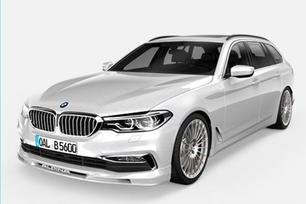
The BMW Alpina B5 Bi-Turbo is not actually a BMW. Not according to the German Federal Motor Transport Authority, at least.
Nope, the modifications applied by tuning house Alpina to the 5 Series are deemed so significant that if you open the bonnet and look inside the engine bay, you'll see that the BMW VIN has been struck through twice and an Alpina vehicle number stamped underneath it.
The B5 is not the first model to be recognised in this way, either; the German government has recognised Alpina as a seperate car manufacturer since 1983.
The B5 has other ‘B' siblings, too. There's the B3 S Bi-Turbo, which is based on the BMW 3 Series, the B4 S Bi-Turbo (the BMW 4 Series) and the B7 Bi-Turbo (I don't need to tell you what this is based on, right?) which I've reviewed, too.
So just what has Alpina done to this unsuspecting BMW 5 Series? Is it really worth the extra money? How does the B5 compare to an M5? Could it actually be superior? And did they really take the speed limiter off to let it warp-speed to beyond 300km/h?
Zeekr is making waves in Australia at the moment but it's not because of the car you see before you.
Nope, it’s the 7X mid-size SUV that’s captured a heap of attention and a whole lot of sales. In fact, of the 1832 sales the brand has managed over the first three months of 2026, just 54 were for the X.
But that was the old X and this is the new one. With more power, more performance, faster charging and a whole heap of pretty special equipment, especially for the small SUV segment.
So, is that enough to finally put the X on the map?
The Alpina B5 is a special car – more special than most people will ever give you credit for if you own one. Those that do know what an Alpina is will let you know; people will cross dangerously busy streets to talk to you about your car. Insanely fast, almost incomprehensibly comfortable and effortlessly powerful to drive.
It's a good thing in a small package, this Zeekr X, and there are a lot of things I like about it. In fact, the only sticking point for me is the price. But that's all about perspective. If you see this as a newcomer Chinese brand, then yes, there are a lot of more affordable options out there. But if you see it as a premium player, it's really a more affordable version of a Volvo.
Note: The author, Andrew Chesterton, is a co-owner of Smart As Media, a content agency and media distribution service with a number of automotive brands among its clients. When producing content for CarsGuide, he does so in accordance with the CarsGuide Editorial Guidelines and Code of Ethics, and the views and opinions expressed in this article are solely those of the author.
Interesting is the right word for it, because while it might be questionable that Alpina's changes to the exterior are aesthetic pleasing, they are definitely intriguing to those who aren't familiar with the brand.
First, there are those 20-spoke wheels. Alpinas have worn this style of wheel forever and they've become the most famous outward sign that this is not just another BMW. So don't under any circumstances take them off and replace them with anything else. You'd be run out of town by the Alpina mafia.
Yes, they're more painful to clean than a cheese grater (trust me, I know. And if you look closely at these images you can see the dirty bits I've missed), but if you really don't like them then perhaps it's a sign this car isn't for you.
Then there's the boot-lid spoiler. It's square and 1980s'-looking, it also appears a bit like it's been bought online and installed by a teenager, but again, this is another Alpina tradition and it suits the car's character perfectly.
All right, those pinstripes; they're known as the Deco-Set and are a hat-tip to the Alpina racecars of the 1970s and '80s. Again, don't take these off, your Alpina will drop through the centre of the Earth in value. These are also part-and-parcel of owning one of these cars. I'm not a massive fan of them.
But I'm all about that front spoiler, with the floating Alpina lettering that you can option in silver, high-gloss black or gold.
Inside, there are fewer Alpina additions, but they're nonetheless unmissable. There's the Alpina-badged steering wheel, and a new virtual instrument cluster, embossed headrests and illuminated door sills.
There's also the little numbered plaque on the centre console which proves its authenticity, ours was number 49. Out of how many? I don't know. But I do know Alpina produces only about 1700 cars globally a year. Rolls Royce does about 4000. So, you can rest assured your B5 is exclusive.
At almost 5m long, 1.9m wide and 1.5m tall, the B5 is a large saloon, but having recently reviewed the Alpina B7 it feels small in comparison. How does it drive? We're getting there.
The visual changes aren’t massive. This AWD version welcomes a couple of new exterior colours, including the 'Matt Khaki Green' of our test car. It also gets the two-tone black roof and there are new 20-inch alloy designs.
Elsewhere, it's the futuristic-style of design we’re used to which differentiates the X from its Volvo EX30 twin under the skin.
Inside, this is a seriously well-equipped and polished-feeling small SUV, and — unlike some of the newcomer brands to Australia — it all feels very high quality and well put together. And that includes the material choices.
I don’t even hate the fact that most of the functions are controlled via this screen, thanks to the little shortcuts glued to the home screen. I do, however, hate the fact that there’s no easy way to change the wing mirrors or shortcuts for toning down some of the safety stuff.
That aside, though, it’s a nice and high-quality feeling space.
Practicality is not really a BMW strong point no matter which model you pick. See, BMW mostly makes the car equivalent of uber-stylish and skin-tight active wear which looks good and performs brilliantly, but sometimes you just want pockets and a bit of room for your… um… bits and pieces.
So while there are two cup holders up front and two in the back, the bottle holders in the doors aren't huge, the centre console bin is on the small side, there's a hidy-hole in front of the shifter, the glove box is just a box for little more than gloves and there's no other great cabin storage options.
Legroom in the rear is good but not great, too - I'm 191cm tall and have about 30mm between my knees and the seat back in my driving position. Middle-seat passengers will also have to straddle the drive shaft hump in the floor. Headroom is restricted in the back, too (you could blame the sunroof) with my hair just skimming the headlining (I do have big hair).
Under that power tailgate, the B5's boot capacity is 530 litres which is 15L more than its big sister, the B7. There are two plastic storage areas either side of the luggage space for wet things. While there is one USB outlet in the front there aren't any in the rear.
You know you're in a small vehicle when you can't fit two large (not those crazy American-style jumbo cups, just normal coffee-shop takeaway) coffees in the cupholders, but so it is with the Zeekr X.
The small SUV's 4432mm length, 1836mm in width and 1566mm height doesn't leave much room to spread out up front. There's ample room for driver and passenger, of course, but we are talking about a small vehicle here.
Clever storage helps to mitigate that, though, especially the super-deep storage space in the centre console and the very clever fridge that separates the driver and passenger seats.
Weirdly, though, the space doesn’t feel overly tight in the back seat. We had a massive baby seat in there, and that fit without issue. And full size humans can genuinely get pretty comfortable. I'm 175cm, and I had enough knee and headroom.
In the boot, there’s 404 litres of volume with the rear seats upright and 1247 litres with them folded flat. And it’s worth pointing out this isn’t intended to be a family car, but there’s certainly enough space for the shopping... and a pram.
The BMW Alpina B5 lists for $210,000, making it only $10K more the BMW M5 which comes with almost identical features apart from the Alpina engineering to the engine and chassis.
Arriving standard is leather upholstery, four-zone climate control, nav, the Alpina embossed-headrests, a 10.25-inch display, digital radio, Alpina door sills, sunroof, proximity key, power front seats, 12-speaker Harman Kardon stereo, head-up display, Alpina virtual instrument cluster, heated front and rear seats, and the 20-inch Alpina wheels.
The test car I drove had been optioned with a limited-slip differential ($5923), steering-wheel heating ($449); soft-close function for doors ($1150); sunblinds ($1059); TV function ($2065) ambient air package ($575), and front-seat ventilation ($1454).
This is a small SUV with a LOT of stuff. There are two trims in the Zeekr X range – the entry-level rear-drive model is $48,900, drive-away, while the all-wheel drive version we've tested is $57,900 on the road.
The obvious comparison is to the Volvo EX30, which shares its platform with the Zeekr X through both brands' Chinese parent company Geely.
As of right now, the cheapest single-motor Volvo is $56,051, drive-away in NSW, or $49,990 plus on-roads, making the Zeekr version much, much cheaper.
Anyway, outside there are 19- or 20-inch alloys, though our test car is fitted with the optional 20-inch black alloys, paired with a black-with-red-highlights interior treatment, which adds $2000 to the price.
Ours is also fitted with the electric front doors which open or close at the push of a button, and back doors that unlatch, but don’t fully open, the same way, which adds another $2000.
Both trims also get heated and cooled front seats, and heating in the rear window seats, but this AWD version also adds a massage function for front seat riders.
There’s also wireless charging, a 13-speaker Yamaha sound system and — very cool, literally — is the little drinks fridge between the front seats in the AWD variant.
Tech is handled by a 14.6-inch touchscreen with Apple CarPlay and Android Auto and there’s a head-up display for the driver.
The Alpina B5 uses the same 4.4-litre V8 engine found in the BMW M5 (and also the B7). But, and it's a big but, the M5 makes 441kW and 750Nm, while the B5 outdoes it with 447kW and 800Nm. Admittedly, the B5's torque arrives at the 3000rpm mark, while the M5's is all there from 1800rpm.
How does the B5 beat it? Alpina installed its specially developed twin turbochargers and intercoolers, a high-performance cooling system, a reconfigured air intake set up and a different exhaust system.
The B5, though, is a tenth of a second slower to 100km/h compared to the M5 with a time of 3.5 seconds, but it will blast on to a top speed of 330km/h while the M5 is limited to 250km/h in regular form and 305km/h with the optional M Driver's package.
Both uses the same ZF eight-speed automatic transmission with identical gear ratios, and both are all-wheel drive.
The big news here is a more powerful rear motor – meaning you get more grunt whether you opt for the rear-wheel drive or this all-wheel drive.
In rear-drive form, that boosts your outputs from 200kW to 250kW, dropping the sprint to 100km/h to 5.6 seconds. In AWD guise, your new outputs are 365kW (up from 315kW) and 573Nm, and your sprint to 100km/h falls to 3.7 seconds.
The Alpina B5 needs petrol. By that, I mean it needs quite a lot of it if you want to enjoy it properly. What type of mileage does it get? Officially, it should use 11.1L/100km after a combination of urban and open roads, where as the M5 is set to 10.5L/100km.
That makes sense, the B5 produces more power and torque, and it's 85kg heavier than the M5 at 2015kg.
Our test car's trip computer was reporting 13.2L/100km after flying low over country roads and slow city piloting. The more time spent in the urban warfare that is the daily peak hour commute, the more that figure crept and hovered around the 15L/100km mark.
This is where it starts to get weird. The rear-drive Zeekr X is fitted with a 61kWh LFP battery, which can accept up to 230kW DC fast charging, taking you from 10 to 80 per cent charged in just 18 minutes. Total claimed range is 405km.
The flagship AWD, though, charges at a slower rate. It gets a 66kWh NMN battery and can only be charged at 150kW, meaning the same charge takes 30 minutes. Zeekr is promising a 415km driving range between charges.
Ok, stay with me here. For this next bit you'll need a fresh egg, a lounge chair, and it might be a good idea to have some plastic bags and carpet cleaner on hand.
First, in front of the lounge chair flatten out the plastic bag and place the egg on it. Next, sit down on the chair and very carefully rest the ball of your foot on the egg with as little pressure as humanly possible.
This is exactly how little force you need to apply to the go-pedal of the B5 to accelerate from a standstill to 60km/h in about five seconds.
If anything sums up the driving experience of the B5, it's that sense of effortlessness.
Stomp on that accelerator, and you'll be shot to 100km/h in 3.5 seconds, without a hint of broken traction thanks to the all-wheel-drive system.
The ride should have been terrible on 20-inch wheels shod in low-profile rubber (Pirelli P Zero 255/35 front, and 295/30 rear), but the Alpina-tuned air suspension is close to miraculous in the way it cushioned and censored the potholes out of Sydney's worst roads. Yes, it can be a touch floaty, particularly in the Comfort Plus setting, but this is benchmark-setting stuff for a comfortable ride.
Don't expect this beast to roar. Unlike the M5, the B5 gets its work done without deafening everybody around it. Sure, the B5's V8 sounds amazing when you push it, but it's not brash, not loud and not lairy. Buy an M5 or Mercedes-AMG E63s if you want to be heard half a block before you get home, but you won't get that with the B5 and its exhaust system.
The B5 also handles well, but I have to say the engagement factor is low. I piloted it effortlessly through the twists and turns of my country test circuit and roads which normally have me grinning like a maniac behind the wheel had me feeling a bit disconnected in the B5. That air suspension, the numb steering and pedal actions make it difficult to ‘feel' the road.
It's highways where the B5 is a king, but even at 110km/h there's the sense that this car is still fast asleep and won't get out of bed for anything less than 150km/h - making it perfect for Germany's autobahns, but maybe not for here in Australia.
Short answer? Pretty good, with some caveats.
I'm partial to a firmer ride. I find some Chinese car companies can feel like they get their suspension bits from Captain Snooze, such is the soft, pillowy ride served up. And to be honest, it makes me a little seasick at times.
The Zeekr is not like that. It has firmness dialled into the ride equation and can feel harsh at times, but also improves the drive experience, delivering connection and engagement at the cost of some sharpness on the wrong road.
It's also faster than the model it replaces, but it's also one of those cars in which the real-life feeling doesn't quite match the on-paper promise.
This thing serves up supercar speed, but it doesn't feel like it from behind the wheel. Instead, the acceleration - especially from a rolling start - feels potent, but not biblical.
From a standing start it pauses for a moment, almost like an internal-combustion vehicle might, before delivering a quick (but not stratospheric) flow of power. None of that is a bad thing, by the way. Who wants their small SUV to accelerate like a supercar?
It's otherwise an entirely pleasant drive. The cabin is serene and quiet and it's a small car that doesn't feel like one. There's nothing light or tinny about the drive experience, instead there's a heft and quality.
The Alpina B5 is based on the BMW 5 Series which had a five-star ANCAP rating awarded to it in 2017.
Along with the comprehensive suite of airbags, traction and stability control, there's an impressive array of advanced safety equipment. Coming standard is AEB (front and rear), evasive steering, front and rear cross-traffic warning, blind-spot alert and lane-keep assist. The Alpina B5 also comes with BMW's emergency call function.
For child seats you'll find two ISOFIX mounts and three top tether points across the rear row.
safety
If you're unfortunate enough to get a flat tyre, there's a puncture repair kit in the boot which works provided the hole isn't giant, as I've experience in the past with these systems.
The Zeekr X wears a maximum five-star ANCAP safety rating, earned in 2024, which means the long list of required active safety stuff is present and accounted for, all wrapped up in what Zeekr calls its 'Intelligent Driving Assist System'.
There are five cameras, five radars and 12 sensors, which is a crazy number for a car this small.
And this is also not a car in which I was desperately trying to figure out how to deactivate any of the active safety systems – save the overzealous over-speed warning – which is a win these days, too.
There are also seven airbags, including a centre front airbag.
The Zeekr X is fitted with ISOFIX anchors on the rear outboard seats and top tether anchorages for all rear seating positions.
The Alpina B5 is covered by BMW's three-year/unlimited kilometre warranty. Servicing is recommended every 12 months or 15,000km.
Zeekr's coverage is an underwhelming five-year, unlimited-kilometres, while the drive battery is covered for eight-years or 160,000km. There’s five years' of roadside assistance thrown in, too.
Service intervals are 20,000km or 12 months, with five years' of ownership setting you back a hefty $3072; an average of $614 per workshop visit.
There are currently 16 Zeekr dealers in Australia - two of which are 'pop-up' sites rather than full retail centres.
Multiple locations in Melbourne, Sydney and Brisbane with the ACT, Adelaide and Perth also covered. Others include Geelong and the Sunshine Coast but so far you're out of luck in Tassie or the NT.