What's the difference?
Close your eyes for me and try to picture a two-door vehicle with a thumping V8 engine, 575kW and a whopping 1000Nm on tap, a 0-100km/h burst of 3.2 seconds and a top speed of 335km/h. Does it look like a Ferrari in your head? Something else Italian, or German perhaps?
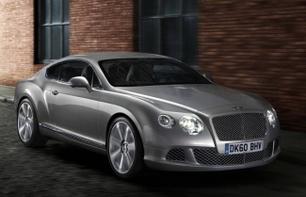
Well, what if I tell you it also weighs 2.5 tonnes. Are you imagining a luxe SUV with the rear doors removed, perhaps? Think again, because what we’re discussing here is arguably the very best of Britain (albeit German-owned), the all new and highly impressive Bentley Continental GT Speed.
Gone is the famous and fabulous W12 engine, never to return (Bentley was long the world’s biggest maker of 12-cylinder engines, henceforth it will make exactly none), to be replaced by the one and only power plant the company will now offer, in various tunes, in all of its ICE cars (yes, a Bentley EV is coming, of course).
All that torque isn’t just from the big 4.0-litre V8, it’s also an 'Ultra Performance Hybrid', which will allow you to drive up to 81km in fully silent electric mode, should you be so boring.
We flew to a posh and very private members-only race track in Japan to find it out if this really is, as Bentley suggests, the everyday supercar.
Lotus - it’s one of the most iconic names in the history of automobiles and was once Great Britain’s answer to Ferrari - on the road and the Formula One circuit.
But that was a long time ago, in the 1960s and ‘70s. Since then Lotus has been on a rollercoaster ride through various owners who put in various levels of investment, resulting in various degrees of success.
But through it all, Lotus has stayed true to the ethos of company founder, Colin Chapman - ‘simplify, then add lightness.’ It’s obviously a playful saying, but it spoke to the core elements of Lotus cars, agility and driving purity.
Lotus rarely worried about big, powerful engines and instead focused on creating the best-handling cars.
That was the past, though, because Lotus Cars is now owned by Geely, the Chinese automotive giant that also counts Volvo, Polestar, Zeekr and more under its control.
Geely’s vision for Lotus is very different to what has come before, with a future focused on building electric SUVs and sedans; such as the already released Eletre and Emeya.
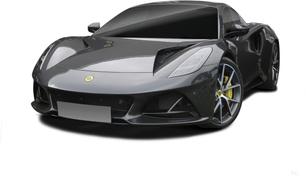
All of which is a very long way to get us to the car we’re actually testing - the MY24 Lotus Emira.
This is the last petrol-powered sports car from Lotus, and while it has been available already with a V6 engine, it has recently arrived with a Mercedes-AMG four-cylinder turbo.
Given its place in the grand scheme of things, the Emira not only needs to live up to the legacy of the iconic models that came before it, but also needs to lay the foundations for the brand’s electric future. Which is a lot of pressure for one car to carry…
Any fears Bentley was heading in the wrong direction by abandoning 12 cylinders for hybridisation (not that it had a lot of choice) should be totally salved by the Continental GT Speed. It is a hugely capable, fabulously luxurious and beautiful to behold grand tourer that deserves extra points for not being an SUV. It might just be the supercar you could drive every day, with no complaints.
Note: CarsGuide attended this event as a guest of the manufacturer, with travel, accommodation and meals provided.
If this really is the final petrol-powered Lotus sports car then it’s a sad day for fans of the brand and its history. But it’s also worthy of celebration because they have made a car that is genuinely impressive.
It may not be perfect, and it will have to fight hard to lure buyers away from Porsche, BMW and co. but for anyone who enjoys a dynamic, engaging and incredibly fun sports car the Emira should be on your short-list.
Alternatively, if you’ve always dreamed of buying a traditional Lotus sports car and haven’t got around to it until now, this is your last chance so don’t wait too long.