What's the difference?
Yes, you can drive your Bentley and keep your family. It's called compromise, or the Bentayga, Bentley's SUV.
The Bentayga my family has been living with is the Azure grade which promises to be even more comfortable and pleasant than the rest of the range.
Comfort is important and we'll cover the Bentayga's lavish details in time, but our mission first and foremost is to find out if the Bentayga makes a good family SUV.
The Mercedes-Benz Sprinter range of vans and cab-chassis models competes for buyers in the Light Duty (3501-8000kg GVM) segment of Australia’s highly competitive Heavy Commercial vehicle market.
In 2024 the German manufacturer expanded its diverse turbo-diesel van range by launching a full-electric variant called the eSprinter, which for the first time offered local buyers the opportunity to drive with zero tailpipe emissions.
We recently spent a working week with this unique offering to assess how competently it could fulfil the diverse job requirements of private tradie buyers and fleet operators.
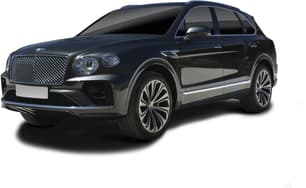
The Bentley Bentayga Azure may look a bit awkward and it surely isn't great value for money, but it is a true Bentley and a very good family SUV that not only provides terrific practicality but superb performance and comfort.
With the convenience of back-to-base charging the eSprinter would be well suited to last-mile logistics or other urban delivery roles, as its driving range is ample for many of these urban tasks with the added benefit of zero tailpipe emissions. However, at more than $100K it is a big spend (like its full-electric rivals) so only a thorough cost-benefit analysis can decide if it’s the right choice for your business.
You'd think of all automotive brands Bentley, with its beautiful swooping and powerful saloons, would be able to floor us with something just exquisite in SUV form. But right from the 2012 concept the Bentayga has struggled to stun the world with its design.
So, while there are Bentley family traits all over the Bentayga, from the intricate headlights and mesh grille, to the oval tail-lights and body which squats over the rear wheels, the overall design looks awkward to my eyes.
To me it appears the boxy design with the tall, flat roofline and elevated ride height favours practicality over the sleekness possessed by a lower, more coupe-like SUV.
I favour dark coloured clothes because it hides my shapes, creases and bulges, but these are the things you want to see in a car and our Bentley's 'Onyx Black' paint, despite being a beautiful colour with a blue hue added, make it a featureless blob in the sunlight.
A lighter shade or something outlandish like a turquoise or yellow would look amazing, and even better, upset your neighbours.
Let's look at the interior design which is lavish with all the quilted leather and Mulliner customisation, but lacks the modern look of many contemporary cabins with its smallish media screen and busy mosaic of buttons.
I like the little chrome plungers for the air vents, the winged styling to the dashboard and the stitched leather upholstery, but it's easy to spot parts that are shared by other members of the Volkswagen Group (which owns Bentley).
For example, there are the indicator and wiper stalks, as well as the steering wheel buttons, all from Audi. Surely Bentley should have its own crafted parts?
The interior colour scheme on our Bentayga is 'Beluga' (black) and 'Camel' (tan) and the Mulliner option split the colours with a cream tone.
From a family perspective the tan and black will hide dirt, although the cream will struggle. It's possibly the best leather on the planet, however, coming from cattle living high enough that their hides are unblemished by insect stings.
This is a substantial vehicle riding on a 3665mm wheelbase and spanning almost 6.0 metres in length (5932mm) and more than 2.0 metres in width (2020mm without mirrors), yet it has a tight kerb-to-kerb turning circle of only 12.4 metres.
And with the optional High Roof as fitted to our example it stands almost 3.0 metres tall (2867mm), so drivers need to be conscious of this extra dimension when accessing underground loading zones, driving under height-restricted bridges etc.
Its rear-wheel drive unitary chassis features simple and rugged McPherson strut front suspension paired with a De Dion-style rigid beam/leaf spring rear axle, along with four-wheel disc brakes and electrically assisted power steering.
There’s prominent use of unpainted dark grey plastic in external areas where bumps, scrapes and wear are usually inflicted, including the grille, front bumper, hubcaps, doorhandles, door mirror shells, side bump-strips and rear bumper.
The cabin design is spacious, neat and functional, with unique instrumentation which replaces the traditional tachometer with a gauge that monitors driving efficiency. There’s also a digital info screen that displays average energy consumption, battery charge, estimated driving range, gear selection and more.
Being shaped like a bus does nothing for the Bentayga's beauty but makes it spacious for cargo and roomy for people.
With its large doors and elevated ride height (the car can be lowered for easier access) it's great for families.
Our Bentayga is a five-seater, which is fine for my little family of four, but there are four- and seven-seat configurations available, too.
Second row legroom is exceptional, even for me at 189cm tall, and sitting behind my own driving position there's still plenty of room.
Headroom is also outstanding throughout. We could be a family that loves top hats, on our way to the top hat championships, and not have to remove our top hats. That's how good headroom and hat room is.
Sun blinds in the second row are vital in Australia, and the electric ones in the Bentayga raise and lower quickly, not just offering protection but also more privacy.
Storage is good throughout with big door pockets and five cupholders.
It seems the cabin space eats into the cargo area because the boot isn't overly large at 484 litres with all seats in place.
Buttons in the cargo area allow the rear of the car to be raised and lowered to make it easier to hoist items in the boot.
For devices there's a wireless phone charger up front along with USB ports in both rows.
With its hefty 2727kg kerb weight (largely due to the battery) and 4250kg GVM, the eSprinter has a sizeable 1523kg payload rating. It’s also rated to tow up to 2000kg of braked trailer but with its 5000kg GCM (or how much it can carry and tow at the same time) that big payload must shrink to only 273kg to legally tow its maximum trailer weight.
That’s only enough payload capacity to cater for the weight of a two-man crew and little more so it’s important to be aware of these numbers if you’re planning to tow this heavy (although we suspect few if any owners would do so).
The cargo bay with the High Roof option is enormous, with 2009mm from floor to roof allowing even tall people to stand without stooping. Its load volume is a cavernous 10.5 cubic metres.
The load floor, which is protected by a hard non-slip surface, is 3375mm long and 1732mm wide with 1350mm between the rear-wheel housings. This allow up to two Aussie pallets or up to four Euro pallets to be carried, secured using a choice of 10 load anchorage points which fold flush with the floor when not in use.
Cargo bay access is through a sliding kerbside door with a big 1260mm-wide opening and a pair of rear barn doors which can open to a full 270 degrees on each side to optimise access to forklifts and loading docks.
The walls and sliding door are neatly lined to roof height and large handles inside both door openings assist access. There’s also bright LED lighting plus handy storage pockets in each rear door.
Its spacious cabin provides a comfortable and efficient workspace. The fabric-trimmed bucket seats offer generous head and legroom for driver and passenger and the ample open floor space between them features a sturdy cradle in which to carry the charging cable (see image).
There’s also ample storage including a large bottle-holder and multiple bins in each door plus a full-width overhead shelf with a key-lockable security box and a central glasses holder.
The top of the dash has two cupholders on each side (so, four in total) plus a large compartment with clamshell lid in the centre equipped with a 12V socket and three USB-C ports. There’s another shelf in the lower dash on the passenger side, a quartet of cupholders in the centre console and yet another compartment hidden beneath the passenger seat.
Reviewing every type of car on the market provides a pretty good perspective, but when it comes to Bentleys we enter a realm where value-for-money often isn't as crucial as it is for more mainstream options.
The same goes for the price. Bentleys are among the most expensive cars in the world. So if, like me, you flinch at the thought of paying more than half a million dollars for an SUV, it may not be the car for us right now.
With that I can tell you the Bentley Bentayga Azure's list price is $475,000 and our car with all of its options comes to $515,000.
That's more money than any SUV from Mercedes-Benz and BMW costs. Even Range Rover can't quite reach that mark.
Only the likes of Aston Martin's DBX 707 and Lamborghini's Urus can match the price.
There are always bigger fish, though, and Rolls Royce's Cullinan swims in at $700,000, making the Bentayga's price seem quite reasonable.
Let's look at the standard features.
Coming standard on the Bentayga Azure are the prettiest LED headlights in the world. There are LED tail-lights, too, as well as a proximity key, roof rails and a panoramic glass roof, plus a hands-free tailgate.
Inside there's the 10.9-inch media screen, sat nav, wireless Apple CarPlay and wireless Android Auto.
The diamond quilting to the door trims is also standard and so are the Bentley sports pedals.
Many of these features are standard on lower grades in the Bentayga range, but the point in choosing the Azure is that many of the optional bundles on offer are fitted as standard here.
So, while leather upholstery is of course standard the 'Colour Specification' package gives you a choice of all interior colour combinations and an extended choice of hide colours.
The 'City Specification' brings extra safety tech like rear cross-traffic alert and a top view camera.
The 'Front Seat Comfort' specification adds 20-way power front seats, ventilation and massage as well as comfort headrests.
The 'Touring Specification' brings adaptive cruise control, a head up display, lane keeping assistance and 'Night Vision'.
And then the 'Sunshine Package' adds electric sun blinds, which are great for kids in the back.
Despite the multitude of standard packages there's plenty left to option on the Azure.
Our car was fitted with about a dozen options including piano black veneer ($5884), 22-inch alloy wheels ($4733), rear privacy glass ($2617), LED welcome lights ($2238), self-levelling wheel centre caps ($1208), a heated acoustic windscreen ($1094), luggage management for the boot ($937) and a heated steering wheel ($543).
Then there's Mulliner, Bentley's in-house customisation division which will personalise your Bentley.
The Mulliner custom features on our Bentayga Azure include the addition of an extra colour in the leather upholstery ($13,492), 'Honeycomb' stitching on the steering wheel ($5391) and contrasting stitching on the quilted areas of leather trim ($2688).
Best family features would have to be the privacy glass, temperature control in the second row and the rear sun blinds.
The second row also comes with a removable tablet which can be used to adjust the climate control, sunroof and media settings among other functions.
In the hands of children this is every parent's nightmare and there's a 100 percent chance of the tablet being lost forever, possibly on the motorway between Sydney and Canberra.
The local eSprinter range, which does not include a cab-chassis variant, offers a choice of van-based models comprising the MWB (Medium Wheelbase) with 81kWh motor for a list price of $104,313 and LWB (Long Wheelbase) with 113kWh motor for $121,041. This six-figure pricing is in the same ballpark as full-electric large van equivalents from Ford (E-Transit) and LDV (eDeliver 9).
Our test vehicle, finished in standard 'Arctic White', is the smaller MWB/81kWh model equipped with the optional High Roof (option code DO3) which adds almost half a metre (489mm) to its external height and $2392 (ex GST) to its price.
Its work-focused standard equipment includes 16-inch steel wheels with 225/75 R16 tyres and a full-size spare, DRLs and side marker lights, sealed cabin bulkhead with central window, electric-adjustable truck-style exterior mirrors, heated driver’s seat and exterior mirror, prestige leather-rimmed steering wheel with multiple remote control functions, colour 5.5-inch driver’s information display, reversing camera, front/rear parking sensors and tyre pressure monitoring to name a few.
The cabin also has an electronic parking brake, electric air-conditioning and heating plus multiple USB ports and 12V sockets. The latest 'MBUX' multimedia system features a large 10.25-inch touchscreen as central command offering voice activation, digital radio, wireless Apple/Android connectivity and more.
When Bentley stopped putting its W12 into the Bentayga this year I was unsurprised yet sad. The world is moving toward tighter fuel emissions but the twin-turbo petrol V8 in this Azure is still a beast.
The 4.0-litre turbo-petrol V8 is from the Audi family and I love it as much for its plentiful torque and superb acceleration as the deep rumble of its exhaust.
Making 404kW and 770Nm the V8 can lift and throw the 2.5-tonne Bentayga to 100km/h from a standstill in 4.5 seconds and onto a top speed of 290km/h. I reckon you could get it to 300km/h with the wind behind you.
Drive goes to all four wheels via an eight-speed transmission and a Torsen-type centre differential.
Default drive balance is 40/60 front to rear, with up to 70 per cent of power able to be sent to the front wheels and up to 85 per cent to the rear axle.
I don't think you'll be astounded to hear this powertrain uses a lot of fuel? Let's go there...
The eSprinter is powered by a single electric motor producing 150kW of power and 400Nm of torque. It’s mounted under the rear floor where it drives the rear wheels through a single-speed transmission.
This compact motor-trans unit shares underfloor space with an 81kWh lithium-ion battery that provides the motor’s energy. This battery occupies most of the underfloor between the front and rear axles and features a slimline design to optimise ground clearance.
Drivers have a choice of three drive modes comprising 'Comfort', 'Economic' and 'Max Range', plus different levels of energy recuperation using steering wheel-mounted paddles that adjust the intensity of regenerative braking.
The electric motor also features a ‘boost’ function which temporarily increases power output when fast acceleration or overtaking is required. The eSprinter’s maximum speed is capped at 120km/h.
Bentley says the Bentayga Azure with the V8 petrol engine will use an average of 11.4L/100km over a combination of open and urban roads.
But what happens if you live in the suburbs not far from the city and drive the Azure every day to do the school drop offs and trips to the shops and then take in some fun country roads? You use an average of 22.8L/100km according to the car's trip computer.
This is still not as high as I was expecting. I've driven V6-powered SUVs which use more than this under the same conditions.
That said, even when using as much fuel as Bentley says you should, an 85-litre fuel tank is only going to deliver an approximate 745km driving range.
Mercedes-Benz’s official driving range for the 81kWh eSprinter, based on combined WLTP testing, is up to 264km. When we collected the vehicle for our test, the battery was fully charged but the estimated driving range displayed was only 234km, or 30km less than the official figure.
The eSprinter’s towering height also stopped us accessing local charging infrastructure (located inside multi-storey car parks) so our test was conducted using the initial single charge. This included a mix of suburban and city driving best suited to electric van use and covered a total distance of 190km.
At the completion of our test, the dash display claimed average energy consumption of 29kWh/100km, with 25 per cent battery charge remaining and 63km of estimated range. So, based on these figures, the official WLTP range of up to 264km is credible.
The eSprinter comes standard with a Mode 3/Type 2 charging cable and the charging port is in the centre of the grille behind a spring-loaded flap displaying a three-pointed star badge.
Mercedes-Benz claims 11kW AC charging of the 81kWh battery from 10-80 per cent takes around eight hours while 115kW DC fast charging reduces that to around 32 minutes.
The Bentley Bentayga doesn't have a safety rating as like many extremely high-end cars it hasn't been assessed by ANCAP or Euro NCAP.
That said, the Azure grade comes standard with an armoury of safety tech including AEB (with turn assistance), lane keeping assistance, blind-spot warning, rear cross-traffic alert, evasive steering assistance, and adaptive cruise control.
Front and rear parking sensors are standard (and the most relied-upon feature I use daily), while exit warning saved my child and myself more than a few times from leaping out into the traffic on the school run.
There’s no ANCAP star rating for commercial vans above 3.5-tonne GVM but the eSprinter did score the maximum Platinum grade in ANCAP’s Commercial Van Safety Comparison in 2024.
It comes standard with six airbags, active distance assist (can automatically brake and accelerate in traffic), lane-keeping, multiple blind-spot monitoring, rear cross-traffic alert, tyre pressure monitoring, reversing camera, front/rear parking sensors, crosswind assist and many more.
The Bentayga is covered by Bentley's three-year/unlimited-kilometre warranty. Servicing is recommended every 12 months or 16,000km.
The good news is all new Bentley's have five years regular servicing included in the cost of the vehicle.
Then eSprinter comes standard with a five-year/250,000km warranty including 24/7 roadside assist for the same duration. There’s also a separate eight years/160,000km warranty covering the lithium-ion battery.
Scheduled servicing is every 12 months/40,000km whichever occurs first. Capped pricing applies to the first five scheduled services totalling $1920, or an average of $384 per service. Pre-paid service packages offer additional savings.