What's the difference?
Audi’s littlest and most affordable SUV, the Q2, has been updated with new looks and tech, but something else has snuck in with it. Or should I say roared in? It’s the SQ2, with a whopping 300 horsepower and a snarling bark.
So, this review has something for everybody. It’s for those who want to know what’s new for the Q2 in this latest update - those thinking of buying a cool-looking little SUV from Audi - and for those who want to wake their neighbours up and frighten their friends.
Ready? Let’s go.
What is it about single letters and performance cars?
BMW has M, Volkswagen has R, Lexus has F, and with only 23 choices left Hyundai opted for N - which stands for Namyang, site of the brand’s sprawling proving ground and development centre in South Korea, and Nurburgring, the famous German racing circuit where its performance cars are fine-tuned.
And like BMW M Sport, VW R-Line and Lexus F Sport, the Korean giant has N Line as a ‘lite’ option. Sporty models that add a little more punch and visual flair without crossing the line into hardcore hot-rod territory.
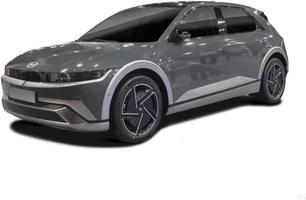
And this is one its latest examples, the pure-electric Ioniq 5 SUV in top-spec Epiq AWD trim and equipped with the N Line Option Pack as well as the tricky Digital Mirror Pack.
In this configuration it slots into the $90K price band, which means it has a lot to live up to in terms of performance, safety, driving dynamics, value and more.
So, stay with us to see if this premium five-seater is the kind of sporty EV SUV that gets your heart racing.
The Q2 is good value and great to drive – especially the SQ2. The exterior looks new, but the cabin feels older than the larger Q3, and most other Audi models.
More standard advanced safety tech would make the Q2 even more appealing, as would a five-year, unlimited-kilometre warranty. While we’re at it, a hybrid variant would make enormous sense.
So, a great car, but Audi could offer more to make it an even better proposition for buyers.
The Hyundai Ioniq 5 Epiq N-Line AWD leverages an electric powertrain’s best attributes brilliantly well.
It’s ultra smooth and comfortable with ample performance and great dynamics thanks in part to this car’s N Line spec.
Its price tag pits it against formidable competition from the German Big Three, Tesla and others. But it has what it takes in terms of quality and value to fight that battle. It’s an impressive machine.
This updated Q2 looks almost identical to the previous one and really the only changes are subtle styling tweaks to the front and back of the car.
The front air vents (they aren’t real air vents on the Q2, but they are on the SQ2) are now larger and pointier and the top of the grille is lower. Around the back, the bumper now has a similar design to the front, with those pointy polygons set wide apart.
It’s an angular little SUV, full of sharp-edged shapes like some kind of acoustical wall in an auditorium.
The SQ2 just looks more aggro, with its metallic-trimmed air vents and beefy quad exhaust.
The new colour is called Apple Green and it’s not really like any colour on the road – well not since 1951, anyway when this hue was hugely popular on everything from cars to telephones. It’s also very close to Disney’s “Go Away” green – look it up and then ask yourself if you should be driving a car that’s kind of invisible to the human eye.
I digress. Other colours in the range include Brilliant Black, Turbo Blue, Glacier White, Floret Silver, Tango Red, Manhattan Grey and Navarra Blue.
Inside, the cabins are the same as before, apart from the larger, sleeker media display, and there are some new trim materials, too. The 35 TFSI has silver inlays with a diamond paint finish, while the 40TFSI has aluminium door sills.
The Q2 has beautiful quilted Nappa leather upholstery, which goes beyond just covering the seats and to the centre console, doors and armrests.
All options offer well laid out and premium feeling cabins, but the disappointing part is that it's an older Audi design, which started out in the third-generation A3, launched in 2013, and still exists on the Q2, even though most Audi models, including the Q3, have the new interior design. This would bug me if I was thinking about buying a Q2.
Have you thought about a Q3? It’s not that much more in price, and it’s a tad bigger, obviously.
The Q2 is tiny, at 4208mm end to end, 1794mm wide and 1537mm tall. The SQ2 is longer at 4216mm long, 1802mm wide and 1524mm tall.
Is this a big hatchback or a mid-size SUV? I’m on team hatchback, while Hyundai defines the Ioniq 5 as an SUV.
But who cares? They’re just words and the fact is even after close to three years in market this five-seater looks fresh and contemporary thanks to its confident, chiselled lines and wide stance.
For car-spotters the N Line exterior treatment consists of flat aluminium badging, specific bumpers front and rear, with a deeper nose spoiler incorporating larger vents to cool the front brakes.
There’s also body-coloured cladding and side skirts, gloss black mirror caps, unique 20-inch alloy rims and a ‘hidden’ lighting signature across the top of the front bumper.
Inside there are Alcantara- and leather-appointed seats, an N Line-exclusive partially-perforated leather steering wheel, red contrast stitching and accents, and brushed metal covers on the pedals.
Add in the twin 12.3-inch screens display and this understated, super-cool interior comes to life with a sporty twist.
The Ioniq 5 scores points for a manual dial for audio control and an Ioniq 5 update earlier this year included a row of simple-to-use buttons for the ventilation system and another on the centre console for seat comfort settings and more. A sensible blend of physical and digital controls.
The Q2 is basically a current model Audi A3, but more practical. I’ve lived with the A3 Sedan and Sportback and while rear legroom is just as confined in those as it is in the Q2 (I’m 191cm and need to squish my knees behind my driving position) getting in and out is easier in the SUV, with its elevated ride height and taller door apertures.
The easier access helps enormously when helping kids into their child seats. In an A3 I need to kneel on the footpath to be at the right level to put my son into the car, but not with the Q2.
The boot space of the Q2 is 405 litres (VDA) for the front-wheel-drive 35 TFSI and for the SQ2 it’s 355 litres. That not bad, and the large hatch makes for a big opening, which is more practical than a sedan’s boot.
Inside, the cabin isn’t enormous, but rear headroom is good, thanks to the fairly high roof.
Cabin storage isn’t terrific, although the front door pockets are big and there are two cupholders up front.
Only the SQ2 has USB ports in the back for rear passengers, but all Q2s have two USB ports up front for charging and media – plus all have wireless charging for phones.
At just over 4.6m long, a little under 1.9m wide and a fraction more than 1.6m tall the Ioniq 5 comfortably fits the medium SUV profile.
But arguably its most significant dimension is a 3.0m wheelbase which is huge for a car of this size as evidenced by the wheels pushed out to the corners.
What that means is plenty of space inside, but before you can even get in the capacitive touch power door handles may look cool and help aero performance with their flush fit design but I’m not a fan. They’re hard to grip most of the time and don’t work well from an ergonomic point-of-view.
That said, once inside the front seats are adjustable six ways to Sunday and at 183cm tall I have plenty of head space and breathing room in general.
In terms of storage there are big pockets in the doors with room for bottles and thanks to the ‘shift-by-wire’ gear controller located on the steering column there’s room between the seats for a substantial console including a pair of cupholders, a slot for devices and a lidded tray (which doubles as a centre armrest) with that whole rear section able to swing up to allow access to a large lower shelf underneath.
In fact, the entire console unit easily slides fore and aft to liberate more legroom for the centre rear position. There’s also an oddments cubby in the lower part of the dash and a decent glove box.
Then, for connectivity and power there are three USB-C sockets (one in the dash switchable to streaming), a wireless device charging pad and a 12-volt outlet.
In the back that long wheelbase comes into its own. Sitting behind the driver’s seat set for my position I have loads of foot, leg and headroom.
Storage runs to door pockets with room for bottles, a fold-down centre armrest with a pair of cupholders, there are netted map pockets on the front seat backs and pull-up sun shades on the rear windows.
There are controls for the front passenger seat on the inner edge of the front passenger seat backrest which allows rear seaters to adjust its position. Thoughtful.
For power there’s a pair of USB-C sockets and individual ventilation controls in the back of the B-pillars is welcome.
Then, not only is the electrically-adjustable rear seat split 60/40 in the backrest, it’s in the cushion, as well, which adds extra flexibility in terms of a balance between rear passenger space and room in the boot.
The boot is generous at 527 litres (VDA) with the rear seat upright and 1587L when it’s folded down.
There’s also a handy 24L ‘frunk’ under the bonnet, a decent portion of which is devoted to the (included) charging cable.
Interestingly, the Ioniq 5 AWD is rated to tow a 1600kg braked trailer with a trailer pre-wiring package standard.
There’s a repair/inflator rather than a spare tyre, which is never a good thing, but there is a ‘smart’ power tailgate and a ‘Vehicle-to-Load’ function that allows you to power and/or charge three-pin appliances from the car. Handy.
The Q2 entry grade is the 35 TFSI and it lists for $42,900, while the 40 TFSI quattro S line is $49,900. The SQ2 is the king of the range and lists at $64,400.
The SQ2 has never been to Australia before, and we’ll get to its standard features in a moment.
Aussies have been able to buy a 35 TFSI or 40 TFSI since the Q2 arrived in 2017, but now both have been updated with new styling and features. The good news is the prices have only gone up by a few hundred bucks, compared to the old Q2.
Standard on the 35 TFSI are LED headlights and taillights, LED DRLs, leather seats and steering wheel, dual-zone climate control, Apple CarPlay and Android Auto, eight-speaker stereo with digital radio, front and rear parking sensors and a rear-view camera.
That was all standard on the previous 35 TFSI, but here’s what’s new: an 8.3-inch media screen (the old one was seven inches); a proximity key with push button start (great news); wireless phone charging (brilliant), heated exterior mirrors (more helpful than you’d think), ambient interior lighting (aww… pretty); and 18-inch alloys (heck yes).
The 40 TFSI quattro S line adds sports front seats, drive-mode selection, a power tailgate, and paddle shifters. The previous one had all that, too, but this new one has the sporty S line exterior body kit (the previous car was just called Sport not S line).
Now, the 45 TFSI quattro S line may appear not to get much more than the 35 TFSI, but the extra money is getting you more grunt and an awesome all-wheel-drive system – the 35 TFSI is front-wheel-drive only. If you love driving and can’t afford the SQ2, then $7K extra for the 45 TFSI is absolutely worth it.
If you have saved all your pennies and the SQ2 is what you’re zeroing in on, then here’s what you get: Metallic/pearl effect paint, 19-inch alloys, matrix LED headlights with dynamic indicators, the S body kit with quad exhaust, sports suspension, Nappa leather upholstery, heated front seats, 10-colour ambient lighting, stainless-steel pedals, auto parking, a fully digital instrument cluster, and a 14-speaker Bang & Olufsen stereo.
Of course, you get an incredible high-output four-cylinder engine, too, but we’ll get to that in a moment.
It shows how far the Hyundai brand has come over its close to 40 years in the Australian new-car market that one of its five-seat SUVs wearing a price tag in excess of $90K doesn’t knock the Earth off its axis.
But a sticker price of $91,300, before on-road costs, does apply the pressure because it puts this primo Ioniq 5 Epiq N Line AWD in the same orbit as versions of the Audi Q4 e-tron, BMW iX3, Mercedes-Benz EQB, Tesla Model Y and Volvo’s XC40 Recharge.
In fact, our test car’s price includes the N Line Pack which is technically a $2500 option and its digital mirrors add a further $3000 for an as-tested price of $94,300, before on-road costs.
So, you should rightfully expect a handsome standard equipment list and this full-fat Ioniq 5 doesn’t disappoint.
Aside from the safety and performance tech we’ll get to shortly this car includes 20-inch alloy rims, all LED exterior lights (with auto LED projection headlights), dual-zone climate control, power driver and front passenger seats (heated/ventilated), heated rear seats, ambient lighting, a head-up display, wireless Android Auto and Apple CarPlay, Bose eight-speaker audio, digital radio, built-in nav and voice control for key functions.
There’s also Alcantara- and leather-appointed seat trim, BlueLink connected car services (with a five-year complimentary subscription), configurable ambient lighting, wireless device charging, a fixed glass roof, a heated steering wheel, heated and power-folding exterior mirrors, auto rain-sensing wipers, keyless entry and start, and ‘Remote Smart Parking Assist’.
That last one allows you to start and move the car forwards and backwards remotely (via the key) to insert it into or extract it from tight parking spots… or just impress your friends.
Suffice it to say the Ioniq 5 Epic N Line AWD stands up well against its competitors when it comes to included features for the money.
There are three grades and each has a different engine.
The 35 TFSI has a new 1.5-litre four-cylinder turbo-petrol engine making 110kW and 250Nm; the 40 TFSI has a 2.0-litre turbo-petrol four making 140kW and 320 Nm; and the SQ2 has a 2.0-litre turbo-petrol as well, but it puts out a very impressive 221kW and 400Nm.
The 35 TFSI is front-wheel drive, while the 45 TFSI quattro S line and SQ2 are both all-wheel drive.
All have a seven-speed dual clutch automatic transmission – nope you can’t get a manual. There are also no diesel engines in the line-up.
I drove all three cars and, from an engine perspective, it’s like turning the ‘Smile Dial’ up from Mona Lisa in the 35 TFSI, to Jim Carrey in the SQ2, with Chrissy Teigen in between.
The Ioniq 5 Epiq AWD is powered by a permanent magnet synchronous electric motor on each axle, both powerful, but the rear unit packs a bigger punch.
And combined peak outputs of 239kW and 605Nm are substantial with especially the latter delivering eye-widening acceleration.
Drive goes to all four wheels via a single-speed, reduction gear auto transmission on both axles. And a ‘Disconnector Actuator System’ is able to disengage the front wheels to reduce drag losses from the front motor and improve energy efficiency.
Audi engines are superbly modern and efficient – even its monster V10 can shut down cylinders to save fuel, and so can the new 1.5-litre four-cylinder engine in the 35 TFSI. Audi says that over a combination of urban and open roads, the 35 TFSI should use 5.2L/100km.
The 40 TFSI is thirstier at 7L/100km, but the SQ2 demands a bit more at 7.7L/100km. Still, not bad.
What’s not good is the lack of a hybrid, PHEV or EV variant of the Q2. I mean the car is small and ideal for the city, and therefore a perfect candidate for an electric version. Not having a hybrid or EV is why the Q2 model range doesn’t score well for its overall fuel economy.
The Ioniq 5 Epiq AWD is powered by an 84kWh liquid-cooled lithium-ion battery, borrowed from the high-performance Ioniq 5 N.
Thanks to 800-volt compatibility it can accept a 350kW DC charge which translates to an up to 80 per cent charge time of around 18 minutes, which expands to just over an hour using a more typical 50kW charger.
Connect to AC at the Ioniq 5’s maximum 10.5kW capacity and quoted charge time is just over six hours.
Official energy consumption on the combined (urban/extra-urban) cycle is 19kWh/100km and claimed range is a useful 495km.
Over a mix of urban, suburban and freeway running on test we saw a real-world average of 16.8kWh/100km, which is impressive for a car with this much performance potential.
When it comes to the driving part, Audi can almost do no wrong – everything the company makes, whether it’s low powered or rip-your-face-off fast, has all the ingredients for engaging driving.
The Q2 range is no different. The entry-grade 35 TFSI has the least grunt and, with its front wheels pulling the car along, it’s the only one in the family that’s not blessed with all-wheel drive, but unless you’re doing laps at a track you’re not going to be wanting more power.
I drove the 35 TFSI for more than 100km on the launch, through the country and into the city, and in all situations, from overtaking on highways to merging and slow traffic, the most affordable Q2 performed well. That 1.5-litre engine is responsive enough and the dual-clutch transmission changes swiftly and smoothly.
Superb steering and good visibility (although that rear three-quarter view is slightly obstructed by the back pillar) makes the 35 TFSI easy to drive.
The 45 TFSI is a good mid-point between the 35 TFSI and the SQ2 and comes with a very noticeable bump in oomph, while the extra traction from the all-wheel drive is a reassuring addition.
The SQ2 isn’t the hardcore beast you might think it is – this thing would be super easy to live with daily. Yes, it has firm sports suspension, but it’s not overly hard, and that engine, which nudges almost 300 horsepower, doesn’t feel like a Rottweiler on the end of a leash. If anything, it’s a Blue Heeler that loves to run and run, but is happy to take it easy and get fat.
The SQ2 is my pick of the bunch, and not just because it’s quick, agile, and has an intimidating growl. It’s also comfortable and luxurious, with sumptuous leather seats.
In terms of straight line performance we’re talking 0-100km/h in a tick over 5.0 seconds and I see anything in the five-second bracket as properly quick.
With more than 600Nm of peak pulling power at your disposal there’s always plenty of pulling power for efficient in-traffic moves and safe highway overtaking.
The shift-by-wire gear selector on the steering column takes some getting used to but once you’re in tune with it, it’s surprisingly convenient, especially during slow speed parking or turning manoeuvres.
There are multiple modes - ‘Eco’, ‘Normal’, ‘Sport’ and ‘Snow’. Sport mode spices things up a bit with more urgent responses and the ‘HTrac’ AWD system uses multiple sensors to manage potential wheelspin and optimise drive in wet conditions or on loose dirt surfaces.
Suspension is by struts at the front and multi-links and the rear and the Ioniq 5 in this configuration is ultra-smooth and comfortable.
Even hitting pretty aggressive speed bumps and ruts in the road and the car soaks them up without fuss. You’re used to EVs being a little harsh in terms of ride compliance thanks to their relative weight, but that’s not the case here.
As part of a model upgrade introduced earlier this year Hyundai says it undertook a “comprehensive revision to the suspension tune”, which includes high-performance dampers on this N Line. And despite low-ish profile (255/45) Michelin Pilot Sport EV tyres on the 20-inch rims it remains comfortable and quiet.
The upgrade also included body reinforcements in the B- and C-pillar, door surrounds and under the body for a stiffer platform overall.
That pays off in the dynamics. Despite its 2.1-tonne weight the Ioniq 5’s steering is accurate and nicely weighted. It doesn’t feel lumbering or ponderous despite its relative heft.
The physical brakes are ventilated discs front and rear with regenerative available through four levels, the most aggressive setting being ‘i-Pedal’ which allows single-pedal driving.
It will slow the car to a full stop, harvesting the most energy possible in the process, although you might need a dab on the brake pedal if things are tight.
Miscellaneous observations include a 12m turning circle, so be ready for three-point turns where you didn’t think you’d have to.
Hyundai's (and Kia’s) default over-speed warning is present in full-force taking clicks through multiple screens to switch off and avoid its incessant audible alarm saying you've exceed what the car believes is the posted limit (every time you restart the car).
The recently released Tucson Hybrid features a short-cut function to do away with this issue and it would be welcome here.
The CPU underpinning the multimedia system is more powerful and response is speedy without a hint of lag.
And the camera based ‘mirrors’ take some getting used to. For many, they’re the answer to a question no one was asking. I mean, conventional mirrors work pretty well and any aero benefit from the smaller camera units has to be modest. But once you’re in tune with them the hi-def screens are excellent.
A flip of the switch on the interior rear view mirror allows you to side-step tall heads or loads in the back of the car but minimal depth of field is also (visually) awkward at first.
The Q2 was given the maximum five-star ANCAP rating when it was tested in 2016, but by 2021 standards it is light on advanced safety tech.
Yes, AEB with pedestrian and cyclist detection is standard on all Q2s and the SQ2, and so is blind-spot warning, but there’s no rear cross traffic alert or reverse AEB, while lane-keeping assistance is only standard on the SQ2, along with adaptive cruise control.
For a car that will most likely be purchased by younger people, it doesn’t seem right that they’re not being protected as well they would be in more expensive Audi models.
For child seats, there are two ISOFIX points and three top-tether anchor mounts.
A space-saver spare is under the boot floor.
The Ioniq 5 received a maximum five-star ANCAP score from assessment in 2021, receiving its highest scores for adult and child occupant protection and the on-board safety assist systems.
The Ioniq 5 stacks up well relative to its competitors when it comes to safety. In fact, there’s so much crash avoidance tech on-board, courtesy of the Hyundai ‘SmartSense’ active safety suite, it would be straight up boring to list it all, but the highlights include AEB (with car-to-car, pedestrian and cyclist detection as well as junction turning and crossing functions), blind-spot monitoring and collision avoidance, lane keeping assist and lane departure warning, rear cross-traffic alert and rear AEB as well as active cruise control (with stop and go).
There are even more assists, warnings, monitors and alerts, but it’s important to note they (almost) all operate with relative subtlety. I did switch off the steering assist/lane-keeping functionality when it became confused and overly intrusive on twisting city curves.
If a crash is unavoidable, there are seven airbags on-board including a front centre bag to minimise head clash injuries in a side-on impact, as well as ‘Automatic Collision Notification’ and an emergency SOS call function operated through the Bluelink system.
For baby capsules/child seats there are three top tether points across the second row with ISOFIX anchors in the outer positions.
The pressure for Audi to move to a five-year warranty must be hugely intense, with Mercedes-Benz offering one, along with pretty much every other mainstream brand. But for now, Audi will only cover the Q2 for three years/unlimited kilometres.
As for servicing, Audi offers a five-year plan for the Q2 costing $2280 and covering every 12-month/15000km service over that time. For the SQ2, the cost is only a fraction higher at $2540.
Hyundai covers the Ioniq 5 with a five-year/unlimited-km warranty, which is the mainstream market norm, with a separate eight-year/160,000km warranty for the drive battery; also an expected term.
Roadside assistance and sat-nav updates are renewed annually if the vehicle is serviced at an authorised Hyundai dealer.
Service interval is two years/30,000km which is appropriate for an EV given its relative mechanical simplicity and a ‘Lifetime Service Plan’ locks in scheduled maintenance costs for the life of the vehicle.
Service cost for the first five years is $1220, with each of the two services required in that time coming in at $610. Competitive for an EV in this part of the market.