What's the difference?
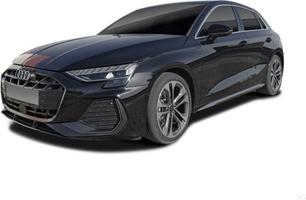
In a world where car upgrades often feel like saying, “Can I upsize that?”, it’s refreshing to hop into the updated Audi S3 Sportback.
The flagship RS 3 may still be the holy grail of hot hatch dreams, but with boosted engine outputs and upgraded tech, the S3 is stepping up.
Is the S3 Sportback the smarter pick over pricier rivals? It delivers serious performance and polish without stretching into RS 3 territory. With fierce competition in the segment, let’s see what this contender brings to the table.
Believe it or not, the McLaren 540C is an entry-level model. But you won't find anything remotely resembling rubber floor mats, steel wheels, or cloth seats here. This is a 'base' car like few others.
Revealed in 2015, it's actually the cornerstone of McLaren's three-tier supercar pyramid, being the most affordable member of the Sport Series, with the properly exotic Super Series (650S, 675LT and now 720S), and pretty much insane Ultimate Series (where the P1 hypercar briefly lived) rising above it.
So, how has this British upstart managed to build a world-beating supercar brand so quickly?
Only a few years ago, McLaren meant nothing to anyone outside the octane-infused world of motorsport. But in 2017, it's right up there with aspirational sports car big guns like Ferrari and Porsche, both of which have been producing road cars for close to 70 years.
So, how has this British upstart managed to build a world-beating supercar brand so quickly?
Everything you need to know to answer that question resides inside the stunning McLaren 540C.
The updated Audi S3 Sportback is a fun-sized dynamo with impressive outputs and athletic road manners. It’s missing a few premium features, but its compact size paired with a gutsy engine makes it a compelling option for drivers who don’t want to compromise on performance (just space).
The 540C is desirable on so many levels. Its dynamic ability, blistering performance, and stunning design make the cost of entry a value-for-money ticket. And the refreshing thing is, choosing a McLaren, with its focus on function and pure engineering, sidesteps the wankery that so often goes with ownership of an 'established' exotic brand. We absolutely love it.
The S3 Sportback may be a small car, but its S design features, like the stylised blackout grille, matrix LED headlights, and 19-inch alloys with red brake calipers, give it a distinctly athletic and fun-loving vibe. It’s compact, but definitely not diminutive and carries serious road presence. It’s hot hatch meets fun-size.
Inside, the S3 looks fabulous. Integrated ambient lighting, a sharp dashboard treatment and a driver-focused cockpit all lend it a premium feel.
The front seats look properly sporty with their integrated headrests, and the quilted Nappa leather upholstery feels great, especially with the eye-catching red contrast stitching.
As for technology, it’s as high-end as you’d expect with a 10.1-inch touchscreen multimedia display and 12.3-inch digital instrument cluster taking centre stage.
The only drawback? No sunroof. Combined with the black headliner and compact cabin, it can feel a little gloomy at times. Still, it’s a cabin you’ll enjoy spending time in.
In 2010 the recent rise (and rise) of McLaren Automotive really began, when its design director, the hugely respected Frank Stephenson, started to send things in a compelling direction.
He says McLarens are 'designed by air' and that intricately sculpted, wind-tunnel-driven approach to supercar beauty is clear in the 540C's shape.
It's aimed at so-called everyday supercars like the Audi R8, and Porsche 911 Turbo, yet it incorporates all the subtle aero tricks that define the brand's dynamic personality.
A serious front spoiler and a mix of large intakes low in the nose create a delicate balance between downforce and corridors for cooling air.
The dihedral design doors swinging up to their fully open position is a camera phone attracting, jaw dropping, traffic-stopper.
Broad strakes down the side, standing proud of the main bodywork, are reminiscent of a formula one car's turbulence reducing barge boards, and giant intake ducts channel air through to the radiators in the cleanest, most efficient way possible.
And the look is suitably spectacular. You could hang the dramatically carved doors in a contemporary art museum.
Barely noticeable flying buttresses extending from the rear of the main roofline make a big contribution to downforce, cooling and stability with a minimal drag penalty.
There's a delicate lip spoiler on the trailing edge of the main deck, and a giant multi-channel diffuser proves air flow under the car is just as carefully managed as that going over it.
But the 540C doesn't lack traditional supercar drama. The dihedral design doors swinging up to their fully open position is a camera phone attracting, jaw dropping, traffic-stopper.
The interior is simple, striking and single-mindedly driver-focused. The chunky wheel is completely unadorned, the digital instruments are crystal clear, and the seats are the perfect combination of support and comfort.
The vertical 7.0-inch 'IRIS' touchscreen is cool to the point of minimalism, managing everything from audio and nav, to media streaming and air-con, with low-key efficiency.
Like most hatches, the front row enjoys the most space. While it’s cosy, it never feels cramped. The seats are firm yet comfortable, thanks to their adjustability and expandable under-thigh supports. Access is fairly easy with wide door apertures, though the low seating position might earn a few grunts, especially from taller folks.
Storage up front is well sorted, with a glove box, a small centre console, a dedicated phone cradle and a couple of cup and bottle holders. It’s about what you'd expect for a car this size, but it's enough to keep things tidy.
There are plenty of charging options, with two USB-C ports in each row and a wireless charging pad up front.
The multimedia system is intuitive and easy to use. The touchscreen is responsive, and wireless Apple CarPlay connected without fuss and stayed connected all week. Wireless Android Auto is available, too.
Built-in sat nav is clear, and I love the way directions pull through to the digital instrument panel. The Sonos sound system? Pretty darn good. My son and I had more than one mini-concert on the school run.
As for the rear row, it definitely reminds you this is a small car. At 168cm, I found it on the cramped side of cosy and my husband just laughed when I asked him to try it! The wheel arch also cuts into the door aperture, making access a little awkward. Best to think of it as occasional adult seating. But given the size, that’s no surprise.
Amenities in the back are decent with a couple of map pockets, cup and bottle holders, as well as a fold-down armrest, those USB ports and rear temperature control (but curiously, no fan control). The seats are comfortable enough, but space is limited. Realistically, it’s best suited for two passengers, not three.
Boot space is quite practical. The wide opening and manageable load lip height make it easy to slide items in and out. It offers 325L of space, less than its key rivals, but expands to 1145L with the rear seats folded flat. The handy 40/20/40 split also adds versatility. Under the boot floor, you’ll find a tyre repair kit.
There are some cursory concessions to practicality… like a glovebox, a single cupholder under the dash at the leading edge of the centre console, a small bin between the seats, housing multiple USB outlets, and other storage options here and there.
The latter includes a shelf at the top of the bulkhead behind the seats, marked with a specific label saying (words to the effect of) 'don't put stuff here', but that's more about objects flying forward in a high-G deceleration, which in this car is more likely to be the result of hitting the brakes, rather than a crash.
But the 'big' surprise is the 144-litre boot in the nose, complete with light and 12 volt power outlet. It easily swallowed the CarsGuide medium sized, 68-litre hard shell suitcase.
In terms of getting in and out, make sure you've done you warm-ups because frankly it's an athletic challenge to maintain composure and get the job done either way. Despite best efforts, I hit my head a couple of times, and aside from the pain it's worth pointing out that being a follicularly-challenged person I'm forced to display abrasions in full public view.
The A3 Sportback comes in three trim levels, with the S3 technically sitting in the middle, just below the performance-focused RS 3. It's priced from $78,800, before on-road costs, and it shares the same platform and underpinnings as the Volkswagen Golf R. Surprisingly, our test vehicle isn’t significantly more expensive than its Golf R rival which comes in at $70,990 MSRP.
That makes it a more affordable option when compared to premium rivals like the BMW M135 xDrive which starts at $83,600 MSRP and the Mercedes-AMG A35 which comes in at $89,700 MSRP.
The update sees engine outputs improve with it gaining 17kW and 20Nm of torque, resulting in a total of 245kW and 420Nm.
Feature highlights include 19-inch alloy wheels, red brake calipers, electrically-adjustable and heated front seats (with expandable under-thigh support), rear privacy glass, quilted Nappa leather upholstery and 'S Sport' suspension with damper control which lowers the ride height lowered by 15mm.
The updated technology is well-rounded and now comes with wireless Apple CarPlay and Android Auto. There's also three-zone climate control, a 10.1-inch touchscreen multimedia display, a 12.3-inch digital instrument cluster, digital radio, four USB-C ports, a wireless charging pad, built-in satellite navigation and a 15-speaker Sonos 3D sound system.
Still, despite its premium hot hatch status, this grade skips a few luxury touches. Ventilated front seats, a heated steering wheel, heated rear outboard seats and a sunroof are all missing. The BMW M135 xDrive, notably, includes all of these as standard.
Even the powered tailgate with kick-functionality is an optional extra here, adding $660 to the price. At this level that should be standard.
At $331,500, we reckon the McLaren 540C is a supercar bargain. For just on $140k less than a Ferrari 488 GTB it delivers equivalent visual drama, and isn't far behind on speed and dynamic ability.
Standard kit runs to climate control air con, an alarm system, cruise control, remote central locking, LED headlights, tail-lights and DRLs, keyless entry and drive, a limited-slip differential, leather steering wheel, power folding mirrors, four-speaker audio, and a multi-function trip computer.
'Our' car featured close to $30,000 worth of options; headline items being the 'Elite - McLaren Orange' paint finish ($3620), a 'Sport Exhaust' system ($8500), and the 'Security Pack' ($10,520) which includes front and rear parking sensors, a reversing camera, alarm upgrade and a vehicle lifter that raises the front of the car an extra 40mm at the push of a column stalk. Very handy.
And the signature orange shade follows through with orange brake calipers peeking out through the standard 'Club Cast' alloy rims, and similarly coloured seatbelts inside.
The S3 Sportback wears the quattro badge proudly, meaning it’s all-wheel drive and it pairs a tweaked seven-speed automatic transmission with a 2.0-litre turbocharged, four-cylinder petrol engine.
This update brings a bump in performance over the previous model, including the addition of a rear torque splitter. Power is now up to a gutsy 245kW and 420Nm of torque, launching the S3 from 0 - 100km/h in just 4.7 seconds. That’s proper hot hatch territory.
Aside from you and a passenger, the most important thing sitting between the 540C's axles is the 3.8-litre (M838TE) twin-turbo V8.
Developed in collaboration with British high-tech engineering specialist, Ricardo, McLaren's used it in various states of tune across different models, including the P1, and even in this 'entry-level' spec it produces enough power to light up a small town.
In 540C trim, the all-alloy unit delivers 397kW (540 metric horsepower, hence the model designation) at 7500rpm, and 540Nm from 3500-6500rpm. It uses race-derived dry sump lubrication, and a compact flat plane crank design, favoured by Ferrari and others in high-performance engines.
While vibration damping can be an issue with this configuration, it allows a much higher rev ceiling relative to the more common cross plane arrangement, and this engine screams up to 8500rpm, a stratospheric number for a road-going turbo.
The seven-speed 'Seamless-Shift' dual-clutch transmission sends drive exclusively to the rear wheels and comes from Italian gearbox gurus Oerlikon Graziano. It's been progressively refined and upgraded since its first appearance in the MP4-12C in 2011.
The S3 Sportback has an official combined fuel consumption figure of 7.9L/100km and a 55-litre fuel tank, giving it a theoretical driving range of up to 696km.
Its key rivals hover around similar numbers, so it's right on the mark for the segment. After a mix of long-distance drives and my usual urban errands, my real-world figure came in at 8.0L/100km - very close to the claim, which I’m pretty happy with.
McLaren claims 10.7L/100km for the combined (urban/extra urban) fuel economy cycle, emitting 249g/km of CO2 at the same time.
For the record, that's six per cent better than the Ferrari 488 GTB (11.4L/100km – 260g/km), and if you take it easy on a constant freeway cruise, you can lower it even further.
But most of the time, we, ahem, didn't do better than that, averaging 14.5L/100km via the trip computer in just over 300km of city, suburban and freeway running.
The S3 Sportback sounds as mean as it looks, and it delivers on that promise with effortless grunt. Acceleration is immediate, with plenty of power on tap when you need it. It’s just fun all around.
The lowered sports suspension and wide tyres do bring some extra noise into the cabin, even at lower speeds. You might find yourself repeating things to rear passengers now and then, but it never feels overwhelming.
Steering and suspension are on the firmer side, so yes, you’ll feel the bumps but the payoff is sharp, responsive handling. Quick lane changes and winding coastal roads are where this car shines.
Visibility is about what you’d expect from a low-slung hot hatch. The pillars don’t obstruct the view, but sitting beside a towering SUV at the lights can make you feel a bit... compact.
Cornering is a strong suit, thanks to the car’s wide stance and AWD system. It feels confidently planted in most conditions. That said, I noticed the occasional wobble through the rear frame on rough sections in heavy rain.
Its compact size makes parking a breeze, especially with the help of multiple sensors. The reversing camera is crisp, but at this price point, the lack of a 360-degree camera view feels like a missed opportunity.
The best word to describe driving this McLaren is orchestration. The 540C's dynamic elements flow seamlessly together to transform its operator into a conductor guiding a well-honed mechanical orchestra through an energetic concerto.
And slipping (carefully) over the carpeted bulkhead into the driver's seat is like dropping into an ergonomic masterclass. It feels like you're putting the car on, rather than getting into it.
Like all other current McLarens, the 540C is constructed around a one-piece, carbon-fibre tub, which it calls MonoCell II. It's super stiff, and just as importantly, light.
McLaren quotes a dry weight (no fuel, lubricants, or coolant) for the 540C of 1311kg, with the kerb weight a stated 1525kg (including a 75kg passenger). Not featherweight, but with this kind of power sitting a few centimetres behind your head, it's not a lot.
The engine sounds brilliantly guttural, with lots of exhaust roar managing to find a way past the turbos.
A sophisticated launch control system means zero to licence loss is achieved in a flash (0-100km/h – 3.5sec), with jail time lurking if you ever decide to explore the 540C's 320km/h maximum velocity. And in case you're wondering, it'll blast from 0-200km/h, in just 10.5sec.
The engine sounds brilliantly guttural, with lots of exhaust roar managing to find a way past the turbos. Maximum torque is available across a flat plateau from 3500-6500rpm, and mid-range punch is strong. However, the 540C is anything but a one-trick pony, or is that 540 ponies?
The double wishbone suspension, complete with the adaptive 'Active Dynamics Control' system lets you channel all that forward thrust into huge cornering speed.
The switch from Normal, through Sport to Track progressively buttons everything down harder, and an ideal weight distribution (42f/58r) delivers fantastic agility.
Feel from the electro-hydraulic steering is amazing, the fat Pirelli P Zero rubber (225/35 x 19 front / 285/35 x 20 rear), developed specifically for this car, grips like a Mr T handshake, and the standard 'Brake Steer' torque vectoring system, which applies braking force to optimise drive and minimise understeer, is undetectable in the best possible way.
A console switchable 'Powertrain Control System' also offers three settings, and in the upper modes, shifts from the seven speed dual clutch 'box are eye-blink rapid.
The steering wheel paddles come in the form of a genuine rocker, so you're able to change up and down ratios on either side of the wheel, or one-handed.
You'll love catching a glimpse of the heat haze shimmering up off the engine in the rear-view mirror at the lights.
Hammer towards a quick corner and the reassuringly progressive steel rotor brakes bleed off speed with complete authority. Flick down a couple of gears, then turn in and the front end sweeps towards the apex without a hint of drama. Squeeze in the power and the fat rear rubber keeps the car planted, and perfectly neutral mid-corner. Then pin the throttle and the 540C rockets towards the next bend… which can't come quickly enough. Repeat, and enjoy.
But slotting everything into 'Normal' mode transforms this dramatic wedge into a compliant daily driver. Smooth throttle response, surprisingly good vision and excellent ride comfort make the McLaren a pleasure to steer around town.
You'll love catching a glimpse of the heat haze shimmering up off the engine in the rear-view mirror at the lights, and the (optional) nose-lift system makes traversing awkward driveways and speed bumps manageable.
The S3 isn’t covered by its 2WD sibling's maximum five-star ANCAP safety rating but it is well-equipped with safety features all the same.
Safety equipment includes blind-spot monitoring, side exit assist, rear cross-traffic alert, lane departure alert, lane keeping aid, park assist, reversing camera, front/rear parking sensors, forward collision warning, autonomous emergency braking and adaptive cruise control with stop and go function.
It also has six airbags but misses out on a front centre airbag. None of the driver assist systems are intrusive to daily driving, which I always like.
The rear row has ISOFIX child seat mounts and three top-tether anchor points but only two child seats will fit.
In terms of active safety, the car's dynamic ability is one giant safeguard against a collision, and that's backed up by tech features including ABS and brake assist (no AEB, though), as well as stability and traction controls.
But if a crunching-type incident is unavoidable, the carbon-composite chassis offers exceptional crash protection with dual front airbags in support (no side or curtain airbags).
Not a huge surprise that ANCAP (or Euro NCAP, for that matter) hasn't assessed this particular vehicle.
Audi backs the S3 Sportback with a five-year/unlimited kilometre warranty, which is on par with its European rivals. A five-year pre-paid servicing plan is available for $2890 which is cheaper than pay-as-you-go and reasonable for the class.
For those looking to go the extra mile, the 'Audi Advantage' package lets you extend the warranty and capped-price servicing by an additional two years, which represents solid value overall.
Servicing intervals are every 12 months or 15,000km, whichever comes first.
McLaren offers a three year/unlimited km warranty on the 540C, and servicing is recommended every 15,000 km or two years, whichever comes first. No capped price servicing program is offered.
That's a lot of kays for a premium exotic like this, and some may not see 15,000km on the odometer… ever.