What's the difference?
Spoilt. That's what we are. If you're in the market for a hot hatch, you can have your pick of German-built and French ones from as little as $27,000. There isn't a dud among them now that the VW Polo GTI has had a bit of an update and you can pick and choose your style. Audi's S1 is aiming to be king of the kids with its stiffly-priced S1.
Set the finances aside and consider for a moment what's on offer. As it turns out, a lot.
Do you like swimming against the tide? Do you like to zig when everyone else is zagging? Are you unafraid of making the unpopular choice?
Well, if you align with the above, I have just the car for you.
The Volvo ES90 pushes against most current trends. The luxury sedan used to be the measure of a brand, but not anymore. These days the luxury market is defined by SUVs and sedans have been reduced to an afterthought for many.
But if you’re willing to think outside the SUV-shaped box, there is a lot to like about Volvo’s new luxury offering. Whether it’s a true sedan or not is open to debate, but what it isn’t is an SUV and for those willing to live that counter-culture lifestyle this may be right for you.
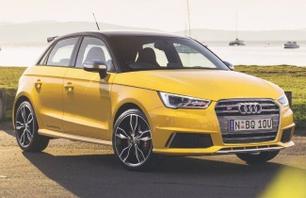
Cars this small shouldn't be this fast and useable at the same time, but the Audi S1 is. It isn't without its problems - the ride is harder even than the Fiesta ST which might weary some prospective buyers.
It's also a bit difficult to justify the price - in its basic form it's missing a few creature comforts that you'd expect in a $50,000 car - reversing camera, high-res screen, that sort of thing.
However, in the hot hatch world, those things don't matter. It has the bragging rights, the tech and the outright blinding speed to take on the bonkers Focus ST and equally zany Megane RS. And even the Audi S3.
More stylish than ever before, as quiet and refined as you'd expect from a luxury car and yet the stand out feature might once again be safety. Despite seemingly every new car being loaded to the gills with safety features, Volvo has managed to demonstrate industry best-practice and leads the way again.
I would encourage engineers from every other car brand to drive the ES90 to learn how to better integrate the modern suite of active safety features like forward collision warning and lane departure warning.
But beyond that, is the ES90 a car worthy of consideration? Well, pretty much everything it does the EX90 does too, so if you prefer an SUV that’s definitely worth consideration. But if you don’t want an SUV, if you prefer a sedan or just love to be different, the ES90 is a very attractive proposition in more ways than one.
The A1 is so small it starts to strain Audi's design language. When you cram on the S-style bumpers and raccoon-eyed trim on the hatchback, it's starts to look a bit busy.
It isn't quite a shrink-wrapped A3 - Ingolstadt's designers know better than that - but it's full of Audi design cues, such as the strong, light-catching character lines, distinctive LED daytime running lights and fondness for big wheels.
Inside is along the themes of the A3, with what are becoming Audi's trademark; round eyeball air-con vents, the manual fold-down screen familiar to Q3 owners (but smaller) and a good clear dash. The handbrake jars slightly as it feels cheap to hold and wobbles a bit.
The S Sport seats are big and comfortable, and the top half of the backs are capped in plastic, which was colour-coded on our car. The rear passengers will certainly get an eyeful of whatever terrifying hue you've chosen, so choose wisely.
Despite the five doors, the back seats are occasionals, like the Mini the A1 is gunning for, and the boot is very small, but okay for shopping for couples or singles.
Discussing Volvo design will draw different opinions depending on your age. As a millennial, I grew up at a time when Volvos were, to quote a famous movie line from the 1990s, ‘boxy, but good’.
But over the past two decades Volvo has smoothed off those boxy edges and become one of the most style-conscious car companies in the world. It has embraced its now-unique place as a Scandinavian carmaker and uses softer edges and more Nordic design themes (such as light coloured interior woods) to ensure the ES90 is simply a good-looking car.
What it isn’t, at least not technically-speaking, is a sedan. That’s because it has a liftback rear-end design, rather than a traditional ‘three-box’ sedan with a conventional boot. That shouldn’t be a deal-breaker for anyone and it means it’s a far more practical design.
It also sits taller than a conventional ‘sedan’, which is an increasingly common trait for modern European sedans as they try to woo would-be SUV buyers. It’s not a lot, you certainly wouldn’t call it a tall or high-riding car, but it is noticeable.
Ends up as an ‘in-between’ design, neither one thing or the other. The closest thing it reminds me of is the short-lived BMW 5-Series GT, which is damning with faint praise, but it speaks to the challenge of making something that simply isn’t an SUV appealing to the modern SUV-obsessed market.
The very stylish cabin features that previously mentioned light coloured wood (at least in our test car) and that unique Scandinavian look. It’s the closest you’ll get to sitting in a Swedish lounge room on wheels.
Starting at $49,900, Audi S1 is by far the priciest of the small-hatch based hotties, at least until Mini's madcap JCW arrives. This price is just almost double that of VW stablemate's forthcoming 2015 Polo GTI.
Standard on the manual-and-five-door-only S1 is a ten speaker stereo, climate control, ambient lighting, remote central locking, cruise control, satnav, headlight washers, auto headlights with xenon low beams, partial leather seats, leather-bound steering wheel, auto wipers and rear parking sensors.
Our Misano Red ($990 option) came with two extra packs. The Quattro Exterior Package ($3990) adds bi-xenon headlights with red trim, red brake calipers, spoiler, quattro logos on rear doors (ahem!) and five-spoke 18-inch alloys that are part matt black, part polished.
The Quattro Interior Package ($2490) adds S Sport front seats with Nappa leather and red backrest capping with quattro logo (ugh), more nappa around the cabin with contrast stitching, flat bottom steering wheel and red rings on the air vents.
There's an S Performance Package that brings the best of these two packs together for $4990, saving about $1500 and the embarrassment of the quattro logos.
Our test car also had aluminium air vents ($220), black contrasting boot lid ($300) and black roof ($720).
The A1 is so small it starts to strain Audi's design language
The grand total is a sobering $58,610. There's a couple more options that'll easily pop you over $60,000.
Audi's MMI is dash-mounted in the A1 as there's no room on the narrow centre console. As ever, it works well and doesn't take much getting used to. The satnav is a bit grainy on the smaller screen but is otherwise a competent unit.
Sound is from a ten-speaker stereo and you can stream across Bluetooth or plug in a memory card. The sound was good but the system did take a while to find the phone whenever we came back to the car.
The ES90 range consists of two models at the time of publication both powered by a single, rear-mounted electric motor, with the twin-motor option available on the EX90 SUV currently not offered in Australia (emphasis on the word ‘currently’).
The range begins with the Pure from $88,880, before on-road costs, and is completed by the current range-topping Ultra variant, which we're testing, priced from $107,990, plus on-roads.
That means it’s cheaper than its direct rivals in the luxury electric sedan market. Audi’s e-tron GT starts at more than $200,000, the BMW i5 line-up is priced from $155,900 and the Mercedes-Benz EQE range begins at $134,900. So, even with this more expensive Ultra variant, Volvo has a clear head-start on the competition.
And Volvo hasn't managed that by skimping on standard equipment. The ES90 comes loaded with adaptive air suspension, 22-inch alloy wheels, a comprehensive safety package (as you’d expect from Volvo) as well as an electrochromic panoramic roof, a smart key you can add to your phone and 'Nordico' upholstery - Volvo’s sustainable synthetic leather.
There’s also a 25-speaker Bowers & Wilkins sound system, but more on that later…
This is where the action is. The S1's tiny body packs a 2.0-litre turbocharged four-cylinder producing 170kW and 370Nm of torque. The S1 will streak to 100km/h in 5.9 seconds thank to the traction aid of quattro all-wheel drive.
All Audi S1s come with a six-speed manual
Despite a pretty solid hammering during its week with us, including more time than we'd have liked in Sydney traffic, the stop-start function helped deliver a pretty reasonable 10.2L/100km, however that's a long way over claimed 7.1L/100km.
All Audi S1s come with a six-speed manual, so dual-clutch haters can save the whining. The only downside from not having a self-shifter is the ECU can't deliver the boy racer farts, parps and crackles of the other S cars.
As the name suggests, the ES90 Single Motor is powered by a single, rear-mounted electric motor that drives the rear wheels via a single-speed transmission. The motor makes a healthy 245kW and 480Nm, so the 0-100km/h sprint time is 6.6 seconds - sprightly for such a big car.
As alluded to earlier, there is a Twin Motor, all-wheel drive ES90 variant available in overseas markets, with 500kW, but Volvo Australia is yet to confirm when, or even if that will arrive here.
If you're buying the S1 as a comfortable urban runabout with a cool badge, you're half right. While the seating for front passengers is certainly supportive, the hard suspension tune will ensure you're well aware of road surface imperfections.
The S1 is a rocket
Thankfully, what it missed out on in the ride department it makes up for in every other way - the S1 is a rocket. The 2.0-litre turbo jammed under the bonnet has almost no lag and is paired with a slick six-speed manual that is terrific fun to manhandle through the gears.
The way the S1 picks up speed when it's on boost is addictive and licence-endangering. A flattened accelerator in second or third will obliterate just about anything this side of $100,000 and you'll be having more fun in this than big brother S3 because the chassis is more adjustable and there's a bit more life.
You can hear the turbo sing to accompany the bassy exhaust growl. Hit the massive brakes hard and the car remains stable even over rutted roads. Turning the wheel brings almost-instant turn-in, mashing the throttle again a fun little wriggle. It's superb.
It's tremendous fun point-to-point on a twisty road
You'll have to be a bit patient with the throttle to get the wriggle, though - give it too much too early and it will want to push wide, the quattro system shuffling power around to try and quell understeer while the electronic diff fiddles with the braking system to do the same thing. It gets there in the end, but you're better off meting out the power with your right foot for maximum rewards.
It's tremendous fun point-to-point on a twisty road - despite being a bit heavy for its size (1415kg), it's as chuckable as the next best thing, the Fiesta ST.
As you’d expect from a luxury, electric car the ES90 is a quiet and refined vehicle to drive. Being a Volvo, the company has used its experience where it matters, and there is excellent insulation from the outside world. Unlike some EVs that lose the engine and hope that just makes things quieter, the ES90 gives you a genuine feeling of insulation from the exterior hustle and bustle.
Performance is adequate from the single motor but it’s by no means a sports sedan with only 250kW/480Nm and such a big vehicle. But it has the instant response that is an EV trademark so it has all the performance this type of car and the drivers it will attract would likely need. If buyers start banging on the door for more power, Volvo can oblige, but for now it does the job you expect of a luxury four-door.
While it has the sedan silhouette, the taller body and raised ride height on the air suspension are noticeable. You will find yourself looking up at SUV drivers, but not all of them. It’s roughly the same seat height as you’ll find in a modern small SUV, so a slight elevation rather than a big boost.
The ride is what you expect from this type of car. You can adjust the suspension and steering between ‘soft’ and ‘firm’ settings, but even with the latter selected there is a lot of compliance and the ride remains comfortable.
The steering is fine most of the time, but when you have to do parking maneuvers you certainly notice the ES90's steer-by-wire technology. The steering literally feels like an old computer game steering wheel set-up, with very little resistance as the wheel lightly spins from lock-to-lock. It’s not a bad feeling, but it is a bit odd and takes some getting used to.
The ultimate take-away from the driving experience is just how relaxed it is - quiet and effortless are the two words that probably best sum it up.
Six airbags, stability and traction control, ABS, brake assist and distribution all add up to a five star ANCAP rating.
This is obviously the area that Volvo is famous for, but with seemingly every other brand forced to raise their own safety features over the years, does the Swedish brand still do anything special on this front?
Absolutely.
Put simply the Volvo suite of active safety systems is better developed and better integrated. Every rival car to the ES90 will have a similar list of features, including adaptive cruise control, forward collision warning, lane departure assist, road sign information and more. But Volvo has made it work so well that unlike rival models, you never even think of turning them off, they don’t beep and bong ad nauseum, they only work if you need them in an emergency - which should be the standard.
One thing to note is the ‘bump’ on the roof (you may see in the images) to house a Lidar system. However, Volvo split with its supplier and has decided to abandon this technology for the ES90. That means the 2026 model year examples will not have the roof bump, but still come loaded with five radars, seven cameras and 12 ultrasonic sensors for the excellent coverage of the surrounding environment.
The only thing that stops the ES90 being worthy of a 10/10 safety score is the lane keeping assist could do with some fine-tuning, as it has a tendency to move in the lane slightly too much.
There is no current ANCAP score for the ES90, but the EX90 SUV does, and given the organisation's previous sharing of scores between different models based on the same core underpinnings, there is no reason to believe the ‘sedan’ wouldn’t be just as safe.