What's the difference?
When I say this is a rare review, I’m talking about the kind of rare that means you can’t even buy the car you’re reading about.
The 2026 Audi RS6 Avant GT you’re looking at in the pictures around this story is number 248 of 660. That’s six-hundred and sixty worldwide.
In Australia, there are only 22 RS6 GTs, and they’re all sold - at exorbitant prices, mind you, but we’ll get to that.
The RS6 GT is essentially a production version of the Audi RS6 GTO concept, built in 2020 and inspired by the Audi 90 quattro IMSA GTO race car, which means the RS6 GT carries a lot of ‘90 GTO’ in the way it looks. More on that shortly.
Aside from its extremely limited availability and its design package, there are some mechanical changes to increase the appeal of the RS6 GT, though whether any of its owners will put the on-road (or on-track) ability of this special wagon from Ingolstadt to the test remains to be seen.
A couple of days to live with one of the few RS6 GTs in Australia should reveal how special this car feels, and result in at least one example of the rarity being driven good and proper.
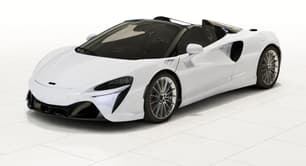
Obviously the headline item of the new McLaren Artura Spider is the ability to drop the top and feel the wind in your hair, or, should you live in Melbourne, at least the damp mist on your face.
But this new plug-in powerhouse has plenty more to offer than just its folding hardtop.
The coupe and convertible are more powerful, there’s a new and louder exhaust, faster gear shifts, a richer rev range, better suspension and better braking.
Oh, and there's a new feature designed to unlock your inner hooligan, but we’ll come back to that one in just a moment...
But at its core, the Artura Spider is a plug-in hybrid monster that goes someway to previewing the future of the supercar species.
Does electrification enhance the excitement? We strapped in to find out.
You’ll notice a number out of 10 on this review, you should ignore it.
Not only is it irrelevant because you can’t buy one, but the RS6 Avant GT isn’t a ‘brain’ car, it’s a ‘heart’ car. As much as a five-seat wagon can be, anyway.
Whether you think it’s overkill, overpriced, or overhyped, the GT is a celebration of a car that’s become such an icon for petrolheads. It’s also probably a marker for the end of an era, because we don’t see many V8 family cars getting about anymore.
Well done to Audi, the accounting team in particular, and if anyone who owns an Avant GT is willing to let me have another drive, my in-box is open.
Or I’ll just keep an eye out.
McLaren’s most liveable offering proves hybrid heroes have a place in the supercar stable of tomorrow. Angry and affable in near-equal measure, it is utterly docile during the week and completely bonkers on the weekend.
Note: CarsGuide attended this event as a guest of the manufacturer, with travel, accommodation and meals provided.
“It looks like a toy car you’d get in a Kinder Surprise” was the first comment from my housemate upon seeing the $400K collector's item on wheels.
Harsh, but to anyone unfamiliar with the Audi 90 quattro IMSA GTO racer, there’s arguably too much going on with the RS6 Avant GT.
The red, grey and black decals, the chunky white 22-inch wheels, the flared and vented front fenders and the wing over the rear window… all of it is a lot to take in, but it’s very faithful to the IMSA car.
As pictured, the 90 quattro IMSA has the red around the bottom lip of the car, on the bonnet, and even its rear wind, the same as the red on the rear of the Avant GT.
Some of the black at the front of the car, where the bonnet and fenders are, is just exposed carbon-fibre rather than a black decal.
Short of the sponsors and racing numbers, the Avant GT does a fabulous job of paying homage to the 1989 race car. It just means you’re going to be the centre of attention anywhere you drive. Or park.
On that note, an alternative paint and graphic scheme in 'Mythos Black' (this car is 'Arkona White') was available to customers and is decidedly more ‘under the radar’. You have to wonder, though, if you opted for the subtle version of a car that pays homage to a fire-breathing IMSA car, would you feel like you took the coward's option?
Besides, you’re either keeping this car in some kind of temperature-controlled bubble, or (hopefully) spending most of your time around it in the driver’s seat. From there, you don’t have to grapple with the question of garishness.
The interior is, while elevated past standard RS6 vibes, a lot more subtle. Dark materials of microfibre, carbon, leather and the smudge-prone piano black (an Audi favourite) are joined by a relatively restrained serving of red in the contrast stitching and seatbelts.
As is pretty par for the course with McLarens, the Artura's design is more about aerodynamics than aesthetics, with everything you see outside designed to either help you slip through the air, or stick to the road.
There is, however, one important new part of the design, and that is the roof, which opens in 11 seconds and at speeds of up to 50km/h, meaning you should never be caught in sudden rain.
Elsewhere, you’ll find it is all angles and alloys outside, while inside, it is a pretty driver-focused experience. I particularly love the steering wheel, which is totally free of buttons – a refreshing change which means it has one job and one job only.
Then there’s the central screen, which looks a bit like it’s just been plonked in the cabin, but works seamlessly. One note, though. It's positioned a little too low, meaning you have to take your eyes right off the road to look at it when driving.
You’ve bought a $400K collectible sports car capable of effortlessly deleting kilometres of highway with your family and enough luggage for a week. Usually a special edition driver's car at this price point is doing well if it has a place to put a phone and a water bottle, let alone phones and water bottles for four people - five if you really need.
Yes, in the performance car world, the Audi RS6 Avant has long been king of the convenience game and the GT holds onto that.
The seating position and ergonomics remains comfortable, the driver’s seat being manually adjustable means it can sit even lower, there’s decent storage in the door cards, cupholders are able to be hidden, the phone charger is under the armrest, there’s a spot for small items like keys, change or glasses and the rear seats have mostly the same alongside their own individual climate controls and heated seats.
Behind those, a 548-litre boot puts most performance cars to shame, but its 1658L space when the rear seats are folded down is unbelievable for something that you’d want to take to a race circuit.
Practical? Not really, but then, what were you expecting? There are two seats, some 124 litres of luggage space in its under-bonnet boot, phone connections and… well, that’s about it.
One design element I do love, which counts as a practicality perk, is the glass finish applied to the rear buttresses, which don’t just look cool, but help you see out the back when peering over your shoulder.
I’ve been told I’m not allowed to swear in CarsGuide reviews, so add your own expletive when I say, at $399,000, before on-road costs, the RS6 GT is expensive.
A ‘standard’ Audi RS6 Avant Performance costs $252,600, so you would really, really hope that warm feeling you get from owning one of only 22 GTs in the country is worth around $146,400. It’s very hard to imagine the physical changes to the car amount to that much money.
Of course, there’s plenty of kit in the RS6, anyway. But unique to the Avant GT is a carbon bonnet, carbon wing mirrors and carbon front fenders, a restyled spoiler, tailgate, and rear diffuser, 22-inch Audi Sport six-arm ‘Avus’-inspired alloy wheels (in white or black), RS ceramic brakes and black badging.
Inside, there are RS front bucket seats trimmed in leather, synthetic suede and carbon, contrast stitching in red, red seatbelts, black synthetic leather along the dashboard with open-pore carbon, rear window sunshades and a Bang & Olufsen 3D sound system from the 'Sensory Package' as standard.
There’s also ‘RS6 GT’ scuff plates, floor mats, puddle lighting and the individual number for each of the 660 cars on the centre console.
There’s also manually adjustable coil-over suspension and a GT-specifically-tuned quattro sport differential.
It’s cool, but is it an extra $146K cool?
For the price, you’re almost in Ferrari territory, or you’re ticking some options boxes on your Porsche 911 Carrera T. Suppose neither of those can comfortably take a family of four on a holiday to the snow and even feel safe driving on icy roads, though.
It does happen to be about the same price as the Mercedes-AMG GT63 S 4 Door, though whether that looks as good as the RS6 is debatable.
Prepare to enter the rarefied air of the supercar world. The McLaren Artura Spider lists at $525,010, or about $50K more than the hardtop Artura, which has also been updated for 2025 and lists at $477,310.
Either way you’re staring down the barrel of around half a million to climb into the new Artura. But kudos to McLaren for offering the new model’s power upgrades, courtesy of a relatively straightforward software update, to owners of the current-gen Artura at no charge.
Anyway, for that spend you get a whole heap of power and performance, of course, but there’s also some new safety stuff and a new launch control designed to unleash your inner hooligan.
It’s called the 'Spinning Wheel Pull-Away' feature, which is essentially a burnout mode allowing you to light up the rear tyres, and even flick through the gears as they’re spinning, attracting the attention of passers-by and the local police in equal measure.
Add to that a redesigned exhaust that delivers a louder and more natural soundtrack, and it begins to become clear the Artura wants to leave any suggestion that it is somehow a mild supercar in its rear-view mirror.
Elsewhere, you’re riding on staggered alloys which are 19 inches up front and 20 inches at the rear, wrapped in Pirelli P-Zero rubber.
And then there’s the roof, which is a lightweight carbon-fibre and composite design operated by eight individual e-motors.
Also new in the cabin is a wireless charge pocket, while a digital dash is joined by a slightly off-looking but effective low-mounted central screen. Standard is a five-speaker McLaren-branded stereo, and rear glass screen is automatic and heated.
Audi’s venerable 4.0-litre, twin-turbo V8 engine remains at the heart of the RS6, though in the GT there’s no more power than the RS6 Avant Performance.
That means 463kW of power and 850Nm of torque delivered to all four wheels via an eight-speed torque converter automatic and Audi’s ‘quattro’ all-wheel drive system, making the RS6 Avant GT capable of a 3.3-second sprint to 100km/h, according to Audi. Top speed is a blistering 305km/h.
All this in a car I took to Coles.
The magic of the Artura’s powertrain isn’t the twin-turbocharged V6, but its dinner-plate-sized e-motor, which adds 70kW and 225Nm to the total outputs.
In EV mode, which lasts around 33km, that’s all the power you get. But when both power sources are in use, the e-motor essentially plugs any turbo lag or power holes, delivering smooth, constant and massively ample power.
How much power? Try 515kW and 720Nm — up some 15kW on the existing Artura — unlocking a sprint to 100km/h in 3.0 seconds, a run to 200km/h in 8.4 seconds and from a standstill to 300km/h in 21.6 seconds.
That power is fed through an eight-speed automatic and channelled to the rear tyres, with the help of an 'E-Diff', while pre-configured 'Electric', 'Comfort', 'Sport' and 'Track' modes arrive as standard, too.
There are also a heap of suspension and software enhancements, longer-laster braking, stiffer engine mounts to tighten the entire vehicle, faster damping, significantly quicker gearshifts and a broader rev range.
Do you care about this section of the review if you’ve bought one? Surely not.
Anyway, Audi claims 11.8L/100km in terms of fuel consumption and you’d better believe it’s 98 RON minimum.
It’s got a 72-litre fuel tank, which was depleted rather rapidly on test. While driving conditions weren’t ‘fair’ in terms of the test given the content demands of a short-term loan, there’s probably a realistic figure somewhere between the claim and the 17.9L/100km I achieved over a few days.
You can plug the Artura in, of course, and taking the 7.4kWh battery from zero to 80 per cent charged will take around 2.5 hours. McLaren reckons you can expect fuel use of around 4.8L/100km when both powertrains are in operation.
Be warned, though, there’s enough magic used to fill Hogwarts when it comes to calculating that number, and you can expect that figure to likely double if driving sedately, and skyrocket if you get on Tinder terms with the accelerator.
There’s something unfortunate about how good the Audi RS6 Avant GT is from behind the wheel. That’s knowing how few people will properly get to enjoy it.
Not just because only 660 were built, but also because the majority of those 660 owners will be too worried about how much they’ve just spent on an automotive rarity to properly take it for a burn on a road, or even a track.
The RS6 was always an icon of Germany's penchant for subtle-looking cars that just happen to be capable of embarrassing much more brash vehicles, but the GT does away with the pretence and sharpens its teeth a little.
The specifically tuned rear differential makes for a more rear-biased driving experience in Dynamic mode, which means more agile cornering and a more natural balance compared to the way the RS6 sometimes feels - like a family wagon.
Its rival, the BMW M5 Touring, can go full rear-drive, but the Audi doesn’t need that as an option. It feels more capable and composed; ready to obey commands without fuss. A set of Continental SportContact 7 tyres (285/30) help there on the grip front.
The suspension underneath, adjustable coil-overs with three settings, is unique to the GT and lowers the ride height by 10 millimeters. It’s stiffer, 30 per cent at the front and 80 at the rear, and you notice it.
There’s more control and much less body roll, but the trade-off is the RS6 Avant GT is a little less comfortable on Australia’s particularly rough roads. Its 22-inch wheels don’t help.
It’s not, however, crashy or rattly. The suspension still does a fine job of stopping the driver being jostled around, but there’s a decidedly firmer response to the surface underneath. Again, still very composed.
With the new suspension, steering the GT feels easier than memory would suggest and the baseline was already good. There’s no unnecessary weight, but there’s still decent feedback from the front wheels and accuracy is bang-on.
Throttle adjustment in the corners, too, is easier with the rear differential, and it means anyone who still had reservations about Audi and understeer can be proven wrong.
The drivetrain remains unchanged from the Performance, which is a good thing. The effortless acceleration, even in the more aggressive 'Dynamic' setting with the transmission set to 'Sport' is smooth but seemingly unending.
Fortunately, the 4.0-litre V8 under the carbon bonnet sounds delightfully burbly, so getting to the speed limit or overtaking is a little treat every time. While the steering wheel paddles are there if you really need to drive in anger, the eight-speed is fine left to its own devices.
A 2.0-tonne family wagon with a V8 up front, easy communicative steering, and sporty suspension that settles well over bumps but allows enthusiastic corner attacks?
The RS6 Avant GT is in limited company.
I know it sounds strange, given how knife-sharp and angular the McLaren Artura Spider looks, but perhaps this plug-in powerhouse's biggest party trick is not how it operates at its 8500rpm redline, but how it behaves at low speeds in town or cruising on the freeway.
This is a properly comfortable supercar, happily tootling around in near-silence in in EV mode, or just cruising around, the improved damping smoothing out the road below and the exhaust note barely noticeable.
Honestly, there was a moment on this test drive when I found myself in EV mode with the roof down while travelling at around 70km/h, and I could hear birds chirping as I passed them, such was the calm ambience of the cabin.
Supercars aren't designed as daily drivers, but the McLaren Artura Spider is so effortlessly easy to live with you could use it as your weekday runabout, before unleashing it on the weekends.
Open the taps a little more, though, and suddenly that nature changes, unlocking a darker and more dynamic side to the McLaren's personality, courtesy of the 3.0-litre twin-turbo V6, putting the entire 515kW and 720Nm at your disposal.
I don't think I've driven a car in which the distance between its twin personalities is so vast. Plant your right foot and the acceleration (0-100km/h in just 3.0 seconds) is properly violent, while the gearing has been set up in a way that it is near impossible to hit the redline on a public road – at least without obliterating the speed limit.
The steering is a predictable highlight – super direct, and near-telepathic in the way it responds to your inputs. The eight-speed auto goes about its work with seamless efficiency, too.
The biggest highlight, though, is the Artura's agility. McLaren is famed for taking an approach to removing weight from its vehicles that is so ruthless it's a miracle they don't make prospective owners step on a scale before handing over the keys. And while its true convertibles are heavier than their hardtop counterparts, you can't tell in the Artura Spider.
Instead, the brand has worked to remove weight and tighten the drive experience, mostly through new and stiffer engine mounts and that single piece carbon-fibre tub, which is why there is no additional body stiffening required in the convertible over the coupe.
As a result, the Spider feels light, lithe and super reactive, devouring corners with no jiggling or roll and no different (in that sense) to the hardtop version we drove last year.
One of the other big changes the brand made this time around is to retune the exhaust, making it louder and more natural-sounding, and you can take advantage of that in the Spider, with the rich bass filling the cabin as though your own personal orchestra is being conducted by your right foot.
So, if you're in the camp that says electrification has no place in the world of supercars, you're wrong. Electrification doesn't hamper excitement here, it enhances it.
There’s no current rating from ANCAP for the A6 in general, let alone this specific RS6, but there’s a decent suite of safety equipment and tech to keep you worry-free in the GT.
Eight airbags and more than 30 driver assistance systems from the RS6 are of course present in the GT, including adaptive cruise control, lane-keep and warning, emergency brake assist and cross-traffic alert.
Audi’s also got surround view cameras for parking, which also includes warnings for approaching vehicles or objects, plus there are preemptive measures the car can take in an impact like tightening the seatbelts or braking to avoid a second collision.
The second row also has three top tethers and ISOFIX anchor points on the outboard seats for mounting child seats.
There's new stuff in the world of safety, too. For one, there’s lane monitoring, which McLaren — ever keen to maintain the purity of its drive experience — is quick to point out you can switch off, and when you do, that it stays off until you switch it back on again.
That said, blind-spot monitoring and rear cross-traffic alert are optional, and you’re more chance of a Powerball win than seeing a Artura Spider crash-tested by ANCAP for an independent safety rating.
Audi’s five-year/unlimited kilometre warranty is below industry par, though most premium brands are in the same boat.
Twelve years of bodywork warranty against corrosion is also included, as is a five-year run of free Audi roadside assistance.
Five-year service plans can be purchased, or customers can buy back-to-back two-year extensions for the warranty, servicing and roadside assistance.
The Artura arrives with a five-year, unlimited-kilometre warranty as standard, while the battery is covered for six years or 75,000km. Five years of roadside assistance is thrown in, as are your first three years of services.