What's the difference?
STOP! Don’t buy the performance SUV you were looking at! There’s a better way.
It’s the car we’re looking at for this review, Audi’s latest RS6 Performance. Freshly updated for the 2024 model year, this is the ultimate wagon, and possibly, the ultimate car which many overlook.
Is there a catch? And what has Audi changed for the 2024 model year? Read on to find out.
Driving a whopping great SUV down the straight on a race track at more than 200km/h sounds like fun, but it actually feels a bit wrong, like entering a baby elephant in a dog show.
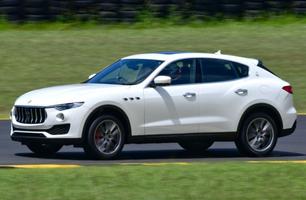
These are strange times, of course, and the Maserati Trofeo Levante is a suitably strange vehicle - stylish, classy, expensively appointed family hauler that also has the heart and soul of a race car.
Indeed, while performance SUVs are an increasingly commonplace vehicle, the Levante - which was actually getting along in the tooth as a model before this significant upgrade - has higher performance credibility than most.
That's because it has a big Ferrari V8 driving all four of its wheels and delivering a properly supercar-like 433kW and 730Nm.
It's not what you might call a typical Maserati buyer's car, but then only those who know what the Trofeo badge stands for - shouty insanity, basically - will be interested in this end of town. It is a lot of car, but is it worth the large load of money on the sticker ($330,000)?
To me at least, the RS6 is pretty much the ultimate fast and practical car. One which is just as comfortable plodding around town as it is tearing it up on the track. Keep in mind, too, this may be one of your last chances to have a car which looks like this, equipped with a V8 engine. So, have I convinced you? Would you consider one of these over a performance SUV? Tell us what you think in the comments below.
Note: CarsGuide attended this event as a guest of the manufacturer, with travel, accommodation and meals provided.
Maseratis are built for a fairly specific niche buyer; someone with a lot of money, someone slightly older and certainly someone who likes the finer things in life and appreciates Italian style, quality and heritage.
They are not, typically, the kind of buyers who want to tear around race tracks like fiends in big, shouty SUVs. But apparently there is a niche within the niche of Maserati fans who do, and they are willing to invest big dollars in vehicles wearing the Trofeo badge, like this Levante.
It might seem a slightly strange creation, a track-mad SUV with a screaming Ferrari engine, but surprisingly, it really does work.
At a distance the RS6 is just an unassuming station wagon, but the closer you get, the more apparent it becomes how mean it is. It’s wide, it’s chiselled, it’s not just good looking, it’s iconically Audi.
The stance is so wide, its ride height so low, and its wheels are so massive that any keen eye will be able to spot where the difference is between this and any old family hauler.
Wagons may not be trendy, but there’s something undeniably cool about having the hauling capacity of an SUV at the ride height of a sedan.
Of course, if you want to look even more svelte and don’t need the boot space, the RS7 is always lurking around at a slight price premium.
Inside, the RS6 has all the modern amenities of the Audi range. Expect the usual sharp screens, lovely sports seats, and a tasteful application of textures throughout.
There’s a blend of carbon-look finishes, chrome, leather and gloss black. Perhaps a little too much gloss black to keep clean, but the aesthetic is suitably upmarket.
You can go to town on customisation, and the car we primarily tested had stitching and colour in the carbon patterns to match its 'Ascari Blue' exterior, but you can pick whatever shade or combination of colours your budget allows.
Audi’s software is pretty good these days, with an attractive theme and fast hardware to back it, and the brand’s ‘Virtual Cockpit’ is still one of the most aesthetically pleasing and customisable digital instrument systems on the market, despite being one of the first.
While the other two Maseratis to get the Trofeo treatment - the Ghibli and Quattroporte sedans - are undeniably lovely, the Levante is not quite as pretty.
Admittedly, for an SUV, it looks very good, and the Trofeo touches - that big, nostrilled bonnet, the red gills on the sides, the carbon, the badges - really do lift its game to another level.
Overall, though, the Levante has just never felt beautiful enough to me to be a Maserati. These guys really do style well, as you'd expect from a premium Italian brand, but making an SUV sexy is beyond even them.
I'll grant you, it does look good from front on, but at the rear they just seem to have run out of ideas.
Credit is due for feeling properly special inside, however.
Okay, I promised a car with the practicality of an equivalent SUV, but it’s not quite there. The trade-off is still worth it, I promise, but there are a few areas where the RS6 isn’t as practical as you think it’s going to be, particularly for front occupants.
Yes, it’s a big wide car, with large but supportive seats and plenty of headroom, but the issue for those travelling in the front two seats is the surprisingly limited amount of storage.
Yes, there are two bottle holders in the centre console with a folding tray lid to hide them away, but they aren’t huge. Bigger bottles would have to go in the door bins, but even then they’re a bit height-constrained.
There’s a decent glove box on the passenger side, but even the centre console box is very shallow, with more than half of it taken up by a wireless phone charger.
The touch panel for the climate unit looks impressive but still can’t match having physical dials. It has clicky haptic feedback to your individual presses, and all the functions are permanently accessible instead of hidden in sub-menus, so if you’re going to make climate a touch-based interface, it doesn’t get much better than this.
Where the RS6 shines is in the back seat. Despite those big bucket front seats, I had heaps of room behind my own seating position (at 182cm tall), with lots of headroom and sufficient width in the cabin to spread out.
You sink into the rear seats, which are heavily contoured so riding in the back is a pretty good experience even on the track.
Rear passengers get four adjustable air vents in both the B pillars and in the centre, as well as their own touch panel for the rear climate zone.
USB power outlets are also available, and there are netted pockets on the front of both back seats, with a further two bottle holders in the drop-down armrest.
The centre seat is probably only good for kids, because there’s a very tall raise in the centre required for the driveshaft, eating all the legroom.
The boot is fairly large at 548 litres which is in mid-size SUV territory, although I will admit some performance SUV rivals offer closer to 600L.
Space expands to 1658L with the second row folded flat.
If you've got to move five people in a genuine hurry, the Levante is a pleasant way to go about it.
There's plenty of head and shoulder room, the seats, while firm in the front, are pleasant to the touch and supportive and there's a 580-litre boot with an electric tailgate and split-folding seats.
The boot feels properly spacious, too, with a 12-volt power outlet and four tie-down points. You won't, however, find a spare wheel out there, so serious off-roading is out (although it probably was already if you look at those expensive wheels).
There are huge door pockets with room for bottles and two big cup holders in the front. The centre-console bin looks lovely, it's all carbon fibre, but is quite small.
There are also three USB points, one in the front and two in the rear, and Apple CarPlay and Android Auto connectivity.
Let’s start with the bad news. Most people can’t afford one of these. The RS6, in all of its muscular glory, is more expensive than ever before. Now wearing a before-on-roads price-tag of $241,500, it’s hardly your average mum and dad family hauler. But then, there’s nothing average about the RS6.
It’s so well regarded amongst enthusiasts for multiple reasons. It’s the biggest meanest wagon you can buy, and somehow Audi has managed to make this version more powerful and even faster than before.
In fact, it’s one of the few normal looking combustion cars out there which can still hold a candle to many electric cars, with its whomping V8 helping it warp from 0 to 100km/h in just 3.4 seconds.
More on those performance specs later. If you’re wondering what else you get for your near-quarter-of-a-mill it’s pretty much every spec item Audi currently offers.
There are now lighter 22-inch alloy wheels, adaptive air suspension, a high-performance braking system, an RS-specific exhaust system, matrix LED headlights with adaptive high beams, a 10.1-inch multimedia touchscreen with navigation and wireless phone mirroring and one of the best digital instrument clusters on the market.
It also features Valcona leather interior trim, sporty bucket seats with perforated trim, honeycomb stitching, as well as ventilation and heating, additional cabin trim in synthetic suede (comprised of 45 per cent recycled fibres), ambient interior lighting and a panoramic sunroof.
It’s a lot of stuff, but one thing you get a little less of is sound insulation. Audi has chosen to remove some of it this time around so you can hear the V8 better from behind the wheel.
I'm sorry, but $330,000 for an SUV, of any kind? Personally I can't see the value, but then personally, as we'll discuss below in the Design section, I can't see the attraction.
This is one of the most expensive SUVs money can buy, well above things like Range Rover Sport SVR ($239,187) or even Porsche Cayenne Turbo Coupe ($254,000), although a pricier Ferrari one is surely on the way.
You'd want a lot for that, and the way it drives and sounds, thanks to that Ferrari engine, accounts for quite a few dollars.
There's also an undeniably high-quality feel to everything you touch on the car, inside and out, and a vast quantity of carbon fibre everywhere as well.
Other highlights include the 21-inch machine polished wheels, an 8.4-inch touchscreen with Navigation and DAB radio, full matrix LED headlights, and incredible Pieno Fiore natural leather, “the best the world has ever seen”, as Maserati says.
The lovely if firm front seats are heated and ventilated, sporty and 12-way adjustable, with Trofeo logos stitched into the headrests. The rooflining is lovely Alcantara, the steering wheel is sporty and features carbon-fibre shift paddles, ad the stereo system is Harman Kardon Premium and has 14 speakers.
And even the rear seats are heated. It feels expensive, and it should. But still, $330K?
The RS6 is still packing eight cylinders in 2023, producing a massive 463kW/850Nm, somehow an increase (+22kW/50Nm) over the previous iteration.
Audi’s signature ‘Quattro’ all-wheel drive system is present alongside a limited-slip differential and four-wheel steering.
Air suspension and performance brakes and exhaust also feature, alongside an aggressive Continental SportContact 7 tyre package.
The 0-100km/h sprint time is now just 3.4 seconds, allowing you to show up even some electric cars, and the RS6 features 48-volt mild hybrid technology with a cylinder-on-demand system which can shut half the block down for more efficient coasting.
The transmission is an eight-speed torque converter unit which is smooth and effortless.
This will be the last time Maserati gets a proper Ferrari engine like this a 3.8-litre twin-turbo V8 shouty monster, which is good for 433kW and 730Nm.
The future, as is the case everywhere, is going to be more electric and less noisy. For now, anyone who can should enjoy this V8 masterpiece, which drives all four wheels through Maserati's Q4 on-demand all-wheel drive system via a limited-slip rear differential and uses an eight-speed automatic transmission.
Its claimed 0 to 100km/h time is 3.9 seconds, which puts it in what used to be super-car territory, and is still very quick indeed, while top speed is an unimaginable 304km/h.
Officially, the RS6 and its eight cylinders drink a combined 11.8L/100km, although even with its fancy hybrid system and cylinder deactivation, my time with the car saw 15.0L/100km. The RS6 has a 72-litre fuel tank and takes only the finest 98RON unleaded fuel.
The official claimed fuel economy for the Maserati Levante Trofeo is 13.5 litres per 100km, but good luck with that.
A more realistic number would probably sit somewhere above 17 litres per 100km, and we would have easily exceeded 20 litres while driving it like lunatics around a track.
But you just paid $330K for an SUV, what do you care about fuel economy?
As you might have guessed from its impressive engine and performance equipment, the RS6 is a certified weapon on road and track.
On the road you can expect a quiet, refined cabin, superbly balanced steering for low and high speeds and a gentle ride quality courtesy of the pricey air set-up.
It’s as noisy or as quiet as you want it to be, with the cylinder deactivation toning things down at low speeds, and the engine roaring to life under heavy acceleration, or when the 'Dynamic' drive mode is selected.
It can at times be alarming how much the RS6 leaps to life, as it feels so cushy in a city, its width and cabin giving the feel of a luxury car rather than a performance one.
Make no mistake, though, the RS6 is properly quick, and when you give it a kick, it’s the roaring, aggressive machine the spec sheet suggests.
The best place for this? The track, of course. The big V8 and the capability of the all-wheel drive system are truly best explored at velocities impossible to legally achieve on the road.
Once you get past the bark and snarl of this wagon’s eight-cylinders at full force, and the lightning-fast shifts of its eight-speed automatic, you’ll have a moment to appreciate the way it simply holds to the tarmac when you tilt it into the corners, providing a balance when loaded up which only air suspension can provide.
The steering is awesome, communicating the texture of the road nicely to the driver, and requiring just the right amount of force to keep the car pointing where it needs to go.
The grip level is astounding with the huge tyres and the four-wheel steer system lets this hefty wagon take corners at a tighter angle than your brain initially allows.
Thankfully, the four-wheel steer system isn’t weird, either. While it can have a strange effect on some cars, in the RS6 it only bends your mind slightly when you tip it into a hairpin. Otherwise it feels pretty normal.
When everything is warmed up, it can let its guard down slightly and allows the driver to eke out a slide at the rear here and there for extra fun-factor
Jeez. What a machine. I guess this is what a quarter of a million dollars buys. A car that can do it all. Take the kids to the school in comfort and tear it up on the track like few other passenger cars on the same day.
There’s a caveat, though. A small one which looks like it will turn into a big one for cars like this in the near future.
I had the opportunity to drive the RS e-tron GT around the same circuit and it was better. Much better.
It was faster, more accurate, more composed. It was so effortless, I didn’t realise exactly how much quicker than the RS6 it was until I drove them back-to-back.
It’s a good sign for the future, but also a reminder a V8 like this isn’t the performance pinnacle it once was.
We got to drive all three Trofeo-fettled Maseratis on track at Sydney Motorsport Park, and before that on the road, where the Levante felt very pleasant, and pleasantly expensive at all times.
As you might expect, a vehicle with 433kW is difficult to fully appreciate on public roads, although there was the occasional and exciting change to give it a quick, loud blat between gears.
It only takes hearing that engine note, and feeling that torque surge, a few times to see why someone might fall in love with this car, or at least this engine.
Out on the track, the rear-driven Ghibli and Quattroporte, which share the Levante's engine, were surely the more fun and frenetic things to drive, but there were those who chose the Levante as their best of the three, even for circuit driving.
There's no doubt that its on-demand all-wheel-drive system, which is biased towards the rear but asks the front wheels for help when required, made it feel the most planted, and the safest, through fast and slow bends.
There's a definite sense that its engine is being asked to work the hardest, though, to push all that bulk through the air (although its brakes never seemed to fade, which is impressive with more than two tonnes of SUV to stop).
While the big, deafening V8 is willing and keen to rev all the way to 7000rpm (where it bangs on the redline waiting for your upshift, if you're driving in manual mode - I do like that), it started to make large sucking sounds towards the top of each gear, as if it was desperately trying to get more oxygen in.
It genuinely sounded different to the other two Trofeo cars, which is odd, but perhaps they just weren't as near their limits. That bulk also slowed it slightly in terms of top speed down the straight, but it still exceeded 220km/h with ease.
What should be said is that I was genuinely shocked at how good the Levante Trofeo was around a track. So much so I asked to have a second go, just to make sure I wasn't going mad.
Sure, it makes no sense to me personally, and I don't know why anyone needs an SUV that's good on a track, but if you do, I can recommend the Levante for sure.
That hugely enjoyable engine is just too much fun, although it's even better in a sedan like the Ghibli...
Like its standard cabin equipment, the RS6 has had the entire catalogue thrown at it for active safety gear. Included is freeway-speed auto emergency braking with pedestrian, cyclist, and intersection detection, lane keep assist with lane departure warning, blind-spot monitoring with rear cross-traffic alert, an exit warning system, and adaptve cruise control with traffic jam assist.
Elsewhere the RS6 gets dual front, dual side, and head curtain airbags, with ISOFIX points on the outer two rear seats as well as three top-tethers across the rear row.
The RS6 is not safety rated by ANCAP, but the rest of the A6 range was awarded a maximum five stars in 2018.
Maserati's safety offering on the Levante includes six airbags, a reversing camera and 360-degree overhead camera, parking sensors front and rear, adaptive cruise control and Blind Spot Detection, Forward Collision Warning Plus, Pedestrian Detection, Lane Keep Assist, Active Driver Assist and Traffic Sign Recognition.
There is no ANCAP rating for the Levante as it's not been crash tested here.
Five years and unlimited kilometres is the warranty length, and Audi’s ownership program includes invites to events like the one we were able to experience for the launch of this car. A track-test of the RS6 and the RS e-tron GT.
If you own one, I recommend them, you’ll learn a thing or two about the car and possibly yourself while you’re at it.
Servicing is required once every 12 months or 15,000km, and a service pack covering the first five years or 75,000km can be purchased alongside the car at a cost of $4360.
It works out at $872 per year, which isn't economy car cheap, but with such a complex drivetrain, what did you expect?
Maserati offers a three-year, unlimited kilometre warranty, but you can choose to buy 12-month or two-year warranty extensions, and even a sixth or seventh-year drive-train warranty extension.
When much, much cheaper Japanese and Korean cars are offering seven and even 10-year warranties, this is so far off the pace that such a fast vehicle should be embarrassed. And if you're buying something Italian, a better, longer warranty would seem like a must. I'd be negotiating at sale for them to throw the longer warranty offer in.
Maserati says servicing for the Ghibli has a "ball park costing of $2700.00 for the first three years of ownership" with a service schedule of every 20,000km or 12 months (whichever occurs first)
Also, "please note that the above is indicative only of the manufacturers basic routine service maintenance schedule and does not include any consumable items such as tyres, brakes etc or additional dealership charges such as environmental levies etc."