What's the difference?
When I say this is a rare review, I’m talking about the kind of rare that means you can’t even buy the car you’re reading about.
The 2026 Audi RS6 Avant GT you’re looking at in the pictures around this story is number 248 of 660. That’s six-hundred and sixty worldwide.
In Australia, there are only 22 RS6 GTs, and they’re all sold - at exorbitant prices, mind you, but we’ll get to that.
The RS6 GT is essentially a production version of the Audi RS6 GTO concept, built in 2020 and inspired by the Audi 90 quattro IMSA GTO race car, which means the RS6 GT carries a lot of ‘90 GTO’ in the way it looks. More on that shortly.
Aside from its extremely limited availability and its design package, there are some mechanical changes to increase the appeal of the RS6 GT, though whether any of its owners will put the on-road (or on-track) ability of this special wagon from Ingolstadt to the test remains to be seen.
A couple of days to live with one of the few RS6 GTs in Australia should reveal how special this car feels, and result in at least one example of the rarity being driven good and proper.
What is it about single letters and performance cars?
BMW has M, Volkswagen has R, Lexus has F, and with only 23 choices left Hyundai opted for N - which stands for Namyang, site of the brand’s sprawling proving ground and development centre in South Korea, and Nurburgring, the famous German racing circuit where its performance cars are fine-tuned.
And like BMW M Sport, VW R-Line and Lexus F Sport, the Korean giant has N Line as a ‘lite’ option. Sporty models that add a little more punch and visual flair without crossing the line into hardcore hot-rod territory.
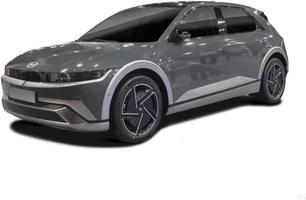
And this is one its latest examples, the pure-electric Ioniq 5 SUV in top-spec Epiq AWD trim and equipped with the N Line Option Pack as well as the tricky Digital Mirror Pack.
In this configuration it slots into the $90K price band, which means it has a lot to live up to in terms of performance, safety, driving dynamics, value and more.
So, stay with us to see if this premium five-seater is the kind of sporty EV SUV that gets your heart racing.
You’ll notice a number out of 10 on this review, you should ignore it.
Not only is it irrelevant because you can’t buy one, but the RS6 Avant GT isn’t a ‘brain’ car, it’s a ‘heart’ car. As much as a five-seat wagon can be, anyway.
Whether you think it’s overkill, overpriced, or overhyped, the GT is a celebration of a car that’s become such an icon for petrolheads. It’s also probably a marker for the end of an era, because we don’t see many V8 family cars getting about anymore.
Well done to Audi, the accounting team in particular, and if anyone who owns an Avant GT is willing to let me have another drive, my in-box is open.
Or I’ll just keep an eye out.
The Hyundai Ioniq 5 Epiq N-Line AWD leverages an electric powertrain’s best attributes brilliantly well.
It’s ultra smooth and comfortable with ample performance and great dynamics thanks in part to this car’s N Line spec.
Its price tag pits it against formidable competition from the German Big Three, Tesla and others. But it has what it takes in terms of quality and value to fight that battle. It’s an impressive machine.
“It looks like a toy car you’d get in a Kinder Surprise” was the first comment from my housemate upon seeing the $400K collector's item on wheels.
Harsh, but to anyone unfamiliar with the Audi 90 quattro IMSA GTO racer, there’s arguably too much going on with the RS6 Avant GT.
The red, grey and black decals, the chunky white 22-inch wheels, the flared and vented front fenders and the wing over the rear window… all of it is a lot to take in, but it’s very faithful to the IMSA car.
As pictured, the 90 quattro IMSA has the red around the bottom lip of the car, on the bonnet, and even its rear wind, the same as the red on the rear of the Avant GT.
Some of the black at the front of the car, where the bonnet and fenders are, is just exposed carbon-fibre rather than a black decal.
Short of the sponsors and racing numbers, the Avant GT does a fabulous job of paying homage to the 1989 race car. It just means you’re going to be the centre of attention anywhere you drive. Or park.
On that note, an alternative paint and graphic scheme in 'Mythos Black' (this car is 'Arkona White') was available to customers and is decidedly more ‘under the radar’. You have to wonder, though, if you opted for the subtle version of a car that pays homage to a fire-breathing IMSA car, would you feel like you took the coward's option?
Besides, you’re either keeping this car in some kind of temperature-controlled bubble, or (hopefully) spending most of your time around it in the driver’s seat. From there, you don’t have to grapple with the question of garishness.
The interior is, while elevated past standard RS6 vibes, a lot more subtle. Dark materials of microfibre, carbon, leather and the smudge-prone piano black (an Audi favourite) are joined by a relatively restrained serving of red in the contrast stitching and seatbelts.
Is this a big hatchback or a mid-size SUV? I’m on team hatchback, while Hyundai defines the Ioniq 5 as an SUV.
But who cares? They’re just words and the fact is even after close to three years in market this five-seater looks fresh and contemporary thanks to its confident, chiselled lines and wide stance.
For car-spotters the N Line exterior treatment consists of flat aluminium badging, specific bumpers front and rear, with a deeper nose spoiler incorporating larger vents to cool the front brakes.
There’s also body-coloured cladding and side skirts, gloss black mirror caps, unique 20-inch alloy rims and a ‘hidden’ lighting signature across the top of the front bumper.
Inside there are Alcantara- and leather-appointed seats, an N Line-exclusive partially-perforated leather steering wheel, red contrast stitching and accents, and brushed metal covers on the pedals.
Add in the twin 12.3-inch screens display and this understated, super-cool interior comes to life with a sporty twist.
The Ioniq 5 scores points for a manual dial for audio control and an Ioniq 5 update earlier this year included a row of simple-to-use buttons for the ventilation system and another on the centre console for seat comfort settings and more. A sensible blend of physical and digital controls.
You’ve bought a $400K collectible sports car capable of effortlessly deleting kilometres of highway with your family and enough luggage for a week. Usually a special edition driver's car at this price point is doing well if it has a place to put a phone and a water bottle, let alone phones and water bottles for four people - five if you really need.
Yes, in the performance car world, the Audi RS6 Avant has long been king of the convenience game and the GT holds onto that.
The seating position and ergonomics remains comfortable, the driver’s seat being manually adjustable means it can sit even lower, there’s decent storage in the door cards, cupholders are able to be hidden, the phone charger is under the armrest, there’s a spot for small items like keys, change or glasses and the rear seats have mostly the same alongside their own individual climate controls and heated seats.
Behind those, a 548-litre boot puts most performance cars to shame, but its 1658L space when the rear seats are folded down is unbelievable for something that you’d want to take to a race circuit.
At just over 4.6m long, a little under 1.9m wide and a fraction more than 1.6m tall the Ioniq 5 comfortably fits the medium SUV profile.
But arguably its most significant dimension is a 3.0m wheelbase which is huge for a car of this size as evidenced by the wheels pushed out to the corners.
What that means is plenty of space inside, but before you can even get in the capacitive touch power door handles may look cool and help aero performance with their flush fit design but I’m not a fan. They’re hard to grip most of the time and don’t work well from an ergonomic point-of-view.
That said, once inside the front seats are adjustable six ways to Sunday and at 183cm tall I have plenty of head space and breathing room in general.
In terms of storage there are big pockets in the doors with room for bottles and thanks to the ‘shift-by-wire’ gear controller located on the steering column there’s room between the seats for a substantial console including a pair of cupholders, a slot for devices and a lidded tray (which doubles as a centre armrest) with that whole rear section able to swing up to allow access to a large lower shelf underneath.
In fact, the entire console unit easily slides fore and aft to liberate more legroom for the centre rear position. There’s also an oddments cubby in the lower part of the dash and a decent glove box.
Then, for connectivity and power there are three USB-C sockets (one in the dash switchable to streaming), a wireless device charging pad and a 12-volt outlet.
In the back that long wheelbase comes into its own. Sitting behind the driver’s seat set for my position I have loads of foot, leg and headroom.
Storage runs to door pockets with room for bottles, a fold-down centre armrest with a pair of cupholders, there are netted map pockets on the front seat backs and pull-up sun shades on the rear windows.
There are controls for the front passenger seat on the inner edge of the front passenger seat backrest which allows rear seaters to adjust its position. Thoughtful.
For power there’s a pair of USB-C sockets and individual ventilation controls in the back of the B-pillars is welcome.
Then, not only is the electrically-adjustable rear seat split 60/40 in the backrest, it’s in the cushion, as well, which adds extra flexibility in terms of a balance between rear passenger space and room in the boot.
The boot is generous at 527 litres (VDA) with the rear seat upright and 1587L when it’s folded down.
There’s also a handy 24L ‘frunk’ under the bonnet, a decent portion of which is devoted to the (included) charging cable.
Interestingly, the Ioniq 5 AWD is rated to tow a 1600kg braked trailer with a trailer pre-wiring package standard.
There’s a repair/inflator rather than a spare tyre, which is never a good thing, but there is a ‘smart’ power tailgate and a ‘Vehicle-to-Load’ function that allows you to power and/or charge three-pin appliances from the car. Handy.
I’ve been told I’m not allowed to swear in CarsGuide reviews, so add your own expletive when I say, at $399,000, before on-road costs, the RS6 GT is expensive.
A ‘standard’ Audi RS6 Avant Performance costs $252,600, so you would really, really hope that warm feeling you get from owning one of only 22 GTs in the country is worth around $146,400. It’s very hard to imagine the physical changes to the car amount to that much money.
Of course, there’s plenty of kit in the RS6, anyway. But unique to the Avant GT is a carbon bonnet, carbon wing mirrors and carbon front fenders, a restyled spoiler, tailgate, and rear diffuser, 22-inch Audi Sport six-arm ‘Avus’-inspired alloy wheels (in white or black), RS ceramic brakes and black badging.
Inside, there are RS front bucket seats trimmed in leather, synthetic suede and carbon, contrast stitching in red, red seatbelts, black synthetic leather along the dashboard with open-pore carbon, rear window sunshades and a Bang & Olufsen 3D sound system from the 'Sensory Package' as standard.
There’s also ‘RS6 GT’ scuff plates, floor mats, puddle lighting and the individual number for each of the 660 cars on the centre console.
There’s also manually adjustable coil-over suspension and a GT-specifically-tuned quattro sport differential.
It’s cool, but is it an extra $146K cool?
For the price, you’re almost in Ferrari territory, or you’re ticking some options boxes on your Porsche 911 Carrera T. Suppose neither of those can comfortably take a family of four on a holiday to the snow and even feel safe driving on icy roads, though.
It does happen to be about the same price as the Mercedes-AMG GT63 S 4 Door, though whether that looks as good as the RS6 is debatable.
It shows how far the Hyundai brand has come over its close to 40 years in the Australian new-car market that one of its five-seat SUVs wearing a price tag in excess of $90K doesn’t knock the Earth off its axis.
But a sticker price of $91,300, before on-road costs, does apply the pressure because it puts this primo Ioniq 5 Epiq N Line AWD in the same orbit as versions of the Audi Q4 e-tron, BMW iX3, Mercedes-Benz EQB, Tesla Model Y and Volvo’s XC40 Recharge.
In fact, our test car’s price includes the N Line Pack which is technically a $2500 option and its digital mirrors add a further $3000 for an as-tested price of $94,300, before on-road costs.
So, you should rightfully expect a handsome standard equipment list and this full-fat Ioniq 5 doesn’t disappoint.
Aside from the safety and performance tech we’ll get to shortly this car includes 20-inch alloy rims, all LED exterior lights (with auto LED projection headlights), dual-zone climate control, power driver and front passenger seats (heated/ventilated), heated rear seats, ambient lighting, a head-up display, wireless Android Auto and Apple CarPlay, Bose eight-speaker audio, digital radio, built-in nav and voice control for key functions.
There’s also Alcantara- and leather-appointed seat trim, BlueLink connected car services (with a five-year complimentary subscription), configurable ambient lighting, wireless device charging, a fixed glass roof, a heated steering wheel, heated and power-folding exterior mirrors, auto rain-sensing wipers, keyless entry and start, and ‘Remote Smart Parking Assist’.
That last one allows you to start and move the car forwards and backwards remotely (via the key) to insert it into or extract it from tight parking spots… or just impress your friends.
Suffice it to say the Ioniq 5 Epic N Line AWD stands up well against its competitors when it comes to included features for the money.
Audi’s venerable 4.0-litre, twin-turbo V8 engine remains at the heart of the RS6, though in the GT there’s no more power than the RS6 Avant Performance.
That means 463kW of power and 850Nm of torque delivered to all four wheels via an eight-speed torque converter automatic and Audi’s ‘quattro’ all-wheel drive system, making the RS6 Avant GT capable of a 3.3-second sprint to 100km/h, according to Audi. Top speed is a blistering 305km/h.
All this in a car I took to Coles.
The Ioniq 5 Epiq AWD is powered by a permanent magnet synchronous electric motor on each axle, both powerful, but the rear unit packs a bigger punch.
And combined peak outputs of 239kW and 605Nm are substantial with especially the latter delivering eye-widening acceleration.
Drive goes to all four wheels via a single-speed, reduction gear auto transmission on both axles. And a ‘Disconnector Actuator System’ is able to disengage the front wheels to reduce drag losses from the front motor and improve energy efficiency.
Do you care about this section of the review if you’ve bought one? Surely not.
Anyway, Audi claims 11.8L/100km in terms of fuel consumption and you’d better believe it’s 98 RON minimum.
It’s got a 72-litre fuel tank, which was depleted rather rapidly on test. While driving conditions weren’t ‘fair’ in terms of the test given the content demands of a short-term loan, there’s probably a realistic figure somewhere between the claim and the 17.9L/100km I achieved over a few days.
The Ioniq 5 Epiq AWD is powered by an 84kWh liquid-cooled lithium-ion battery, borrowed from the high-performance Ioniq 5 N.
Thanks to 800-volt compatibility it can accept a 350kW DC charge which translates to an up to 80 per cent charge time of around 18 minutes, which expands to just over an hour using a more typical 50kW charger.
Connect to AC at the Ioniq 5’s maximum 10.5kW capacity and quoted charge time is just over six hours.
Official energy consumption on the combined (urban/extra-urban) cycle is 19kWh/100km and claimed range is a useful 495km.
Over a mix of urban, suburban and freeway running on test we saw a real-world average of 16.8kWh/100km, which is impressive for a car with this much performance potential.
There’s something unfortunate about how good the Audi RS6 Avant GT is from behind the wheel. That’s knowing how few people will properly get to enjoy it.
Not just because only 660 were built, but also because the majority of those 660 owners will be too worried about how much they’ve just spent on an automotive rarity to properly take it for a burn on a road, or even a track.
The RS6 was always an icon of Germany's penchant for subtle-looking cars that just happen to be capable of embarrassing much more brash vehicles, but the GT does away with the pretence and sharpens its teeth a little.
The specifically tuned rear differential makes for a more rear-biased driving experience in Dynamic mode, which means more agile cornering and a more natural balance compared to the way the RS6 sometimes feels - like a family wagon.
Its rival, the BMW M5 Touring, can go full rear-drive, but the Audi doesn’t need that as an option. It feels more capable and composed; ready to obey commands without fuss. A set of Continental SportContact 7 tyres (285/30) help there on the grip front.
The suspension underneath, adjustable coil-overs with three settings, is unique to the GT and lowers the ride height by 10 millimeters. It’s stiffer, 30 per cent at the front and 80 at the rear, and you notice it.
There’s more control and much less body roll, but the trade-off is the RS6 Avant GT is a little less comfortable on Australia’s particularly rough roads. Its 22-inch wheels don’t help.
It’s not, however, crashy or rattly. The suspension still does a fine job of stopping the driver being jostled around, but there’s a decidedly firmer response to the surface underneath. Again, still very composed.
With the new suspension, steering the GT feels easier than memory would suggest and the baseline was already good. There’s no unnecessary weight, but there’s still decent feedback from the front wheels and accuracy is bang-on.
Throttle adjustment in the corners, too, is easier with the rear differential, and it means anyone who still had reservations about Audi and understeer can be proven wrong.
The drivetrain remains unchanged from the Performance, which is a good thing. The effortless acceleration, even in the more aggressive 'Dynamic' setting with the transmission set to 'Sport' is smooth but seemingly unending.
Fortunately, the 4.0-litre V8 under the carbon bonnet sounds delightfully burbly, so getting to the speed limit or overtaking is a little treat every time. While the steering wheel paddles are there if you really need to drive in anger, the eight-speed is fine left to its own devices.
A 2.0-tonne family wagon with a V8 up front, easy communicative steering, and sporty suspension that settles well over bumps but allows enthusiastic corner attacks?
The RS6 Avant GT is in limited company.
In terms of straight line performance we’re talking 0-100km/h in a tick over 5.0 seconds and I see anything in the five-second bracket as properly quick.
With more than 600Nm of peak pulling power at your disposal there’s always plenty of pulling power for efficient in-traffic moves and safe highway overtaking.
The shift-by-wire gear selector on the steering column takes some getting used to but once you’re in tune with it, it’s surprisingly convenient, especially during slow speed parking or turning manoeuvres.
There are multiple modes - ‘Eco’, ‘Normal’, ‘Sport’ and ‘Snow’. Sport mode spices things up a bit with more urgent responses and the ‘HTrac’ AWD system uses multiple sensors to manage potential wheelspin and optimise drive in wet conditions or on loose dirt surfaces.
Suspension is by struts at the front and multi-links and the rear and the Ioniq 5 in this configuration is ultra-smooth and comfortable.
Even hitting pretty aggressive speed bumps and ruts in the road and the car soaks them up without fuss. You’re used to EVs being a little harsh in terms of ride compliance thanks to their relative weight, but that’s not the case here.
As part of a model upgrade introduced earlier this year Hyundai says it undertook a “comprehensive revision to the suspension tune”, which includes high-performance dampers on this N Line. And despite low-ish profile (255/45) Michelin Pilot Sport EV tyres on the 20-inch rims it remains comfortable and quiet.
The upgrade also included body reinforcements in the B- and C-pillar, door surrounds and under the body for a stiffer platform overall.
That pays off in the dynamics. Despite its 2.1-tonne weight the Ioniq 5’s steering is accurate and nicely weighted. It doesn’t feel lumbering or ponderous despite its relative heft.
The physical brakes are ventilated discs front and rear with regenerative available through four levels, the most aggressive setting being ‘i-Pedal’ which allows single-pedal driving.
It will slow the car to a full stop, harvesting the most energy possible in the process, although you might need a dab on the brake pedal if things are tight.
Miscellaneous observations include a 12m turning circle, so be ready for three-point turns where you didn’t think you’d have to.
Hyundai's (and Kia’s) default over-speed warning is present in full-force taking clicks through multiple screens to switch off and avoid its incessant audible alarm saying you've exceed what the car believes is the posted limit (every time you restart the car).
The recently released Tucson Hybrid features a short-cut function to do away with this issue and it would be welcome here.
The CPU underpinning the multimedia system is more powerful and response is speedy without a hint of lag.
And the camera based ‘mirrors’ take some getting used to. For many, they’re the answer to a question no one was asking. I mean, conventional mirrors work pretty well and any aero benefit from the smaller camera units has to be modest. But once you’re in tune with them the hi-def screens are excellent.
A flip of the switch on the interior rear view mirror allows you to side-step tall heads or loads in the back of the car but minimal depth of field is also (visually) awkward at first.
There’s no current rating from ANCAP for the A6 in general, let alone this specific RS6, but there’s a decent suite of safety equipment and tech to keep you worry-free in the GT.
Eight airbags and more than 30 driver assistance systems from the RS6 are of course present in the GT, including adaptive cruise control, lane-keep and warning, emergency brake assist and cross-traffic alert.
Audi’s also got surround view cameras for parking, which also includes warnings for approaching vehicles or objects, plus there are preemptive measures the car can take in an impact like tightening the seatbelts or braking to avoid a second collision.
The second row also has three top tethers and ISOFIX anchor points on the outboard seats for mounting child seats.
The Ioniq 5 received a maximum five-star ANCAP score from assessment in 2021, receiving its highest scores for adult and child occupant protection and the on-board safety assist systems.
The Ioniq 5 stacks up well relative to its competitors when it comes to safety. In fact, there’s so much crash avoidance tech on-board, courtesy of the Hyundai ‘SmartSense’ active safety suite, it would be straight up boring to list it all, but the highlights include AEB (with car-to-car, pedestrian and cyclist detection as well as junction turning and crossing functions), blind-spot monitoring and collision avoidance, lane keeping assist and lane departure warning, rear cross-traffic alert and rear AEB as well as active cruise control (with stop and go).
There are even more assists, warnings, monitors and alerts, but it’s important to note they (almost) all operate with relative subtlety. I did switch off the steering assist/lane-keeping functionality when it became confused and overly intrusive on twisting city curves.
If a crash is unavoidable, there are seven airbags on-board including a front centre bag to minimise head clash injuries in a side-on impact, as well as ‘Automatic Collision Notification’ and an emergency SOS call function operated through the Bluelink system.
For baby capsules/child seats there are three top tether points across the second row with ISOFIX anchors in the outer positions.
Audi’s five-year/unlimited kilometre warranty is below industry par, though most premium brands are in the same boat.
Twelve years of bodywork warranty against corrosion is also included, as is a five-year run of free Audi roadside assistance.
Five-year service plans can be purchased, or customers can buy back-to-back two-year extensions for the warranty, servicing and roadside assistance.
Hyundai covers the Ioniq 5 with a five-year/unlimited-km warranty, which is the mainstream market norm, with a separate eight-year/160,000km warranty for the drive battery; also an expected term.
Roadside assistance and sat-nav updates are renewed annually if the vehicle is serviced at an authorised Hyundai dealer.
Service interval is two years/30,000km which is appropriate for an EV given its relative mechanical simplicity and a ‘Lifetime Service Plan’ locks in scheduled maintenance costs for the life of the vehicle.
Service cost for the first five years is $1220, with each of the two services required in that time coming in at $610. Competitive for an EV in this part of the market.