What's the difference?
Not to spoil the illusion, but at their core the Lamborghini Urus, Bentley Bentayga and Porsche Cayenne all share the same base mechanical DNA. And yet despite their huge price tags and enviable reputation for performance, the fastest SUV isn’t one of them - it’s an Audi.
The new Audi RS Q8 Performance, to be precise, which has lapped the famous Nurburgring in Germany in record time, usurping the Cayenne Turbo GT in the process.
Boasting the most powerful internal combustion engine Audi has ever installed in a production car, ceramic brakes and a highly advanced suspension package, the RS Q8 Performance takes the German brand’s SUVs to a new level of, how do I put this… performance.
So it’s an appropriate name, but is it an appropriate car for Australian buyers looking for something fast, spacious and special? Read on to find out…
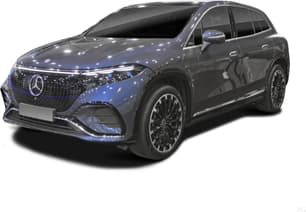
The EV revolution is bringing plenty of firsts, and this big electric behemoth is yet another one. Meet the EQS450, which Mercedes describes as its first "electric luxury full-size SUV with seven seats".
That is a bit of a mouthful though, right? So let’s shortcut that a bit, shall we?
What you really need to know is that this is one of the few proper seven-seat electric SUVs on sale in Australia, so it will — a little surprisingly — end up being compared with the increasingly premium Kia and its EV9 when it launches in November.
So what does this electric answer to a high-riding S-Class bring to the table? Well, lots of luxury, of course.
The Audi RS Q8 Performance is a lot - of everything. It offers lots of power, lots of performance, lots of space and lots of luxury. But it’s also a lot of money, and at more than $250k it’s not going to be on everyone’s shopping list. It’s a very niche proposition for a small group of buyers. For those select few, those who want a lot of everything and who crave the ultimate of whatever product they’re buying, then the RS Q8 Performance is going to be a very tempting proposition - even if they never set any lap record in it.
Note: CarsGuide attended this event as a guest of the manufacturer, with travel, accommodation and meals provided.
Does electrification enhance the seven-seat SUV experience? In the case of the EQS450, the answer is yes. Smoother, quieter and with plenty of easy-flowing power, the brand's family-focused luxury electric SUV behaves exactly as you might expect.
Note: CarsGuide attended this event as a guest of the manufacturer, with meals provided.
We don’t refer to ‘facelifted’ cars for no reason, the RS Q8 Performance has a number of visual changes.
These include a new Audi ‘singleframe grille’ and new front bumper design, with a new Matt Carbon trim package available to highlight that.
There’s also a new rear bumper design as well as new digital daytime running lights at the front and digital OLED lights at the rear.
The unique forged alloy wheels are another design change, but also bring a functional element. Measuring 23 inches they do a good job of filling out the wheel arches and give the RS Q8 Performance a purposeful stance and good proportions. But they are also 5kg lighter per wheel than the 22-inch rims on the RS Q8, saving unsprung weight to help the ride and handling.
Inside, Audi hasn’t made any dramatic changes to the design, which is fine because the brand does some of the best cabins on the market in terms of look and feel.
What is new is an aluminium inlay and an optional RS interior design package which provides a unique finish to the seats, with contrasting stitching, for an additional $4100.
It’s a handsome SUV, and one that’s not immediately recognisable as electric — especially given there are little exhaust-pipe-mirroring design flourishes at the rear which make you look twice.
Aussie-spec cars get the AMG exterior treatment, which includes AMG alloys, aluminium-look side steps and the power-domed bonnet, but there's still nothing overly 'shouty' about the design, with the sleek, smooth body panels (accentuated by the hidden handles) making the EQS450 look smaller than it actually is.
Inside, it’s a super-comfy space to spend time, and the little fluffy pillows attached to the headrests should be standard in every car. The tech on offer is ample, too.
But it does all feel a little gigantic, with great swathes of wood panelling and massive screens, all of which make you feel bit like you’ve been shrunken down and are now living amongst the giants.
While it’s easy to get swept up in the power and speed of the RS Q8 Performance, it’s important to remember that it’s an SUV and it needs to offer ‘utility’ as well as ‘sports’.
With that in mind, the front seat occupants are well looked after with supportive and comfortable sports seats, with a good amount of small item storage spaces.
The rear seats are surprisingly comfortable, despite the sloping roofline of this ‘coupe-style’ SUV. Audi has cut recesses into the ceiling to create more headroom, so it will be fine for anyone under six-foot tall. Despite there being five seat belts, this is realistically more of a four-seater for adults, although three smaller kids could squeeze across the back.
There’s also a pair of cupholders, two USB-C ports, a 12-volt outlet and your own climate controls for the rear passengers.
As for the boot, again it loses some volume because it’s not a wagon-style SUV, but there’s still a decent, square floor space with a claimed 605 litres of capacity.
So, overall the Q8 obviously isn’t the most practical version of an SUV, but it does well given its focus on style.
The EQS450 stretches 5136mm in length, 1965mm in width and 1718mm in height. That's about the size of a Nissan Patrol and long enough to make it a proper seven-seater.
The middle row can be adjusted forwards or backwards, and with the front seat set to my 175cm driving position, I found I had ample head and knee room to get comfortable.
USB-A charge points abound, and there's wireless device charging, and because of the sheer size of the cabin, the storage options are plentiful. The central bin between the front seats, for example, seems styled on the Grand Canyon.
In the third row, though, things get a little tighter, but it’s perfectly good for kids. My knees were touching the seat in front, however, and it still requires some acrobatics to climb into.
At the rear, with all three seats in place, you'll find 245L of room (measured to the ceiling), growing to a maximum 1030L with the third row flat. Stow the second row, and you'll find a maximum 2020L of storage space – which, and take my word for it – is plenty.
One small quirk, though. While the second row is electric, stowing away at the touch of a button, the third row isn't. That means, when it's flat, you have to climb into the boot to pull it back up, or attack it from the rear door. Either way, it's more awkward than it needs to be.
Audi updated the Q8 range earlier this year, with refreshed looks after seven years on sale and a plug-in hybrid powertrain to cater for new demand.
A new RS Q8 is coming later in the year, but the RS Q8 Performance has arrived first to make a bigger impact. It naturally gets a performance boost, but there are some other extras beyond more kilowatts.
These include RS ceramic brakes, lightweight 23-inch forged alloy wheels, Pirelli P-Zero tyres, unique aluminium inlays and a special RS layout for the digital instrument display.
Which is good, because the RS Q8 Performance costs nearly $25k more than the ‘standard’ RS Q8, priced from $255,800 plus on-road costs.
Luckily for a car costing a quarter of a million bucks, there’s also plenty of luxuries too, including Nappa leather upholstery, four-zone climate control and a 17-speaker 730-watt Bang & Olufsen sound system, amongst others.
When you compare it to its rivals on performance terms, in particular the Urus and Cayenne Turbo, the $250k asking price doesn’t exactly look ‘cheap’ but it is good value in comparison.
The Audi is a touch pricier than the BMW X6 M Performance at $250,900, but quite a bit more affordable than the Mercedes-AMG GLE63 S Coupe at $268,900.
Arguably the biggest hurdle the EQS450 has to clear is its asking price, which is a considerable $194,900, before on-road costs.
Inside, you'll find leather seats and trim, a big 12.8-inch central display (and a head-up display), a 12.3-inch digital instrument display, a Burmester sound system with 15 speakers, a panoramic sunroof and cooling and heating in the front seats.
Outside, there are 21-inch alloys, flush-fitting door handles, illuminated running boards and LED lighting, which Benz calls 'Digital Lighting', and offers 1.3m pixels of light per headlight.
This is the latest iteration of Audi’s twin-turbo 4.0-litre V8 petrol engine - and it’s a beauty.
While this engine is used in a variety of models, for the RS Q8 Performance Audi has taken power to 471kW with 850Nm of torque, which, as mentioned earlier, makes it the most powerful internal combustion engine Audi has ever offered in a production car.
That’s also a big boost over the previous RS Q8, which managed 441kW/800Nm, and is only just shy of the 485kW/850Nm offered by its ‘cousin’, the Porsche Cayenne Turbo GT.
Audi claims that the RS Q8 Performance will launch 0-100km/h in just 3.6 seconds and keep going to an electronically limited top speed of 250km/h. We tried to test the acceleration time on a closed circuit, but driving into a very strong headwind the big SUV could manage only 4.4 seconds - which is still a very quick time given its size and luxury.
The engine is paired to an eight-speed automatic transmission and Audi’s trademark quattro all-wheel-drive system to help smoothly transmit so much power to the road.
There are two electric motors delivering the driving power, one at the front axle and one at the rear, which will deliver a combined 265kW and 800Nm, fed through a single-speed transmission and with all four wheels being powered.
That's enough for a sprint to 100km/h of 6.0 seconds.
Unfortunately you don’t get the most powerful production engine without some trade-off, and for the RS Q8 Performance that means significant fuel consumption. The official fuel economy rating is a very thirsty 12.2L/100km, but that's the best-case scenario too. If you partake in some spirited driving that unleashes the full potential of the engine will result in a higher rate of premium unleaded being consumed by the big V8. We saw returns in the high teens across our time, but that was largely open road driving, so we’ll reserve final judgement for an extended test drive across more varied conditions.
Thankfully there’s a fairly large 85L fuel tank, so if you can hit the claimed average you can get a theoretical 696km of range.
There's a huge 107.8kWh on board here, but the EQS450's driving range is a less impressive 483km. Maybe something to do with the 2918kg weight of this big SUV.
Don't get me wrong, 483km is plenty to cover almost anyone's weekly commute (and then some), but early promises had pointed to a range of more like 600km.
When it comes time to plug in, you'll find the EQS450 is set up for 200kW DC fast charging, which should see you go from 10 to 80 percent charged in just 31 minutes.
Home charging is, of course, a slower proposition. A three-phase 11kW supply should take 10 hours, while a 7.0kW wallbox will be slower again, and more like 15 hours.
Obviously the RS Q8 Performance is all about speed, Audi made its intention clear by sending it to the Nurburgring to set a new SUV lap record for an SUV. But the reality is most owners are unlikely to hit the racetrack in the RS Q8, so what’s it like on the road?
In a word? Impressive.
While the engine is undoubtedly the star attraction offering up so much effortless performance, the RS Q8 Performance wouldn’t be so quick around the Nurburgring or as nice to drive on the road without its highly advanced chassis systems.
It has an array of technology to help it handle, it has active air suspension, adaptive dampers, active roll stabilisation and all-wheel steering, which help to make this big SUV handle like a much smaller car.
The suspension does a remarkable job of providing a compliant ride on such large alloy wheels, while also providing responsiveness.
The handling is certainly helped by the all-wheel steering, which gets the rear wheels to turn in the opposite direction to the fronts at low speed (below 50km/h), but in the same direction at high speed (above 80km/h), making the big SUV feels much more direct when changing direction.
As for the overall experience, that’s helped by Audi’s surprising decision to actually remove some of the sound insulation, which allows you to hear the engine even more than you ordinarily would. This really plays to the dynamic nature of the RS Q8 Performance.
The drive experience is, well, unremarkable. But I don’t want that to sound negative, because that's not how it's intended.
The EQS450 SUV does exactly what you expect a circa-three-tonne, premium electric SUV to do, and it does it all well.
It's powerful enough without being exhilarating, comfortable enough, and laden with enough tech to satisfy almost anyone.
It's just that it also doesn't exactly ignite the senses. But the question must be asked, what seven-seat family-focused SUV does? Few, if any.
So, surely the real test is if electrification has improved the formula here, and I'd argue that it definitely has.
For one, the EQS450 is properly whisper-quiet in the cabin, with Benz employing multiple sound-deadening techniques at once to lock out road noise. And with no pesky engine to interfere, the cabin is about as serene as they come.
The power delivery is predictably smooth and easy, too. There is no headline-stealing acceleration figure here, but the power is potent and plentiful, and more than enough for any real-world situation you might encounter.
The ride, too, is commendable. Aided by Mercedes' air suspension, it glides over all but the most broken road surfaces. And it is fitted with rear-axle steering, which really does cut down a turning circle that would otherwise surely resemble that of a cruise ship.
It feels heavy at times, though, and even the most high-tech suspension can't eliminate body roll entirely through tighter corners (physics and all that).
But unless you're really pushing – and why would you be – the cabin is calm, comfortable and cosseting.
So, exciting? Not really. But comfortable and calming, which are probably the traits its owners will value much higher.
The RS Q8 Performance comes stacked with the full suite of active safety features. These include adaptive cruise control, lane change warning, rear cross-traffic alert and surround-view cameras.
ANCAP rated the Q8 as five stars back when it first launched in 2019 and that rating is due to expire at the end of 2025. However, ANCAP states that it only applies to the 3.0-litre Q8 models, not the V8-powered RS variants.
The EQS450 SUV is yet to be ANCAP crash tested, but you can expect an extensive suite of active safety equipment, including AEB with pedestrian and cyclist detection and junction assist, adaptive cruise control, active lane keep assist, lane change assist and steering assist, traffic sign recognition and eight airbags.
Despite the extra power and fancy new brakes, the RS Q8 Performance costs the same to service as the existing RS Q8.
That means $4690 for Audi’s five-year service plan, and $5720 for the Audi Advantage.
The latter package includes an extra two-year, unlimited kilometre warranty on top of Audi’s five year/unlimited km coverage. It also includes two extra services and two more years of roadside assistance, to keep you covered for seven years total.
That’s good, but it’s still an extra cost when many mainstream brands already offer seven years of coverage as standard.
The Mercedes EQS450 is covered by Mercedes-Benz's five-year, unlimited-kilometre warranty, with servicing required every 12 months or 25,000km.
You can prepay your service costs, coming in at $2350 for three years, $3695 for four years or $4280 for five years.
The battery its covered for eight years or 160,000km.