What's the difference?
Not to spoil the illusion, but at their core the Lamborghini Urus, Bentley Bentayga and Porsche Cayenne all share the same base mechanical DNA. And yet despite their huge price tags and enviable reputation for performance, the fastest SUV isn’t one of them - it’s an Audi.
The new Audi RS Q8 Performance, to be precise, which has lapped the famous Nurburgring in Germany in record time, usurping the Cayenne Turbo GT in the process.
Boasting the most powerful internal combustion engine Audi has ever installed in a production car, ceramic brakes and a highly advanced suspension package, the RS Q8 Performance takes the German brand’s SUVs to a new level of, how do I put this… performance.
So it’s an appropriate name, but is it an appropriate car for Australian buyers looking for something fast, spacious and special? Read on to find out…
The SUV craze is such that high-riding wagons are increasingly being tasked with also doing the job of sports cars, despite the immutable laws of physics clearly working against them.
While the results have been mixed, Mercedes-AMG has some serious form in this area, so much so that it’s been confident enough to unleash the second-generation GLE63 S.
Yep, this large SUV is looking to do its best impersonation of a sports car, so we’re looking to find out if it’s a convincing Jekyll and Hyde. Read on.
The Audi RS Q8 Performance is a lot - of everything. It offers lots of power, lots of performance, lots of space and lots of luxury. But it’s also a lot of money, and at more than $250k it’s not going to be on everyone’s shopping list. It’s a very niche proposition for a small group of buyers. For those select few, those who want a lot of everything and who crave the ultimate of whatever product they’re buying, then the RS Q8 Performance is going to be a very tempting proposition - even if they never set any lap record in it.
Note: CarsGuide attended this event as a guest of the manufacturer, with travel, accommodation and meals provided.
There’s little wonder the GLE63 S is back for a second go around, after clearly putting the frighteners on the Audi RS Q8 and BMW’s X5 M Competition and X6 M Competition.
After all, it’s a large SUV that sacrifices little in the way of practicality (especially the wagon) in its pursuit of high performance.
And for that reason, we’re itching to go for another drive – with or without the family.
Note: CarsGuide attended this event as a guest of the manufacturer, with travel and meals provided.
We don’t refer to ‘facelifted’ cars for no reason, the RS Q8 Performance has a number of visual changes.
These include a new Audi ‘singleframe grille’ and new front bumper design, with a new Matt Carbon trim package available to highlight that.
There’s also a new rear bumper design as well as new digital daytime running lights at the front and digital OLED lights at the rear.
The unique forged alloy wheels are another design change, but also bring a functional element. Measuring 23 inches they do a good job of filling out the wheel arches and give the RS Q8 Performance a purposeful stance and good proportions. But they are also 5kg lighter per wheel than the 22-inch rims on the RS Q8, saving unsprung weight to help the ride and handling.
Inside, Audi hasn’t made any dramatic changes to the design, which is fine because the brand does some of the best cabins on the market in terms of look and feel.
What is new is an aluminium inlay and an optional RS interior design package which provides a unique finish to the seats, with contrasting stitching, for an additional $4100.
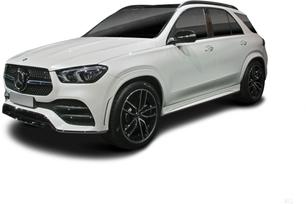
First things first, the new GLE63 S is available in two body-styles, with the wagon appealing to the traditionalists out there, while the coupe targets the style-conscious.
Either way, few large SUVs are as imposing as the GLE63 S, which is a good thing considering it wants to be taken seriously.
Up front, it’s immediately identifiable as a Mercedes-AMG model thanks to its distinctive Panamericana grille insert.
The angry look is punctuated by the angular daytime running lights integrated into the Multibeam LED headlights, while the chunky front bumper has large air intakes.
Around the side, the GLE63 S stands out with its aggressive wheelarch extensions and side skirts, with the wagon getting 21-inch alloy wheels as standard, while the coupe gets 22-inch items.
From the A-pillars onwards, the differences between the wagon and coupe body-styles start to become apparent, with the latter’s roofline much more steeply raked.
At the rear, the wagon and coupe differentiate themselves even more clearly with their unique tailgates, LED tail-lights and diffusers. That said, they do have a sports exhaust system with squared-off quad tailpipes in common.
It’s worth mentioning that the difference in body-style also means a difference in dimensions, with the coupe 7mm longer (4961mm) than the wagon, despite having a 60mm-shorter wheelbase (2935mm). It’s also 1mm narrower (2014mm) and 66mm shorter (1716mm).
Inside, the GLE63 S separates itself with its flat-bottom steering wheel with Dinamica microfibre accents, and multi-contour front seats, which are upholstered in Nappa leather alongside the armrests, dashboard and door shoulders and inserts.
The door bins are of the hard plastic variety. That’s underwhelming in a vehicle that costs this much, as you would hope cow hide – or at least a soft-touch material – would be applied to them.
The black headliner acts as another reminder of its performance focus, and while it makes for a darker cabin, metallic accents feature throughout, while the trim (our test vehicle had open-pore wood) adds some variety alongside the ambient lighting.
That said, the GLE63 S is still filled to the brim with cutting-edge technology, including two 12.3-inch displays, with one the central touchscreen and the other a digital instrument cluster.
Both use Mercedes’ MBUX multimedia system and feature Apple CarPlay and Android Auto support. This set-up is still the benchmark, thanks to its speed and breadth of functionality and input methods, including always-on voice control and a touchpad.
While it’s easy to get swept up in the power and speed of the RS Q8 Performance, it’s important to remember that it’s an SUV and it needs to offer ‘utility’ as well as ‘sports’.
With that in mind, the front seat occupants are well looked after with supportive and comfortable sports seats, with a good amount of small item storage spaces.
The rear seats are surprisingly comfortable, despite the sloping roofline of this ‘coupe-style’ SUV. Audi has cut recesses into the ceiling to create more headroom, so it will be fine for anyone under six-foot tall. Despite there being five seat belts, this is realistically more of a four-seater for adults, although three smaller kids could squeeze across the back.
There’s also a pair of cupholders, two USB-C ports, a 12-volt outlet and your own climate controls for the rear passengers.
As for the boot, again it loses some volume because it’s not a wagon-style SUV, but there’s still a decent, square floor space with a claimed 605 litres of capacity.
So, overall the Q8 obviously isn’t the most practical version of an SUV, but it does well given its focus on style.
Being a large SUV, you’d expect the GLE63 S to be quite practical, and it is, but what you wouldn’t expect is the coupe to have 25L more cargo capacity than the wagon, at a generous 655L, due to its higher window line.
That said, when you stow the 40/20/40 split-fold rear bench via the second row’s release latches, the wagon has a significant 220L advantage over the coupe, at a cavernous 2010L, thanks to its boxier design.
Either way, there’s a small load lip to contend with, making loading bulkier items a little more difficult, although that task can be made easier with the flick of a switch, as the air springs are able to lower the load height by a handy 50mm.
Better yet, four tie-down points are on hand to help secure loose items, alongside a couple of bag hooks, while a space-saver spare resides under the flat floor.
In the second row, things are even better, with the wagon offering a crazy amount of legroom behind our 184cm driving position, as well as two inches of headroom for me.
With its 60mm-shorter wheelbase, the coupe naturally sacrifices some legroom, but it still provides three inches of legroom, while its sloping roofline trims headroom to an inch.
No matter the body-style, the five-seat GLE63 S is wide enough to seat three adults abreast with few complaints, with the transmission tunnel on the smaller side, meaning there’s plenty of room for feet.
There’s also plenty of room for child seats, with two ISOFIX and three top-tether anchorage points on hand for fitting them.
Amenities-wise, rear occupants are treated to map pockets on the front-seat backrests, as well as a fold-down armrest with two cupholders, while the door bins can accommodate a couple of regular bottles each.
A fold-out cubby is positioned below the air vents at the rear of the centre console, containing two slots for smartphones as well as a pair of USB-C ports.
In the first row, occupants have access to the centre console’s cubby, which features two temperature-controlled cupholders, in front of which are a wireless smartphone charger, two USB-C ports and a 12V power outlet.
The central storage bin is pleasingly large and contains another USB-C port, while the glovebox is also on the larger side, and you get an overhead sunglasses holder too. Stunningly, the front door bins can take three regular bottles apiece. Not bad.
While the wagon has a large, square rear window, the coupe’s is a letterbox in comparison, so rearward visibility isn’t one of its strong suits.
Audi updated the Q8 range earlier this year, with refreshed looks after seven years on sale and a plug-in hybrid powertrain to cater for new demand.
A new RS Q8 is coming later in the year, but the RS Q8 Performance has arrived first to make a bigger impact. It naturally gets a performance boost, but there are some other extras beyond more kilowatts.
These include RS ceramic brakes, lightweight 23-inch forged alloy wheels, Pirelli P-Zero tyres, unique aluminium inlays and a special RS layout for the digital instrument display.
Which is good, because the RS Q8 Performance costs nearly $25k more than the ‘standard’ RS Q8, priced from $255,800 plus on-road costs.
Luckily for a car costing a quarter of a million bucks, there’s also plenty of luxuries too, including Nappa leather upholstery, four-zone climate control and a 17-speaker 730-watt Bang & Olufsen sound system, amongst others.
When you compare it to its rivals on performance terms, in particular the Urus and Cayenne Turbo, the $250k asking price doesn’t exactly look ‘cheap’ but it is good value in comparison.
The Audi is a touch pricier than the BMW X6 M Performance at $250,900, but quite a bit more affordable than the Mercedes-AMG GLE63 S Coupe at $268,900.
Priced from $220,600 plus on-road costs, the new GLE63 S wagon is $24,571 dearer than its predecessor. While the rise is unfortunate, it is accompanied by the fitment of a lot more standard equipment.
And the same is true of the new GLE63 S coupe, which is priced from $225,500, making it $22,030 more expensive than its forebear.
Standard equipment for both cars includes metallic paintwork, dusk-sensing lights, rain-sensing wipers, power-folding side mirrors with heating, side steps, soft-close doors, roof rails (wagon only), keyless entry, rear privacy glass and a power-operated tailgate.
Inside you score push-button start, a panoramic sunroof, satellite navigation with live traffic, digital radio, a 590W Burmester surround-sound system with 13 speakers, a head-up display, a power-adjustable steering column, power-adjustable front seats with heating, cooling and massaging functionality, heated front armrests and outboard rear seats, four-zone climate control, stainless-steel pedals and an auto-dimming rearview-mirror feature.
Rivals for the GLE63 S include the less expensive Audi RS Q8 ($208,500) and BMW’s X5 M Competition ($212,900) and X6 M Competition ($218,900).
This is the latest iteration of Audi’s twin-turbo 4.0-litre V8 petrol engine - and it’s a beauty.
While this engine is used in a variety of models, for the RS Q8 Performance Audi has taken power to 471kW with 850Nm of torque, which, as mentioned earlier, makes it the most powerful internal combustion engine Audi has ever offered in a production car.
That’s also a big boost over the previous RS Q8, which managed 441kW/800Nm, and is only just shy of the 485kW/850Nm offered by its ‘cousin’, the Porsche Cayenne Turbo GT.
Audi claims that the RS Q8 Performance will launch 0-100km/h in just 3.6 seconds and keep going to an electronically limited top speed of 250km/h. We tried to test the acceleration time on a closed circuit, but driving into a very strong headwind the big SUV could manage only 4.4 seconds - which is still a very quick time given its size and luxury.
The engine is paired to an eight-speed automatic transmission and Audi’s trademark quattro all-wheel-drive system to help smoothly transmit so much power to the road.
The GLE63 S is powered by Mercedes-AMG’s ubiquitous 4.0-litre twin-turbo V8 petrol engine, with this version pumping out a hard-hitting 450kW of power at 5750rpm and 850Nm of torque from 2250-5000rpm.
But that’s not all, because the GLE63 S also has a 48V mild-hybrid system called EQ Boost.
As its name suggests, it has an integrated starter-generator (ISG) that can provide up to 16kW and 250Nm of electric boost in short bursts, which means it can also reduce the sensation of turbo lag.
Mated to a nine-speed torque-converter automatic transmission with paddle-shifters, and Mercedes-AMG’s fully variable 4Matic+ all-wheel-drive system, the GLE63 S sprints from a standstill to 100km/h in just 3.8 seconds, in either body-style.
Unfortunately you don’t get the most powerful production engine without some trade-off, and for the RS Q8 Performance that means significant fuel consumption. The official fuel economy rating is a very thirsty 12.2L/100km, but that's the best-case scenario too. If you partake in some spirited driving that unleashes the full potential of the engine will result in a higher rate of premium unleaded being consumed by the big V8. We saw returns in the high teens across our time, but that was largely open road driving, so we’ll reserve final judgement for an extended test drive across more varied conditions.
Thankfully there’s a fairly large 85L fuel tank, so if you can hit the claimed average you can get a theoretical 696km of range.
The GLE63 S’s fuel consumption on the combined-cycle test (ADR 81/02) varies, with the wagon achieving 12.4L/100km, while the coupe needs 0.2L more. Carbon dioxide (CO2) emissions are 282g/km and 286g/km respectively.
When you consider the high level of performance on offer, all of these claims are fairly reasonable. And they’re made possible by the engine’s cylinder-deactivation technology and the 48V EQ Boost mild-hybrid system, which has coasting and extended idle-stop functionality.
That said, in our real-world testing with the wagon, we averaged 12.7L/100km over 149km. While that’s a surprisingly good result, its launch drive route mainly consisted of high-speed roads, so expect a much higher number in metropolitan areas.
And in the coupe, we averaged a higher but still respectable 14.4L/100km over 68km, although its launch route purely involved high-speed country roads, and you know what that means.
For reference, the wagon has an 80L fuel tank, while the coupe has an 85L unit. Either way, the GLE63 S only takes more expensive 98RON premium petrol.
Obviously the RS Q8 Performance is all about speed, Audi made its intention clear by sending it to the Nurburgring to set a new SUV lap record for an SUV. But the reality is most owners are unlikely to hit the racetrack in the RS Q8, so what’s it like on the road?
In a word? Impressive.
While the engine is undoubtedly the star attraction offering up so much effortless performance, the RS Q8 Performance wouldn’t be so quick around the Nurburgring or as nice to drive on the road without its highly advanced chassis systems.
It has an array of technology to help it handle, it has active air suspension, adaptive dampers, active roll stabilisation and all-wheel steering, which help to make this big SUV handle like a much smaller car.
The suspension does a remarkable job of providing a compliant ride on such large alloy wheels, while also providing responsiveness.
The handling is certainly helped by the all-wheel steering, which gets the rear wheels to turn in the opposite direction to the fronts at low speed (below 50km/h), but in the same direction at high speed (above 80km/h), making the big SUV feels much more direct when changing direction.
As for the overall experience, that’s helped by Audi’s surprising decision to actually remove some of the sound insulation, which allows you to hear the engine even more than you ordinarily would. This really plays to the dynamic nature of the RS Q8 Performance.
Make no mistake, the GLE63 S is a big beast, but it certainly doesn’t act its size.
Firstly, the GLE63 S’s engine is an absolute monster, helping it to hunker down off the line and then charge on towards the horizon with serious vigour.
While there’s so much initial torque to begin with, you still get the added benefit of the ISG, which helps to eliminate lag as the new twin-scroll turbos spool up.
That said, acceleration isn’t always brutal, as the electronic stability control (ESC) is often quick to cut power when under full throttle in first gear. Thankfully, engaging the ESC system’s Sport mode solves this issue.
This behaviour is somewhat ironic as the 4Matic+ system is seemingly never short of grip, with it's working hard to find the axle with the most traction, while torque vectoring and a rear limited-slip differential proportion torque from wheel to wheel.
Regardless, the transmission provides predictably smooth and predominantly timely gear changes, although they’re definitely not dual-clutch quick.
What’s more memorable, though, is the sports exhaust system, which keeps your neighbours relatively sane in the Comfort and Sport drive modes, but will drive them mad in Sport+, with hilarious crackles and pops heard loud and clear on the overrun.
It’s worth noting that while the sports exhaust system can be manually engaged in the Comfort and Sport drive modes via a switch on the centre console, it only makes the V8 rumble grow stronger, with the full effect only unlocked in Sport+.
Of course, there’s more to the GLE63 S experience, like the fact that it somehow rides like a large SUV yet handles like a sports car.
The suspension’s air springs and adaptive dampers offer up a luxurious ride in the Comfort drive mode, with the GLE63 S wafting along with confidence. Not even its large-diameter alloy wheels pose too much of a threat to this quality on poorer country roads.
The ride is still more than liveable in the Sport drive mode, although the adaptive dampers become a too firm in Sport+, with the ride becoming a little too jittery to be bearable.
Of course, the whole point of the adaptive dampers becoming progressively firmer is to help the GLE63 S handle even better, but the real revelations here are the active anti-roll bars and engine mounts, which effectively limit body roll to such a level that it’s almost imperceptible.
In fact, overall body control is impressive, with the GLE63 S not feeling like the 2.5-tonne-plus behemoth it is. It really has no right to attack corners the way it does, with the coupe feeling a touch tighter than the wagon, thanks to its 60mm-shorter wheelbase.
Further confidence is afforded by the sports brakes, which include 400mm discs with six-piston calipers up front. Yep, they wash away speed with ease, which is exactly what you’d hope for.
Also key to the handling is the electric power steering, which is speed-sensitive and has a variable ratio. It’s really quick in the wagon, and even more so in the coupe, thanks to its more direct tune.
Either way, this set-up is well-weighted in the Comfort drive mode, with plenty of feel and just the right amount of heft. That said, Sport and Sport+ make it gradually heavier, but neither make the driving experience better, so stick with the default setting.
Meanwhile, Noise, Vibration and Harshness (NVH) levels are pretty good, although tyre roar is consistent at highway speeds, while wind whistle is prominent over the side mirrors when travelling above 110km/h.
The RS Q8 Performance comes stacked with the full suite of active safety features. These include adaptive cruise control, lane change warning, rear cross-traffic alert and surround-view cameras.
ANCAP rated the Q8 as five stars back when it first launched in 2019 and that rating is due to expire at the end of 2025. However, ANCAP states that it only applies to the 3.0-litre Q8 models, not the V8-powered RS variants.
ANCAP awarded the second-generation GLE range its maximum five-star rating in 2019, meaning the new GLE63 S gets full marks from the independent safety authority.
Advanced driver-assist systems generously extend to autonomous emergency braking with pedestrian and cyclist detection, lane-keep and steering assist (including emergency), adaptive cruise control with stop and go functionality, traffic-sign recognition, driver attention alert, high-beam assist, active blind-spot monitoring and cross-traffic alert, tyre pressure monitoring, hill-descent control, park assist, surround-view cameras and front and rear parking sensors.
Other standard safety equipment includes nine airbags, anti-skid brakes, electronic brake-force distribution and the usual electronic traction and stability control systems.
Despite the extra power and fancy new brakes, the RS Q8 Performance costs the same to service as the existing RS Q8.
That means $4690 for Audi’s five-year service plan, and $5720 for the Audi Advantage.
The latter package includes an extra two-year, unlimited kilometre warranty on top of Audi’s five year/unlimited km coverage. It also includes two extra services and two more years of roadside assistance, to keep you covered for seven years total.
That’s good, but it’s still an extra cost when many mainstream brands already offer seven years of coverage as standard.
As with all Mercedes-AMG models, the GLE63 S comes with a five-year/unlimited-kilometre warranty, which currently sets the standard for the premium market. It also comes with five years of roadside assistance.
Better yet, the GLE63 S’s service intervals are relatively long, at every year or 20,000km – whichever comes first.
It’s also available with a five-year/100,000km capped-price-servicing plan, but it costs $4450 in total, or an average of $890 per visit. Yep, the GLE63 S isn’t exactly cheap to maintain, but you expected that.