What's the difference?
Is 10 years long enough for a special birthday celebration? When you're a kid, hitting 'double figures' is a pretty big deal, and Audi's obviously in the mood to make some noise because it has lit the candles on a limited 10th anniversary version of its compact SUV rocket ship, the RS Q3.
Only 555 examples of the 'RS Q3 Sportback edition 10 years' will be produced for worldwide consumption, with Audi Australia capturing a batch of them and sending one our way for a brief blast as the fiery five-cylinder starts filtering into dealerships.
This idea hasn’t always worked out too well. Take a parcel-van (in this case the Ford Transit Custom) strip out the rubber matting and cargo barrier and bolt six or seven seats into what was the load area. Sure, the original vehicle to use this concept, the Volkswagen Kombi way back in the 1950s, got away with it, possibly because there wasn’t anything better around.
Ford has plenty of history with this notion, too. The first Transit of 1965 was also available as a mini-bus, but worked okay because the Transit itself was such a car-like departure from the commercial-vehicle norm.
Things didn’t go so well for Ford in the early 1980s, however, when the Econovan-badged parcel van it shared with Mazda (the E2200) was fitted with eight seats, given some fuzzy velour trim and dubbed the Spectron. And it was dreadful. In fact, so bad, that it made the contemporaneous Mitsubishi Nimbus and the even more forgettable Nissan Prairie seem like vastly superior alternatives to the job of moving people. Only because they were.
Early versions of the Spectron retained the Econovan’s crude suspension, wheezy (and fragile) little engines and even the tiny dual rear wheels that entirely deprived the vehicle of any traction. In fact, dreadful doesn’t even cover it.
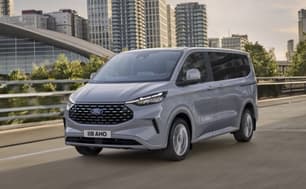
So you can see why Ford might be a bit antsy about me referring to the new Tourneo (a badge that has been around in Europe for decades) as a Transit Custom with extra seats and windows. Yet that kind of sums it up (up to a point, anyway). Luckily, the Transit Custom itself is a pretty sorted thing these days, so maybe Ford has nothing to worry about. Maybe…
The Audi RS Q3 Sportback edition 10 years is dynamically brilliant, beautifully finished and surprisingly civilised on day-to-day duty. A polished compact performance package that even in this special 'get-it-while-you-can' guise offers compelling value relative to its direct competitors.
There’s absolutely no doubt that the van-based people-mover has some distinct advantages over a three-row SUV. The rear seat is bigger, access to it is far better and there’s more luggage space even when all eight seats are occupied. But the Tourneo goes a step or two further with the sliding, swivelling seats that make it one of the most practical and flexible interiors on the market.
True, the driving experience is a bit alien at first, but it’s a case of different, rather than worse. Meantime, the ride is excellent and the performance and economy from the turbo-diesel driveline are both absolutely spot on for this vehicle’s intended purpose.
And perhaps that’s the metaphor for the whole thing: By not trying to be something it’s not, and concentrating on what it needs to do, the Tourneo emerges as a bit of a quiet achiever.
As we said earlier, this type of vehicle concept is never a sure-fire proposition. Parcel vans converted to passenger duties haven’t always worked out. This time, though, it’s different.
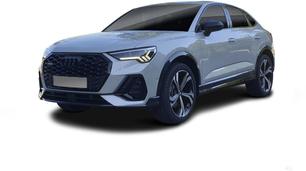
There's a lot going on with the RS Q3's exterior design; a mix of jagged lights, hard character lines, broad haunches and multiple vents surrounding the brand's signature, six-sided grille up front.
The big 21-inch rims fill the arches nicely and the rear features a deep diffuser with fat exhaust finishers poking out either side.
It's a purposeful, macho look and the Sportback edition 10 years is defined by a black package which adds gloss black to the side window trim, front spoiler blade, side blades, rear diffuser and exterior mirrors.
The limited edition is available in two colours, 'Chronos Grey metallic', which is unique to this model and 'Dew Silver matte' which will now be added to the broader RS Q3 colour palette.
Premium performance feels like the dominant theme inside with a typically Audi tech-focused approach including high-quality brushed metal elements, matt carbon inserts and quilted leather trim on the heavily bolstered front seats.
A meticulous attention to detail is obvious and the bottom line is it's all about the driver. A grippy, flat-bottom, leather-trimmed steering wheel looks as good as it feels, sleek screens enhance the racy vibe and the mix of physical and digital controls is sensible.
Perhaps the biggest revision of the successful Transit Custom formula needed to make the leap from FedEx to Brady Bunch has been to the rear suspension. Where the Transit uses a leaf-sprung arrangement, the Tourneo has switched to coil rear springs. These technically offer much greater ride comfort at the expense of some load-carrying ability. Which is fine, even if your kids are the bigger variety.
The move to powered sliding side doors is a welcome one, but I found out the hard way that the doors will still open a fraction if you push the button while still travelling at low speed. Not sure why that would be, but at least the buttons in question are up front in Adult-Land, not within reach of you-know-who.
The reality is, too, that the Tourneo is destined to run with the air-con on any time you have bodes in the back. That’s because – like a lot of van conversions – there’s no opening side windows beyond the tiny, hinged windows that open an equally tiny amount. This has more to do with the Transit’s basic structure than any desire to oxygen-deprive the young `uns, but as any parent knows, a supply of fresh air on the move is sometimes the only thing between a happy day out and a clean up in Aisle five.
Snug but spacious enough, the RS Q3 Sportback's driver and front passenger are provided with plenty of breathing room without upsetting the intimate, performance car feel. Just be prepared for a bit of head-ducking physical origami when folding yourself into either of the heavily bolstered front seats.
Storage includes door bins with room for bottles, two generous cupholders in the centre console, a lidded tray in front of the gearshift (which doubles as the wireless device charging bay), a storage compartment and owners manual holder under the front seats, a modest glove box and an adjustable front centre armrest with storage compartment.
Given this car measures just over 4.5m end-to-end, a close to 2.7m wheelbase is significant and rear room is generous given the Q3's overall footprint. Plenty of head and legroom (for me at 183cm) with enough width for three adults on short journeys. A trio of up to teenage kids will be fine.
The back seat is able to slide for extra legroom (and slightly less boot space), while backrest angle is also adjustable.
Storage runs to small bins in the doors, a fold-down centre armrest (with two pop-up cupholders) and storage nets on the back of the front seats. Directional and temperature control in the rear for the ventilation system is a big plus.
Power and connectivity options run to a 12V outlet and two USB sockets in the front (Type A and C), another two Type C sockets in the back and a second 12-volt jack in the boot.
Speaking of which, cargo volume with all seats up is a handy 530 litres, enough to swallow CarsGuide's three-piece luggage set or large pram (the latter with room to spare) and 1400 litres with the 40/20/40 split-folding rear seat lowered.
The loading lip is low, a stainless steel sill protector helps minimise scuffs and scratches and the hands-free power tailgate is welcome.
If you're keen to hook up the boat or horse float the RS Q3 is able to tow a braked trailer up to 1900kg (750kg unbraked), but don't bother looking for a spare of any description, a repair/inflator kit is your only option. Boo...
Here’s where a vehicle like this stands or falls. Because if something like a Tourneo can’t cope with lots of people and their luggage in a single bound, then there’s really not much point to it, is there? I mean you’re not going to buy it for its sporty looks or supercar dynamics, so unless it works brilliantly as family transport, it’s kind of dead in the water. Fortunately Ford seems to have got it right. Mostly, anyway.
That starts up front where the two front seats feel like they’re metres apart. In reality, this huge gap forms a walk-through function for getting access to anything or anyone misbehaving in the second or third row of chairs. But you can’t help wondering what if… What if Ford had ditched the stubby centre console and added a third front-row seat? Wouldn’t a nine-seater be better than eight?
But the seats themselves are comfy and the high-and-mighty driving position gives plenty of vision in every direction. With one exception. And that is when you’re pulling out of a side street on to a main road and need to see what’s coming from the left. Depending on the angle you’re on, the fat frame of the pop-out side window (in the sliding door) becomes a blind spot, especially for taller drivers.
There’s nothing irretrievably wrong with the way the controls are laid out, but they will take some acclimatisation. That goes for the menu system on the touchscreen as well as the column-mounted shifter wand which is about the same size and shape (and in the same place) as a conventional indicator stalk. Tip the lever accidentally and you’ll wind up in neutral, wondering what just happened. The manual-shift mode is also fiddly to use and paddle sifters would be vastly better. Most won’t bother anyway.
The front cabin is home to a shallow lidded bin in the centre console, a deeper bin below that and a couple of charge points. There are also cup-holders in great spots up high in the corner of the dashboard, a shelf across the top of the dashboard and no less than two gloveboxes (the top one is pretty shallow) thanks to moving the passenger’s airbag into the roof lining. Both front doors also feature bins and storage nooks but there’s a fair bit of hard plastic on show, surely a legacy of the Tourneo’s parcel-van DNA.
The Tourneo’s party trick is the way both the second and third rows of seats can be slid to almost any point on a pair of tracks in the floor. The move is simply accomplished via a lever at the front or a rip-cord in the back of the seats, and all three centre-row seats can be moved individually (the third row is split 60:40). The upshot is that you can have all three rows bunched together for a large luggage space, or the rear row pushed right back to form a rear row with huge legroom. Don’t need all eight seats? How about a second row with the two outside chairs in place and the centre one folded forward to expose a work-surface with built-in cupholders.
But it gets even better, because individual seats can be removed to suit the weirdest of loads and the second-row seats even swivel 180-degrees to form a loungeroom on wheels. The kids will be begging you to take them for a drive in this thing.
The seats fold forward, but they don’t tumble. They don’t need to really, and they don’t fold into a bed either. But if you fancy camping in the Tourneo, you can remove both rows of rear seats for a huge flat floor.
The second row is home to storage bins in each sliding door (yes, a door on each side) a pop-put window that opens only about 40mm, temperature controls, air vents and reading lights. The third row, meantime, is not only easily accessed provided the second row isn’t slid all the way back (at which point you wouldn’t be using the third row anyway) but the good news is that the rearmost seat itself is basically three bucket seats with the same comfort levels (high) as the second row. There are also reading lights and a pair of phone pockets and cup-holders in the last row, too. Only the way the track system works and the shape of the seat base means that foot-room is limited to an extent.
With all three rows in place, but pushed as far forward as they can go, there’s a long load area of up to 725mm. But you can also push the second and third rows all the way back and have a cargo area 2622mm long behind the front seats. Maybe the van DNA is a good thing after all.
With all eight seats in place, there’s a minimum of 673 litres of luggage space which can be expanded all the way to a monster 4683 litres with the second and third rows removed.
There’s also a 12-volt power socket and a lighting system in the back, too, although while the side doors are automatic, the tailgate is manual. And you’ll need plenty of real estate to open it, too. Even tall folk will hit the button to open the tailgate, start the strut-assisted opening and then take a step or two back to allow the huge tailgate to rise without clobbering them. An automatic tailgate where you hit the button and run away to a safe distance would be much nicer.
The Audi RS Q3 Sportback edition 10 years is priced at $102,900, before on-road costs, which is a $3800 premium over the standard issue version.
For those extra dollars the car is upgraded with specific 21-inch black alloy rims, black badging and brake calipers as well as (three-stage heated) 'RS' Nappa leather-trimmed sports front seats with contrast 'Copper Honeycomb' stitching.
The fancy stitching extends to the Alcantara-trimmed steering wheel and gear lever, the RS floor mats also feature copper highlights and the door downlighting projects a unique rhombus design.
At that money the RS Q3 lines up against BMW's firecracker X3 M40i ($126,800), the ferocious Mercedes-AMG GLA45 S ($121,900) with the Jaguar E-Pace 300 Sport AWD ($84,500) the only other similarly pitched compact performance SUV within $20K of the Audi.
And as well as the performance and safety tech covered later in the review, the RS Q3's standard features list includes, three-zone climate control, adaptive cruise control, keyless entry and start, Nappa leather trim, ambient lighting (with 30 colour choices), an RS sport contour leather-trimmed steering wheel, 12.3-inch digital instrument cluster, 10.1-inch multimedia display (with text and voice control), (wired) Android Auto and Apple CarPlay, sat nav and wireless device charging.
There's also a Bang & Olufsen '3D Sound System' (15-speaker with 680-watt, 16-channel amp), digital radio, 21-inch alloys, electronically-controlled adaptive dampers, auto Matrix LED headlights (with RS-specific darkened trim) and a hands-free power tailgate. And it's worth noting metallic and pearl effect paint finishes are offered at no extra cost.
Pretty impressive. Especially when you consider even this special edition RS Q3 is $20,000 cheaper than its primary BMW and Merc-AMG rivals.
If ever the Average Aussie family has been in the grip of a cost-of-living crisis, it’s right now. With that in mind, we’ve chosen the entry level version of the Tourneo, the Active, for this review. At $65,990 before on-road costs, it’s not exactly cheap, but does come in a full $5000 less than the Titanium X version.
And it is pretty well equipped. That starts with 17-inch alloy wheels, 13-inch touchscreen and 12-inch driver information screen, Bluetooth, full connectivity including wireless Apple CarPlay and Android Auto, wireless charging, 10-speaker stereo, tri-zone climate control, automatic wipers, heated front windscreen, keyless entry and start, 10-way powered driver’s seat, heated and cooled front seats, and a pretty nice artificial leather covering for some of the touch-points.
In a continuation of an industry-wide trend that we wish would stop, only white is considered a standard, no-cost paint colour. Every other colour costs extra, but in 2025, should it?
If the budget will stretch the extra five grand, the Titanium X model adds body coloured bumpers, a 14-speaker stereo, a 360-degree camera system, ambient interior lighting, heated outboard seats in the second row, and extra areas of (better) artificial leather trim.
The RS Q3 Sportback is powered by a 2.5-litre in-line five-cylinder intercooled turbo-petrol engine sending drive to all four wheels via a seven-speed dual-clutch automatic transmission and Audi's quattro permanent all-wheel drive system based on an electronically-controlled multi-plate clutch pack.
Featuring a cast iron block, alloy head, direct-injection as well as variable intake and exhaust cam adjustment, the (EA855) engine features a special firing order (1-2-4-5-3), the odd number of cylinders producing a signature engine sound and exhaust note reminiscent of the 1980s 'Ur' Quattro.
Peak power is 294kW from 5850-7000rpm and maximum torque is 480Nm delivered across a broad plateau from 1950-5850rpm.
Because the platform is (mostly) borrowed from the Transit Custom, you get the same driveline. That starts with a 2.0-litre turbo diesel, good for 125kW of power and a useful 390Nm of torque. It drives through a conventional eight-speed automatic transmission and then to the front wheels as a means of keeping the load floor as flat and low as possible.
Ford claims a 2500kg towing capacity with a braked trailer, but on a wet road or damp boat ramp, that’s really going to test the limits of the front wheel’s grip which can be overcome even in the dry if you’re too hasty with the throttle.
The biggest engineering change in the move from Transit Custom to Tourneo has been the switch from leaf springs on the former to coil springs and an independent suspension on the latter. This is all in the name of ride quality and recognises the fact that the Transit will often be called on to cart heavier loads than eight humans.
Audi's official fuel economy number for the RS Q3 on the combined cycle is 8.9L/100km, the 2.5-litre turbo-petrol five-cylinder engine emitting 204g/km of CO2 in the process. Stop-start is standard.
We covered city, suburban and some freeway running on test, returning an (indicated) average of 9.6L/100km. And that's pretty good, given we pushed on enthusiastically on a reasonably regular basis.
The fuel tank requires 63 litres of 98 RON premium unleaded to fill it which translates to a theoretical range of just over 700km, shrinking to around 650km based on our real-world number.
Ford quotes an official combined fuel consumption figure of 7.4 litres for the Tourneo. Over a few days of running in a pretty broad mix of urban and country work, we saw an average of 8.6 litres per 100km which is still pretty good for a vehicle of this size.
With the standard 70-litre fuel tank, that gives the Tourneo a theoretical combined range of around 900km between fills, but the real-world number says closer to 800km is more realistic.
Don’t forget, either, that running costs will be a little higher than some diesels, as the Tourneo requires AdBlue at regular intervals, in line with its Euro 6 emissions levels.
It still seems counterintuitive when a high-riding SUV is tuned to perform and handle like a low-slung sports car but here we are. And Audi executes this mystifying transformation as expertly as any carmaker in the automotive world.
Audi says the RS Q3 Sportback will blast from 0-100km/h in 4.5 seconds. Anything under 5.0 seconds is properly fast, and there's nothing quite like the deep-throated bellow of a VW Group in-line five to raise the hairs on the back of your neck.
The RS Q3's sport exhaust system is a dual-branch set-up with exhaust flap control, and people of a certain age will instantly imagine themselves matching it with Ari Vatanen, Walter Röhrl and Michèle Mouton on a suburban special stage behind the wheel of a 1980s Group B Sport Quattro rally car (actually, the school drop off at an infinitely more sensible pace).
The car weighs in at a not insubstantial 1775kg, but 480Nm, available all the way from 1950rpm to 5850rpm, means a near instant surge of fierce acceleration is always lurking under your right foot.
And the VW Group is on the pace when it comes to dual-clutch auto transmissions, from Porsche's 'PDK' and VW's 'DSG' to Lambo's 'DCT' and Audi's 'S tronic'.
The RS Q3's seven-speed unit is quick and positive, the wheel-mounted paddles ramping up the engagement factor.
The variable ratio, electrically-assisted steering is capital G Great. Well weighted and precise with reassuring road feel and the Alcantara trimmed wheel is a nice way to access it all.
Suspension is by struts at the front and multi-links (four) at the rear with adaptive dampers on-board.
Despite running on 21-inch rims, shod with high-performance 255/35 Continental PremiumContact 6 rubber, ride comfort is surprisingly good.
Dial in 'Comfort' mode via the 'Drive Select' system and the impact of even substantial bumps is softened off appreciably.
An ideal set-up would be the first 'RS1' short-cut Drive Select button set for Comfort suspension, with throttle, steering and transmission set to maximum attack and the second 'RS2' mode tweaking the suspension to track-day level, too.
Push on through your favourite set of bends and you can feel the electronic wheel-selective torque control system keeping everything under control. This car puts its power down through sweeping sections with fuss-free authority.
The RS-specific menu in the digital instrument cluster provides extra instrumentation in the shape of a power/torque display, G meter and lap timer. Fun!
The brakes are professional grade with big ventilated rotors all around and aluminium fixed calipers at the front.
But beware, the flip side of the RS Q3's quick steering response is a sizeable 11.8m turning circle. Take your time when parking.
If you haven’t driven a one-box van for a decade or more, you’re in for a treat. Just like the Transit Custom on which this car is based, the Tourneo represents a different experience to that of a conventional car or SUV, but one that is not without merit.
For a start, you sit very high which means a great view out across the traffic. And while the driving position is a little less laid-back than a modern car, once you get used to the almost square steering wheel, neither is it the dreaded sit-up-and-beg of older van designs.
The four-cylinder engine doesn’t make the Tourneo a fast vehicle, but it does give it lots of flexibility thanks to all that turbo-torque being available from just off idle. The eight-speed transmission helps, too, but the real surprise is just how quiet the Tourneo is when on a cruising setting. In fact, it’s almost uncanny how such a big, empty metal box could be so silent, but beyond a little tyre noise on coarse surfaces, the Ford pulls it off. As a result, it’s very relaxed and effortless feeling at freeway speeds.
The other surprise is how good the ride quality is. By swapping the cargo van’s leaf rear springs for coils, the Tourneo suddenly displays a very good match between the front and rear axles in terms of how they work to absorb bumps. You do still get some of the front-seat sensation that you’re sitting over the front axle, but it’s not terrible and the reality is that you simply sitting closer to the axle, not right over it.
For many drivers perhaps the over-riding impression will be of the vehicle’s external size. And, yes, it’s a long and wide piece of equipment, but at least the boxy shape means the corners are easy to place and the huge glass area and driver aids like parking sensors and blind-spot warnings help a lot in the daily cut and thrust.
Things are also improved by the fabulously small turning circle of 10.9m kerb-to-kerb (courtesy of the Transit’s role as an inner-city delivery van) that gives an agility the looks don’t suggest. But there’s a sense that the Tourneo is a little wider in the rear track than the front, as you’ll sometimes find the inside rear tyre finding the lips of roundabouts and suburban gutters.
Although the Audi Q3 received a maximum five-star ANCAP score in 2019, the RS Q3 was specifically excluded from the assessment, so it's officially untested.
But the car boasts an extensive active (crash-avoidance) safety suite including, auto emergency braking (AEB) (5.0km/h to 85km/h for pedestrians and cyclists and up to 250km/h for vehicles), adaptive cruise control (with stop-go function and active lane assist), lane change warning and lane departure warning (with lane keeping assist).
There's also 'Attention Assist' (warning tone and visual signal if the system determines the driver's attention may be lapsing), front and rear parking sensors, a reversing camera with 360-degree view, rear cross-traffic alert, tyre pressure monitoring, 'Hill hold assist' and hill descent control.
If, despite all that, a crash is unavoidable there are six airbags on-board (front and side for the driver and front passenger as well as full-length curtains). The RS Q3's showing its (10-year) age here because additional rear side and front centre bags are close to the norm now.
Nice to see a first aid kit and warning triangle included and there are three top tethers and two ISOFIX anchor points for securing baby capsules and child seats across the second row.
Keeping the whole family safe is the name of the game here, so Ford has extended things like side-curtain airbags right through to the third row, thereby covering every outboard seating position. In fact, there are nine airbags all up, including a centre airbag between the front seat occupants.
Driver assistance programs include forward collision warning which incorporates the autonomous emergency braking (AEB) function, blind-spot monitoring and assistance, rear cross-traffic braking, active cruise-control, tyre pressure monitoring, lane-keeping assistance, front and rear parking sensors and traffic sign recognition.
The AEB works at any speed above 5km/h, and the pre-collision assist at speeds above 30km/h.
Both the second and third rows of seats feature a pair of ISOFIX child-restraint mounting points (for a total of four) while there are five top-tether restraint mounting points as well.
The Tourneo hasn’t been locally crash tested as per the safety-stars system, but the Transit Custom has been assessed overseas as part of a commercial van safety comparison which graded the vehicle at 96 per cent, the highest rating ever achieved by a van undertaking the test program in question.
Audi Australia covers all the models it sells with a five-year/unlimited km warranty with 24-hour roadside assistance included for the duration. Pretty much cost-of-entry in this part of the market.
Paintwork defects are also covered for five years, and the body is warranted against corrosion (to the point of perforation) for no less than 12 years. Nice.
Service intervals are 12 months/15,000km and capped-price servicing is available, a five-year/75,000km plan for the RS Q3 costing $3580, an annual average of $770. Fairly steep.
An 'Audi Advantage' package is also available, adding an extra two years' worth of warranty, scheduled servicing and roadside assistance (to the end of any existing term) for $3800.
Ford offers its standard five-year/unlimited kilometre warranty on the Tourneo. Five years is fair enough, but can’t match the seven years or even more that some of the competition offer. It‘s worth noting, however, that the warranty does match many of the makes and models that will be the Ford’s natural enemies.
Service intervals are 12 months or a very long 30,000km, but it’s unlikely many families will clock up 30,000km in a 12-month period, anyway. There’s no word on capped-price servicing yet, but the mechanically similar Transit Custom has a service plan that limits the cost of each of the first four services to around $500.
The biggest additional running cost for the Tourneo will be the AdBlue additive to control emissions. How frequently you need to top up will be determined by what type of driving you do.