What's the difference?
Supercars can sometimes be seen as the divas of the auto world – delicate, over-the-top, not very good with reality. Well that may be the case for some supercars but not Audi's R8. It's affordable by supercar standards, easy to drive and still very, very fast.
Now the updated R8 has arrived, looking fiercer than ever, but remaining one of the smartest supercar buys on the market. But did you know there are two types of R8? Both have very distinct personalities and I lived with them for two days – in the reality of road works and also ideal country roads.
Here's everything you need to know...
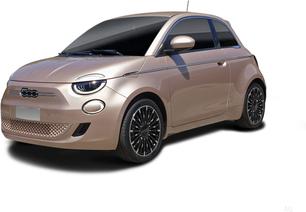
You wouldn’t know it to look at it, but this is a brand-new — as in really and truly all-new — Fiat 500.
That has got to be a big deal for fans of Fiat’s pint-sized city car, with a genuinely all-new 500 about rare as spotting Halley’s Comet soaring over Turin. The last time was way back in 2007, by the way, and that car will remain on sale alongside this new one for the foreseeable.
But that’s not the only surprise. This 500 is also entirely electric, properly modern inside, and it has actual technology in its cabin and on its safety list.
Fiat reckons this is a big reset for the 500. And that there will never be another all-new petrol model again.
So, how does this new 500e stack up against the recent flood of small EVs, predominantly from China?
Let’s go find out.
The Audi R8 V10 RWD and V10 Performance Quattro have their own personalities. I'm a big fan of the lower-powered rear-wheel drive car, but the Performance is the ultimate here with better brakes and that 330km/h top speed. Either way the R8 is a true supercar, but one that doesn't have to be driven gingerly as though something may break off.
A fun, funky EV which will no doubt appeal to lovers of Italian style, but also one which struggles a little on the range and price front.
Still, there’s no doubt that electrification has improved the Fiat 500 formula.
Lamborghini styling can look over the top, McLarens can sometimes appear delicate and fragile, and Ferraris seem to be everywhere, and even for me, begin to blend into one.
The R8, though, looks exactly how an Audi supercar should look – understated, tough and serious. Have you seen that Audi advert with the R8 on a dyno not wearing any pants? That sounds ridiculous but Google it because it sums up what the R8 is – a real car with a raw race car underneath, that's meant to be driven comfortably on the road and hard on a race track and the styling indicates that intent with little in the way of fanfare.
Well, there is that big window at the back which shows off the engine and the 'side blades' that surround the large vents carved into the side of the car to cool the engine.
The latest update has taken the design from the second-gen car which arrived in 2016 and added a new grille, front bumper, door sills and vents in the rear bumper. It's a more angular, sharper, and busier design with more vents and winglets than ever.
The R8 V10 RWD and R8 V10 Performance are close to identical in their styling. You can pick the Performance by its gloss carbon front spoiler, side sills, mirror caps and rear diffuser. The RWD has gloss black elements instead.
Which looks best: the Coupe or Spyder? That's a personal thing, but I reckon race cars need to have a hardtop roof, so it's the coupe for me, please.
Built using the 'Audi Space Frame' which weighs only 200kg, the R8 is 4426mm long and just 1240mm tall, but at 1940mm across it has a wide, planted stance.
It looks, well, it looks like a Fiat 500.
It’s actually bigger in every dimension than an ICE cinquecento, but it doesn’t really look like it, which is a good thing.
The 17-inch wheels look great, and big against the very small Fiat, and I like the hidden doorhandles, which make the already smooth-looking 500’s flanks look a little smoother still. But I can take or leave the little DRLs up front that are meant to act as little illuminated eyebrows for the headlights, which come over a bit too cutesy.
But I think the highest compliment I can pay it is that it looks like a regular Fiat 500 — one of the most successful reincarnations of a timeless design ever — and not some modern, eco-friendly version that would have killed the look.
In the cabin, however, it’s definitely a more modern affair, with the big screen, the horizontal push-button gear selector, and the nifty push-button door openers.
Still, it’s all pretty familiar Fiat 500, only a little nicer, even if some of the plastics are far too hard and scratchy for a vehicle this expensive.
There are five colours available: Ice white, Onyx black, Rose gold, Ocean green and Celestial blue.
The R8 is a two-seater supercar and practicality isn't high on its 'to do' list with limited cabin storage in the form door pockets almost as small as my jeans pockets, two cupholders hiding under a trapdoor in the centre armrest, a hidey hole in front of the shifter containing a wireless charger and two USB ports and the glove box.
As for the boot – there are two: one in the nose with a 112-litre cargo capacity and another behind the mid-mounted engine with 226 litres.
Room for people, well you and a friend, is excellent. I'm 191cm (6'3") tall with a 2.0m wingspan and found the footwell deep and spacious, while head and shoulder room is also good.
The 500e is 29mm taller, 61mm longer and 56mm wider than the current ICE Fiat 500 (now 1529mm, 3631mm and 1683mm respectively), and it rides on a longer wheelbase, too .
That means more front-seat room and head room, but there’s still not oodles of space in the four-seat cabin, and especially in the back, where things are pretty tight.
I’m 175cm tall, and my head touches the ceiling in the back, and if I had another full-size human in the back with me, I’d want it to be someone I know well, because we’d be well and truly aquatinted by the time we got to our destination.
The front seats are more accomodating, but there is a strange tightness to the pedal area for the driver. It’s so tight, in fact, that when you rest your left foot, you have to be careful not to accidentally clip the brake pedal when driving.
The boot is a small 185 litres, too. But you’re not buying this for practicality perks, are you?
The entry level R8 RWD Coupe lists for $295,000, while the Spyder version is $316,500. The R8 V10 Performance Coupe is $395,000 and the Spyder is $416,500.
It's in my view the best value supercar on the market. The Lamborghini Huracán Evo shares the same 5.2-litre V10, the transmission and the chassis (like Audi it's part of the Volkswagen family) and starts at $460K.
A Ferrari 488 Pista is pushing $600K, but the McLaren 570S is closer in price at $395,000 – although I find the R8 much less stressful and completely different to drive – read about that below.
Let's talk features. Coming standard on the R8 RWD Coupe and Spyder are laser LED headlights (new to the R8 for this update), 20-inch cast aluminum wheels (also new), a full leather interior (new) with heated and power adjustable RS sports seats, 12.3-inch instrument cluster, Bang & Olufsen 13-speaker stereo (new, too), sat nav, digital radio, proximity key and wireless device charging (new).
The R8 V10 Performance Coupe gets all of the features above but swaps the wheels for lighter, milled alloy rims, ditches the steel brakes for ceramic (pricey to replace, though), and adds other mechanical extras over the entry car such as Audi's magnetic dampers, plus a carbon-fibre reinforced polymer front swaybar.
What's missing? A central media screen would be good so your passenger can pick the music or follow the sat nav. Audi calls it a 'driver-focused cabin', but the Huracán has a media screen in the centre console.
I think there's a bit of advanced safety equipment missing, too – but that's in the section down further.
The 500e is not cheap by modern small EV standards — we’re looking at you, China — but it does arrive in one well-equipped trim level, called La Prima, with paint the only available option.
It's also, quite shockingly for anyone who has driven an ICE Fiat 500 lately, stacked with some truly high-tech kit.
There’s heated seats for the first time ever, for example, and there’s 10.25-inch central screen with Apple CarPlay and Android Auto, and wireless charging.
There’s a digital driver display, too, plus there’s faux-leather on the seats and dash, a panoramic glass sunroof and fancy push-button front doors (though with a mechanical back-up lever hidden in the door pockets should something go pear shaped).
Outside, you’ll find 17-inch alloys, as well as LED lightning all around, including the DRLs, and there’s keyless entry and push-button start, too.
But, and it’s a significant but, the 500e lists at $52,500 before on-roads , which — when you consider its size, battery and range — really edges it into the premium EV space.
A similar-sized EV from China can be had for under $40k, which means you are going to have to really love the 500e to drop that extra $15k or so.
There are two grades in the Audi R8 range – the entry-point R8 V10 RWD which has rear-wheel drive (RWD), and the R8 V10 Performance Quattro which has all-wheel drive (AWD).
Both obviously have V10 engines, it's a naturally aspirated 5.2-litre petrol unit (so no turbos here), but the RWD makes less power and torque at 397kW and 540Nm, while the Performance produces 449kW and 560Nm.
The V10 is mounted behind the driver's seat but ahead of the rear axle making it mid-engined car. The engine even has its own window and you can see it in there with its face pressed up against the glass.
There are two body styles as well – the Coupe and Spyder (convertible, roadster, just another word for a retractable soft roof). We'll get to the prices in the next section, but let's talk about the more interesting numbers such as top speeds.
The V10 RWD in coupe form can reach 324km/h and the Spyder can hit 322km/h while the V10 Performance Coupe and Spyder are both a smidge quicker at 330km/h.
Those are all go-straight-to-jail speeds in Australia, so if you're tempted to fact check my numbers then do it on a racetrack. Audi holds excellent track days – I've done them and you'll not only get to drive the R8 as fast as you can, the instructors will help you improve your advanced driving skills, too. Do it, it could save your life.
Acceleration from 0-100km/h is rapid – 3.7 seconds and 3.8 seconds for the V10 RWD Coupe and Spyder respectively, while the V10 Performance Coupe and Spyder can nail it in 3.2 seconds and 3.3 seconds.
The V10 engine has a cylinder-on-demand feature which can shut down five of the cylinders while cruising on a motorway, say at 110km/h. It's a fuel-saving system, but keep in mind this V10 loves petrol and lots of it – I've hidden that all the way down the bottom of this review.
Shifting gears in all R8s is a seven-speed dual-clutch automatic transmission.
A single front-mounted electric motor delivers the power here, with 87kW and 220Nm on offer. Enough, Fiat says, to knock off 100km/h in 9.0 seconds. But it does feel quicker than that in real life, thanks to the way electric vehicles deliver their power.
There’s the usual EV single-speed gearbox, too, with power sent to the front wheels.
That's like asking how many calories are in this pavlova that I'm about to push into my mouth? Seriously if you're asking then you shouldn't be eating it – or driving the R8.
But just for the record, according to Audi the RWD R8 uses 12.0L/100km in Coupe form and 12.2L/100km in Spyder guise after a combination of urban and open roads, while the AWD R8 of course will use more at 13.4L/100km for both Coupe and Spyder.
The Fiat 500e’s 42kWh battery provides a smallish 311km driving range on paper, but when we got in it was more like 290km at 96per cent charged. A city car, then, rather than a long-distance hauler.
When it does come time to charge, you’re set up for 85kW DC fast charging which should take you from zero to 80 percent in 35 minutes.
A race circuit is the best place to test the performance of an Audi R8. I've been lucky enough to have done this in the past, but for this update of the R8 the Australian launch was held on public roads and included a convoy of RS models such as the RS 6 Avant, RS 7, RS Q3 and TT RS.
Even then I think I was 'stitched up' because I began the day in the R8 V10 Performance Coupe but spent almost the entirety of my allocated time in roadworks at 40km/h before swapping to an RS Q3.
So, while I can't honesty comment about the dynamics on this updated R8 V10 Performance Coupe I can tell you that having driven every iteration of the R8 since 2012 that it's a weapon, with helicopter-like visibility out of that large front window.
If, like me, you think turbos are 'cheating' (superchargers are fine), then you'll love the linear power delivery of the R8's naturally aspirated V10, and while I love front-engined sportscars, nothing beats a mid-engined car for the feeling of balance and lightness in the nose while having the sound of thousands of explosions going off just behind your back.
Having AWD is not just great for acceleration and perfect traction from Audi's quattro system, I think it's a good safety feature in a supercar, and while only your judgements can stop things going pear shaped, the system will be there to help on slippery roads.
The following day was different. I was in the R8 V10 RWD, the country roads were superb and while it wasn't a racetrack it was enough to get a hint of the capabilities of the RWD R8.
While the R8 V10 RWD feels the same to sit in with the same great view, it feels different to drive than its faster sibling, in a good way. First there's the noticeable power difference – more than 50kW and 20Nm less – but also the lack of AWD makes the front end feel more pointable, and the car feel more like a traditional sportscar that pushes from behind rather than pulling from the front. Less power, but more fun.
The RS cars in our test convoy were all awesome machines, but stepping out of even the RS6 Avant and slipping down into the R8 cockpit was like getting into a UFO – it's so far ahead dynamically of any other Audi that all I could do was laugh like an idiot. Corners which were making an RS 7 really struggle, were handled effortlessly by the R8. And in a straight line it's a bullet in a barrel.
The Performance has the better brakes: 380mm ceramic discs with six piston calipers up front and 356mm discs with four piston calipers at the rear. The RWD has steel discs – 365mm with eight piston calipers up front and 356mm discs with four piston calipers in the rear.
Keep in mind if you are planning on track days, you'll find the ceramic discs costly to replace, and beside the stopping power of the steel ones is excellent.
And yet, on pot holed course bitumen the ride is a lot more comfortable than you might think and having driven the Performance in traffic it's a much nicer place to sit than the claustrophobic cabin of a McLaren 570S. You could honestly use the R8 daily.
This is the probably the best-driving example of the Fiat 500 I’ve ever climbed into. Sure, it’s not quite as engaging as self-shifting a perky little manual, but it’s smoother, easier and more comfortable, and a whole lot better than ICE vehicles fitted with Fiat's odd dual-logic automatic gearbox.
The EV transition genuinely suits the little Fiat, admittedly sapping a little character, but also thoroughly modernising the drive experience, with smooth, constant acceleration, sharp-enough steering and a ride that’s mostly settled, only really becoming crashy over the bigger road imperfections.
The small dimensions here also help the EV reincarnation. Yes, it’s heavier than you might expect, weighing in at 1290kg (tare), with the batteries adding several hundred kilograms to the equation, but the 500e still doesn’t feel overly heavy, with the little Fiat remaining pretty light on its feet.
There are three drive modes on board, including the catchy Sherpa mode (because it will help get you where you’re going), which, when you’re running low on battery, kills the climate control and anything else it needs to preserve range and get you home.
But you can’t shake the feeling that the 500e is a little expensive for such a specialist tool. It’s unashamedly a city car, but one that will cost you more than $50k, and which doesn’t feel quite premium enough in the cabin to justify that asking price.
ANCAP has not tested the Audi R8 so there's no star rating available. What we can tell you is that the R8 has a low level of advanced safety technology – there's no AEB, no adaptive cruise control, no rear cross traffic alert, nor blind spot warning, nor lane keeping assistance. That's the reason why the score is so low here.
The R8 does have electronic stability control and ABS, and active roll over protection, plus six airbags, although the Spyder doesn't have curtain airbags.
There’s a heap of active safety stuff on board (again, unusual for a 500), with active cruise control, traffic sign recognition, front, rear and side parking sensors, blind-spot monitoring, AEB with pedestrian and cyclist detection, and more.
Still, the 500e only secured a four-star ANCAP safety rating, scoring just below the five-star cut off in Adult Occupant Protection, Child Occupant Protection and Safety Assist, with a lack of a centre airbag not helping.
The R8 is covered by Audi's three-year, unlimited kilometre warranty which not only falls behind in duration compared to mainstream brands but also its direct rival Mercedes-Benz which now has five-year, unlimited kilometre coverage.
Service intervals are every 12 months or 15,000km but unlike other Audi models there isn't a three-year or five-year plan available.
The fly in Fiat’s ointment is its ownership proposition, with a three-year, 150,000km warranty now way below par in Australia these days, even if the battery is covered for the standard eight years.
Servicing is every 12 months or 15,000kms, and will cost $250 a pop for the first eight years, which is commendably cheap.