What's the difference?
Audi’s latest Q5 Sportback brings mild-hybrid power, updated underpinnings, more technology and a genuinely impressive interior glow-up.
It’s clearly aimed at buyers drawn to a more athletic take on the mid-size SUV, where style plays a bigger role than outright practicality. We're testing the base petrol spec to see how it sits alongside the BMW X4 xDrive20i, Genesis GV70 2.5T and Mercedes-Benz GLC300 Coupe.
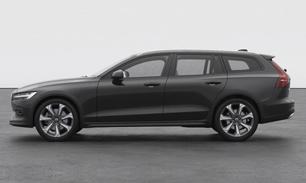
There’s something about a Volvo wagon. Especially one with Cross Country in its name. City sophistication mixed with the potential for adventurous outdoor pursuits.
Leaning into its all-wheel-drive capability for a cheeky ski weekend with the family. Hooking up the boat and heading to the lake for a spot of fishing. Or seeking out that off-the-beaten-track camping spot you’ve had your eye on.
The V60 Cross Country is made for that family-focused role. Okay, so the Clearys didn’t do much skiing, fishing or camping during a week with this premium mid-sizer. None, actually.
But we did assess its comfort, flexibility, practicality and everything else required to help grease the wheels of day-to-day household life. Stay tuned to see what we discovered.
The updated Audi Q5 Sportback TFSI is a strong example of a luxury base-grade SUV, ticking most of the boxes in styling, comfort and features. It may not always outperform its rivals on paper, but it delivers where it counts, offering a refined, practical and engaging package that will satisfy.
The Volvo V60 Cross Country’s split-personality delivers urban civility and all-wheel-drive capability. Our city-slicker week with it confirmed the latter doesn’t compromise the former. It’s sleek and refined, well equipped for the money and safety is top-shelf.
If you have multiple kids creeping up through their teens, you might need something a bit bigger, and ownership costs like fuel economy and servicing, while not tragic, could be better.
Overall though, a thoughtfully engineered, premium mid-size wagon that expertly balances form and function.
The Q5 Sportback is the more attractive sibling when compared to the standard SUV, with a shape that feels more dynamic and sport-oriented. The updated design dials back the sharper creases of the previous model in favour of softer curves, paired with slim matrix LED headlights. The revised 'Singleframe' grille has strong presence and the full-width rear light treatment adds to the Sportback’s visual appeal. Overall, it’s a very handsome vehicle.
Inside, the interior glow-up is immediately noticeable. The large new display takes centre stage in a redesigned dashboard that looks clean and appropriately sophisticated.
There’s a good mix of materials throughout the cabin, including the beige leather upholstery, although the presence of hard plastics reminds you that this is still a base grade. Even so, the cabin largely hits the right notes for a luxury entry point.
There are a few details that don’t quite land for me. The door-mounted control panel on the driver's side feels busy and a little fiddly to use, and creates an oddly sized and positioned pull handle that just doesn’t feel nice to use. And this is very much a nitpick, but the black stitching on the beige seatbelts catches my eye all the time. None of these are deal-breakers, but they stand out in an otherwise well resolved interior.
Full disclosure, I’m a long-time wagon fancier, appreciating their practicality and load capacity combined with easy, low centre-of-gravity driving dynamics. And the V60 Cross Country follows Volvo’s clean-as-a-Scandinavian-whistle design direction.
Soft curves, a gently tapering roofline and the occasional hard character line deliver a fuss-free exterior that’s contemporary and instantly recognisable as a Volvo.
Signature elements like the ‘Thor’s Hammer’ LED headlights, and tall, jagged tail-lights will be familiar to spotters of Swedish cars, and our test example’s classy ‘Thunder Grey’ paint finish enhances the understated, yet premium look.
The V60 Cross Country rides higher than the non-XC models available in other markets (197mm ground clearance vs 142mm) and adds a hint of toughness with dark wheel arch extensions, a chrome frame grille with black bars, high-gloss black side window trim and bright aluminium roof rails.
The interior is similarly understated, yet there’s plenty of visual interest thanks to the multi-layered dash, mixing soft-touch plastics and brushed metal elements with trimmed and stitched insert panels.
A portrait-oriented central multimedia screen and customisable digital instrument cluster add just the right amount of techiness, with a common-sense mix of digital and physical controls attached to various functions.
Speaking of which, the gearshift is “genuine Swedish crystal” made for Volvo by Orrefors. Not my cup of tea, but it’s distinctive.
With chubby, adjustable cushion and backrest bolsters, as well as customisable under thigh support, the front seats look racy but give nothing away in terms of comfort. The rear seats are also neatly contoured and the overall standard of fit and finish is top-shelf.
Up front, the cabin feels spacious and comfortable, with plush (heated) electric seats, while the driver also benefits from a two-position memory function, which is a plus if the car is shared. My main gripe is the short seat bases, which become noticeable on longer drives.
In the rear, comfort largely holds up, though space is better suited to two adults due to the high transmission tunnel. The 40/20/40 split-folding rear seat is a practical inclusion and helps when juggling passengers and longer items.
Storage is mostly well considered. There’s a generously sized glove box and a couple of useful storage bins in each door, although the centre console is on the smaller side. The dedicated phone tray is a highlight, housing the wireless charging pad, two USB-C ports and a 12-volt socket. Both rows get cupholders and bottle storage, while rear passengers also benefit from USB-C ports, climate control, directional air vents and map pockets. Overall, there’s just enough space and amenity for adults or teens to remain comfortable.
Technology is handled by the updated media display, which features a responsive touchscreen and a menu system that’s easy enough to navigate. Wireless Apple CarPlay and Android Auto are quick to set up, and the built-in satellite navigation is clearly laid out. That said, the near-total absence of physical buttons may frustrate some, with functions like climate control buried within the touchscreen. The number of pop-up disclaimers on start-up also feels excessive.
Boot space is where the Sportback’s sloping roofline has the biggest impact. Load height is limited, and capacity tops out at 515L with all seats in place, making it the smallest in its segment, albeit only by around 10L. I like the deep underfloor storage, along with the cargo cover, net and hands-free powered tailgate. However, the lack of a spare tyre, replaced by a repair kit, is a deal-breaker for me as a country driver, though it may matter less to those with easier access to repair services.
At just under 4.9m long, a fraction over 1.9m wide and 1.5m tall the V60 Cross Country is a ‘large’ medium-sized wagon. And a lengthy 2875mm wheelbase means there’s a generous amount of space inside.
Plenty of breathing room up front but storage is a mixed bag. The (cooled) glove box is a decent size, there’s a lidded box (which doubles as a centre armrest) between the seats, and two big cupholders in the centre console with a sliding lid to cover them. Which is great if you want to hide odds and ends in there, rather than locate a couple of large cappuccinos.
However, in front of that, the wireless charging pad takes up a flat piece of real estate next to the gear shift and another small covered section further up rolls back to reveal an awkward little space that looks like a miniature swimming pool with a 12V socket at the deep end.
The lower front door pockets are long, although sliding even medium-size bottles in them is a bit of a struggle, however there’s a useful secondary space in the centre of the armrest.
Move to the back, and sitting behind the driver’s seat, set for my 183cm position, I enjoyed more than adequate head and legroom.
Our kids, two of which are the same height as me, were rubbing shoulders with their slightly shorter older sister, so three across the rear is do-able for short-to-medium-length trips only. And the pronounced transmission tunnel in front of the centre position makes it the short straw option.
That said, up to mid-teenagers will be fine for the full road trip experience.
There’s adjustable ventilation control at the rear of the front centre console and in the back of the b-pillars, while the fold down centre armrest incorporates a pair of pop-out cupholders. The door bins are decent and there are netted map pockets on the front seat backs.
For in-cabin power and connectivity there are three USB-C sockets in the front (one media, two power-only) and another two in the rear, as well as that hidden 12-volt outlet in the front.
If you’re looking for a wagon, boot space is obviously a priority and the V60 provides 648 litres of volume with all seats upright, growing to 1431L with the 40/20/40 split-folding rear seat lowered.
We were able to load in the large CarsGuide pram, with lots of room to spare, and our three-piece luggage set (36L, 95L and 124L) was also swallowed easily.
A ski-port door in the centre rear backrest increases flexibility (but make sure those long loads are properly secured) and a fold-up cargo divider (with bag hooks on the back) is a thoughtful extra.
There are more shopping bag hooks on both sides of the boot, an extra netted space on the passenger side, a 12V socket and four flip-up anchors to safely tie-down loose loads.
The spare is an 80km/h speed-limited space saver and if you’re into towing, the V60 Cross Country is rated to haul an 1800kg braked trailer.
Also worth noting trailer-stability control is standard. Nice.
The Audi Q5 Sportback is offered with a choice of petrol or diesel engines, across two grades before stepping up to the more powerful SQ5 variants. For this review, we’re testing the base petrol TFSI grade, which is also the only front-wheel drive option in the line-up.
It carries a before on-road costs price of $84,500 and comes well stocked with features that often sit on the options list with key rivals. Aside from the Genesis GV70 2.5T, which remains hard to beat for standard inclusions, the Q5 Sportback TFSI stands out as one of the better value propositions at this price point.
New for this update is a large panoramic display that combines an 11.9-inch digital instrument cluster with a 14.5-inch central media screen. The system includes built-in satellite navigation, wireless Apple CarPlay and Android Auto and access to the 'Audi Connect' app. The app allows access to remote services like locking/unlocking to car, checking fuel/charge levels, sending navigation routes, car finder and monitoring vehicle status (warnings, last parked location).
Our test car is fitted with optional 'Pearl Beige' leather upholstery, which is a no-cost option. New design elements include a full suite of LED exterior lights, including matrix LED headlights and side puddle lamps.
Comfort is clearly a priority in this grade, with electric and heated front seats featuring lumbar support and a two-position memory function for the driver. Three-zone climate control, a wireless charging pad, multiple USB-C ports and 12-volt sockets, along with a 360-degree camera system round out the major tech highlights.
Practical touches haven’t been overlooked either, with a hands-free powered tailgate, cargo cover and net plus a 40/20/40 split-fold rear seat set-up.
At $60,490, before on-road costs, the Volvo V60 Cross Country sits in the middle of three broadly comparable competitors - the Peugeot 508 GT Sportwagon ($65,657), Subaru Outback Touring ($55,990) and Volkswagen’s Passat Alltrack 162TSI Premium ($62,790).
A ‘civilian’ V60 is offered in other markets, in front- and all-wheel drive, powered by a variety of petrol and diesel engines. But the higher riding, all-wheel-drive Cross Country variant is the single choice here.
Hence the alignment with similarly priced ‘soft-roaders’ like the Outback and Passat Alltrack.
The $60K threshold is a pretty significant one, and at that money you have every right to expect a lengthy standard equipment list. And the V60 XC delivers.
Aside from the safety and performance tech covered separately, this five-seat wagon features a head-up display, 9.0-inch central multimedia screen (with touch or voice control), 12-inch driver display, leather-accented trim, four-zone climate control, a heated steering wheel, keyless entry and start, Apple CarPlay, 10-speaker 220W audio (with digital radio), multi-adjustable electric front seats (with two-position memory on both sides) plus heated seats (front and rear).
Then there’s ‘Google built-in’ for four years (Google Assistant, Google Maps, Google Play and more), adaptive cruise control, auto LED headlights, 19-inch five-spoke alloy rims and a power tailgate. A solid package for the money.
Our test example had several options lavished upon it in the shape of a 15-speaker, 1410W Bowers and Wilkins premium audio ($4200), perforated Nappa leather-accented interior trim ($3150), front seat massage function ($1100) and tinted rear windows ($750).
At an as-tested price of $78,690 the V60 starts to rub shoulders with premium players like the Audi A4 Avant 45 TFSI Quattro S Line MHEV ($78,200), but even then the value equation stacks up well.
The Q5 Sportback TFSI is front-wheel drive and powered by a 2.0L four-cylinder turbo-petrol engine paired with a mild-hybrid system. Combined outputs sit at 150kW and 340Nm, which places it toward the lower end of the segment when stacked against rivals such as the Genesis GV70 2.5T and Mercedes GLC300 Coupe offering 224kW/422Nm and 190kW/400Nm, respectively.
On the road, however, there’s still plenty on offer for everyday driving, with power delivery feeling smooth and accessible. The seven-speed transmission shifts effortlessly, helping the Q5 Sportback feel refined and easy to live with, even if outright performance isn’t its headline feature.
The V60 is powered by a 2.0-litre, all-alloy, four-cylinder turbo-petrol engine producing 183kW (from 5400-5700rpm) and 350Nm (between 1800-4800rpm).
Drive goes to all four wheels via an eight-speed automatic transmission then a computer controlled Haldex AWD system built around a high-pressure hydraulic pump and multi-plate transfer clutch pack.
The B in the car’s designation stands for ‘Battery Charging System’ because it features a starter/generator unit in place of a conventional starter motor.
The set-up recovers kinetic energy from vehicle braking and stores it in a small 48V battery.
The system is then able to pull power from the generator, assisting the engine with a 10kW/40Nm boost, especially when starting off from rest and under acceleration.
It also helps power the standard stop-start function and deliver relatively modest fuel consumption and emissions reductions.
But the main benefit of this type of ‘mild-hybrid’ arrangement is improved drivability, which we’ll get to in the ‘Driving’ section.
The Q5 Sportback TFSI has a claimed combined (urban/extra-urban) cycle fuel consumption figure of 5.7L/100km and paired with its 65L fuel tank offers a theoretical driving range of up to 1140km. An impressive result on paper.
After a mix of long highway driving and my usual urban runaround, real-world consumption settled at 5.8L/100km, which is almost spot on.
It also highlights the Q5 Sportback TFSI’s performance/efficiency trade-off. While its outputs are modest relative to some rivals it rewards you with excellent economy in real-world use.
Volvo’s official fuel economy number for the combined (ADR 81/02 - urban, extra-urban) cycle is 7.4L/100km, the 2.0-litre turbo-petrol four emitting 168g/km of CO2 in the process.
Over a week of city, suburban, and some freeway running we averaged 10.1L/100km, which is acceptable rather than spectacular for a 1.8-tonne five-seat wagon.
Worth noting the standard stop-start system is one of the best, thanks to the efficiency of the 48-volt starter/generator, its operation is seamless.
Minimum fuel requirement is 95 RON premium unleaded and you’ll need 60 litres of it to fill the tank.
Using the official number, that translates to a range of around 810km, which drops to just under 600km using our real-world figure.
There’s enough power in the base grade to keep things engaging on the open road, whether overtaking or maintaining pace, with a reassuring sense of reserves and smooth, punctual delivery.
Despite the firmer suspension, ride comfort remains high thanks to the newly tuned damping system, which absorbs bumps without sacrificing road feedback. The cabin is quiet at speed and at low speeds the car can switch to its hybrid system for extra refinement.
I’m not a huge fan of the adaptive steering assist, particularly on winding roads, as it can overcorrect at times. Overall, though, the Q5 Sportback delivers enjoyable, sporty dynamics.
Visibility is good from the front and sides, while the rear window is a little on the small side. It’s easy to get accustomed to the car’s dimensions and a clear 360-degree camera view comes standard across all grades, providing a clear view that automatically activates during low-speed manoeuvres. Parking this car is straightforward and stress-free.
Volvo claims the V60 Cross Country will accelerate from 0-100km/h in 6.9 seconds, and it feels every bit that quick behind the wheel.
This mid-size wagon might weigh in at a fairly chonky 1.8 tonnes, but its engine delivers peak torque (pulling power) all the way from 1800-4800rpm, which means there’s plenty of oomph lurking under your right foot across the mid-range.
Yet that urgency isn’t manic. The drive is civilised and commendably quiet, thanks in part to active noise control cancelling out unwanted frequencies.
Suspension is by double wishbones at the front and multi-links at the rear, the latter featuring a composite transverse leaf spring rather than more commonly used coils.
The result is impressive ride comfort, even over rutted and pock-marked urban roads.
Steering feel is good, the adaptive assistance system seamlessly adjusting the weight from agreeably light at parking speeds to appreciably heavier on the highway. And despite its increased elevation the V60 Cross Country remains balanced and predictable on a twisting b-road.
Braking is by (345mm) vented discs at the front, with (320mm) solid rotors at the rear and stopping power is strong, yet progressive.
The configurable head-up display is a welcome inclusion and an 11.3m turning circle (not to mention a clear reversing camera and 360-degree view) makes parking and similarly tight manoeuvres a stress-free undertaking.
Volvo has thoroughly thought through in-cabin ergonomics. The previously mentioned mix of physical and on-screen controls works well, and the availability of touchscreen or voice control for various functions is a big plus.
Walking through the screens and sub-menus in the central multimedia screen is quick and intuitive.
And even though we didn’t hit the great outdoors in this test, for those who regularly do, the V60 Cross Country’s clearance angles are, approach - 17 degrees, breakover - 18.4 degrees and departure - 22.4 degrees.
The Audi Q5 Sportback carries a fresh maximum five-star ANCAP safety rating from 2025 testing. It comes with nine airbags, including side-chest airbags for both rows which is a standout feature, as these are often limited to the front seats.
The safety equipment suite is strong, featuring lane departure warning, lane keeping assist, side exit warning, blind-spot monitoring, traffic sign recognition, dusk-sensing LED headlights and emergency call capability. There’s also front collision warning, rear cross-traffic alert with assist and rear turn-assist. Adaptive cruise control is generally well-calibrated, though it can occasionally slow for vehicles outside your lane.
Autonomous emergency braking covers cars, pedestrians, cyclists, motorcyclists, and backover assist which is operational between 5.0 and 250km/h. Child safety is supported with two ISOFIX mounts and three top-tether anchor points, although only two seats fit comfortably.
A quick game of automotive word association must surely pair safety with Volvo, and it’s no surprise the V60 Cross Country was awarded a maximum five-star ANCAP rating in 2019.
In the intervening four years ANCAP’s assessment criteria have become stricter, but that doesn’t mean this car has fallen off the pace when it comes to active (crash avoidance) tech.
For a start, its AEB system (with forward collision warning) operates from four to 250km/h, with pedestrian and cyclist detection in play up to 80km/h.
There’s also ‘Intersection Collision and Oncoming Mitigation with Brake Support’, ‘Steering Support’, adaptive cruise control, lane keeping assist, blind-spot warning (with cross-traffic alert), ‘Front and Rear Collision Warning’ (with mitigation support), hill start assist, hill descent control and a reversing camera with 360-degree camera view.
Then, there’s rear cross-traffic alert (with auto brake), ‘Park Assist Pilot’ (for parallel and perpendicular spaces), tyre pressure monitoring, automatic rain-sensing wipers, auto adaptive headlights, ‘Emergency Brake Assist’ and ‘Emergency Brake Light’.
But if an impact is unavoidable there are six airbags on board (driver and front passenger - front and side, plus full-length side curtains).
Missing is the increasingly common front centre bag designed to minimise head clash injuries in a side impact.
There are three top-tether points for child seats/baby capsules across the second row, with ISOFIX anchors on the two outer positions.
An active bonnet increases the distance between it and hard parts underneath to minimise injuries in a pedestrian impact, while multi-collision brake controls the car post-crash to lessen the chance of secondary collisions.
The Q5 Sportback comes with Audi’s five-year/unlimited km warranty, which also includes complimentary roadside assistance - all fairly standard at this end of the market. A five-year pre-paid servicing plan is available for $3520, which is cheaper than the pay-as-you-go option, though it’s not the most competitive compared with some rivals. For instance, BMW offers the same coverage for $2475, while the Genesis comes with complimentary servicing.
You can also extend the service period by two years with the 'Audi Advantage Package' for an additional cost. Services are spaced at sensible intervals, every 12 months or 15,000km, whichever comes first, making maintenance straightforward and predictable.
The V60 Cross Country is covered by Volvo’s five year/unlimited km warranty, which is the current industry standard, with eight years roadside assistance as part of the deal.
Recommended service interval is 12 months/15,000km and Volvo offers capped-price servicing over three- or five-year periods.
Three years comes in at $1750 (an average of $583 annually) and five years is set at $3000 ($600 annual average).
Not over the top, but not exactly cheap, either. However, the set price means you can fold maintenance costs into a finance package if you’re purchasing the car that way.