What's the difference?
Audi’s latest Q5 Sportback brings mild-hybrid power, updated underpinnings, more technology and a genuinely impressive interior glow-up.
It’s clearly aimed at buyers drawn to a more athletic take on the mid-size SUV, where style plays a bigger role than outright practicality. We're testing the base petrol spec to see how it sits alongside the BMW X4 xDrive20i, Genesis GV70 2.5T and Mercedes-Benz GLC300 Coupe.
You’re not alone if you’re struggling to grasp the sheer number of new names from China popping up in the Australian new-car market. There’s more than ten and the list is only growing.
Geely is yet another marque with an ambitious plan to break into Australia's top-10 auto brands. It might have a leg-up on rivals, though, because Geely has been dabbling in international marques for some time.
Volvo, Polestar, Lotus and Zeekr are either majority or entirely owned by Geely, and the father brand — like Volkswagen in its eponymous group — therefore benefits from years of engineering know-how from other brands. Clever.
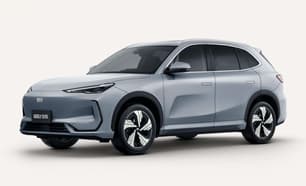
The first car launching here Australia is the EX5, an electric mid-size SUV pitched at families. Think of it as a direct rival to the Tesla Model Y, Kia EV5 and XPeng G6 but (yet unconfirmed) sharp pricing might see buyers cross-shopping with Toyota RAV4s and Mazda CX-5s.
Geely even proclaims Australian-tuned suspension, something Ford, Toyota, Hyundai and Kia have used to huge success. But does that mean the 2025 Geely EX5 is top-10 material? A spin in an early production model should give us some answers.
The updated Audi Q5 Sportback TFSI is a strong example of a luxury base-grade SUV, ticking most of the boxes in styling, comfort and features. It may not always outperform its rivals on paper, but it delivers where it counts, offering a refined, practical and engaging package that will satisfy.
The Geely EX5 has good bones. It’s well packaged, sturdily built, efficient and jam-packed with technology. But questions remain. The EX5 really needs work on its safety systems and another round of chassis revisions to be competitive.
Pricing, too, will be crucial for the EX5 to succeed in today’s savage new electric car market.
If the list of nagging complaints can be fixed and Geely is able to back up its product with solid aftersales support, it could be a winner. The jury is still out on the EX5.
Note: CarsGuide attended this event as a guest of the manufacturer, with meals provided.
The Q5 Sportback is the more attractive sibling when compared to the standard SUV, with a shape that feels more dynamic and sport-oriented. The updated design dials back the sharper creases of the previous model in favour of softer curves, paired with slim matrix LED headlights. The revised 'Singleframe' grille has strong presence and the full-width rear light treatment adds to the Sportback’s visual appeal. Overall, it’s a very handsome vehicle.
Inside, the interior glow-up is immediately noticeable. The large new display takes centre stage in a redesigned dashboard that looks clean and appropriately sophisticated.
There’s a good mix of materials throughout the cabin, including the beige leather upholstery, although the presence of hard plastics reminds you that this is still a base grade. Even so, the cabin largely hits the right notes for a luxury entry point.
There are a few details that don’t quite land for me. The door-mounted control panel on the driver's side feels busy and a little fiddly to use, and creates an oddly sized and positioned pull handle that just doesn’t feel nice to use. And this is very much a nitpick, but the black stitching on the beige seatbelts catches my eye all the time. None of these are deal-breakers, but they stand out in an otherwise well resolved interior.
The Geely EX5’s exterior design is conservative verging on anonymous. Perhaps that’s because the brand is unknown here, but forgettable details like the six-rectangle badge rear and haphazard ‘Geely EX5’ badge placement aren’t the height of fashion.
Inside, though, the EX5 improves. The two screens are presented well, as is the cabin with upholstery that isn’t just boring black. The design language is more conventional — in a good way — than, say, a BYD Atto 3 or Tesla Model Y and doesn’t seem to unashamedly copy elements from established carmakers.
Key touch points, such as the rotary volume control, the (wrong way around) window switches and door handles appear to be made of real metal, with knurling in some cases. The dash and door tops are all encased in squishy rubber, too.
As for sizing, the EX5 is the exact same length as a Toyota RAV4, at 4615mm long, though being wider (1901mm) and riding on a longer 2750mm wheelbase should mean more cabin space.
Up front, the cabin feels spacious and comfortable, with plush (heated) electric seats, while the driver also benefits from a two-position memory function, which is a plus if the car is shared. My main gripe is the short seat bases, which become noticeable on longer drives.
In the rear, comfort largely holds up, though space is better suited to two adults due to the high transmission tunnel. The 40/20/40 split-folding rear seat is a practical inclusion and helps when juggling passengers and longer items.
Storage is mostly well considered. There’s a generously sized glove box and a couple of useful storage bins in each door, although the centre console is on the smaller side. The dedicated phone tray is a highlight, housing the wireless charging pad, two USB-C ports and a 12-volt socket. Both rows get cupholders and bottle storage, while rear passengers also benefit from USB-C ports, climate control, directional air vents and map pockets. Overall, there’s just enough space and amenity for adults or teens to remain comfortable.
Technology is handled by the updated media display, which features a responsive touchscreen and a menu system that’s easy enough to navigate. Wireless Apple CarPlay and Android Auto are quick to set up, and the built-in satellite navigation is clearly laid out. That said, the near-total absence of physical buttons may frustrate some, with functions like climate control buried within the touchscreen. The number of pop-up disclaimers on start-up also feels excessive.
Boot space is where the Sportback’s sloping roofline has the biggest impact. Load height is limited, and capacity tops out at 515L with all seats in place, making it the smallest in its segment, albeit only by around 10L. I like the deep underfloor storage, along with the cargo cover, net and hands-free powered tailgate. However, the lack of a spare tyre, replaced by a repair kit, is a deal-breaker for me as a country driver, though it may matter less to those with easier access to repair services.
Finding a comfortable driving position is easy in the EX5 Inspire with the octagonal steering wheel tilting and telescoping through a broad range of motion. The seats are supportive and well-bolstered, too — not a given in this class.
While we wish the front passenger seat was height adjustable, the Inspire’s leg rest and ability to lie the seats fully flat while charging is appreciated. The massage function has six modes, three intensity levels and is remarkably powerful.
Between the EX5’s front seats is a floating centre console as gear selection is done via the right-hand stalk. It has two small cup holders on top, while under that is a generous, rubberised storage space perfect for handbags, cameras, or the like. It’s where the USB-A, USB-C and 12-volt socket are located for device charging.
There is a wireless charging pad that sits ahead of a large central storage box cooled by the air-conditioning. The Geely EX5’s door cards will easily accept a 600mL camping bottle.
Where the Geely EX5 falls down is the control layout. It is nice to have four physical switches beneath the touchscreen as shortcuts to switch the air-conditioning on or off, engage air recirculation and the front demister, but where’s the hazard light switch? It's on the ceiling.
Then there’s the large rotary dial which generally functions as a volume knob. Press it down and you can choose to have it adjust the temperature, fan speed, or — for some reason — one of several desktop backgrounds, including a computer-generated kitten playing with some wool. In this mode it also works as cursor for the multimedia screen, but never at any other time. Peculiar.
The convoluted menu structure has a strange control hierarchy. There's a shortcut target for the rear fog light, for example, yet to disable the lane-keep assist or adjust the regenerative braking power you need to jump through at least three sub-menus. And some of the text in the Geely EX5’s digital driver’s display is so small it’s almost illegible.
Then there are the typos and grammatical errors that should have been an easy pre-launch fix. A few include: ‘Distractive. Drive carefully’, ‘Keep safety distance’, ‘Driver is facial detection is missing’ and, a personal favourite: ‘The current battery is low, whether to enable super battery life?’ None of this inspires much confidence. At least the EX5’s processor is responsive for smooth tapping between the many menus.
The Geely EX5’s 1000-watt 16-speaker sound system is punchy and has presets – borrowed from Volvo and Polestar — which promise to emulate the sound quality of a recording studio, concert hall and other locations. Gimmicky in practice, plus, with the volume over 30 per cent, the EX5’s sound quality is disappointingly muddy.
Connectivity promises to be strong in the EX5 but the cars we drove were not fitted with 4G sims for live navigation, app downloads and remote smartphone control. Apple CarPlay will be added via a software update in July and Android Auto before the end of the year, says Geely.
The Geely EX5’s back seat is very generous, at 188cm tall I had plenty of leg room, respectable toe room and excellent head room even underneath the standard panoramic sunroof. The floor is totally flat and, rarely, the middle seat is usable for adults.
Two more USB chargers can be found along with air vents, door pockets and a fold-down central armrest. There’s even a hidden sliding draw for storing valuables out of sight.
The Geely EX5 has ISOFIX child seat connectors on both outboard seats and three top tether anchors on its 40/60 split-fold backrest.
The EX5 Inspire has a standard power tailgate which opens up to a total of 410 litres of boot space. If it looks a little shallow in pictures, that’s because the total space accounts for the large under-floor area (108L on its own) where Geely skipped a spare tyre.
There is one LED boot light, two shopping bag hooks and a wet storage area off to the side but, curiously, no parcel shelf.
The Audi Q5 Sportback is offered with a choice of petrol or diesel engines, across two grades before stepping up to the more powerful SQ5 variants. For this review, we’re testing the base petrol TFSI grade, which is also the only front-wheel drive option in the line-up.
It carries a before on-road costs price of $84,500 and comes well stocked with features that often sit on the options list with key rivals. Aside from the Genesis GV70 2.5T, which remains hard to beat for standard inclusions, the Q5 Sportback TFSI stands out as one of the better value propositions at this price point.
New for this update is a large panoramic display that combines an 11.9-inch digital instrument cluster with a 14.5-inch central media screen. The system includes built-in satellite navigation, wireless Apple CarPlay and Android Auto and access to the 'Audi Connect' app. The app allows access to remote services like locking/unlocking to car, checking fuel/charge levels, sending navigation routes, car finder and monitoring vehicle status (warnings, last parked location).
Our test car is fitted with optional 'Pearl Beige' leather upholstery, which is a no-cost option. New design elements include a full suite of LED exterior lights, including matrix LED headlights and side puddle lamps.
Comfort is clearly a priority in this grade, with electric and heated front seats featuring lumbar support and a two-position memory function for the driver. Three-zone climate control, a wireless charging pad, multiple USB-C ports and 12-volt sockets, along with a 360-degree camera system round out the major tech highlights.
Practical touches haven’t been overlooked either, with a hands-free powered tailgate, cargo cover and net plus a 40/20/40 split-fold rear seat set-up.
The EX5 joins a new Chinese competitor set that’s bringing electric car prices down to — and below — size-equivalent combustion and hybrid-powered cars.
Problem is, we still don’t know the exact price, but Geely has at least provided a guide. The Geely EX5 will be priced between $49,000 and $55,000. It has either 430km (Complete) or 410km (Inspire) WLTP-rated driving range and enough power to get out of its own way.
When you consider high-spec combustion-engined mid-size SUVs like the Toyota RAV4 Cruiser ($51,410, before on-road costs), the Geely EX5 is shaping up to offer stellar on-paper value.
The entry grade EX5 Complete features 18-inch alloy wheels, privacy glass, full LED exterior lighting with auto high-beam, rear parking sensors and roof rails that accommodate up to 50kg.
Inside, a huge 15.4-inch touchscreen with built-in navigation and 10.2-inch digital driver’s display should embarrass any combustion-engined rival. The upholstery is artificial leather, the front seats are heated and power-adjustable, the sound system has six speakers and there’s keyless entry with pop-out door handles.
Moving up to the tested Inspire brings larger 19-inch alloy wheels, a power tailgate, front parking sensors and a sunroof. Cabin niceties improve with illuminated vanity mirrors and 256-colour ambient lighting, though it notably lacks dual-zone climate control.
Veritable luxury features include driver’s seat memory and an ottoman for the front passenger, ventilation and massaging for both front seats, a 16-speaker sound system putting out 1000 watts, 13.4-inch head-up display and optional ‘Cloud’ cream upholstery colour.
With exact pricing still to be revealed, it’s impossible to say whether the Geely EX5 is better value than the Leapmotor C10, Deepal S07, Kia EV5, BYD Sealion 7 or XPeng G6, but it certainly shapes up well against the updated Tesla Model Y that has climbed north of $60,000.
Five paint colours are available; Arctic White is no cost, while Shadow Black, Volcanic Grey, Moonlit Silver and Aquatic Green attract an extra charge.
The Geely EX5 is capable of outputting electricity either to a load like hairdryer, coffee machine or power tools at 3.3kW and to another vehicle at 6kWm adding 40km of driving range in an hour.
The Q5 Sportback TFSI is front-wheel drive and powered by a 2.0L four-cylinder turbo-petrol engine paired with a mild-hybrid system. Combined outputs sit at 150kW and 340Nm, which places it toward the lower end of the segment when stacked against rivals such as the Genesis GV70 2.5T and Mercedes GLC300 Coupe offering 224kW/422Nm and 190kW/400Nm, respectively.
On the road, however, there’s still plenty on offer for everyday driving, with power delivery feeling smooth and accessible. The seven-speed transmission shifts effortlessly, helping the Q5 Sportback feel refined and easy to live with, even if outright performance isn’t its headline feature.
Geely claims the EX5’s front axle-mounted 11-in-one motor, transmission and power unit is the lightest and most compact in class. Though power and torque outputs of 160kW and 320Nm are nothing groundbreaking it was perfectly adequate for the EX5’s 1765kg tare mass.
In Eco, Standard and Sport modes the tip-in response is intentionally dulled to minimise wheel spin. Three are three regenerative braking levels; medium felt most natural, though High was acceptable. There’s no one-pedal drive mode in the Geely EX5.
The front-drive Geely EX5 Inspire's claimed 0-100km/h time is 7.1 seconds and its top speed is limited to 175km/h.
The Q5 Sportback TFSI has a claimed combined (urban/extra-urban) cycle fuel consumption figure of 5.7L/100km and paired with its 65L fuel tank offers a theoretical driving range of up to 1140km. An impressive result on paper.
After a mix of long highway driving and my usual urban runaround, real-world consumption settled at 5.8L/100km, which is almost spot on.
It also highlights the Q5 Sportback TFSI’s performance/efficiency trade-off. While its outputs are modest relative to some rivals it rewards you with excellent economy in real-world use.
Real-world efficiency is one of the EX5’s most impressive attributes, with the Inspire’s WLTP-range being 410km dependent on returning energy consumption of 14.7kWh/100km.
Over a 100km distance taking in suburban, motorway and country roads, the EX5’s dash showed a lower-than-rated energy consumption of 13.5kWh/100km, representing nearly 460km of real-world range from Geely’s 60.22kWh ‘Aegis’ lithium-iron phosphate (LFP) battery pack.
Along with the motor, some of the efficiency can be put down to the Geely EX5 Inspire’s quality 235/50R19 Goodyear EfficientGrip tyres.
Charging is middling for this pack, with the EX5 using a 400-volt architecture that allows DC power up to 100kW. Rejuicing from 20-80 per cent takes 28 minutes, says Geely, which is faster than the Deepal S07 and Leapmotor C10 but a long way short of the XPeng G6 and Model Y.
Three-phase AC charging caps out at 11kW, meaning you can take the EX5 from flat to full in around five and a half hours at home.
There’s enough power in the base grade to keep things engaging on the open road, whether overtaking or maintaining pace, with a reassuring sense of reserves and smooth, punctual delivery.
Despite the firmer suspension, ride comfort remains high thanks to the newly tuned damping system, which absorbs bumps without sacrificing road feedback. The cabin is quiet at speed and at low speeds the car can switch to its hybrid system for extra refinement.
I’m not a huge fan of the adaptive steering assist, particularly on winding roads, as it can overcorrect at times. Overall, though, the Q5 Sportback delivers enjoyable, sporty dynamics.
Visibility is good from the front and sides, while the rear window is a little on the small side. It’s easy to get accustomed to the car’s dimensions and a clear 360-degree camera view comes standard across all grades, providing a clear view that automatically activates during low-speed manoeuvres. Parking this car is straightforward and stress-free.
Underpinning the Geely EX5 is the new Global Intelligent Electric Architecture, or GEA for short. It is a newer and lower-cost version of the group’s SEA platform as used in Volvo, Polestar, Zeekr and Smart products and the bones are good.
The Geely EX5’s body doesn’t rattle, creak or shimmy over nasty road surfaces. Some solid knowhow has made its way into the brake pedal calibration which is light but delightfully smooth. It’s impossible to detect where regenerative slowing ends and hydraulic begins.
It has allegedly undergone Australian suspension localisation but don’t expect outright handling excellence, the EX5’s ride is still pillowy — verging on melted marshmallow — soft. Some will find this acceptable, however there’s plenty of potential for improvement.
Over large bumps both in town and at speed it takes the Geely EX5’s rear end between two and four rebound cycles to settle. There’s also a large amount of lateral ‘head toss’, with both attributes key ingredients in making back seat passengers car sick.
I also experienced a low-frequency boom in the EX5's cabin over concrete and rough coarse chip surfaces common on Sydney roads. Otherwise, the EX5’s is a mostly quiet car.
The sharp steering is light around town but weighted up unnaturally through corners. With high quality tyres and stability control that intervenes very early, you’re unlikely to get out of shape in the EX5 on a twisty road at least.
That said, with good bones like McPherson struts up front and multi-link rear suspension we would love to see Geely revise the EX5’s chassis to bestow the sort of fluency that makes the Kia EV5 and combustion equivalents like the Toyota RAV4 and Mazda CX-5 so much more pleasant to drive. Doing so would provide the EX5 a clear point of difference from the XPeng G6, BYD Sealion 7, Deepal S07 and Leapmotor C10.
The Audi Q5 Sportback carries a fresh maximum five-star ANCAP safety rating from 2025 testing. It comes with nine airbags, including side-chest airbags for both rows which is a standout feature, as these are often limited to the front seats.
The safety equipment suite is strong, featuring lane departure warning, lane keeping assist, side exit warning, blind-spot monitoring, traffic sign recognition, dusk-sensing LED headlights and emergency call capability. There’s also front collision warning, rear cross-traffic alert with assist and rear turn-assist. Adaptive cruise control is generally well-calibrated, though it can occasionally slow for vehicles outside your lane.
Autonomous emergency braking covers cars, pedestrians, cyclists, motorcyclists, and backover assist which is operational between 5.0 and 250km/h. Child safety is supported with two ISOFIX mounts and three top-tether anchor points, although only two seats fit comfortably.
The Geely EX5 is yet to be tested by ANCAP or other relevant safety testing body.
The EX5 has seven airbags including a front centre one, a Short Blade battery that has been extensively tested to minimise fire danger along with 16 advanced driver assistance features including auto emergency braking, driver attention monitoring, blind-spot monitoring, lane-keep assist and more.
It is all well and good to tick the safety aid boxes but in practice, the EX5 leaves a little to be desired. Various mysterious beeps and bongs are semi-constant but more soothing than some rivals.
The EX5’s lane-keep assist worked well enough in the morning but was flummoxed by brighter afternoon light and shadows, once grabbing control of the wheel and pointing the car at an upcoming vehicle, another time towards the grass. Sometimes the system simply didn’t work to keep the EX5 in the lane at all.
The adaptive cruise control has an ‘Intelligent’ program that convincingly changes lanes by itself when prompted by the indicator. Unfortunately, like the lane-keep system, shadows on the road caused a few phantom-braking episodes.
Activating the adaptive cruise control is not intuitive because the steering wheel controls are poorly labeled. It’s the left directional and ‘ok’ button set, if you’re wondering, and you cancel cruise by hitting the cross button below the similar looking asterisk customisable hot key.
The standard surround-view camera is high quality with plenty of different angles to minimise kerb strikes.
Like the suspension tuning, Geely ought to send out engineers with a fine tooth comb to iron out issues with the safety systems before hitting start on public sales.
The Q5 Sportback comes with Audi’s five-year/unlimited km warranty, which also includes complimentary roadside assistance - all fairly standard at this end of the market. A five-year pre-paid servicing plan is available for $3520, which is cheaper than the pay-as-you-go option, though it’s not the most competitive compared with some rivals. For instance, BMW offers the same coverage for $2475, while the Genesis comes with complimentary servicing.
You can also extend the service period by two years with the 'Audi Advantage Package' for an additional cost. Services are spaced at sensible intervals, every 12 months or 15,000km, whichever comes first, making maintenance straightforward and predictable.
Geely is doing its best to ensure smooth parts supply from launch, having run around for 12 months stocking inventory and partnering with DB Schenker for logistics.
To promote the EX5, Geely’s launching with three years complimentary servicing and one year (or 1000kWh) of free charging on the Evie network for those who order an EX5 before February 28.
Geely has yet to announce warranty details. The brand will want to aim for more than five years, as seven years is fast becoming the minimum standard for new vehicles.
Service pricing is also yet to be confirmed, though maintenance will be due every 12 months or 20,000km.