What's the difference?
It can be easy to dismiss electric cars as an imperfect solution to the world’s problems. But that would be missing one big point - they’re really, really fast.
Carmakers twigged that not everyone was enamoured with the environmental credentials of electric vehicles (EVs), especially luxury brands, and thus pivoted to the new sales tacit of performance and prestige.
Which is why Audi’s current performance flagship vehicle is not a mid-engined V10-powered replacement for the R8, but rather the all-electric RS e-tron GT. And for the new model year they have not only updated the range, bringing (you guessed it) more power, but also added a new hero model - the RS e-tron GT Performance.
It leads a new three-pronged line-up for the four rings brand, with the RS e-tron GT Performance sitting above the RS e-tron GT and the new S e-tron GT; the latter effectively replacing the previous ‘entry-grade’ model known only as the e-tron GT.
These arrive as part of a mid-life update for the model, with some minor styling tweaks (inside and out) along with enhancements to the battery and changes to the specifications.
The new range has just arrived in Australia and Audi will be hoping it can turn around the sales performance, which saw the outgoing e-tron GT and RS e-tron GT find just 84 customers in 2024. That was a decline of 75 per cent on 2023 sales, and nearly 200 less than the closely related Porsche Taycan.
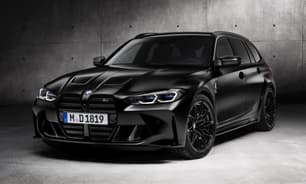
There’s no point waxing too lyrical here, because the facts surrounding the M3 Touring are more than exciting enough.
It’s a (kind of) family friendly wagon with oodles of space and practicality. It’s also an unhinged performance weapon with a thumping 3.0-litre twin-turbo-petrol inline six-cylinder engine.
And it has been years — decades, even — in the making. So, has it been worth the wait? Let’s strap in and find out.
While it may be a very different beast to the R8 supercar, it’s hard to argue that the e-tron GT offers performance that isn’t equal to anything Audi has previously produced. The immense acceleration and power, coupled with the brilliant and clever handling make this updated range, especially the RS pair, feel like something special.The fact that it will save you visiting a petrol bowser and might help cut harmful emissions is just a bonus.
Note: CarsGuide attended this event as a guest of the manufacturer, with travel, accommodation and meals provided.
Long live the mighty wagon. The BMW M3 Touring is treat to look at, and an even bigger treat to drive.
If you want one, act fast. We waited a long time for a wagon-shaped M3, and with electrification increasing in the automotive industry, this will likely be your last chance.
While there are some big changes underneath, on the surface the design tweaks are quite subtle.
There are some tweaks to the front grille, headlights, lower bumper and air intakes, but overall the look isn’t dramatically different. The more noticeable styling change is between the S and RS models, with the latter looking more sporty and dynamic thanks to a unique lower bumper design and the larger alloy wheels, which have a sportier look.
The biggest design changes are arguably the introduction of the switchable transparency roof on the RS and the option to use matt carbon camouflage.
The former is another shared element between the RS e-tron GT and Taycan, and it uses a special glass that can switch between being clear or opaque depending on whether you put a current through it. Cleverly, Audi is offering the option to have individual sections alternate between the two states, so you can customise it to your preference.
As for the grandly named matte carbon camouflage, it wasn’t highlighted in Audi’s presentation, but it’s the same material the Lamborghini developed over a decade ago and calls ‘forged carbon’ instead.
Unlike traditional carbon-fibre, which is made from injecting resin into sheets of fabric-like carbon fibre weave, forged composite uses a malleable paste of carbon sheets and resin. This technique is quicker to make and easier to shape into complex pieces, but lacks the visual impact of conventional carbon-fibre.
The biggest design change internally is the new steering wheel, which is a not-quote-squared-off rim that feels nice in your hand without being too thick. The RS models feature two new large red buttons - ‘RS’ and ‘Boost’ - which allow you to select the drive modes and activate the short boost function, respectively.
It looks spectacular, this M3 Touring, and even more so given a) wagons are so rare, and b) proper low-riding performance wagons with massive alloys are even rarer.
That said, I expect it will be polarising – and possibly too shouty for some – but I've got to say, I like it.
I’ve seen it described elsewhere as a bit of a sleeper, but for mine, you’d need painted-on eyes to not see there’s plenty going on with the Touring, especially one finished in the same Frozen Black paint as our test car.
It is at once sleek and swept back, and bulging and aggressive, especially at the flared wheel arches and fat exhausts poking from its diffuser-filled rump.
Inside, it’s mostly business as BMW usual, though with more carbon-fibre elements — our vehicle was equipped with the M Carbon Experience pack — but snug-fitting seats aside, it’s a premium, if performance-focused, place to spend time.
Practicality is an important consolidation for the e-tron GT, it may have replaced the two-seater R8 as Audi’s definitive performance hero, but it’s a four-door sedan so it needs to be more family friendly. It’s especially relevant for Audi, as the brand has a history of brilliantly combining family needs with fast cars, namely its iconic wagons, the RS4 and RS6 Avants.
Audi also has a strong reputation for some of the best interior design in the industry, and the e-tron GT is arguably amongst its best work (at least in this reviewer’s opinion). It looks modern and stylish without leaning too far towards being different simply because it’s an electric car.
The new steering wheel fits the new design well, framing the digital driver’s display nicely. The display itself has a new RS-specific display for the higher-end models.
There’s a central infotainment touchscreen, but underneath this particular Audi skips the climate control touchscreen in favour of a digital readout and physical switchgear; a welcome relief for some, no doubt.
As for the seats, all three trim levels get the same style of sports seat trimmed in Nappa leather with a honeycomb stitch pattern. There are different finishes, both black and red leather, and some with contrasting stitching available through the optional design package. The RS performance package gets a unique ‘serpentine green’ stitching to stand out.
Small item storage in the front is adequate but not generous, which does make the e-tron GT feel more like a sports car at least, even if it doesn’t help practicality.
As for the rear, space is surprisingly good given the external dimensions and the nature of it being a low-roof sedan (rather than an SUV) with batteries underneath the floor. That’s largely because Audi has split the battery pack to allow for extra room in the rear for passengers’ feet, combating a common problem with electric sedans.
Headroom is adequate, and will be tight for anyone much taller than 180cm, but it will do the job of transporting the family in relative comfort. It is, by no means, the most spacious or family friendly model in the Audi range, but it does play its role as both a performance car and roomy sedan.
The boot is measured at 405 litres in the S but shrinks to 350L in the RS models, but both have the same 77L space under the bonnet, so space is (again) reasonable without being generous.
A performance-focused wagon is still a wagon, right? And that means there is oodles of space in the boot, though the seating choices in our test cars made the front seats less comfortable than they could, and should, be.
But first, the boot. The M3 Touring is a 4.8m-long wagon, which pays dividends when it comes to cargo. BMW says you'll find a minimum 500L of storage space, which grows to 1510L with the rear seat folded.
In the back, you’ll find seating for three, with the requisite ISOFIX attachment points, and with enough head and leg room to get comfortable.
But those carbon front seats are an option I wouldn’t be springing for. They arrive carved out of the rock-hard material, though with big holes throughout to reduce their overall weight, and they’re not only challenging to climb in and out of, but they’re awkward and hard to sit behind.
Stick with the regular seats and both rows will be happier.
The 2025 range begins at $209,900 for the S e-tron GT, steps up to $264,900 for the RS e-tron GT and hits $309,900 for the new RS e-tron GT Performance (all prices exclude on-road costs).
While there is more power and equipment, that’s still a significant leap in price, with the previous e-tron GT starting at $181,784 ($28,116 cheaper) and the RS e-tron GT priced from $250,484 ($14,416 cheaper).
This pushes the Audi close to its most direct rival, the Porsche Taycan. Despite what the brands try to say publicly, the reality is these two are very closely related mechanically. Porsche now has two models cheaper than the S e-tron GT (the $174,500 Taycan RWD and $184,500 Taycan 4), while the Taycan 4S is priced just above it at $215,700.
Porsche’s rival to the RS e-tron GT is the $260,300 Taycan GTS, while it has the $306,900 Taycan Turbo to challenge the new RS e-tron GT Performance - plus the Turbo S and Turbo GT above it for those craving more power.
While the Audi isn’t bad value, it isn’t surprising that people in the market for an electric performance car from Germany are leaning towards the Taycan instead of the e-tron GT given the pricing structure.
In terms of specification difference between the three variants, the S e-tron gets 20-inch alloy wheels, adaptive air suspension, all-wheel steering, HD Matrix LED headlights with Audi laser lights, and a panoramic fixed glass roof.
Moving up to the RS e-tron GT adds unique 21-inch wheel design, a panoramic glass sunroof with a new switchable transparency, performance brakes with a carbide coating, and an RS-specific instrument cluster design.
The RS e-tron GT Performance crowns the range with its own 21-inch alloy wheels, active suspension and a specific RS Performance exterior electric sound system as standard.
There are a range of option packages too for all three models, which bundle extras together. The Sensory package ($6000) and Design package ($3800) are available for the S, the RS can be had with the Gloss carbon exterior styling package ($6000) and RS design package ($4500), and the new RS Performance has the matte carbon camouflage exterior styling package ($10,000) and a unique version of the RS performance design package ($4500).
The BMW M3 Touring lists at $180,100, which isn’t chump change, and positions the wagon body shape a fair way above a regular M3 sedan.
That’s before on-road costs, of course. According to BMW’s website, putting an M3 Touring on the road in NSW will be more like $194,039 — before you start ticking option boxes.
The 'M Carbon Experience' adds $17,500, and reduces overall weight by close to 10kg through carbon bucket seats, and adds more visible carbon and even more possible headroom to fit a helmet
The 'M Carbon ceramic brakes' add another $16,500, and while there are plenty of free paint colours, you can pay up to $7000 for the 'Frozen White' paintwork.
Our test car was finished in 'Frozen Black', a bargain at $5K.
Elsewhere, there is plenty of equipment on a stacked standard features list.
That includes staggered 19- and 20-inch alloys, BMW’s digital 'Laserlight' headlights, and an automatic boot.
Inside, there’s a 'BMW Live Cockpit' with a 12.3-inch instrument display, a 14.9-inch central screen, a head-up display, wireless device charging, Apple CarPlay and Android Auto and a premium Harman Kardon surround sound stereo.
You also get three-zone climate, leather seats, an 'Active M Differential' and 'Adaptive M Suspension', and seat heating up front.
Oh, and there is lots — lots — of performance, but we’ll come back to that shortly.
The key number for the new model is 680kW - that’s what the new RS e-tron GT Performance produces from its dual electric motors. That makes it the most powerful production car Audi has ever offered, which is quite an achievement when you look back at some of the cars this brand has built over the years.
That power upgrade is an extra 205kW over the pre-facelifted RS e-tron GT, and comes with a whopping 1027Nm of torque.
The RS e-tron GT has been upgraded too, now making 630kW/865Nm, a 155kW improvement on the old model. Which is a good thing, because the new S e-tron GT has even more power than the original RS, underlining just how much Audi has focused on power for this mid-life enhancement. The new S packs a 500kW/717Nm punch, compared to the 475kW/830Nm the previous RS offered.
The M3 Touring’s engine might well be one of the best in the business – a hard-charging 3.0-litre twin-turbo-petrol inline six-cylinder engine that produces a sizeable 375kW and 650Nm.
That power is sent to all four wheels via BMW’s 'M xDrive' with Active M Differential, producing a sprint to 100km/h of just 3.6 seconds.
Another one of the significant unseen changes for this update is the battery. Audi has overall the battery for this latest e-tron GT, so it now has higher energy density (168.3Wh/kg), more size (105kWh v 97kWh), faster charging (10-80 per cent in 18 minutes) and reduced weight (down 9kg).
Despite all the extra power, driving ranges for the three models are still all beyond 500km. The S e-tron GT has a claimed range of 558km, the RS e-tron GT can manage up to 522km and RS e-tron GT Performance can run 528km on a single charge, according to Audi.
As for the charging itself, Audi claims it now takes just 18 minutes to get from 10 to 80 per cent using an ultra-fast DC charger.
Officially, you should see a claimed 10.4L/100km on the combined cycle, but as is often the case in cars with engines that tempt you to be aggressive with the accelerator, the reality can be a little different.
We saw more like 16.4L/100km, but in the big bruiser’s defence, we spent a lot of time in city and suburbs, and a lot more time standing on the accelerator.
The M3 Touring is fitted with a 59-litre tank, and will only accept 98RON premium fuel.
Range is close to 570km using the official consumption figure and around 360km using our real-world number.
Befitting its role as Audi’s performance hero, the new range drives with a level of speed and precision you would expect from such a car.
Even the new S e-tron GT has a level of acceleration that not every sports car could keep up with (the official 0-100km/h claim is 3.4 seconds), which would be impressive on its own but is a standout when you consider this is a four-door sedan.
It also helps that the adaptive air suspension and all-wheel steering (which can help both low speed manoeuvring and high speed changes of direction) make for an incredibly responsive and agile handling vehicle.
And then you drive the RS e-tron GT Performance and the driving experience is a step up again with its 2.5s triple-digit sprint time. That’s largely because of the new active suspension system it uses, which features a hi-tech array of cameras, radars and sensors to ‘read’ the road ahead of it and adjust the ride accordingly.
The result is arguably one of the best riding, most comfortable electric performance cars on sale today. Typically the need to control so much weight, from the batteries, means the ride is often too firm. But with the active suspension, Audi has somehow managed to make the ride both compliant (on 21-inch wheels) but also very well controlled, which allows you to really drive with precision even at speed.
But it’s not just the suspension, as mentioned earlier, the RS models also get a new ‘Boost’ button on the steering wheel that offers an extra 70kW of power for 10 seconds. Along with the surge of extra performance there’s a large countdown timer on the digital dashboard when you press it to really give you a sense of urgency and speed.
Thankfully, with so much power the e-tron GT range has plenty of stopping power. The S comes equipped with steel brakes, which do a fine job. But for the faster RS models, you get a carbide coated rotor and you can option ceramic brakes for more resilient stopping power.
In a word? Delightful.
Don’t get me wrong, it’s not the easiest car in the world to daily drive. The carbon-fibre seats fitted to ours, for example, made getting in and out a slightly embarrassing challenge, and there’s a surging eagerness to the delivery of power that makes you look a little like you're showing off.
But the adaptive suspension serves up a far more comfortable ride than you might be expecting (more comfortable, in fact, than lesser, cheaper M models), making tootling around town easier and less chiropractic than I was expecting.
But it’s away from the city, with its traffic and red lights, that owning the M3 Touring becomes a delight, from its potent and punchy powertrain to the thrum of its exhaust, and the EV-like immediacy of its power delivery.
This is a driver’s wagon, there’s no doubt about it, with proper seatback-pushing acceleration, direct and confident steering and enough body stiffening and bracing that you really would have no idea you’re driving a wagon when cornering.
Engage its sportiest settings, and disengage its electronic nanny systems, and you can even set to work judging your drifting skills, courtesy of the (as yet untested, honestly) 'M Drift Analyser'.
A family car like few others, then. That you can also take it to Bunnings and throw some sleepers in the back is just a very welcome bonus.
Audi has equipped the e-tron GT trio with a respectable level of safety features, including adaptive cruise control with stop and go functionality, park assist plus, front and rear autonomous emergency braking, active lane assist, side assist with exit warning, collision avoidance assist and a 360-degree camera system for parking assistance.
Given its low sales volume, ANCAP has not crash tested the e-tron GT (or the structurally similar Taycan), so there is no score. But overall its level of equipment and Audi’s reputation and experience means we have no safety concerns over this particular model.
Neither the M3 or M3 Touring have been independently crash tested to date, but it’s worth pointing out the 3 Series and 4 Series received maximum five-star scores from Euro NCAP.
Standard safety kit includes AEB with pedestrian detection, active lane keeping assist, blind spot monitoring, adaptive cruise control and rear cross-traffic alert.
You’ll also find six airbags on board.
Audi offers its standard five-year/unlimited kilometre warranty for the three e-tron GT variants, but the battery gets a specific eight year/160,000km warranty. The five years of coverage is fairly standard for the luxury car segment, but short of the increasingly common seven-year warranties for mainstream brands.
As for the servicing, that’s included in the cost of the car, with Audi covering the first six years of maintenance for no additional charge. It helps that service intervals, without a complicated and oily engine, are stretched to two years or 30,000km.
The BMW M3 Touring is covered by a five-year, unlimited kilometre warranty, and servicing is "condition based", in that the vehicle will tell you what maintenance is required, and when.
You can prepay your service costs at the time of purchase for all BMW vehicles, covering the first five years of ownership.