What's the difference?
Audi’s flagship is the A8, a long, luxurious sedan where being driven is often as important as doing the driving.
To put this ultra-premium machine in context, it competes with other German heavyweights like BMW’s 7 Series and, of course, the Mercedes-Benz S-Class as well as Porsche’s Panamera. Not to mention the Lexus LS or Maserati’s Quattroporte.
What’s life like at the top of the Audi pyramid? Stay with us to find out.
The icon is electric. Well, kind of.
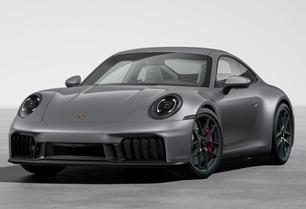
This is the new Porsche 911 Carrera GTS, which ushers in a facelift for the brand’s most famous model — and it’s one that introduces a pretty major change.
That faint whistling you hear is most likely the distant wails of the Porsche purists, because this new 911 is now a hybrid.
Yes, the Carrera GTS features Porsche’s clever T-Hybrid engine, which is the brand’s take on electrifying the world’s most famous sports car.
It’s faster than the model it replaces, but it also fundamentally alters the formula that has made the 911 the world’s most iconic sports car.
The question is, does it alter it for the better?
The Audi A8 swims in a luxury car shark tank where those paying the big dollars expect top-shelf everything. It delivers a serene driving experience whether you’re in the front or the back, in a superbly engineered and executed luxury sedan package. Not perfect, but very, very impressive.
The more things change, the more they stay the same. The t-hybrid might be an entirely new propulsion system for the 911, but the net result is unchanged – power, poise and performance on tap.
Note: CarsGuide attended this event as a guest of the manufacturer, with travel, accommodation and meals provided.
The A8 is close to 5.2 metres long, yet instantly recognisable as an Audi thanks mainly to its evenly weighted proportions, gently curved roofline and overall high-waisted design. Worth noting its drag coefficient (Cd) is an impressively slippery 0.25.
The characteristic look is accentuated by the brand’s signature, six-sided grille, in this instance highlighted by a matrix of high-relief chrome accents. And typically angular LED Matrix headlights sit either side.
Check out our video review for the carefully orchestrated animation they run through when the car is unlocked.
The car looks equally svelte and contemporary from the rear, with just the right amount of chrome lifting the tone and multi-spoke 20-inch rims filling the wheel arches nicely.
As you’d expect, the top-shelf look and feel continues inside with the seats trimmed in aniline leather, perforated on the front and outer rear positions, with genuine hide also covering the centre console, door rails and armrests, steering wheel and upper dashboard.
Fine grain ash wood inserts sit alongside brushed metal elements and a meticulous attention to detail is obvious… everywhere.
For example, the interior door handle design has been thoroughly thought through, requiring a simple underhand tap to open the door, rather than the more conventional, and ergonomically convoluted, ‘over the top’ movement.
Three sleek screens dial up the tech - a 10.1-inch multimedia interface at the top of the centre stack, an 8.6-inch display below it for heating and ventilation, and a 12.3-inch version of Audi’s ‘Virtual Cockpit’ in the instrument binnacle.
And the spacious rear is the epitome of cool, calm Teutonic form and function. You feel relaxed the moment you get in, and isn’t that the primary aim of a car like this?
This facelift debuts a revolutionary exterior design that has completely reshaped the 911.
Just kidding. If it ain’t broke and all that. The front air vents and exhaust have changed, the former now an active intake system that deploys via vertical flaps, but elsewhere it’s largely evolution over revolution.
Instead, Porsche has focused most of the updates in then cabin. In here, you’ll find a new digital instrument panel, they’ve changed some of the levers and the steering wheel.
In true Porsche fashion, though, this new 911 mimics the older versions in that it's one of the more intuitive cabins you’ll ever sit in. Everything feels as though it’s exactly where it should be, and all feels entirely centred on the driver.
Space is luxury, be it a large house, a first class seat or a spacious car, and at nearly 5.2 metres long with a close to 3.0m wheelbase the Audi A8 measures up.
Even before you get in, the doors have an amazing sense of solidity and quality. It’s like opening and closing a bank vault… if that huge circular door had a power-assisted soft-close function.
There’s copious amounts of space for the driver and front passenger with lots of storage including a lidded box between the front seats, complete with a two-piece longitudinally split top design, so you can sneak your half’s open without displacing your neighbour’s elbow.
The door bins are decent but there isn’t a specific cut-out for bottles, so it’s more a case of laying them down than standing them up. There’s also a handy covered cubby at the end of the door armrests.
The glove box is a good size and there are two cupholders under a pop-up cover in the centre console.
Of course, the back is where space really counts, and there’s as much room as you’d find in, well… a limo.
Sitting behind the driver’s seat, set for my 183cm position, I enjoyed copious amounts of head, shoulder and legroom.
There are electric sunblinds for the rear and rear side windows, controlled by buttons in the door as well as the rear seat remote, a 5.7 inch OLED display housed in the beautifully trimmed fold-down centre armrest (which also has a soft close function!). The remote also allows adjustment of the lighting and climate control. Classy.
There’s a shallow storage box and twin cupholders in the armrest, medium size door bins and hard shell pockets on the front seat backs. The rear armrests also feature a small lidded cubby.
In terms of connectivity and power options there’s wireless Android Auto and Apple CarPlay, a USB-A and USB-C in the front, and an identical pair in the rear, as well as a 12-volt socket in the front and two in the back.
Boot volume is a useful 505 litres (VDA) and the lid is electric, with gesture control. It’s able to easily swallow our three-piece luggage set or the bulky CarsGuide pram. And while the rear seats don’t fold there’s a ski port door to accommodate long items. Just make sure you use the tie-down anchors in the boot to ensure they’re properly secured. There’s a handy netted section behind the left wheel well and a cargo net is included.
Maximum towing capacity, for a braked trailer, is 2.3 tonnes (750kg unbraked) and in more good news, the spare is a space-saver rather than the increasingly prevalent inflator/repair kit.
This probably falls under the ‘next question, please’ umbrella, given that, while the Porsche 911 is known for a lot of things, vast acres of space with loads of practicality perks just ain’t a part of its portfolio.
The new 911 measures a not-insubstantial 4533mm in length, 1852mm width and around 1294mm in height, and it rides on a 2450mm wheelbase. Luggage space is a paltry 135 litres under the bonnet, plus whatever else you can fit in your pockets.
There’s seating for four, should you not like the people you’re squeezing back there very much, but really the 911 is best enjoyed as a two-seat proposition – which is why you can also delete the backseat, should you wish.
It also weighs a minimum 1595kg, or up to 1745kg, but Porsche says the hybrid tech only adds about 50kg to the total kerb weight.
With an entry price of $202,700, before on-road costs, the A8 is in the thick of it amongst its full-size primo sedan competitors from Europe and Japan. Specifically, BMW’s 740i MHEV ($272,900), the Lexus LS500h ($195,920), Maserati Quattroporte GT ($210,990), Mercedes-Benz S450 ($244,700) and Porsche’s Panamera ($207,800).
By definition, a luxury car should be loaded to the gunwales with features that make life on the road that little bit easier. And aside from the performance and safety tech we’ll cover shortly, the highlights from a very lengthy standard equipment list are - 20-inch alloy rims, metallic paint, adaptive cruise control, digital matrix LED headlights, digital OLED tail-lights, full keyless entry and start, power-assisted door closing, power boot lid (with gesture control), a panoramic sunroof, heated, ventilated and massaging electrically adjustable front seats, heated front armrests and extended leather trim (centre console, door rails and armrests, steering wheel and upper dashboard).
Also included are ambient interior lighting (with 30 colours and six colour profiles), four-zone climate control, electric sunblinds for the rear and rear side windows, ‘Audi Connect’ navigation and multimedia (with voice and handwriting recognition), wireless Android Auto and Apple CarPlay, 17-speaker 730-watt Bang & Olufsen audio (with digital radio) and a colour head-up display.
There’s a lot more, and the A8 can hold its head high in terms of pricing and features relative to its $200K price tag and the competition.
Yikes. Perhaps I wasn’t paying close enough attention, because the Porsche 911 range now suddenly seems very expensive.
In fact, it inspired some research. Some 10 years ago, in 2015, the Porsche 911 range kicked off at around $208,000. Today, though, you’re looking at more like $280,500 for the entry-level 911, and if you want this bahn-storming Carrera GTS, you’re looking at more like, deep breath, $381,200, before on-road costs.
If you want four-wheel drive, a cabriolet roof, or both, the price climbs from there, with the GTS range topping out with the Carrera 4 GTS Cabriolet listing at $437,900.
Now in Germany’s defence, the Porsche has gotten progressively faster and more powerful over the years, and that’s true again with the T-Hybrid version, but we’ll come back to the tech stuff in a second.
Outside, it rides on staggered alloys (21 inch at the rear, 20 inch at the front), and there are standard matrix LED headlights, vertical-mounted active cooling flaps, and you can have it as a hard top, a Targa roof or as a full Cabriolet.
The biggest updates (apart from the driving stuff, of course, occur in the cabin, where the 911 has now push-button start, and introduces a new digital dashboard, which defaults as a digital version of the old analogue setup. The screen is 12.6 inches, and there’s a second 10.9-inch screen in the centre cabin which does your phone streaming.
There’s also a BOSE Surround Sound System, 14-way adjustable comfort seats, and digital radio.
The Audi A8 50TDI is powered by a 3.0-litre turbo-diesel V6 engine sending 210kW (from 3500-4000rpm) and 600Nm (from 1750-3250rpm) to all four wheels via an eight-speed automatic transmission (with ‘Tiptronic’ sequential manual shift function) and Audi’s quattro constant all-wheel drive system using a self-locking centre differential.
It also features a 48-volt electrical set-up for mild hybrid functionality built around a belt connected starter/generator, AC to DC converter and a 48-volt lithium-ion battery.
With energy recovery of up to 12kW from regenerative braking, it enables the A8 to regularly coast with the engine switched off and helps the extended stop-start system to operate smoothly.
A new (or at least, massively altered) 3.6-litre petrol engine has been developed for this T-Hybrid, which combines with two electric motors to produce a total 398kW and 610Nm. It’s only available with Porsche’s very good eight-speed Porsche Doppelkupplung (PDK) automatic, largely because the brand admits it would be… well… unpleasant to drive as a manual.
Now, there is lots of magic at work here, and I don’t want to bore you, but the Porsche setup sees a lightweight 1.9kWh battery placed basically in the middle of the front axle, and a 12-volt battery now behind the front seat. Then, a tiny e-motor lives as part of the gearbox (it’s just 55mm long) and delivers up to 150Nm at low speeds to supplement the petrol engine.
It’s joined by what Porsche calls an “electric exhaust gas turbocharger”, which essentially removes the spooling time from the turbo, delivering instant power.
The aim of the game here is excitement, not efficiency, and the launch-control-aided spring to 100km/h takes just 3.0 seconds. And it somehow feels, and sounds, faster.
The latter being important, with Porsche aware that if the new powertrain didn’t sound good, "nobody would like it”.
Audi’s official fuel economy number for the combined (ADR 81/02 - urban, extra-urban) cycle is 6.6L/100km, the 3.0-litre turbo-diesel V6 emitting 175g/km of CO2 in the process.
Over a week of city, suburban, and some freeway running we averaged 11.1L/100km, which is acceptable for a 2.1-tonne luxury sedan.
Also worth noting the standard stop-start system works beautifully thanks to the 48-volt starter/generator.
You’ll need 82 litres of diesel to fill the tank and using the official number, that translates to a range of just over 1240km, which drops to around 740km using our real-world figure.
Porsche in Australia is yet to lock in local fuel use for the Carrera GTS T-Hybrid, but international testing has it at 10.5-10.7L/100km, C02 emissions of between 239-244g/km.
Those aren’t exactly Toyota Prius numbers. But again, that was never Porsche’s intention. The electric power on offer here is intended to improve acceleration, not fuel use.
It’s fitted with a 63-litre fuel tank, which should deliver a driving range of around 600km per tank.
Despite extensive use of aluminium in the ‘ASF’ platform and body panels, the A8 tips the scales at a sturdy 2095kg, yet Audi says the A8 will accelerate from 0-100km/h in just 5.9 seconds. And with 600Nm of peak torque available across a flat plateau from 1750-3250rpm this big four-door gets up and goes hard when asked to.
At more sedate speeds you’re occasionally reminded there’s a diesel engine under the bonnet, with that characteristic engine and exhaust noise only making their presence felt under pressure.
In fact, under normal circumstances, noise, be it the engine, tyres or wind is minimal, thanks to a combination of the car’s aero-efficient shape, thick acoustic glass and other sound-deadening measures throughout the car.
The eight-speed auto transmission is suitably smooth, with the central shifter or wheel-mounted paddles able to make snappy sequential ‘manual’ shifts.
There are four drive modes in the ‘Drive Select’ system - ‘Comfort’, ‘Auto’, ‘Dynamic’ and ‘Individual’ - enabling tweaks to the steering, transmission, throttle and suspension. Comfort felt most appropriate most of the time, although dialling up the throttle and transmission to more aggressive modes in Individual adds an enjoyable edge.
The suspension is five-link front and rear with an adaptive air system smoothing even high-frequency bumps and ruts amazingly well.
Push into a corner and the A8 feels nicely balanced, its wide track, sophisticated suspension, plus the quattro AWD system seamlessly distributing drive between the front and rear axles, keeping the big body under control. In fact, you feel the ‘big car shrinking around you’ syndrome from the get-go.
The steering is precise without being overly sharp and road feel is good. Again, with that 2.1-tonne kerb weight in mind, braking is appropriately powerful with big ventilated discs front (350mm) and rear (330mm).
It pays to remember the turning circle is 12.5m, and it’s worth picking your spot for a U- or three-point turn.
Although there’s a lot going on for the driver in terms of screens, buttons and switches it all makes sense ergonomically. The head-up display is helpful and there’s a common sense mix of digital and physical controls, the latter including an audio volume knob. Yes.
Porsche did just about the Porschiest thing to ever Porsche in launching the 911 Carrera GTS T-Hybrid, in that we piled into cars in Melbourne, drove the many, many hours (well, it feels that long, at least) to the Phillip Island race circuit, beat the hell out of the cars on track and on the drag strip for several hours, then trundled back out on the road and drove them back to Melbourne.
The subliminal messaging here is pretty clear. This new 911 might have a new powertrain, but it can still deliver the road-track-road experience without breaking a sweat — or, more importantly, without breaking any expensive bits.
So let’s do this in order, shall we? On the road, this new 911 is every bit as sweet as it has ever been. Comfortable, quiet enough when you want it to be, and — save some road noise from those big wheels – quiet enough to let you forget you're driving something with one of Peter Dutton’s nuclear reactors hidden beneath its svelte metal work.
Mind you, that T-Hybrid powertrain will happily remind you of its presence every time you press the accelerator in anger, the exhaust erupting into life and the 911 genuinely rocketing into the future, but stay gentle with your inputs and this hybrid 911 is a genuinely comfortable, genuinely liveable daily driver.
Its split personality appears when you rumble out onto a race track though, where you quickly discover the electrified, and electrifying, Porsche is properly, properly rapid, both in a straight line or around Phillip Island’s fast and flowing circuit.
It’s so rapid, in fact, that it feels most closely related to a performance EV, like the Taycan. Of course it is louder and more engaging, but that’s the best way I can think of to describe the instant power on offer here. There’s no ICE-like lags or lumps in the way that 398kW and 610Nm finds its way to the tyres and into the tarmac. Instead it’s just this constant, savage flow of power that never seems to let up.
Porsche says this new powertrain is about 50kg heavier, but you’d need to be plugged into the race track like its the Matrix to ever feel it, with the T-Hybrid feeling lithe, grippy and athletic, aided by near-perfect steering, the best automatic gearbox in existence, and exactly zero roll through the body. In fact, the only thing that really moves when cornering hard in this new 911 is the driver, and I genuinely got out after several laps with a sore neck from trying to stay vertical.
Downsides? Well, it’s faster in a straight line (it will be some 7.0m further down the road after 2.5sec when compared to the older GTS) and faster around corners (8.7sec faster around the Nurburgring than its predecessor), but there’s something delightfully analogue about the outgoing car, which also manages to feel more aggressive under heavy acceleration, too, owing to the little ebbs and flows of power, and after driving both back-to-back, I still can’t decide which one I like more.
Even though the A8 hasn't been assessed by ANCAP, as you might expect, it goes to town when it comes to active safety tech, the car’s standard crash-avoidance features including auto emergency braking (AEB) (pedestrians/cyclists - 5.0-85km/h, vehicles - to 250km/h), ‘Active Lane Assist’, blind-spot monitoring, a reversing camera and 360-degree view (including kerb view function), front and rear parking sensors, ‘Collision Avoidance Assist’ (steering assistance in critical situations), ‘Turn Assist’ (monitors incoming traffic when turning right), and rear cross-traffic alert.
There’s also ‘Intersection Crossing Assist’, ‘Attention Assist’, tyre-pressure monitoring and an ‘Exit Warning System’ (detects cars and cyclists when opening doors).
If all that isn’t enough to avoid a crash the airbag count runs to nine, including front and side bags for the driver and front passenger, side airbags covering the outer rear passengers, full length curtains and a front centre airbag to minimise head clash injuries in a side impact. A first aid kit, warning triangle and high visibility vests are also on-board.
There are three top tethers for baby capsules/child seats across the back seat with ISOFIX anchors on the outer positions.
This 911 arrives without an avalanche of active safety kit, but the key stuff is covered. There are airbags up front for the driver and passenger, side impact protection including thorax and curtain airbags, auto emergency braking (AEB) with pedestrian detection, a surround-view camera with parking lines, lane change assist, lane keeping assist, adaptive cruise control and a driver fatigue monitor.
The A8 is covered by Audi Australia’s five-year/unlimited km warranty, which is now par for the luxury market course, and 24-hour roadside assistance is included for the duration.
Paint defects are also covered for five years, with rust (to the point of perforation) covered for 12. Nice.
Service is required every 12 months or 15,000km with a five-year capped-price plan for the A8 coming in at $3830, or $766 per year. That’s a fair wedge but not outrageous for the category.
The 911 Carrera GTS is covered by a pretty underwhelming three-year, unlimited-kilometre warranty, with servicing required every 12 months or 15,000kms. We don’t have the hybrid service pricing yet, but as guide, the last 911 split the services into minor and major, and charged either $785 or $1285 for each.