What's the difference?
What makes the Aston Martin Vanquish a luxury car? Everything.
Its over-the-top performance and opulence makes its very existence the definition of a luxury car. Nobody on the planet has any need for this car, you only buy the Vanquish because you want it - and that makes it one of the most luxurious vehicles on sale today.
Its very existence is tied directly to what’s under the bonnet, the last V12 remaining in Aston Martin’s showroom, and the fact that some customers can simply not bring themselves to drive anything without 12 cylinders.
So, what’s it like driving the apex of luxury? Read on to find out…
The Nissan Z is a real blueblood.
With Datsun, Nissan introduced the world to Japanese cars via a gruelling round-Australia rally in 1958 that had the country captivated. Within 10 years the 1600 made them respectable, but it was the 240Z of 1970 that also made them desirable.
Seven generations later, today’s RZ34-series Z – along with the Toyota/Subaru GR86/BRZ and Mazda MX-5 – embodies that nation’s tradition of affordable yet charismatic sports cars.
They’ve always been ripe for modifying as well, with Nissan leaning on its performance arm Nismo for 40 years. Which is exactly what the Z Nismo is all about, stepping up to take on the Toyota GR Supra, BMW M240i and Ford Mustang GT.
The old 370Z Nismo was a true corker. Let’s find out if this one does the family proud.
The definition of luxury is having something you want, rather than something you need. And the Vanquish is definitely something you don’t need, but will desperately want once you’ve experienced it. It’s opulence on wheels, the kind of car you buy mostly because you can. Because owning a V8-powered Aston Martin wouldn’t cut it in your circle of friends. Or because you just want the very best things in life, cost be damned.
The Nismo turns up the wick just enough to justify its $20K premium over the brilliant regular Z.
Visual changes inside and out are one thing, but with tangible boosts in performance, handling and braking – with no detriment to ride quality or comfort – as a result of properly engineered upgrades, the RZ34 version deserves its place in Nissan’s sports car hall of fame.
Note, though, that good as it is, the Nismo is also a potent reminder of how solid a foundation the standard Z also is… especially in manual gearbox guise.
While the engine is the unique heart of the Vanquish, the design is the first element that grabs your attention. Even for a brand renowned for its GT cars with imposingly long bonnets, the Vanquish stands out.
That’s because the designers deliberately added 80mm of space between the front axle and the A-pillar (the front windscreen pillar) to elongate the bonnet even more for what it calls a “rakish and indulgent” profile.
The lines flow across the length of the Vanquish, from its trademark grille to its Kamm Tail, giving it a look that is somehow simultaneously classically Aston Martin - with elements of its multiple generations of GT cars - while also being contemporary.
Some of the modern touches are derived from Formula One, as the brand looks to leverage its racing team, with bonnet louvres to help cool the engine without unsettling the air-flow too much.
Aston Martin’s Chief Creative Officer Marek Reichman calls the Vanquish “an iconic halo model” and explained the design was deliberately pushing “beyond the expected, rational, and thoughtful.” Which sums up this dramatic piece of automotive art quite nicely.
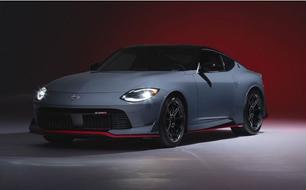
Reinterpreting a classic via retro styling isn’t always successful – hello, 2001 Ford Thunderbird – but what Nissan has achieved with the RZ34, given it’s a pastiche of several Z greatest hits from the ‘70s, ‘80s, ‘90s and today, is truly masterful design.
Take the cab-backward silhouette, long nose and short wheelbase; it somehow manages to deftly capture the spirit of previous Z generations, without looking like a bad caricature.
Points especially go to the stunning nose and tail treatments that evoke both the ‘70s 240/260/280 as well as the sadly long-forgotten Mid-4 II concept car of 1987.
Slightly longer than the regular model, the Nismo’s nose is meant to evoke the early ‘70s Japan domestic market Fairlady ZG, with the G denoting “Grand Nose”. Fun fact: Fairlady first appeared on the 1960 Datsun roadster as deference to the Broadway musical (and later Audrey Hepburn film, presumably) ‘My Fair Lady’.
Anyway, besides scraping speed humps and driveways, the Nismo’s elongated front bumper promotes improved engine cooling and better aero flow, as do the side sills, larger wraparound three-piece spoiler and redesigned rear bumper/diffuser. The wider-yet-lighter back wheels are 10mm wider. And a glossy red stripe runs along the underside like Anna Nicole Smith’s lipstick.
Does it all look better than the simpler, purer regular Z? No. But they perform better. And isn’t that the point of a Nismo?
Despite measuring nearly five metres long, the Vanquish is a surprisingly small car from a practicality perspective. Because the added wheelbase is ahead of the cabin, it remains strictly a two-seater, with no room for rear passengers.
There’s limited small item storage, too, aside from a couple of cupholders and a lidded console box. Although, on the plus side, the lack of rear seats creates room for some small shelves in case you need to store some loose items.
It also has a surprisingly small 248-litre boot, which means limited storage for anything, including luggage, for a road trip in what would otherwise be a great road trip car.
As for the multimedia system, while not at the cutting edge (although Aston Martin will debut Apple CarPlay Ultra in its DBX model) the system works well for this type of car.
It’s unlikely too many under 25s will be grabbing this $700K luxury GT, so the fact the media system has a touchscreen and an array of physical buttons is a welcome detail.
As for the 1170-watt, 15-speaker Bowers & Wilkins sound system, it performs incredibly well, as you would probably expect. Like the car it has loads of power but excellent attention-to-detail with fantastic clarity, too.
So, just as the exterior is an anthology of past Z car stylings, the same also applies inside.
A mishmash of new and old as well, they also marry together harmoniously – after you’ve bent and contorted yourself inside nice and snug, on the racy yet not-too-unforgiving set of Recaro bucket seats.
The Z’s signature sloping roof and rising window line; a trio of dials that have been a hallmark of the series since the 240Z, a thin three-spoke steering wheel; a physical hand brake and a pair of old-school seat base angle adjuster knobs just like in sports cars from 20 years ago betray the Nissan’s ageing DNA.
But they set the mood, like hearing a favourite old track, though one remixed by a contemporary DJ to a modern beat.
Which means that you’ll be able to view whichever artist you like through the 8.0-inch touchscreen, either via Bluetooth audio streaming, Spotify or some such app.
Easy to decipher and simple to navigate (though no imbedded GPS is fitted), the Z’s dashboard also offers the essential surround-view parking camera (given how limited vision is as you’re sat so low with not much glass to peer out through), amongst a host of vehicle functions. You’re also privy to extremely useful blind-spot alert thoughtfully placed inside the car by the mirror mounts, four cupholders if you count the door-sited ones and surprisingly generous storage. Practicality, thy name is Fairlady.
For lightness and sensible packaging, we understand why Nissan’s sports coupe is strictly a two-seater proposition – and certainly a roomy enough one for the lucky pair at that.
However, it’s a shame Nissan doesn’t offer a 2+2-seater option in the form of a pair of occasional jump seats behind, as per the old Datsun days, as there seems to be just enough space for smaller folk – though as a pair of shelves, that area did prove very useful during our week with the Nismo.
Issues? Along with a sheer lack of grace entering and exiting the Z, poor overall vision and 350Z-era switchgear that are now old enough to drive themselves, finding the right driving position eluded this particular 178cm tester. The seats do a great job keeping you firmly fixed in place, and of course the wheel tilts and telescopes, but those pair of knobs were forever being twirled and fiddled with.
Oh, and simultaneously unlocking and opening the doors was also confounding, due to exterior door handles and pressure sensor not designed for Homo Sapien hands.
Further back, and as in the two previous generations Zeds, a brace bisects the luggage area. Rated at 241 litres VDA, it is wide and flat but a wee bit shallow. At least it adds another level of practicality and is big enough for those weekends away.
There’s no cover (though seeing what’s inside isn’t easy) and no spare wheel of any size is fitted.
Meanwhile, on the other side of the Nismo…
The Vanquish sits at the top of the range for now, at least until the new Valhalla supercar arrives in Australia, and has an eye-watering starting price of $737,000.
Not only does that not include on-road costs, which will likely push the price closer to seven-figures, there’s also the plethora of options and customisation you can choose from that will add to the amount you pay.
Not that the standard specification is bad. For $700K you do get 21-inch alloy wheels, carbon ceramic brakes, 16-way adjustable sports seats, keyless ignition, a 10.2-inch touchscreen multimedia display, Apple CarPlay, Bluetooth, wireless phone charging and a 1170-watt 15-speaker Bowers & Wilkins sound system.
Of course, on top of all that you get a bespoke chassis and a unique twin-turbo V12 engine, that puts the Vanquish in the same class as the Ferrari 12Cilindri, which starts at $803,500 - making the Aston Martin look competitive.
Nismo is short for Nissan Motorsport. It’s like what AMG means to Mercedes or HSV was to Holden. Which means, of course, that Australians love this sort of thing.
Last year, as limited editions, the first 100 Z Nismos sold out in under an hour, according to Nissan. Now it’s back more permanently, still from $94,000 before on-road costs, but without quite the exclusivity.
But, don’t worry. You still get the Nismo body kit and leather/Alcantara-clad cabin treatments, stronger performance and track-focused chassis upgrades, which include extra bracing, sharper steering, beefier suspension, bigger brakes and GT-R-spec wider wheels, compared to the regular Z. More on the engineering changes later on.
There are also Recaro sports seats, Nismo-branded digital instrumentation and steering wheel, additional drive modes and red trim highlights.
These come above the regular Z items like keyless entry/start, an 8.0-inch touchscreen, surround-view reverse camera, (wired-only) Apple CarPlay/Android Auto, Bluetooth connectivity, an eight-speaker Bose premium audio, active noise cancellation tech, dual-zone climate control, artificially amplified exhaust note and wider-yet-lighter 19-inch alloy wheels.
Note, however, that going Recaros means ditching the regular Z’s seat heating and electric adjustment including lumbar support. And there’s no spare wheel in either grade… just a tyre-repair kit. Boo.
For your $100K-driveaway, from an equipment perspective anyway, the Nismo does stretch the value argument almost to breaking point, so it’s a good thing that the Z still looks so good. And there’s lots of beautiful engineering underneath that pretty skin too.
The engine is undoubtedly the star attraction of the Vanquish, with the twin-turbo 5.2-litre V12 being the last of its kind in the British brand’s line-up now that the DB12 has switched to an AMG-sourced twin-turbo V8.
While that engine is arguably better with its excellent performance, smaller dimensions and lighter weight, the fact remains that for many of Aston Martin’s long-time buyers, it’s V12 or nothing.
It also helps that the V12 produces an extremely potent 614kW and 1000Nm, which is way ahead of the 611kW/678Nm the Ferrari 12Cilindri makes. So you get bragging rights at the golf club with your Ferrari mates.
The engine features a unique titanium exhaust and is paired with an eight-speed automatic transaxle that drives the rear wheels.
That is enough to propel the Vanquish to a top speed of 345km/h, making it the fastest production car the brand has ever produced, with a 3.3 second 0-100km/h time.
Nissan sure knows how to make a great six-cylinder engine.
The Nismo’s internal combustion engine in question is the VR30DDTT – a twin-turbo V6 making four per cent more power and around 10 per cent more torque compared to the one found in the regular Z.
Power jumps 11kW and torque a handier 45Nm to 309kW @ 6400rpm and 520Nm between 2000rpm and 5200rpm respectively, providing extra punch as well as a slightly superior power-to-weight ratio of around 184kW per tonne.
That’s up 2kW/tonne, despite the Nismo gaining around 50 kilos, to 1680kg.
This has been possible thanks to extra turbo boost, revised ignition timing, improved cooling systems and updated engine management software.
Driving the rear wheels is a Mercedes-Benz based nine-speed torque-converter auto. Upgraded and retuned for track use, it includes a Sport+ mode providing speedier shift responses. Aided by the new launch control function, we managed a tidy 4.5 seconds from standstill to 100km/h.
Sadly, though, there’s no manual option as per the regular Z.
What else is unique here? Underneath, the platform might date all the way back to the 350Z of 2003, but Nismo has really worked some of its magic.
Along with the retuned dampers, everything else has been stiffened up – including the anti-roll bars, springs, bushes and even the steering rack mounts – to help deliver more controlled and linear steering. There’s extra underfloor bracing at the front, centre and rear of the car, thicker brake rotors and model-specific Dunlop SP Sport Maxx GT600 tyres that are wider at the back, on gloss-black RAYS alloys.
Continuing to use a double-wishbone front and multi-link rear suspension set-up, the Z’s front/rear weight distribution is 56/44 front/rear.
Now, the Nismo was our favourite version of the previous 370Z by some margin. How does it all square up in RZ34 guise?
To say the Vanquish isn’t the most fuel frugal vehicle on the market is an obvious statement, but even its claimed 13.7L/100km is best described as optimistic.
That’s not surprising given its size and performance, but with an 82-litre fuel tank that’s a driving range of less than 600km, at best.
In the real world, during our time in the Vanquish, the car’s trip computer was indicating that we stayed in the high teens; although that featured limited freeway/extra-urban driving.
Not surprisingly, the Z Nismo needs to drink from the 98 RON premium unleaded petrol fountain.
Nissan reckons owners should expect to average 10.4L/100km (for 242 grams per kilometre of carbon dioxide emissions) on the combined cycle (and 15.0 and 7.7 L/100km for the urban and extra-urban ratings respectively.
This figure is almost half a litre worse than the non-Nismo Z’s 9.8L/100km result, but still substantially better than the six-speed manual base grade’s 10.8L, despite the latter being some 33kg lighter.
With a sizeable 62L tank, you might be able to average just under 600km between refills.
For the record, we achieved 11.9 litres per 100km in a mix of urban, freeway and performance driving which is not too bad at all given how often we fanged this thing.
As cars go, few can match what the Vanquish offers. Even in my 20+ years of driving every type of car imaginable, the Vanquish stands out as being something distinct, bold and special.
Sitting behind the wheel, the bonnet looks like it stretches out to the horizon and you feel like you’re sitting on the back axle of the car. And yet, when you start driving, the Vanquish feels like it shrinks around you.
At normal speeds it feels like a classic grand tourer, relaxed, refined and easy to drive. Obviously it's a firmer ride than your average luxury car, but that’s a small price to pay for the breadth of capability this car offers.
Because once you get out of the urban environment, the Vanquish becomes something else entirely. On a winding road this British beast is surprisingly agile for such a big car.
The steering feels direct and the front end responds with much more precision and poise than you should reasonably expect from a car with such an exaggerated bonnet.
No, it doesn’t have the dynamic aggression the more compact Vantage offers, but it manages to take elements of that car and combine it with the GT nature of the DB12 to give you the best of both Aston Martin’s coupes.
Of course, the catch is it’s much too fast for Australian roads and isn’t really designed to be a track day car, so in Australia - without autobahns or more liberal views on speeding - the Vanquish in many respects doesn’t make sense.
But that is arguably its driving essence, you buy it because you know what it’s capable of, even if you’ll rarely use it, and that is an absolute luxury.
Nissan does plenty of things really well, and the Nismo is no exception.
Firing up the VR30DDTT 3.0-litre twin-turbo V6 is also a reminder of how brilliant the brand’s six-cylinder engines are. They tingle all the right sensory areas, starting with the baritone rumble at idle.
What a portent of what’s to come!
Nismo’s massaging of the engine, combined with upgraded clutch packs and a retune of the nine-speed auto’s software, results in stronger, hungrier and angrier acceleration, no matter which of the three driving modes you’ve selected. Even in Normal, the Nissan leaps off the line. In Sport, its appetite for speed is palpable. In Sport+, this thing is eating up the tarmac. Somehow, in an EV era where 4.5s to 100 is ho-hum, the (electronically enhanced but who cares) guttural exhaust bellow seems to amplify the action and thrills.
And spills. For five of our seven days together, the heavens poured. Now, in Normal mode, the Nismo was as benign and controlled as you’d hope in wet conditions, the driver-assist tech metering out just enough torque and braking to seamlessly keep the car humming along. Ever-present but always nuanced, they’ll help make your commute a safer and more relaxing one.
Selecting Sport loosened things up markedly, with the driver needing to be ready to counteract with steering, seating and throttle, though still with a safety net to keep the car from going totally out of whack; Sport+, meanwhile, is not for amateurs or the distracted. This is serious, tail-wagging waywardness that should only be fully explored with experience and care.
Later in the week, Launch Mode in Sport+ on cold but dry bitumen also requires super concentration, as we discovered attempting to extract the fastest acceleration time. Sideways in a straight line at 100km/h-plus is not for the faint hearted.
Beyond all-out performance and drama, the Nismo soars with weighty yet linear and precise steering, resulting in satisfying, hunkered-down handling that is the hallmark of a great sports car. Really tight turns can be taken at impressive speeds, but there’s about 1.7 tonne of muscle to manipulate, so the real fun can be found blasting along a snaking set of more open corners, where the Z’s inherent thrust, poise and grip come into play, all to the symphony of that bi-turbo V6.
That the suspension can feel both firm and supple at the same time is another arrow in the Nismo’s bow.
Nissan isn’t pretending this is anything but a rousing and rapid grand tourer with track aspirations, so the fact there’s also comfort and sophistication to be enjoyed just shows the sheer bandwidth of this particular Z.
Downsides? There’s always a wall of sound, be it mechanical or noise intrusion from the rubber and/or bitumen. The Nismo is rarely quiet. The extended front spoiler seems to summon up speed humps and bumps you never knew existed. The adaptive cruise control’s inability to resume in heavy stop/start traffic betrays this car’s 350Z-era tech. And the lack of a manual transmission, we reckon, is a missed opportunity for an even greater degree of interactive sports car driving.
Still, the Nismo delivers exactly what the brand promises, and continues to improve a firm favourite for speed and drama.
But the gap between Nismo and regular model is smaller than the one that existed in the preceding 370Z, which means that – if $100K driveaway is too steep – you’re already driving something elevated in the standard Z. Particularly if you yearn for a manual.
It’s all good.
There’s no ANCAP rating given the extreme low-volume nature of the Vanquish. However, it does come with complete airbag coverage for both occupants and a laundry list of safety acronyms.
These include autonomous emergency braking (AEB), forward collision warning (FCW), adaptive cruise control (ACC), traffic sign recognition (TSR), lane keep assist (LKA), lane departure warning (LDW), blind spot assist (BSA) and rear cross-traffic assist (RCTA).
In addition there’s driver attention assist, to make sure you stay alert in such an expensive machine, and door exit assist, so you don’t open the long doors into a passing car or cyclist.
Importantly, none of these systems are intrusive or annoying, so credit to Aston Martin for integrating them smoothly.
There is no Euro NCAP or ANCAP crash-test rating for the Nissan Z Nismo
Standard safety features include AEB with pedestrian detection (though no operating parameters could be found about this system), 'Predictive Forward Collision Warning', lane departure warning, blind spot warning, rear cross-traffic alert, high beam assist, tyre pressure monitoring sensor, traffic sign recognition and adaptive cruise control with full-stop (but no resume) functionality.
What’s missing? There is no active lane-keep assist tech to nudge you into line, and you won't find parking sensors nor a front-centre airbag.
But the Z does have dual frontal, side chest and head-protecting airbags, a surround-view camera, anti-lock brakes with electronic brake-force distribution and brake assist, stability control, traction control, hill-start assist, front and rear parking sensors, LED headlights with light sensitivity and rain-detecting wipers.
There is also a child seat tether point on the passenger seat, but the Nismo ditches the other Z’s ISOFIX alternative.
Despite the extraordinary price tag the Vanquish is covered by a very standard three-year/unlimited kilometre warranty. It’s a surprising, and some might argue disappointing, short period of coverage for a car that is not only expensive but should have a long life.
However, it does redeem itself in some way by including the first five years of servicing into the cost of the car. Ferrari offers seven for its models, so Aston Martin is still behind the market, but included servicing feels right for a car costing nearly $1 million once you put it in traffic.
Your wallet’s pretty secure as well.
Like all Zs, the Nismo is subject to a warranty period of five years with unlimited kilometres, while service intervals are fixed at every 12 months or 10,000km – whichever occurs first. There is also five years of roadside assistance.
Nissan also provides pre-paid maintenance plans that can save up to $245 over three years, as well as capped-price servicing. At the time of publishing, the capped-price service appointments cost between $347 and $950 depending on the year of ownership.