What's the difference?
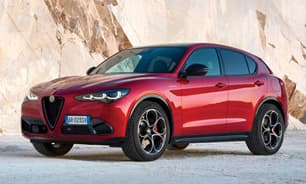
This week I’ve taken the recently updated Alfa Romeo Stelvio Veloce on a massive road trip and after the first few hours of driving it, I thought this is the sort of car you get when you need some extra boot space but still want that sports car vibe.
It helps that our test model is finished in the classic 'Alfa Red' but while its on-road performance can't be ignored, it has some tough medium SUV competition from the likes of the BMW X3, Genesis GV70 and Lexus NX.
So, is it just a fun car to drive or will it suit the family, too? I've been cruising around in it for the last week with my family of three to find out for you!
There has never been a better time to be shopping for an electric SUV in Australia, with the avalanche of Chinese brands constantly smashing through the price floor as they bid for the title of Australia’s cheapest.
MG led the charge with its S5, which is $40,490, drive-away. Then Leapmotor upped (or downed?) the ante with its B10 with a $38,990, drive-away, price tag. And now BYD has knocked them both out with its Atto 2, officially Australia’s cheapest electric SUV (at least for now), with a MSRP of $31,990, which, in NSW, translates to a drive-away cost of less than $35K.
Cheap is one thing. But cheerful? Let’s find out, shall we?
The Alfa Romeo Stelvio Veloce is the car you get when you want a sports car but happen to have a kid or two. Its ride comfort is on the lower end but it has heaps of power and enough features that it manages to slide into its price tag without feeling too cheeky. The back seat’s size will limit this to smaller families, though. And I would prefer to see better tech at this grade level, so this gets a 7.1/10 from me.
My son didn’t spend much time in this one but he liked the red paintwork. My mum, however, loved the power and sexy packaging. She gives it an 8/10.
The BYD Atto 2 isn't just the cheapest electric SUV in Australia, it's also one that doesn't feel all that cheap, which is a hell of a magic trick. If it's easy, comfortable city motoring you're after, the Atto 2 delivers in spades. But if your blood type is high octane, there are better driving EVs out there.
Note: CarsGuide attended this event as a guest of the manufacturer, with meals provided.
Note: The author, Andrew Chesterton, is a co-owner of Smart As Media, a content agency and media distribution service with a number automotive brands among its clients. When producing content for CarsGuide, he does so in accordance with the CarsGuide Editorial Guidelines and Code of Ethics, and the views and opinions expressed in this article are solely those of the author.
While the Veloce has had a facelift, the changes are so minor I would dare to ask, why bother?
The daytime running light signature has been tweaked but only die-hard Stelvio fans will notice it. I do like the larger 12.3-inch digital instrument display but surprisingly the multimedia screen remains on the smaller side at 8.8 inches.
Otherwise, there’s no denying the Veloce looks like an Alfa Romeo, staying true to its Italian heritage. It’s solid, with a 1903mm wide stance, but so robust that it moves away from words like 'sleek' or 'sexy'.
The black grille, 20-inch alloy wheels and red brake calipers make it look sports car mean and hint at what's under the bonnet.
The interior looks well made and it's got a bat cave element with the black headliner and panoramic sunroof. There's a plethora of soft touchpoints throughout and the circular air-vents found in both rows add some flair.
Overall, though, the interior is understated and if you’re looking for something as flashy as the exterior, you may be disappointed.
I think it’s a sharp-looking thing, this Atto 2. Kudos to BYD for not making the design look like it’s trying too hard, or like the Atto 2 is something it isn’t. It’s just smooth, sensible small SUV with styling that looks like it will age gracefully.
I like the chunky black moulding which makes it look a bit tougher than it is, plus the LED DRLs and swept back (and spoiler-equipped) roofline add a bit of visual drama.
Inside, BYD has made two pretty good choices. The first is that the cabin feels toned down from the one in the Atto 3 (which is all chunky wheel-style controls and vents).
This one feels far more sedate and conventional in its design, which I think is a win.
The other good decision is to equip the Atto 2 with soft plastics, rather than hard scratchy ones, in places like the door panels. In some cheaper cars, you feel your elbows constantly rubbing against cheap-feeling plastics, but that’s not the case here.
Too much stuff is still controlled through that central screen, and BYD has an awkward way of shortcutting functions. They call it a three-finger swipe, meaning that if you run three fingers across the screen horizontally you can adjust the climate-control’s fan speed, while swiping horizontally adjusts temp, but it feels like a weird movement.
The front row benefits the most in terms of space and features. I have stacks of headroom and legroom in the front seat and didn’t feel like I was too close to my passenger this week.
I like the comfortable electric seats and the fact you can adjust the side bolsters and under-thigh support.
Individual storage options are on the slim side throughout the car and it was something my mum and I found annoying on our road trip because there aren’t a lot of spots to put your little items up front. Think snacks, sunglasses, lip balm etc.
The two cupholders are really drink bottle holders because they’re too large to fit a small takeaway cup without popping the lid off but I like the large storage bins in each front door.
It's a tight squeeze in the back seat for my 168cm (5'6") height and that’s behind my driving position! It could feel a tad cramped back there for those with longer legs.
It’s also a bit awkward getting in and out of the back seat because of the large wheel arches.
The storage bins in the doors are too small to hold a drink bottle but the middle armrest has two cupholders and a phone holder.
Charging options are fantastic up front with two USB-A ports, one USB-C port, a 12-volt socket and a wireless charging pad to choose from. You even get an 'aux' jack, too.
The amenities in the back seat are okay and you get a couple of net map pockets, reading lights, a USB-A and C port, as well as directional air vents.
This Alfa has a no-nonsense approach with the other tech, though. I usually don’t mind that but the touchscreen multimedia system is a little too no-nonsense for this spec-level.
I found it to be laggy and too small. It also regularly turned itself off and rebooted. This happened a few times while needing satellite navigation directions, which was annoying.
Also on the sat nav, you can’t search for a general name of something, like a business, you have to input an address which meant using my iPhone anyway. It’s great that you get wired Apple CarPlay and Android Auto, though.
The digital instrument panel looks upmarket but isn’t properly customisable and I was disappointed the ambient lighting package only meant that there are lights in the footwells and a tiny overhead light. Adding some extra lighting would have transformed the night-time driving experience.
The boot is the highlight for me because you get a decent capacity at 499L. The load space is level and I like the back row's 40/20/40 split-fold. We had plenty of room on our road trip for luggage and shopping.
You get a temporary spare tyre and a retractable cargo blind. The latter is stiff enough to double as a shelf which is handy and a handsfree powered tailgate comes standard, as well.
The Atto 2 measures 4310mm in length, 1830mm in width and 1675mm in height and it rides on a 2620mm wheelbase. It also sits on BYD’s fully-flat EV platform, which helps to maximise space in the back seat.
I’m 175cm tall and could get comfortable behind my own driving position, with enough knee and headroom to ensure I didn’t feel cramped.
There are two ISOFIX attachment points, one in each window seat in the back as well as USB-A and -C connection points.
Boot space is a not cavernous, but also not tiny, 380L with the rear seats in place, growing to 1320L with the rear pews folded flat. Both models also offer a V2L (Vehicle to Load) connection, too, so you can power up household devices.
There are three models for the Stelvio and ours is the mid-spec Veloce grade, which will cost you $82,950, before on-road costs. The pricing should make it competitive compared to its rivals but the features list isn’t as robust as it could be.
The interior gets most of the big-ticket items with leather upholstered sports front seats, extended leather trim on the doors and dashboard as well as a heated steering wheel.
Both front seats are electric with six-way power adjustment, powered side bolsters and four-way adjustable lumbar support. They also feature a heat function and extendable under-thigh support.
The luxury items continue with the panoramic sunroof, real aluminium accents throughout and a premium Harman Kardon sound system that boasts 14 speakers.
Other standard features include full LED adaptive 'Matrix' headlights, aluminium sports pedals, dual-zone climate control, keyless entry, push-button start and a handsfree powered tailgate.
It's the technology that lets the Stelvio down but I'll go into that later.
This thing really is cheap. The BYD Atto 2 arrives with a two-model range kicking off with the Dynamic, at $31,990, before on-road costs, before stepping up to the Premium at $35,990 BOC. They both get the same motor and battery, by the way, so the extra money comes down to extra kit.
The Dynamic rides on 16-inch alloys wrapped in cheaper Westlake rubber, scores LED headlights and DRLs and gets rain-sensing wipers and heated wing mirrors. Inside, there’s a 10.1-inch central touchscreen, an 8.8-inch driver display, synthetic leather seats with manual adjustment up front and wireless Apple CarPlay and Android Auto linked to a four-speaker stereo.
The Premium rides on 17-inch alloys wearing better Hankook rubber, and there’s a panoramic glass roof with a shade and roof racks. Inside, the central screen grows to 12.8 inches, and there’s an eight-speaker stereo and a wireless charge pad. Your seats are now electronically adjusted and heated and cooled. Plus there’s some extra safety stuff, but we’ll cover that off in a second.
The Veloce has a 2.0-litre, four-cylinder turbo-petrol engine that gives a maximum power output of 206kW and 400Nm of torque. It’s an all-wheel drive and has an eight-speed auto transmission which is very smooth.
Checking out the specs I didn’t think this would be as powerful as it is. But it’s really fun when you need to put your foot down! I mean, it can go from 0-100km/h in just 5.7 seconds.
Both Atto 2 models share the same powertrain - a front-mounted electric motor producing 130kW/290Nm which is sent to the front tyres. It feels fairly sedate, even under flat-footed acceleration, though BYD reckons you can knock off the sprint to 100km/h in 7.9 seconds.
The official combined cycle fuel economy figure is 7.0L/100km and my real-world usage came to 8.4L/100km.
I drove our test model hard but did A LOT of open road driving - 2051km to be exact - so I was happy with the average but I would expect it to be higher in the city.
Based on the official combined cycle number and 64L fuel tank, you theoretically should be able to get a driving range of around 914km but my real-world tests see that figure come in closer to 700km.
Alfa Romeo recommends a minimum 95 RON petrol be used for the Stelvio.
Both models also share the same battery, a 51.1kWh LFP unit, which should unlock a WLTP driving range of 345km. AC charging is pegged at 7.0kW, so a good match for a standard home wallbox, while DC fast charging is 82kW. Using the latter, BYD says you should go from 10 to 80 per cent charged in 38 minutes.
The Veloce is downright fun to drive because of how damn responsive it is. There is plenty of power, so much so, that you’ll look forward to hitting the open road.
The sporty steering makes for sharp handling and the car moves decisively. I have felt confident all week that it would do what I wanted it to do. It's wide stance also makes it hug the road like an old friend.
However, the suspension is also sporty, aka firm! The padded seats help soften the impact when you hit a bump but you’ll still know it when you hit one. There's also a resonating 'ker-thump' in the cabin, in case you didn't feel it.
The big thing that marred the driving experience for me, at least for a longer trip, is how loud road and wind noise are at higher speeds. It’s loud enough that you need to raise your voice to talk, which I didn’t enjoy.
The Veloce earns back points with how easy it is to park and it handles those stupidly small hotel car parks extremely well.
I don't rate the reversing camera, though. The quality of the image is terrible for this grade-level.
Your drive experience in the Atto 2 very much depends on what you ask of it.
Or to put it another way, the first half of my drive route was a breezy run through the city and suburbs, then onto the freeway, before arriving at our destination.
It was probably 60 kays or so, and across it all the Atto 2 felt quiet and comfortable, with enough power at its disposal to easily get up to speed and stay there.
In the second half, though, I hunted down some twisting roads and cracks started to appear. The ride is pretty solid and there isn't huge amounts of body roll during more enthusiastic cornering.
But the steering is vague and there's plenty of slack – you can turn the wheel a fair bit without eliciting much response from the tyres.
Interestingly, turning the wheel with a bit of aggression also produced a weird sound up front, like you could hear the mechanicals shifting the tyres.
The tyres make a difference, too, with the Premium's more expensive Hankook rubber far happier to hang on without squealing than the Dynamic's Westlake tyres.
But context is key here. The Atto 2 is an accessible, affordable city-focused EV, and it performs those duties admirably. But if you're sold on a car-driver connection, there isn't much of that on offer here.
The Stelvio has most of the major items that I like to see on a family car and the standard safety features include adaptive cruise control, forward collision warning, driver attention monitor, traffic sign recognition, lane keeping aids, blind-spot monitoring, rear cross-traffic alert, a reversing camera, daytime-running lights, front and rear parking sensors, and a tyre pressure monitoring system.
It's important to note though that the safety systems only scored a 60 per cent with ANCAP.
It has autonomous emergency braking with pedestrian and car detection and is operational from 7.0 - 200km/h.
The Veloce has a maximum five-star ANCAP safety rating but it was done ages ago in 2017, which means it will expire this December. It also only has six airbags, which is low for a family car but the curtain airbags cover the back row.
There are ISOFIX child seat mounts on the outboard rear seats and three top tethers in the second row but two seats will fit best.
You can just squeeze a 0-4 rearward facing child seat in but it will encroach on front passenger comfort.
The Atto 2 is yet to be assessed by ANCAP but there’s no shortage of stuff. The entry-level car gets six airbags, rear parking sensors and all the usual traction tech. Then there’s active cruise, lane departure warning, blind spot monitoring, cross-traffic alert in both directions - the list goes on. In fact, the only things the Premium adds on top are a 360-degree camera and front parking sensors.
The ongoing costs aren’t too shabby on the Stelvio because it comes with a five-year/unlimited km warranty and you also get five years roadside assistance.
It’s a 24/7 complimentary service that covers a host of items but check out the terms and conditions for more information.
There’s capped priced servicing for five years or up to 75,000km, whichever occurs first.
Services cost an average of $573, which is competitive for the class and servicing intervals are good at every 12 months or 15,000km, whichever occurs first.
BYD’s warranty is an okay six years but just 150,000km, which is underwhelming compared to the best in the business. The battery is covered for eight years or 160,000km.
BYD vehicles typically have 12 month, 20,000km service intervals with capped price servicing, but the details are yet to be confirmed for the Atto 2.