What's the difference?
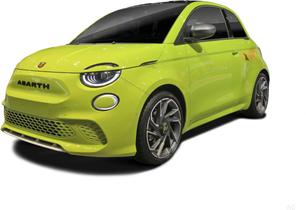
Meet the Abarth 500e, the mad-hatter sibling to the very good and all-electric Fiat 500e, and the Italian brand's first attempt at a bonafide EV hot hatch.
It's tiny, tough and – despite the lack of engine and exhaust – it burbles manically when you fire it up.
So does this mean Italy’s pint-sized, petrol-powered icon has a future in the all-electric era? Let’s go find out.
It is highly unusual to drive around in a bed, but that’s what it felt like we were being asked to do with the new and terribly exciting Tesla Model 3 Performance.
Tesla doesn’t do media launches, nor traditional marketing, so everything about this event was predictably peculiar, but when we were told this new car was causing so much excitement that we should pull a sheet over it every time we stopped, to avoid people photographing it, or touching it (“if someone tries, just politely ask them to stop” as we were advised) we hit peak weirdness.
Eventually, they did agree to pull the sheet off one and let us have a look at the most exciting car Tesla has ever made that’s not a Cybertruck.
The Performance is the Model 3 Tesla engineers and designers always wanted to make. Clearly, it was going to be called the 'Ludicrous', because some staff kept stuffing up and calling it that. It’s a shame the name wasn’t used, but at least it still gets an 'Insane' mode.
They really wanted to go all out with the original Performance version, but “a guy called Elon” didn’t want to add all the complexity that required at the time - he was focused on quality issues and ramping up production - but this go around he has let them have their heads, and encouraged them to go hog wild.
That means an entirely new power unit at the rear, staggered 20-inch wheels for sportier turn-in, aerodynamic changes for more downforce and less lift, new seats and the fitting of active dampers to a Model 3 for the first time, to help provide proper, track-ready handling.
We set out into the embrace of the adoring Los Angeles public (truly, no city on Earth boasts so many Tesla owners, they are everywhere) to find out if all the fuss is worth it.
It’s not perfect, but it’s everything a hot hatch should be in the electric era — engaging, exciting, and, above all, fun.
The Model 3 Performance is one of those cars that’s undeniably impressive in almost every way, and hugely fast in absolutely every way, and yet can somehow still leave you feeling slightly cold. Or at least damp with fear sweat.
It’s not my kind of sports car, but if you love speed, and EVs, and Tesla, you’re gong to think it’s the Queen Bee’s knees.
Publishers: Please place the following in BOLD after the verdict:
Note: CarsGuide attended this event as a guest of the manufacturer, with travel, accommodation and meals provided.
I’m just going to come right out and say it — I love the look of the Abarth 500e, even if the colour of our test car should be renamed Acid Trip, rather than Acid Green.
I love its perfectly proportioned, hunkered-down hot-hatch styling, the new ABARTH lettering on the body, and the new scorpion logo pasted to the side.
Basically, if you can look at the Abarth and not smile, then you need to find more fun in your life.
Inside, it’s a predictably cramped-feeling space, but it’s all nicely laid out, and the more I use them, the more I like the horizontal drive controllers that don’t eat up the little space you have with a traditional shifter. The materials are a bit hit and miss, though.
Tesla’s design folks waxed long and loud about how they’d finally been able to visually lift and separate this Performance Model 3 from the basic one and they point to the new front and rear fascias, more aggressive styling, aerodynamic flicks, integrated cooling ducts, rear diffuser and carbon-fibre spoiler, which are there not only to look good, but to to “optimise lift balance and high-speed stability”.
Now, I’ll grant you it’s better than a normal Model 3, and that we were regularly approached by excited Tesla fans asking “is this the NEW PERFORMANCE OH MY GOD I WANT ONE NOW?!?"
But honestly, I still think it’s a bit subtle, and that includes the strange little 'Performance' sticker/badge on the rear, which does look a lot like the Ludicrous symbol that Elon loves, from the awful movie Spaceballs, but Tesla staff insist it’s not, nor is it Plaid.
Clearly, the design tweaks are there for a reason, and train spotters will note the differences immediately, but it’s still just not the most exciting car to look at, nor is it anywhere near as exciting to behold as it is to drive.
While I like the addition of the central screen, it’s surprisingly annoying to use — I found myself jabbing at the buttons again and again before it reacts. You need a Stephen Hawking-level intellect to figure it all out.
I was trying to turn off the Abarth Sound Generator, which I'm reliably informed is possible, but after about five minutes digging through sub-menus, I abandoned all hope.
Normally I’d spend a bit of time exploring the back seat, but frankly, once in there I didn't really feel like spending excess time back there.
The Abarth 500e is only around 3.6m long, 1.7m wide and 1.5m tall, and suffice it to say, the space is tight, and you’ll only be using the two seats in the back in an emergency, or for the smallest of kids.
The boot is pretty tiny, too, starting at 185 litres (VDA) with the rear seats up, but growing to 550L (VDA) with the split-fold rear seat lowered.
So, not much to write home about. But criticising the tiny Abarth for a lack of practicality is like criticising a horse because it can’t swim – it’s not really in its job description.
Inside, the big news is the new seats. Tesla was happy to admit the pews fitted to the previous Performance just weren’t up to the job of holding humans in place when applying so much G force.
The new 'Sport Seats' feature enhanced side cushioning and side bolsters for better lateral support during dynamic driving. And they can also be heated and ventilated.
Elsewhere, there’s some carbon-fibre trim on top of the dash, with a Tesla-first weave pattern to further help the Performance stand out within the Model 3 line-up.
Other than that, it’s pretty standard Tesla sedan, which will be familiar if you’ve ever caught an Uber in Los Angeles. Spartan, minimalist, slightly cheap-feeling.
As for the practicality of the tech, I'm still against the giant 15-inch tablet-style touchscreen, for everything, the replacement of an indicator stalk with buttons and not having a speedo right in front of your eyes, where you need it.
Ok, so bonkers thing number one: This Abarth 500e might look like it could fit in your pocket, but it is priced like a much bigger vehicle, starting at $58,900 plus on-road costs for the Turismo variant, increasing to $60,500 for the limited-edition Scorpionissima.
Outside, either trim gets 18-inch diamond-cut alloys, LED lighting all around, a fixed glass roof, the new e-latch front doors (meaning you can just push a button to open the door) from the 500e, along with some performance-focused add-ons, like a front splitter, greyed-out mirror caps, rear disc brakes and new front and rear bumper treatments.
Inside, there’s a leather-and-Alcantara steering wheel, sports seats, aluminium pedals and climate control, while on the tech front, a central 10.25-inch central screen pairs with a wireless charger and wireless phone mirroring, while a second 7.0-inch Driver Display Screen gives you all your driving data.
Oh, and there’s what the brand calls an Abarth Sound Generator, which is all kinds of crazy, but we’ll touch on that in a moment.
The difference between the Scorpionissima and the Turismo, by the way, is style led, with Abarth decals down the sides, and a certificate of authenticity confirming yours is one of 1949 vehicles sold around the world.
Tesla says the price for the Model 3 Performance will be "starting at" $80,900, plus on-road costs. There's no word on whether there will be different spec levels and the company does not like answering questions or providing information.
What we also know about Tesla is that the price quoted could move down, or up, at any time, quite randomly, so if phrases like "residual value" or "depreciation" are of interest to you, it can be a challenging brand.
That side swipe aside, this sounds like astonishingly good value for this much performance from your Model 3 Performance. A Hyundai Ioniq 5 N would give it run for fun and involvement, if not brand fans, but it's $111,000, while a Porsche Taycan kicks off at $164,000 (it is a lot more car for the money, but it might struggle to keep up with this Tesla, at least in base model form).
In terms of equipment, it's pretty much standard Model 3 fare, other than the fast bits and a spot of carbon here and there.
You get 'Autopilot' included, of course, but you can't use all of its 'Full Self Driving functionality' on Australian roads. Not yet, anyway.
There’s a single front-mounted electric motor providing the go here, with a total 113.7kW and 235Nm on offer fed through the single-speed gearbox, which is enough to push the 500e from 0-100km/h in 7.0 seconds.
Happily, the way that power is delivered makes it feel faster, and that Sound Generator does a pretty good impersonation of a petrol-powered hot hatch, rising and falling with your inputs.
If you’ve ever driven the previous Model 3 Performance you’ll know that it could well have come with Space X badging (arguably Elon’s more impressive engineering achievement), because it really did thrust rather than accelerate.
But this time the engineers wanted to go all out. Customers appreciated the incremental performance they got from the last Model 3 Performance version, but they told Tesla they wanted more.
With many enthusiasts among Tesla's engineering and development team, they looked to unlock the performance potential of the platform.
So, that meant a whole lot more madness and torque thump. It comes from a new Performance 4DU, an all-new drive unit - featuring an entirely new rear motor that uses bar-winding technology - unlocking 22 per cent more continuous power, 32 per cent more peak power and 16 per cent higher peak torque delivery.
Overall figures are 380kW and 740Nm, but looking at them written down, they seem big, yet not as big as they feel in this car, as it’s shoving you from a standing start to 100km/h in three seconds flat.
It feels faster. Sick-making fast, even.
Right, there’s one obvious downside to the Abarth experience, and that is that it is fitted with a 42kWh battery that delivers a claimed 253km of driving range.
It’s worth noting that there are three Drive Modes — Turismo, Scorpion Street and Scorpion Track — and that only the first one will deliver the maximum range, because it limits inputs to 100kW and 220Nm.
Engage the other two — I’ve had it locked in Scorpion Track, for example, which gives you all of the power and deactivates one-pedal driving — and you can expect those numbers to drop.
When it comes time to charge, the Abarth 500e is set up for 85kW DC fast charging, which should take you from flat to 80 percent charged in around 35 minutes, as well as a maximum 11kW AC charging, which takes just over four hours to get to fully charged. Or you can plug it into a regular socket, which means more like 15 hours to recharge.
One last caveat: I actually wasn't able to get it to charge, which curtailed my adventures a little bit. I tried three chargers, all of which conjured an error message on the screen, and after a quick call to the folks at Abarth it transpired that a quick software update is required.
Despite being heavier and gruntier, Tesla claims the new Performance Model 3 manages to be more efficient than the one it replaces, albeit delivering just a two per cent reduction in energy consumption. Claimed energy usage is 16.7 kWh/100km.
Tesla claims a total range of 528km on the WLTP, which is obviously going to drop if you drive it the way its makers clearly intended.
Using a Tesla Supercharger, you can add 228km in 15 minutes and... that's all Tesla will tell us. There are no official figures available for how long a full charge takes, on either a Tesla charge or a home wallbox of your own.
Remember what I said about how just looking at the Abarth should put a smile on your face? Well, driving it paints on an even bigger grin, and it starts as soon as you fire it up.
While most EVs start silently, leaving you wondering if they're on at all, the Abarth takes a different approach, instead leaning on its sound generator, modelled on the exhaust note of the 695, to give you a throaty rumble when you fire it up. It even revs! And yes, you can turn it off (apparently), but why would you?
On the road, electric drive has actually improved the Abarth experience, I reckon, because all the harshness of the drivetrain has been ironed out, instead just leaving this smooth, potent flow of power every time you plant your right foot, with no gear changes or harsh vibrations to get in the way.
The steering is predictably direct, too, and the whole vehicle feels nimble and quick to react to your inputs.
It’s honestly the kind of car that’s fun driving anywhere, be it suburban streets or twisty backroads, and despite having a couple of options parked at my house, I found myself pulled to the Abarth for all of my trips.
Downsides? The ride is firm but comfortable on most roads, but downright uncomfortable when you clang over bumps or road imperfections. You’ll have to decide if that’s a price to high to pay, but I can live with it for the trade off. And while the cabin tech looks nice, but is fiddly and annoying to use.
Finally, the range relegates the Abarth to a second car, or for those who rarely leave the city. Which is a big ask at the price point.
Very occasionally, one drives a car that makes the human body feel inadequate to the task. I would have worried that I’m getting old, that my body is simply too flubby and my brain too broken, to cope with the kind of wild acceleration and brutal g-forces the Model 3 Performance delivers.
But, fortunately, I had a videographer in the passenger seat, a much younger man who loves fast cars, and he kept threatening to vomit when I drove it hard, too.
I’ve driven quite a few cars that you can use make your passenger sick, or hurt their necks - one obvious competitor in the shape of a Porsche Taycan Turbo S comes to mind - but it’s very rare that a vehicle is so intense it can make you, the driver, feel bilious.
Yes, you do bring this on yourself, by choosing to push this Performance anywhere near its limits through particularly sharp and intestine-shaped roads like the canyons outside Malibu Tesla chose to launch it on.
On longer, sweeping bends it was far more of a joy, and less physically punishing, but in the tight stuff it often felt like corners were being thrown at you, as if you were driving behind the Millennium Falcon and being pulled along in its wake.
The brakes, special new sporting ones with track-ready pads, were up to the task, even though it often felt like they couldn’t possibly pull you up from the speeds you were doing.
And yes, it was entirely my fault that the very first time I even gently prodded the throttle and it launched me ahead past a California Highway Patrol officer, that was my fault too. Three minutes into the drive, holding an American fine, I had already deduced that perhaps this car was too fast for my own good.
But lots of EVs are fast in a straight line, you’re really comparing the length and depth of your “oooophhh” sounds at this point, but where this one succeeds is by being a lot better in the handling and ride and cornering departments than most.
Tesla’s stated goal with this car was to move beyond straight-line speed, to become more than a one-trick pony, and to do that it’s given the Performance a stiffer structure overall and updated the springs and stabiliser bars.
Aerodynamic changes have reduced drag by five per cent, delivered a 36 per cent lift reduction, and a 55 per cent improvement in front-to-rear lift balance.
Tesla’s own, in-house version of adaptive dampers, not an option but included in every Performance, work with the car’s 'Vehicle Dynamics Controller' through its various modes - 'Insane' and 'Track' being the most… ludicrous - to immediately respond to driver inputs.
The Performance rides well on LA’s awful concrete freeways but feels absolutely nailed down when you attack even a bumpy driver’s road.
This version also has a lot more power going to the rear wheels, to help it feel more sports-car playful and to fire out of bends the way an enthusiast’s car should. And make no mistake, I met them, the people behind this car are serious driving enthusiasts (although they demur, slightly, on whether their boss is one).
Track mode will allow some serious adjustability, drifting ability and fun, so the kind of people who want to hurl around a racing circuit in silence will love it.
Perhaps the only let downs are that it still feels a bit austere inside, just not very special, and that the steering is just a bit digital, soft and uninvolving, compared to the cars they clearly benchmarked against - BMWs and Porsches.
The Abarth 500e is fitted with six airbags, and decent suite of active safety stuff, like AEB, Lane Keep Assist, Traffic Sign Recognition, Blind Spot Warning, auto high beam and and an attention monitor. It’s all pretty subtle, though, and it didn't bing or bong at me once, which was wonderful.
It scored four stars when tested by Euro NCAP.
Tesla provided no information about safety for the Performance Model but it is assumed it will be unchanged from a standard Model 3.
Aside from Autopilot that means auto emergency braking, lane keep aids, and instead of blind-spot monitoring, it gets the surround radar view and blind-spot cameras when you indicate.
The latest Model 3 has an additional centre airbag for a total of seven, as well as additional bolstering where the doors meet the body in response to requirements in its American home market.
It should be able to carry its maximum five-star ANCAP safety rating, which the original version achieved in 2019.
It’s an interesting ownership proposition, because the car is covered for three years or 150,000km, which is underwhelming and then some compared to the warranty offerings of its competition, but there is capped-price servicing, at $300 per visit, required every 12 months or 15,000km, which lasts 10 years.
The battery is covered for eight years or 160,000km.
Again, we've been asked to assume the Performance will come with Tesla's standard four-year/80,000km warranty and roadside assistance. And that the battery and drive unit will fall under an eight-year/192,000km warranty, whichever comes first.
Tesla says it monitors its cars to ascertain when they need servicing, and so it is based on a case-by-case situation. Every 12 months/20,000km is recommended for a general check-up, and includes tyre rotation.
Wiper blades, brake fluid and cabin air filters need replacement every two years while the air-con service is every six years.
Of course, there are no oil changes, filters or spark plugs to replace, and even brake pad wear is less than on an ICE vehicle because of the regenerative braking system. Although it will likely be higher in the Performance variant.